North Carolina Eye Protection Requirement
Riding an ATV or UTV in North Carolina is an exhilarating experience, whether you're tackling the rugged trails of the Uwharrie National Forest or cruising through a private field. But amidst all the fun, it's easy to get confused by the rules and regulations, especially when it comes to personal safety gear. One area that often leaves riders scratching their heads is the specific requirement for eye protection. This guide is here to clear up that confusion, diving deep into North Carolina's eye protection laws, who they apply to, and what kind of gear actually keeps you safe and legal on the trails and roads.
The Basics of North Carolina's Eye Protection Laws for ATV Riders
Understanding North Carolina's approach to ATV and UTV safety can feel a bit like navigating a winding trail – there are specific rules, but also strong recommendations for everyone. When it comes to eye protection, the state draws a clear line, primarily focusing on its younger riders, but the spirit of the law, and good sense, applies to us all.
Who Needs Eye Protection and When
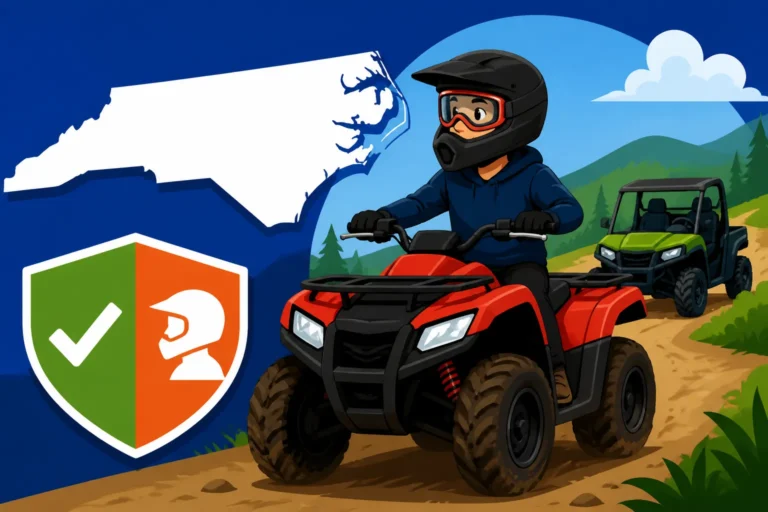
Let's cut right to it: in North Carolina, any ATV or UTV rider under the age of 18 is legally required to wear eye protection. This isn't just a suggestion; it's a hard-and-fast rule designed to protect our most vulnerable riders. This mandate applies whenever they're operating an ATV or UTV, whether on public lands like the Badin Lake OHV Trail Complex or even on private property. The state is serious about safeguarding minors from the obvious hazards of off-road riding, such as flying debris, dust, branches, and insects.
For those of us who are 18 and older, the legal landscape shifts. North Carolina law generally does not explicitly mandate eye protection for adult ATV and UTV riders when operating off-road. You might breathe a sigh of relief hearing that, but don't toss your goggles aside just yet! While it might not be a legal requirement for adults in most off-road scenarios, it remains an absolutely critical piece of safety gear. Imagine hitting a dusty stretch of trail near Brown Mountain, and suddenly, a rogue branch springs back, or another rider kicks up a shower of rocks. Without proper eye protection, you're not just risking discomfort; you're risking a serious injury that could permanently affect your vision or lead to a dangerous loss of control. The smart money is always on wearing those goggles, regardless of your age.
What Counts as "Approved" Eye Protection
The law for riders under 18 specifies that eye protection must be worn, but it doesn't get overly prescriptive about brands or specific certifications for off-road use, unlike some other states or for certain on-road vehicles. Generally, this means goggles or a face shield that covers the eyes adequately. The key is that the protection must be designed for impact resistance and clear visibility, offering a barrier against foreign objects. A good pair of off-road goggles, or a helmet with an integrated face shield, typically fits the bill.
Think about the conditions you're riding in. Are you kicking up a lot of red clay dust in the Uwharries? A pair of sealed goggles with good ventilation will be far more effective at keeping your vision clear than a pair of sunglasses. Are you riding through wooded areas where low-hanging branches are common? A full face shield on a helmet provides broader protection. While the law might not name specific certifications for off-road ATV use, many riders opt for goggles or helmets that meet recognized safety standards like ANSI (American National Standards Institute) for impact resistance or DOT (Department of Transportation) for helmets with face shields, simply because these standards signify a higher level of protection. You can read more about what's expected for all riders in [Helmet and Eye Protection Rules in North Carolina]. Remember, clear vision is paramount to safe riding, so investing in quality eye protection is never a bad idea.
Specific Scenarios and Age Restrictions
North Carolina's approach to ATV and UTV safety is deeply rooted in protecting young riders, and this is nowhere more evident than in its stringent eye protection requirements for minors. This isn't just about avoiding a ticket; it's about safeguarding futures.
Riders Under 18: A Non-Negotiable Requirement
For anyone under the age of 18, wearing appropriate eye protection while operating an ATV or UTV in North Carolina is a non-negotiable legal requirement. This rule applies across the board, whether the young rider is tearing it up on a designated OHV trail, cruising on private property, or helping out on a farm. There are no exceptions for experienced young riders or for short trips. A child's developing vision is incredibly precious, and the state recognizes the severe risks posed by the off-road environment. Imagine a scenario where a 15-year-old is enjoying a ride on the trails at Badin Lake. Without goggles, a sudden spray of mud or a low-hanging branch could cause a serious eye injury, potentially leading to permanent damage. This is precisely what the law aims to prevent.
As parents or guardians, it's our direct responsibility to ensure that young riders not only have the proper eye protection but also wear it consistently and correctly. This often means providing youth-sized goggles that fit snugly and comfortably, ensuring they don't impede vision or fall off during active riding. This requirement is part of a broader set of safety regulations for minors, which also includes helmet use and age restrictions for certain engine sizes. You can dive deeper into these rules by looking at [North Carolina Rules for Riders Under 16] and specifically for eye protection in [Eye Protection Under Eighteen in North Carolina]. This vigilance by adults is key to fostering a safe riding environment for the next generation of enthusiasts.
Adults and the "Strong Recommendation"
While the law lets up on adults aged 18 and over, dropping the legal mandate for eye protection in most off-road situations, the recommendation to wear it remains incredibly strong – to the point where it should be considered essential gear. Think about it: a dust storm whipped up by a buddy's quad, a pebble flung from a tire, or even a persistent fly can ruin a ride and, more importantly, put you at risk. These hazards don't discriminate by age. A veteran rider navigating a rocky climb in the Nantahala Forest is just as susceptible to a flying stone as a teenager on their first ride.
Beyond the obvious physical protection, eye protection significantly enhances your riding experience. It shields your eyes from wind, reducing fatigue and allowing for better concentration. It can also offer UV protection on sunny days, preventing eye strain. Many experienced riders in North Carolina swear by their goggles, even when not legally required, simply because they offer such a clear advantage in comfort and safety. From basic clear goggles for all-around use to tinted or amber lenses for specific light conditions, there's a huge variety available. Companies like SuperATV, for instance, offer a wide range of goggles and windshields designed to keep your vision clear and protected, no matter how challenging the conditions get. So, while you might not face a fine for riding bare-eyed as an adult off-road, the personal cost of an injury far outweighs the small investment in a good pair of goggles.
Eye Protection for Modified Utility Vehicles MUVs and Street Riding
The rules of the road – quite literally – change when you move from off-road trails to public streets, especially when we're talking about Modified Utility Vehicles, or MUVs. These machines bridge the gap between recreational off-roaders and street-legal vehicles, and with that transition comes a different set of safety considerations, including how we protect our eyes.
MUVs and the Road-Legal Difference
North Carolina has a very specific pathway for certain UTVs to become street-legal, transforming them into what the state calls a Modified Utility Vehicle (MUV). This isn't just a matter of adding a license plate; it involves meeting a host of equipment requirements, from turn signals and brake lights to a speedometer and a parking brake. When a UTV successfully jumps through all these hoops and becomes a registered MUV, its operational environment changes dramatically, moving from trails to shared public roadways. Consequently, the safety gear requirements, including eye protection, also shift to align with standard vehicle codes.
For MUV operators, the rules often mirror those for motorcycles or other open-air vehicles, especially if the MUV doesn't have a full windshield. The state's general stance on vehicles operating on public roads is that if you're exposed to the elements and traffic, you need protection. This means that if you're cruising your MUV down a county road without a windshield, you'll typically be expected to have appropriate eye protection, often in conjunction with a DOT-approved helmet. This is a crucial distinction from off-road ATV rules, where adults are often not legally required to wear eye protection. You can explore the full scope of what makes a machine street-legal in [North Carolina's Modified Utility Vehicle Route]. Being aware of these differences is essential for staying legal and safe on North Carolina's public roads, as MUVs are treated with the seriousness of other registered vehicles.
Windshields vs. Goggles: Which One Applies?
Here's where things can get a little nuanced for MUVs. Many UTVs, by their very design, can be fitted with a full windshield. If your MUV has a properly installed, factory-grade or aftermarket windshield that meets safety standards, it typically serves as your primary eye protection while driving on public roads. In this scenario, goggles or a helmet face shield would generally not be legally mandated solely for eye protection. The windshield acts as a barrier, deflecting wind, insects, and road debris away from the driver's and passengers' faces.
However, even with a windshield, many experienced MUV drivers will tell you that secondary eye protection, like sunglasses or even goggles for specific conditions, can still be beneficial. For example, a full windshield won't stop dust from swirling in from the sides, or block intense sun glare effectively without tinting. For those times when you're transitioning from pavement to a gravel driveway, or just want extra protection from side-blown debris, having a pair of goggles or impact-resistant glasses on hand is a smart move. Companies like SuperATV offer a variety of robust windshields for UTVs, which can be a key component in meeting MUV requirements and enhancing your road-going comfort. Always check the specific language of North Carolina's vehicle codes regarding MUV equipment, and remember that even if not legally required, extra protection is always a good idea, particularly if you find yourself on open roads where speeds are higher and hazards are different from the trail. It's all about comprehensive safety, whether you're navigating urban streets or country lanes.
Practical Tips and Choosing the Right Gear
Navigating the legalities is one thing, but making smart choices about your gear for real-world riding is another. Whether you're legally mandated to wear eye protection or just choosing to be safe, having the right kind of goggles or shield can make all the difference in your comfort, vision, and ultimately, your safety on the trails.
Choosing the Right Goggles or Shield
Selecting the perfect eye protection isn't just about grabbing the first pair of goggles you see. There's a lot to consider to ensure you get the best fit and performance for your riding style and the conditions you'll encounter in North Carolina. First and foremost, fit is crucial. Goggles should seal comfortably against your face without being too tight or leaving gaps where dust and debris can sneak in. They should also integrate well with your helmet, fitting securely within the helmet's eye port without creating pressure points or obstructing your peripheral vision.
Ventilation and anti-fog properties are also incredibly important, especially when riding in humid North Carolina summers or during strenuous activity. Goggles that fog up are not only annoying but dangerous, as they can obscure your vision. Look for models with good airflow and anti-fog coatings on the lenses. When it comes to lenses, consider different options: clear lenses are best for low light or night riding; tinted or mirrored lenses are great for bright, sunny days, cutting down on glare. Amber or yellow lenses can enhance contrast in overcast or low-light forest conditions, which can be a huge benefit when riding through shaded areas in the Pisgah National Forest. Finally, always prioritize impact resistance. Your eye protection needs to be able to withstand hits from rocks, branches, and other trail hazards. Products from reputable brands, perhaps like those found at SuperATV, often emphasize these features, giving you confidence in their ability to protect your eyes.
Maintaining Your Eye Protection
Even the best eye protection won't do its job if it's not properly cared for. A scratched lens or a pair of mud-caked goggles is just as dangerous as not wearing any protection at all. Proper cleaning is paramount. After every dusty or muddy ride, resist the urge to wipe your lenses with a dirty glove or shirt. This is a sure-fire way to scratch them. Instead, rinse your goggles thoroughly with clean water to remove grit, then use a microfiber cloth and a gentle cleaner designed for optics. For those stubborn mud splatters after a particularly wet ride in the Uwharries, you might need to soak the goggles briefly before gently cleaning.
Storing your eye protection correctly is equally important. Don't just toss your goggles into your gear bag where they can get crushed or scratched by other items. Many goggles come with a soft bag or a hard case, which provides excellent protection when not in use. Replacing old or damaged gear is also key. Lenses get scratched over time, elastic straps stretch out, and foam seals deteriorate. If your goggles are no longer sealing properly, if the lens is significantly scratched, or if the anti-fog coating has worn off, it's time for a replacement. Think of your eye protection as a critical safety component, just like your helmet or tires. Regular maintenance and timely replacement ensure it's always ready to protect you, ride after ride, year after year.
Here’s a quick overview of eye protection guidelines:
| Rider Age/Machine Type | Legal Requirement for Eye Protection | Recommended Eye Protection Type | Key Considerations |
|---|---|---|---|
| Under 18 (ATV/UTV Off-Road) | Mandatory (goggles/face shield) | Youth-specific goggles, helmet with shield | Proper fit with helmet, impact resistance |
| 18+ (ATV/UTV Off-Road) | Not legally required | Goggles or helmet with face shield | Dust, debris, UV protection, anti-fog |
| MUV on Public Road (No Windshield) | Mandatory (goggles/face shield) | DOT-approved helmet with face shield, goggles | Road hazards, speed, clear visibility |
| MUV on Public Road (With Windshield) | Not legally required (windshield acts as primary protection) | Sunglasses, side shields, or full goggles for added protection | Side-blown debris, glare, wind buffeting |
Disclaimer
This article is for general informational purposes only and does not constitute professional advice. Laws, prices and regulations vary by location and change over time. Consult a qualified professional for guidance on your specific situation.