Where a Beginner Should Start at Badin Lake
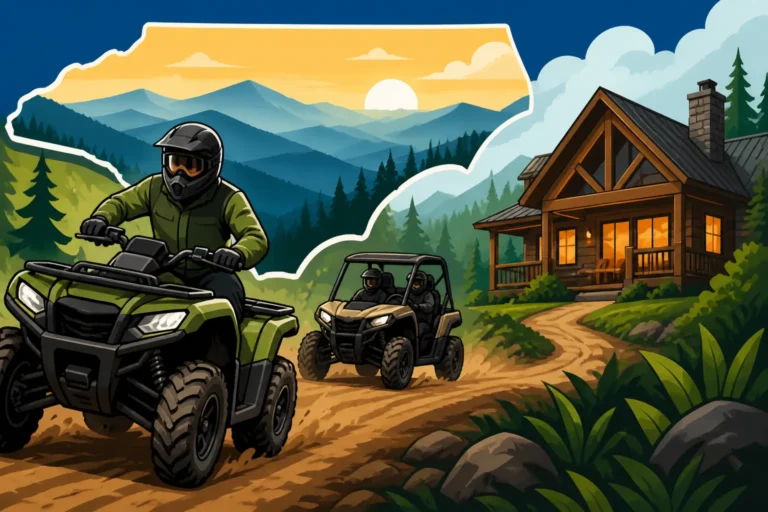
A first ride at Badin Lake can feel intimidating when the trail map shows several routes, difficulty ratings, and junctions you have never seen before. The easiest way to enjoy the Uwharrie National Forest is to start with a short, clearly rated route, ride within your machine’s limits, and leave time to turn around. This guide explains how to plan that first outing.
How to choose a beginner route at Badin Lake
Start with the official map and trail ratings
Badin Lake is part of the Uwharrie National Forest’s off-highway vehicle riding area near Troy. It is not one simple loop: trails branch and connect, and a route that looks short on a map can feel demanding when it includes rocks, steep grades, ruts, or tight turns. Before unloading, get the current forest map and identify the trail ratings and marked trail numbers. The overview in Badin Lake’s Eight Named Trails can help you get familiar with the system, but use the map and signs at the riding area to make your final choice.
For a first ride, look for the easiest rating shown on the map and choose a short out-and-back or a compact loop if one is available. Do not assume that a trail is beginner-friendly just because it looks smooth near the entrance. Conditions can change after rain, and rocks or washouts may appear farther along. If the map marks a route as difficult or extremely difficult, save it for another day, even if another rider makes it look easy.
It also helps to choose a turnaround point before you set off. Agree on a landmark, trail junction, or time to reassess with everyone in your group. A beginner’s ride does not need to cover the most ground. A modest route that leaves you feeling steady and in control is a better first experience than a long ride that turns into a stressful search for the way back.
Pick a manageable first goal
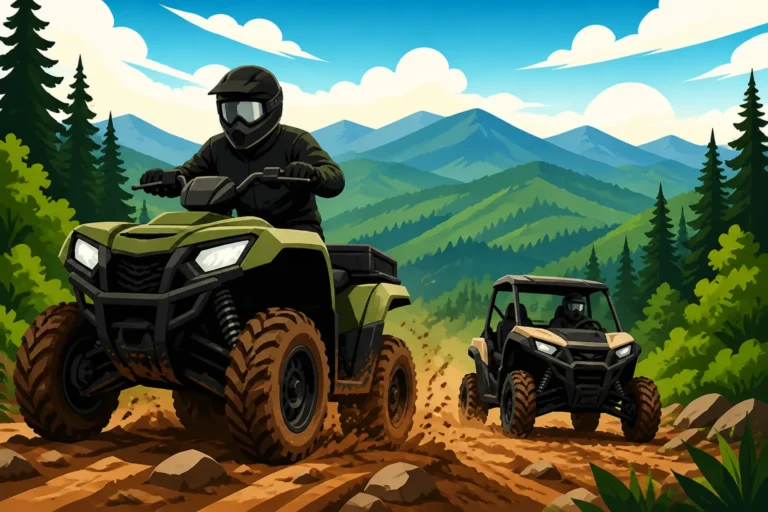
Your goal for ride one is to learn how your ATV or UTV behaves on that terrain, not to prove how much trail you can cover. If you are new to off-road riding, aim for a short outing with plenty of time to pause, check the map, and get comfortable with the machine. Even confident drivers can find that forest trails feel different from gravel roads or open fields.
A useful way to compare possible first rides is to look at the terrain, route length, and how easily you can retrace your path:
| Route feature | More beginner-friendly choice | Why it helps |
|---|---|---|
| Difficulty rating | Easiest rating on the official map | Reduces the chance of encountering obstacles beyond your comfort level |
| Route shape | Short out-and-back or simple loop | Makes it easier to track your location and return |
| Terrain | Smooth, gradual sections | Gives you room to practice steering, braking, and throttle control |
| Junctions | Few turns, clearly marked signs | Lowers the chance of taking the wrong trail |
| Weather exposure | A route that avoids challenging wet or muddy sections | Rain can make slopes, roots, and rocks harder to manage |
| Group pace | A route that suits the least experienced rider | Keeps the group together and reduces pressure |
The best route is the one your whole group can ride safely, not the one that sounds most exciting. If someone in your party is nervous, has never operated the machine they are using, or is riding with a passenger, lower the ambition for the day. A comfortable start makes it easier to build skill gradually.
If you use a digital trail-planning tool such as onX Offroad, treat it as a useful supplement for orientation rather than a substitute for the official forest map, signs, or closure notices. Download or save what you need before leaving an area with reliable service. Cell coverage can be inconsistent in forested terrain, so do not count on a phone app to guide you through every junction.
Prepare before you unload
Check access, closures, and permit requirements
A trail that appears on a map is not automatically open on the day you arrive. Seasonal schedules, maintenance, weather damage, and temporary closures can change what is available. Before driving to Badin Lake, check the relevant forest notices and trail information, then confirm what the posted board says when you arrive. The practical checklist in North Carolina Trail Conditions Before You Ride is a helpful reminder to check more than just the route itself.
Make sure you understand the riding area’s permit rules before unloading. Forest OHV access may require a permit, and requirements can depend on the riding area and the type of use. Read the official instructions for Badin Lake rather than relying on a pass or registration from another state to cover your ride. Badin Lake’s Season Permit is a useful starting point for understanding that permit topic; confirm the current instructions and display requirements with the forest before heading out.
Plan for the possibility that your preferred trail is closed. Have a simple backup plan: a different open route that matches your group’s experience, or a decision to postpone the ride. That is much less frustrating than arriving, discovering a closure, and trying to improvise a challenging route because you have already made the trip.
If you are using onX Offroad to review possible routes, compare what the app shows with official maps and on-site notices. A line on a screen can help with general orientation, but it does not override a closed gate, posted restriction, or marked trail boundary. Keep the app accessible, but carry a map or saved offline copy as a backup.
Set up the machine and the group
Before the first trail, take a few minutes to confirm that the ATV or UTV is in good condition. Check tires, brakes, steering, throttle response, fuel, and lights. For a UTV, make sure seat belts work and everyone knows how to use them. For an ATV, confirm that the rider can reach and operate the controls comfortably. A basic check in the parking area is easier than discovering a problem halfway along a narrow trail.
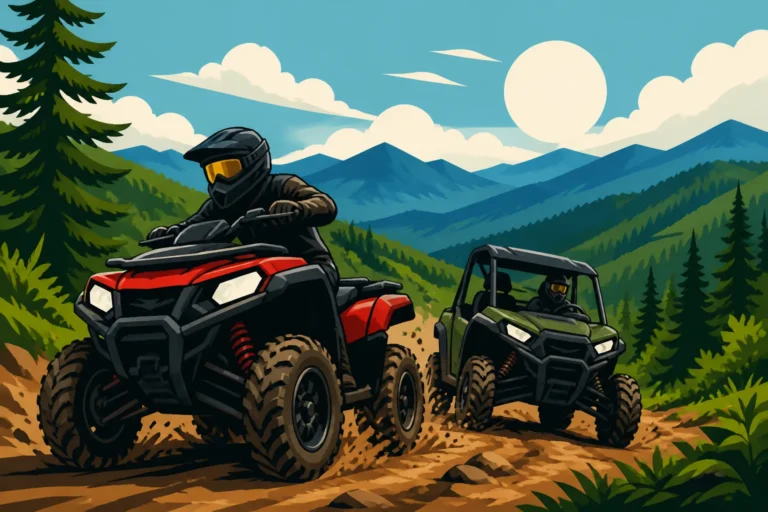
Talk through a few group rules before starting. Decide who will lead and who will ride last, agree to keep a safe gap, and identify a place to stop if someone needs help. The lead rider should not disappear around a bend while newer riders are still negotiating the previous obstacle. If the group becomes separated, stop at a safe location and regroup rather than pressing ahead.
Bring essentials that fit the length and conditions of your ride: water, a charged phone, a basic first-aid kit, and any tools or supplies appropriate for your machine. Pack for changing weather, and do not assume a short ride means you can leave everything behind. A small delay from a flat tire or a wrong turn can stretch a quick outing into a much longer day.
Ride at a beginner’s pace
Use steady control on rocks, slopes, and turns
On unfamiliar terrain, smooth inputs matter. Accelerate gradually, avoid abrupt braking, and look ahead toward the line you want to follow rather than staring directly at the front tires. Give yourself room to react. If the trail narrows or becomes rough, slow down before the obstacle rather than waiting until you are on top of it.
Approach rocks and uneven ground at a pace that lets you stay balanced and in control. Do not follow another rider’s line automatically if you cannot see the ground clearly or do not understand how they approached it. If you are uncertain whether a section is within your ability, stop somewhere safe and reassess. Turning around is a sensible choice, not a failure.
Be especially cautious on slopes. Avoid sudden turns or sharp throttle changes, and do not crowd the machine ahead of you. If you are riding a UTV with a passenger, make sure they remain seated and belted as required by the vehicle’s setup. A passenger should not lean out or try to shift the vehicle by moving around in the cabin.
Keep the group together and the route simple
At junctions, pause long enough for the group to catch up and confirm the direction. Use the map, trail markers, and on-site signs together. If there is disagreement about the route, stop and sort it out before moving on. A quick check at a junction is far easier than realizing later that the group split across different trails.
It is tempting to keep riding when everyone else seems comfortable, but beginners should feel able to speak up. Tell the group if you need a break, want to take a slower line, or are uncomfortable with an obstacle. Agree in advance that nobody will pressure a rider into attempting a section they are not ready for. If you need a broader refresher on choosing routes and preparing for a forest ride, North Carolina Trails for Beginners offers a useful companion topic.
Leave extra time to return to the staging area. Avoid planning the day so tightly that you feel rushed near the end, particularly if the group has to retrace its route or navigate a junction again. Knowing you have time in reserve makes it easier to ride carefully and stop when necessary.
Make the first outing safer and more enjoyable
Pack for conditions and respect trail etiquette
Wear appropriate protective gear, including a properly fitted helmet and eye protection. Dress for the weather and the trail: dust, mud, branches, and changing temperatures can make a ride uncomfortable quickly. Keep essential items secure so they will not fall onto the trail, and carry out anything you bring in.
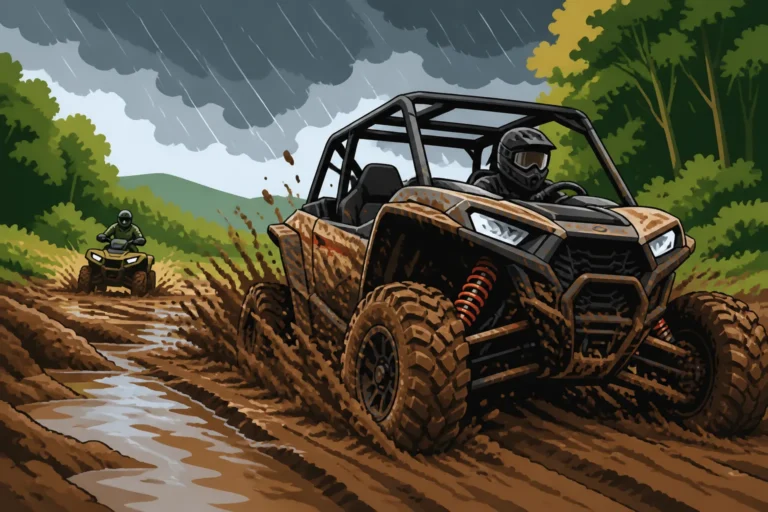
Stay on marked, open routes. Riding around a barrier or cutting across vegetation can damage the area and put you in conflict with posted rules. If the trail is wet or muddy, consider whether your machine and experience are suited to the conditions. Spinning tires can make an already difficult section worse, and a route that felt manageable when dry may become slippery after rain. North Carolina Riding After Heavy Rain covers why postponing can be the smarter choice when conditions have changed.
Share the trail with care. Slow down when approaching other users, give people room, and follow posted guidance about right-of-way and trail use. Keep noise and speed under control, especially near trailheads and busy junctions. A considerate pace makes the ride safer for your group and for others using the area.
Review the ride before planning a harder one
After you return, take a few minutes to talk through what went well and what felt challenging. Did the route take longer than expected? Was the machine comfortable on the terrain? Did anyone feel rushed, confused at junctions, or uneasy on a particular obstacle? Those answers give you a much more useful basis for choosing the next ride than simply looking at mileage.
If the group felt confident on the easiest route, you can gradually try a longer or somewhat more demanding option on a later visit. Change one thing at a time: route length, terrain difficulty, or group size. That makes it easier to tell what your riders and machine are ready for, rather than making several parts of the day harder at once.
You can also use onX Offroad to review where the group traveled, if you recorded the ride, and compare that track with your paper or downloaded map. Keep that record as a planning aid, not proof that a trail remains open or unchanged. Before every visit, check the latest official notices and signs again. For a broader look at the area’s routes and access points, see North Carolina’s Badin Lake Trailheads and Best Places to Ride an ATV in North Carolina.
A beginner’s first Badin Lake ride should feel controlled, not rushed. Start with an officially open, easy-rated route; bring the right gear; agree on a simple plan; and turn back whenever the terrain or conditions stop feeling manageable. With that foundation, future rides can get longer and more adventurous at a pace that makes sense for you.
Disclaimer
This article is for general informational purposes only and does not constitute professional advice. Laws, prices and regulations vary by location and change over time. Consult a qualified professional for guidance on your specific situation.