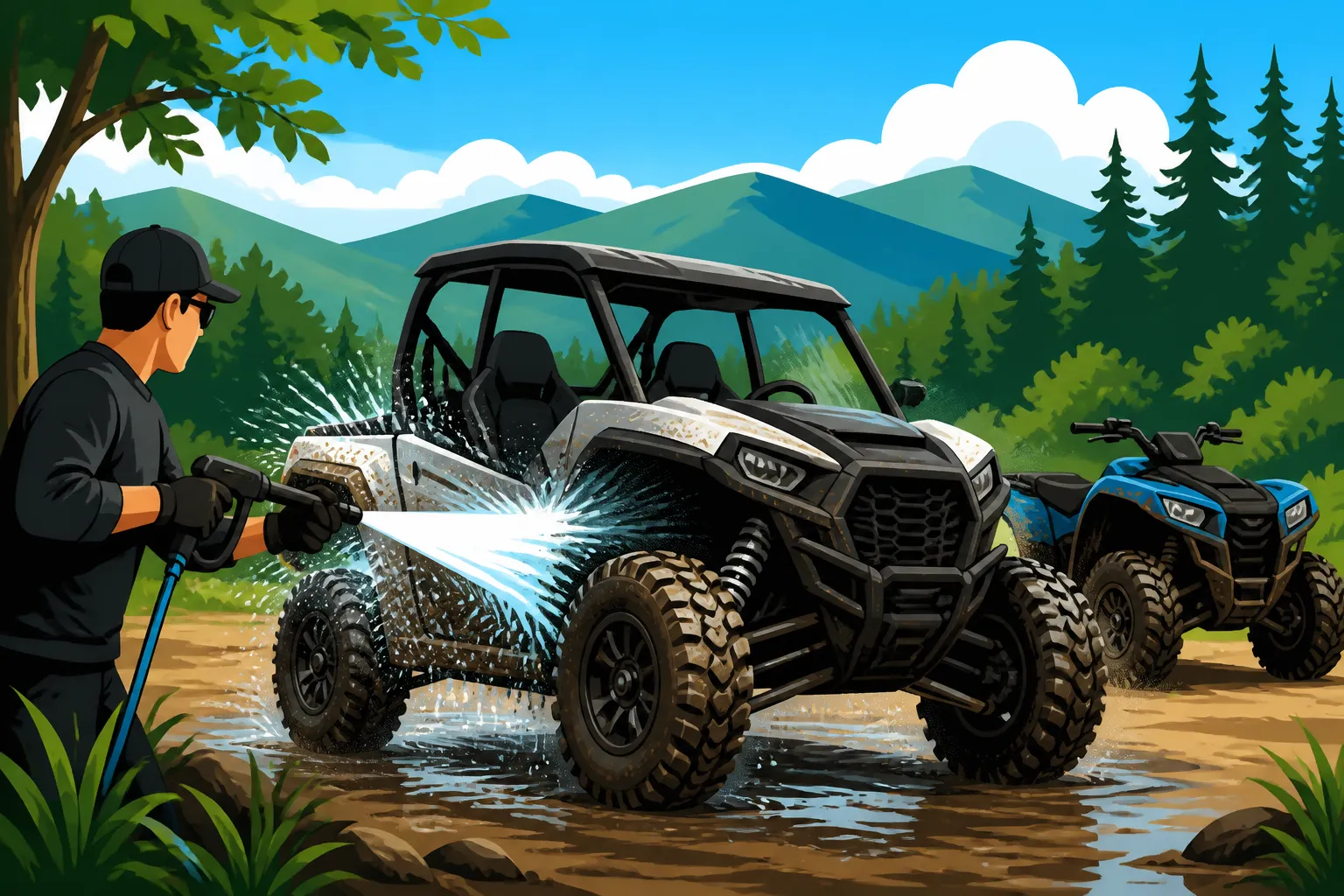
Washing Off at a North Carolina Trailhead
Mud packed into wheel wells, grit grinding against your trailer, and no obvious place to rinse off after a North Carolina ride: it’s a familiar end-of-day headache. This guide explains how to clean your ATV or UTV responsibly at and around trailheads, protect waterways and shared parking areas, and plan ahead when no wash station is available.
Check whether washing is allowed before you unload
Don’t assume a trailhead has a wash station
Many riders reach a forest trailhead expecting a hose or designated wash bay, only to find a parking lot, a restroom, or no facilities at all. Treat washing as something to plan for, not a service every riding area provides. Before your trip, check the land manager’s current information and any posted notices at the entrance or staging area.
That matters at places such as the Uwharrie National Forest, Brown Mountain, and Wayehutta. Facilities, access, and local rules can differ by site, and conditions may change after storms or maintenance work. A spot that looks like a convenient place to rinse may be a drainage ditch, roadside, creek edge, or area where runoff flows toward a stream. Unless washing is clearly permitted in a designated location, don’t wash the machine there.
If you’re deciding where to ride, start with Where to Ride an ATV in North Carolina and check North Carolina Trail Conditions Before You Ride before loading up. Planning this detail ahead can spare you the awkward moment of standing beside a muddy machine with a hose and nowhere appropriate to use it.
Keep mud and wash water out of waterways
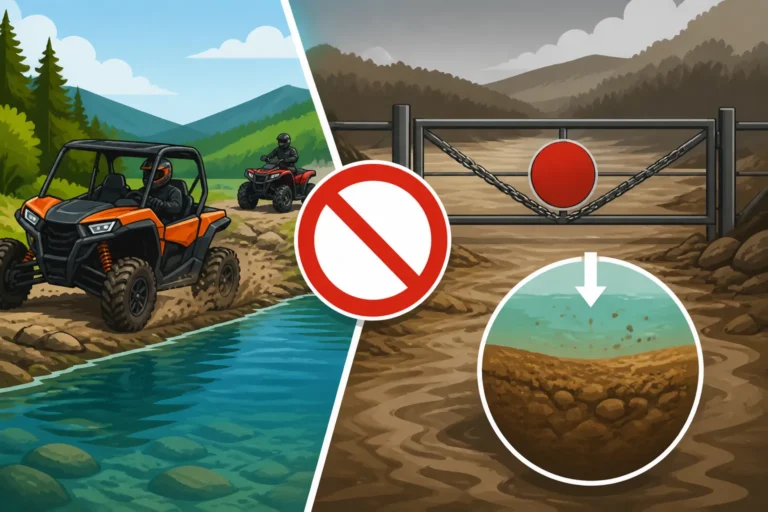
Mud itself can carry sediment, plant material, and other debris. When a rinse sends that material into a creek, roadside drain, or wet area, the runoff can travel beyond the spot where you’re standing. Avoid washing in or near waterways, and don’t drive into a stream to knock mud from tires or undercarriages.
Soap and household cleaners add another problem. Even products marketed as gentle can be unsuitable for direct release into soil or water. If a site has a purpose-built wash area, follow its posted instructions about products, drains, and disposal. If it doesn’t, save the full wash for a suitable private location with an appropriate way to manage runoff.
A designated facility is different from an open patch of gravel that happens to have a hose nearby. Look for clear signs that the wash area is intended for vehicles and that you’re allowed to use it. When the rules are unclear, the safest choice is to keep the machine loaded and clean it elsewhere.
Respect shared parking and staging areas
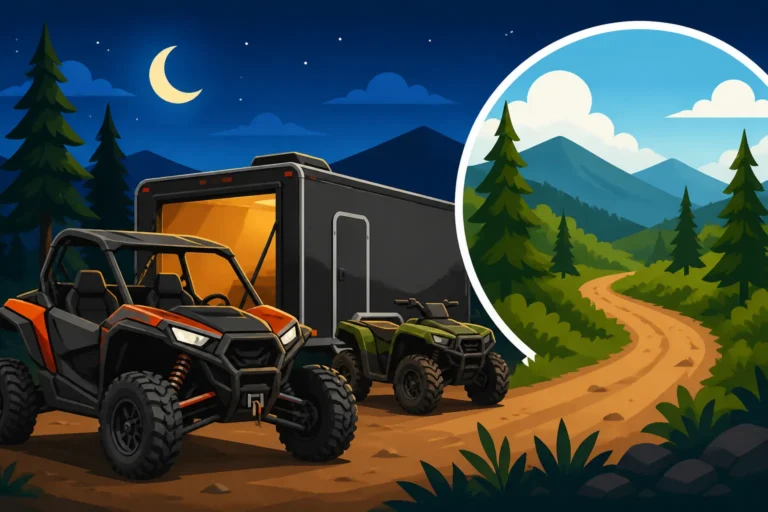
Trailhead parking is a working space, not a personal wash bay. Other riders may be waiting to unload, reconnect trailers, or leave before daylight fades. A long rinse can block access, spread mud across the lot, and leave the next person with a slick, dirty parking spot.
Keep your cleanup compact. Knock loose clumps from boots and gear without scattering them across another vehicle, use a tarp or mat where practical, and collect trash and packaging. If mud has collected on the ground, don’t push it toward a drain, ditch, or trail entrance with a hose. A considerate cleanup helps keep the staging area usable for everyone.
Prepare your machine before the ride ends
Carry a small cleanup kit
A few supplies can make the trip home much easier even when a proper wash has to wait. Pack them where you can reach them without unloading half the trailer: a stiff brush, gloves, a small scraper, absorbent towels, a trash bag, and a tarp or ground cloth. A soft brush is useful for delicate surfaces, while a scraper can loosen packed clay from places that don’t need a pressure wash.
Bring a separate bag for muddy gear. Gloves, boots, and riding clothes can leave grit and clay in the truck or trailer long after the machine is unloaded. A lidded storage bin or washable tote keeps that mess contained. If you’re riding with children or a group, give everyone a place to put dirty items before they climb into the vehicle.
A compact kit is for removing loose debris and protecting your transport setup, not for making a full wash happen wherever you park. Don’t pour rinse water onto the ground simply because you brought a container or spray bottle. If the site doesn’t allow washing, use dry methods to manage the immediate mess and wait until you reach an appropriate wash location.
Remove mud carefully before loading
Start with the areas that can cause trouble during transport: tires, fenders, footwells, skid plates, and exposed suspension components. Use a brush or scraper to remove loose clods without forcing mud into seals, electrical connections, bearings, or radiator fins. Check the underside from a safe position; don’t crawl under an unstable machine or reach near hot parts.
Take care around cooling components. A UTV radiator packed with grass and mud may need attention, but aggressive scraping or a concentrated spray can bend fins or push debris deeper. When you get home, follow the owner’s manual for cleaning sensitive areas and keep electrical connectors and air intakes in mind. If the machine has an unusual smell, warning light, or overheating symptom, don’t treat a quick rinse as a substitute for inspection.
Also check for sticks, vines, and plant material caught beneath the chassis. Removing debris can prevent it from dropping onto the trailer or being carried to another riding area. If you find seeds or tangled vegetation, dispose of them appropriately rather than tossing them onto the trail or into roadside brush.
Protect the trailer and tow vehicle
A muddy machine can turn a clean trailer into a slippery mess by the time you reach home. Before loading, lay down a removable mat if you have one, and avoid stepping onto muddy ramps in footwear that has lost its grip. If the trailer has a textured deck, watch for packed clay hiding the texture.
Once the machine is secured, check that mud isn’t obstructing lights, the license plate, tie-down points, or trailer connections. Make sure straps are attached to suitable points and aren’t rubbing against sharp or muddy edges. Don’t spray water around electrical plugs or connections at the trailhead in an attempt to clean them.
At the next safe stop, verify that the load is still secure. Mud can shift as it dries or break loose on the road, so make another quick check after the first part of the drive. This is especially useful after a rough, wet ride when the machine and trailer have both collected heavy clay.
Choose a cleanup option that fits the site
Compare trailhead, private, and home cleanup
There isn’t one best option for every ride. The right choice depends on whether a wash area is officially provided, what the rules allow, how muddy the machine is, and how far you still need to travel.
| Cleanup option | Best for | What to check |
|---|---|---|
| Designated wash station | Removing mud before leaving a riding area | Posted hours, use rules, drainage, and permitted cleaning products |
| Dry cleanup at the trailhead | Removing loose clods and protecting the trailer | Keep debris contained and avoid drains, streams, and other vehicles |
| Private wash bay | A thorough rinse when the property permits it | Permission, runoff handling, and any business or facility rules |
| Home cleanup | Detailed cleaning and inspection | Owner’s manual guidance, safe water disposal, and access to tools |
When a trailhead offers no designated wash space, dry cleanup is usually the practical choice. Brush off loose mud, contain dirty gear, and take the machine home for a proper wash. If you plan to use a commercial wash bay, call ahead or check its rules; not every facility accepts off-road machines, and some may restrict muddy vehicles.
For Uwharrie trips, Where to Wash Before Loading at Uwharrie is a useful planning topic to review alongside Parking a Trailer at a Badin Lake Trailhead. Don’t rely on an unverified hose, tap, or nearby business as a guaranteed service. Confirm access and expectations before your riding day.
Use maps to plan the cleanup leg
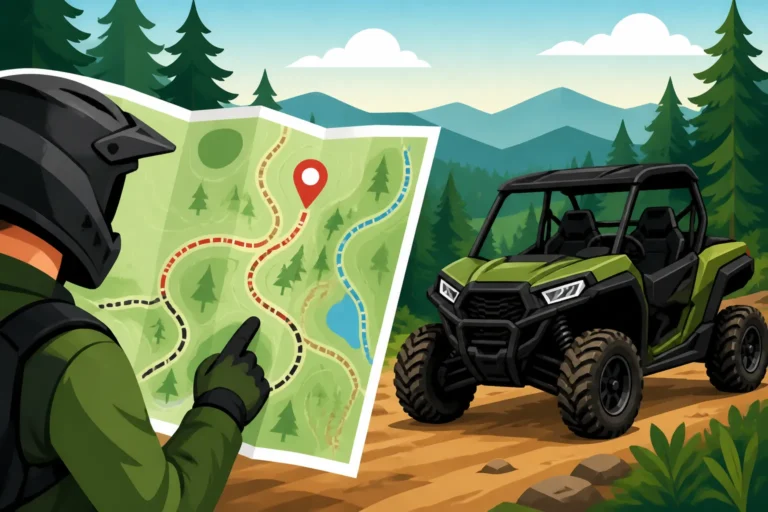
The ride may be the main event, but the trip home is easier when you know where you can stop without improvising. Mark your trailhead, fuel stops, and any confirmed cleanup facility before leaving. onX Offroad can help you organize your route and keep riding-area planning in one place; use it as a planning aid, then verify facility access and rules directly with the land manager or property.
A map may show roads or points of interest without telling you whether a business allows muddy machines, whether a wash area is open, or whether its drainage is suitable for vehicle cleaning. Treat map information as a starting point. A quick call can prevent a detour to a closed facility or an uncomfortable conversation at a private property.
If you’re planning a longer day at Uwharrie or Brown Mountain, note how far the nearest confirmed wash option is from your exit route. That gives you a realistic choice: clean up before loading if an authorized station is available, or contain the mess and continue home. onX Offroad can also help you keep the route and return plan together rather than relying on memory when everyone is tired.
Make post-ride cleanup safer and easier
Follow a simple routine at the trailhead
The end of a ride is when people are most likely to rush. It’s getting late, the group is hungry, and someone wants to start the drive. A short routine helps you avoid missed gear, dirty tie-downs, and unsafe loading.
- Park in a permitted spot without blocking the access lane or another rider’s trailer.
- Check signs and posted rules before using water or cleaning equipment.
- Remove loose mud with a brush or scraper if washing is not authorized.
- Put muddy boots, gloves, and clothing into a separate container.
- Check the tires, lights, tie-down points, and trailer connections before leaving.
- Take your trash and supplies with you, and leave the staging area clear.
If the machine is too muddy to load safely, don’t solve the problem by washing it in a prohibited spot. Look for a suitable permitted facility, or remove enough mud by hand to load and tow safely. A few minutes of contained cleanup is better than leaving a mess that someone else has to deal with.
Finish the job at home
Once you’re home, choose a location where you can clean the machine without directing muddy water into a storm drain, ditch, or waterway. Follow local requirements and the machine manufacturer’s cleaning guidance. Avoid spraying directly into bearings, seals, air intakes, electrical connections, or other sensitive components.
After the rinse, inspect the machine while the mud is gone. Look for damaged hoses, loose fasteners, cuts in tires, leaking fluids, packed debris, or damage to skid plates. Clean and dry gear before storing it, and let the machine dry in a secure, well-ventilated place. A quick inspection can catch a small issue before the next ride turns it into a trail-side repair.
The next trip gets easier when cleanup is part of the plan from the beginning. Check North Carolina Trail Closures to Check and review North Carolina Trail Etiquette on Narrow Trails before you go, especially when weather has left the route muddy. If you’re riding public forest land, check North Carolina Forest OHV Permits as well as the site-specific information for the area you plan to visit. Rules for riding and facility use are not interchangeable, so confirm both.
onX Offroad can help you keep your riding route and return plan organized, but the land manager or facility operator is the one to confirm whether washing is permitted. Make that check before you leave home. Then you can finish the ride without turning a muddy machine into a trailhead problem.
Disclaimer
This article is for general informational purposes only and does not constitute professional advice. Laws, prices and regulations vary by location and change over time. Consult a qualified professional for guidance on your specific situation.