North Carolina ATV Insurance Requirement
The world of ATV and UTV ownership in North Carolina can sometimes feel like navigating a complex trail, especially when it comes to understanding insurance. Many riders are left wondering if they truly need insurance for their quad or side-by-side, and the answers aren't always as clear-cut as they are for a standard car or truck. This guide is here to shed light on North Carolina's ATV insurance requirements, breaking down when it's legally mandated and, just as importantly, why carrying it, even when not required, is almost always a smart decision for any responsible rider.
The Core Question: Is ATV Insurance Required in North Carolina?
This is the million-dollar question that causes a lot of head-scratching, and understandably so. Unlike the strict liability insurance mandates for vehicles registered for public road use, the rules for ATVs and UTVs in North Carolina are a bit more nuanced. They largely depend on where you plan to ride and, in one specific scenario, how your machine is classified.
Off-Road Riding on Private Land
If your riding adventures are strictly confined to private property – whether it's your own sprawling acreage in the foothills or a friend's farm down east with their explicit permission – the state of North Carolina generally doesn't require you to carry a specific ATV insurance policy. In these private settings, the assumption is that the landowner and the rider are responsible for understanding and accepting the risks involved. This often comes as a surprise to new riders who might think all motorized vehicles need insurance, but for purely private, off-road use, that's simply not the case here. However, this lack of a legal mandate doesn't mean you're immune to financial risks if an accident occurs, even on your own turf.
Riding on Public OHV Trails
Venturing out to North Carolina's fantastic public OHV trail systems, like the [Brown Mountain OHV Trail System] or the [Badin Lake OHV Trail Complex], introduces a different set of regulations. You'll definitely need to be aware of things like [North Carolina Helmet Law for ATV Riders] and often require a [North Carolina Forest OHV Permits] to gain access. However, generally speaking, the state or federal agencies that manage these public lands do not mandate that you carry a specific ATV insurance policy to ride. They focus more on safety equipment and environmental rules. That said, it's crucial to differentiate between public lands and privately owned off-road parks. Some private parks or organized riding events might have their own insurance requirements as a condition of entry, so always double-check their specific rules before you haul your machine there.
The Distinction of the Modified Utility Vehicle MUV
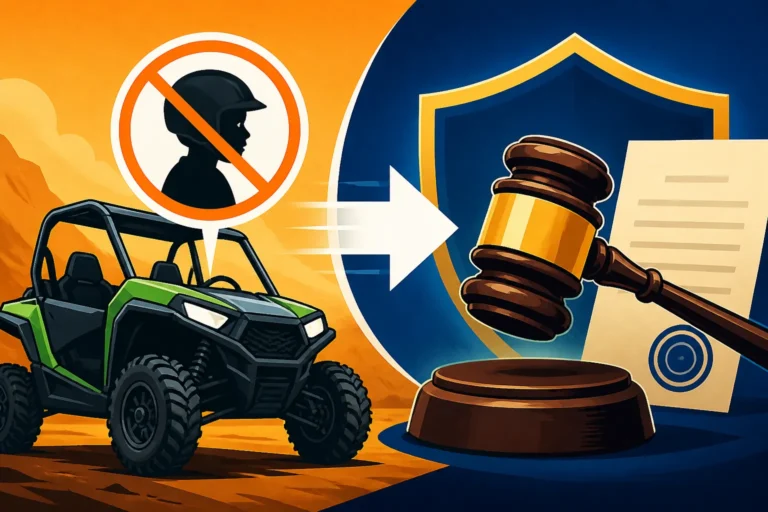
Here's the critical exception that many UTV owners overlook: the Modified Utility Vehicle, or MUV. North Carolina has a very precise definition for what constitutes an MUV, and if your side-by-side meets these specific criteria and you intend to register it for limited public road use – making it "street legal" in certain contexts – then yes, insurance becomes a legal requirement. This isn't just about riding off-road anymore; you're now operating a vehicle that interacts with public roadways, and with that comes the same kind of financial responsibility expected of any other street-legal vehicle. We're talking about very particular specifications, such as [Why an MUV Needs More Than 2,400cc] and [The 58-Inch Width Requirement]. If your UTV is destined for MUV status, then be prepared for insurance to become a non-negotiable part of your ownership journey.
When Insurance Becomes a Must: The MUV Exception
Let's dive deeper into the MUV, as this is the primary scenario where North Carolina absolutely requires insurance for your UTV. If you're hoping to drive your side-by-side on certain public roads, understanding this classification and its implications is paramount.
Understanding MUV Registration and Its Implications
For your UTV to be legally operated as an MUV on designated public roads in North Carolina, it must undergo a specialized registration and titling process with the DMV. This is a far cry from the largely optional [Titling an ATV in North Carolina Is Optional] that applies to most ATVs. This MUV process mandates that your vehicle meets stringent safety and equipment standards, including proper headlamps, taillamps, turn signals, mirrors, a speedometer, and a parking brake. You'll find a complete list of these specific requirements in guides like [North Carolina MUV Registration Requirements]. Beyond these physical modifications, you'll also need a [A VIN Assigned by the North Carolina DMV] and, most importantly, you must demonstrate proof of financial responsibility. This proof, my friends, is exactly where insurance enters the picture. Without it, the DMV will not allow you to register your MUV for road use. It's the state's way of ensuring that if your MUV is involved in an accident on a public thoroughfare, there are funds available to cover any damages or injuries to other people or their property.
What Kind of Coverage Do MUVs Need?
When you successfully register your UTV as an MUV in North Carolina, you are legally required to carry, at minimum, the state's standard liability insurance requirements for motor vehicles. This is the same type of coverage your car or truck needs. Liability insurance is specifically designed to protect other people – both for bodily injury and property damage – if you are found at fault in an accident. For example, if you're driving your MUV on a permissible road and accidentally graze another vehicle, your liability insurance would help cover the costs to repair their car.
It's crucial to understand that while this coverage protects others, it does not cover damage to your own MUV or your own medical expenses. For that, you would need additional types of coverage like collision or comprehensive. While upgrading your UTV with robust parts from a brand like SuperATV can enhance its performance and durability, liability insurance is what truly protects you financially in the event of an unfortunate incident on the road. Many MUV owners wisely choose to carry higher coverage limits than the state minimums to ensure greater financial protection in today's world of escalating repair costs and medical bills.
Checking with Your Insurance Provider
Do not make assumptions when it comes to MUV insurance. Your existing auto policy or homeowner's policy will almost certainly not automatically cover your UTV once it's registered as an MUV for public road use. The landscape of insurance for these specialized vehicles is specific, and you need a policy tailored to it. Your absolute best course of action is to contact your insurance provider, or shop around for one that specializes in these types of vehicles.
Be crystal clear about your intentions: tell them you are registering your UTV as a Modified Utility Vehicle (MUV) for limited street use in North Carolina, and that you need to meet the state's minimum liability requirements. They can walk you through the specifics of what they offer, explain any additional coverage options that might be beneficial (like physical damage coverage for your MUV itself), and ensure you're fully compliant with state law. Getting this right upfront will save you a world of trouble and potential financial heartache down the line.
Beyond Legal Requirements: Why Insurance Is Still a Smart Move
Even if your ATV or UTV is never destined for MUV status and you plan to keep it strictly off-road, dismissing insurance as unnecessary could prove to be a very expensive gamble. Beyond legal mandates, there are compelling reasons why carrying ATV or UTV insurance is a responsible and financially prudent decision for any North Carolina rider.
Protecting Your Investment
Let's face it: ATVs and UTVs are significant investments. Whether you've just purchased a shiny new side-by-side or you've lovingly maintained a well-seasoned quad, these machines represent a substantial financial commitment. They're also prone to the unpredictable nature of off-road riding, not to mention the general risks of ownership. Imagine you're out enjoying a ride in the [Uwharrie National Forest in North Carolina] and misjudge a tricky section, resulting in a bent frame or shattered plastics. Without physical damage coverage, that repair bill is coming directly out of your wallet.
Or consider the unfortunate reality of theft. While having a [Why a Title Matters After Your Quad Is Stolen] proves you own your machine, insurance is what helps you recover its value or replace it entirely. Comprehensive and collision coverage, even when not legally mandated, acts as a crucial safety net, protecting your valuable asset from unforeseen damages or loss. This is especially true if you've kitted out your machine with high-end aftermarket accessories from companies like SuperATV; a good policy will ensure those valuable additions are covered too.
Liability Protection for Peace of Mind
Even on private land or designated trails where insurance isn't required, accidents can and do happen. And when they involve another person or their property, the financial fallout can be devastating. What if, during a group ride, you accidentally swerve and collide with another rider, causing serious injury? Or what if your machine accidentally damages a fence line on someone else's property? Without liability coverage, you could be held personally responsible for thousands – or even tens of thousands – of dollars in medical bills, property repairs, or legal fees.
A dedicated off-road vehicle insurance policy can provide robust liability protection, covering these potential costs if you're found at fault. This peace of mind is invaluable. It's not just about protecting your bank account; it's about protecting your financial future and avoiding strained relationships with friends or fellow riders due to an unfortunate mishap. Nobody wants to face a civil lawsuit stemming from an innocent mistake on the trail.
What About Theft and Damage?
Beyond accidents involving other parties, your ATV or UTV faces a myriad of other risks. Theft is a constant threat, whether your machine is parked at home, secured on a trailer, or left at a trailhead. Fire, vandalism, or even damage from natural events like a falling tree branch can render your machine inoperable and lead to costly repairs. While [North Carolina ATV Title Lookup] can help track down a stolen machine, it doesn't cover its replacement.
Many owners mistakenly believe their homeowner's policy will cover their ATV if it's stolen from their garage, but this is often not the case, or coverage may be extremely limited, especially if the machine is off-premises or in use. A specialized ATV/UTV insurance policy typically includes comprehensive coverage for these non-collision events and collision coverage for accidents you're involved in. This ensures that your investment, including any valuable modifications or accessories you've added (perhaps some tough SuperATV components), is protected against a wide range of perils, giving you financial security no matter what unexpected event comes your way.
Navigating Insurance Options for Your North Carolina ATV
So, you've weighed the options and decided that insurance, whether legally required for your MUV or simply a wise choice for your peace of mind, is the way to go. How do you go about finding the right coverage for your North Carolina ATV or UTV? It's a straightforward process once you know what to look for and what questions to ask.
Dedicated ATV/UTV Policies
For the most comprehensive protection, a dedicated ATV/UTV insurance policy is usually your best bet. Many reputable insurance carriers offer these specialized policies, which are specifically designed to address the unique risks associated with off-road vehicles. These policies typically provide a full suite of coverage options, often including:
- Liability Coverage: Protects you against financial responsibility for damages or injuries you cause to others.
- Collision Coverage: Covers damage to your own ATV or UTV if it collides with another vehicle or object, regardless of fault.
- Comprehensive Coverage: Protects your machine from non-collision events like theft, vandalism, fire, and natural disasters.
- Uninsured/Underinsured Motorist Coverage: This is vital; it protects you if you're involved in an accident with another rider who either has no insurance or insufficient coverage to pay for your damages.
- Medical Payments Coverage: Helps cover medical expenses for you or your passengers if injured in an accident, regardless of who was at fault.
- Accessory Coverage: If you've invested in aftermarket parts, winches, light bars, or custom wheels from brands like SuperATV, make sure your policy includes adequate coverage for these additions. Standard policies might only cover the machine's factory value.
These robust policies offer the broadest protection and are highly recommended, especially for newer, higher-value machines, or if you regularly ride with passengers.
Adding to an Existing Policy
Sometimes, if you already have auto or home insurance with a particular provider, you might be able to add your ATV or UTV to your existing coverage, either as an endorsement or a separate policy. This can occasionally lead to multi-policy discounts, which can save you a few bucks. However, it's absolutely crucial to be meticulous and confirm the exact scope of coverage. An endorsement on a homeowner's policy, for instance, might provide limited liability protection if the machine is on your property, but it might not cover physical damage or theft when you're out riding the trails or transporting your machine. Always get the specifics in writing and ensure the coverage aligns with your intended use, particularly if you're aiming for [North Carolina MUV Street Legal Requirements]. Never assume; always ask for detailed clarification.
What to Look for in a Policy
When you're shopping for ATV or UTV insurance in North Carolina, approaching the conversation with your agent prepared will ensure you get the right coverage. Here’s a helpful table to guide your questions:
| Feature/Coverage | What to Ask | Why It Matters |
|---|---|---|
| Coverage Limits | What are the maximum payouts for liability (bodily injury, property damage)? | Ensures adequate protection against major financial claims if you're at fault. |
| Deductibles | What is the deductible amount for collision and comprehensive claims? | This is your out-of-pocket cost before insurance covers repairs or replacement. |
| Accessory Coverage | Is my aftermarket equipment (e.g., winch, custom tires, SuperATV parts) covered? Up to what value? | Protects your additional investment beyond the stock machine. |
| Riding Area Limits | Are there any restrictions on where I can ride? (e.g., private land, public trails, specific states) | Ensures your policy covers your actual riding habits and locations. |
| Passenger Coverage | Are passengers covered for injuries? If so, what limits apply? | Essential if you frequently ride with friends or family. |
| Uninsured Motorist | Does the policy protect me if an uninsured or underinsured rider causes an accident? | Protects you from the financial irresponsibility of others. |
| Road Use (MUV) | If registering as an MUV, does this policy meet [North Carolina MUV Insurance Requirements] and all state minimums? | Absolutely crucial for legal street operation; confirm all specific MUV criteria are met. |
| Storage Coverage | Is my machine covered when stored off-season, in a garage, or at a remote cabin? | Provides protection against theft, fire, or damage when the machine isn't in use. |
It’s always a good idea to compare quotes from several different insurance providers. Don't simply opt for the cheapest policy; prioritize a policy that offers comprehensive protection tailored to your specific riding style and the value of your machine. A few extra dollars a month could save you thousands in the event of an accident or theft.
Disclaimer
This article is for general informational purposes only and does not constitute professional advice. Laws, prices and regulations vary by location and change over time. Consult a qualified professional for guidance on your specific situation.