North Carolina Rules for Riding After a Storm Closure
A storm can leave an ATV trail looking rideable while a gate, sign or official notice still says it is closed. In North Carolina, a permit does not cancel that restriction. Here’s how to check what is closed, where to confirm a reopening and what to do when the notice is unclear, so you don’t mistake a passable trail for an authorized one.
What a storm closure means for ATV and UTV riders
A storm closure is a direction to stay out of a particular area or route until the manager says otherwise. It may follow heavy rain, flooding, a hurricane, fallen trees, washed-out roads, unstable slopes or damage to bridges and drainage structures. The closure can cover a single trail, a road, a trail system or a larger area.
The ground conditions you can see from the trailhead are not the whole story. A route may look intact at the entrance but have a washout farther in, an unsafe crossing or damage that blocks emergency or repair crews. Some hazards are hidden by leaves, mud or standing water. A route that an ATV can cross may still be unsafe for other users or vulnerable to further damage.
The written notice, closure order, gate and posted signs matter more than a rider’s impression of the trail. Do not treat the following as proof that you can ride:
- The storm has passed or the weather has cleared.
- Other vehicles appear to be using the route.
- A trail looks dry, or there is no visible barrier at the entrance.
- An old map shows the trail as open.
- Your permit is still valid.
- A nearby trail or another part of the same forest has reopened.
A permit and an opening are separate things. A permit may be required for riding in an area, but it does not grant permission to ride a route that is currently closed. For a broader explanation of permit rules, see Do You Need a Permit for North Carolina Forest Trails? and North Carolina Forest OHV Permits.
Storm restrictions can also have different boundaries. A notice may close an individual trail, a particular access road, a trailhead or a broader zone. A closure of one route does not necessarily close every route in the area, but it also does not give riders permission to find a way around the restricted section. Read the notice as written and confirm the boundary if it is unclear.
| What you find | How to interpret it |
|---|---|
| An official notice says the route is closed | Do not ride there, even if the surface looks passable |
| A gate or closure sign blocks access | Do not go around, under or past it |
| A trail is missing from a closure update | Do not assume it is open; check the current area information |
| A permit is valid but the trail is closed | The permit does not override the closure |
| One trail has reopened but another has not | Follow the status of each route, not the system’s general status |
| A notice is unclear or appears outdated | Confirm with the managing office before unloading |
The practical rule is simple: ride only where current official information allows riding. If a route’s status cannot be confirmed, choose an area that is clearly open rather than testing the boundary on the ground.
How to check whether the route has reopened
Start with the land manager responsible for the riding area. North Carolina riders may visit trails in national forests, private off-road parks and other managed places, and each operator may communicate closures differently. A notice from one manager does not establish the status of a different property or trail system.
For national forest riding, look for current information from the relevant forest or ranger district. A broad forest update may not answer whether a particular trailhead or route is open, so check notices that identify the specific riding area. The names on a map, sign or permit materials can help you work out which office to contact.
Use more than one clue when information is available:
- Check the latest official notice. Look for storm-related alerts, closure orders or updates that name the trail, road, trailhead or area. A general weather update is not the same as an official reopening.
- Compare the notice with the map. Make sure you have identified the same route and access point. A trail name, road name or system boundary can be easy to confuse.
- Look for a clear reopening statement. A notice saying that repair work has begun, or that some routes have reopened, does not necessarily reopen every route.
- Contact the land manager if the status is ambiguous. Ask about the exact trail or road you plan to use, not just whether the forest or park is “open.”
- Check again before departure. Conditions and closures can change between planning and travel, especially after another round of rain or a new storm.
The articles North Carolina Trail Closures to Check and Checking a Forest Alert Before You Drive offer related ways to verify conditions before setting out. If you are planning a specific destination, North Carolina Trail Status After a Storm can help frame what to check after severe weather.
Pay attention to the date and scope of an update. A notice from before a later storm may no longer describe current conditions. Likewise, an update about repairs or reopening in one part of a system should not be read as an all-clear for every route. If the official page has not been updated, that lack of a new notice is not proof that a closure has ended. Ask the manager for confirmation.
Do not rely only on social media posts, forum comments, trail apps or word of mouth. Those sources can be helpful leads, but they may describe a different entrance, reflect an earlier visit or circulate an old status. Use them to decide what question to ask, not as the final authority for whether a closed route has reopened.
At the trailhead, check the posted information again. If the official update says open but a closure sign remains in place, do not ride past the sign while assuming it has not been removed yet. Contact the manager and follow the on-site restriction unless an authorized official confirms otherwise. Similarly, if an online map appears open but a current notice closes the route, follow the notice.
What to do when a closure affects your ride
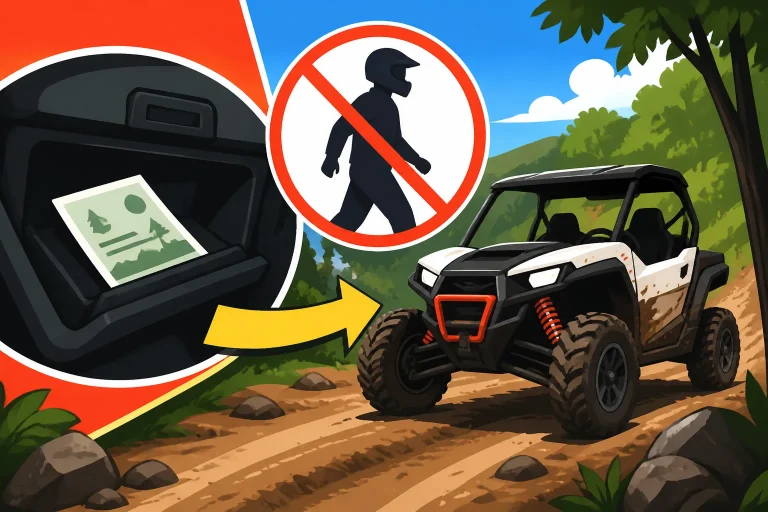
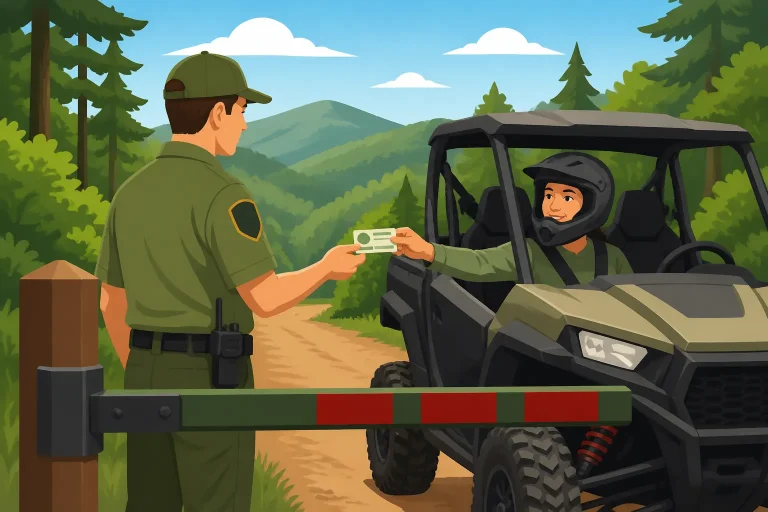
If the route is closed, do not ride around a gate or search for an unposted bypass. A barrier may be protecting a damaged crossing, a repair site or an area that cannot safely support traffic. Going around it can also widen an existing impact or damage land outside the designated route.
Instead, pause and make a new plan. Verify which routes remain open, whether they can be reached by an open access road, and whether your permit covers the intended riding area. If there is no suitable confirmed route, postpone the ride or choose another destination. North Carolina Trail Conditions Before You Ride is useful background for planning around changing conditions.
Be careful about treating an open-looking alternative as an approved detour. Do not turn onto a closed forest road, private driveway, utility corridor or unmarked track just because it seems to connect to an open trail. A route needs to be authorized for the machine and use in question; physical access alone does not establish permission.
If you arrive and discover a closure that was not apparent during planning:
- Stop before the barrier or restricted section.
- Read the sign for its scope and any contact information.
- Turn back using an authorized route.
- Do not move signs, unlock gates or follow tracks around a barrier.
- If safe and practical, report a blocked or damaged route to the land manager.
- Recheck the system’s status before trying another access point.
A closure can affect permits and trip expenses, but do not assume a permit is transferable, refundable or valid for a substitute area. Those terms depend on the permit and operator. Check with the issuer before buying another pass or making a longer drive. A permit sold for one trail system should not be assumed to cover another.
Be realistic about what “reopened” means. Reopening says the manager has authorized access under the posted conditions; it does not promise that every puddle, rut or rough section has been repaired. A trail may remain muddy or uneven, and some hazards may still require care. The guidance in North Carolina Riding After Heavy Rain can help you think through conditions once riding is allowed again.
Even after a route reopens, adjust your plan to what the ground can support. Avoid spinning tires through soft soil, damaging drainage features or pushing into a crossing that looks unsafe. Turn around if conditions exceed your machine, experience or group’s ability. Reopening is not a reason to ignore temporary warnings, trail markings or instructions from staff.
Avoiding confusion between weather, closures and permits
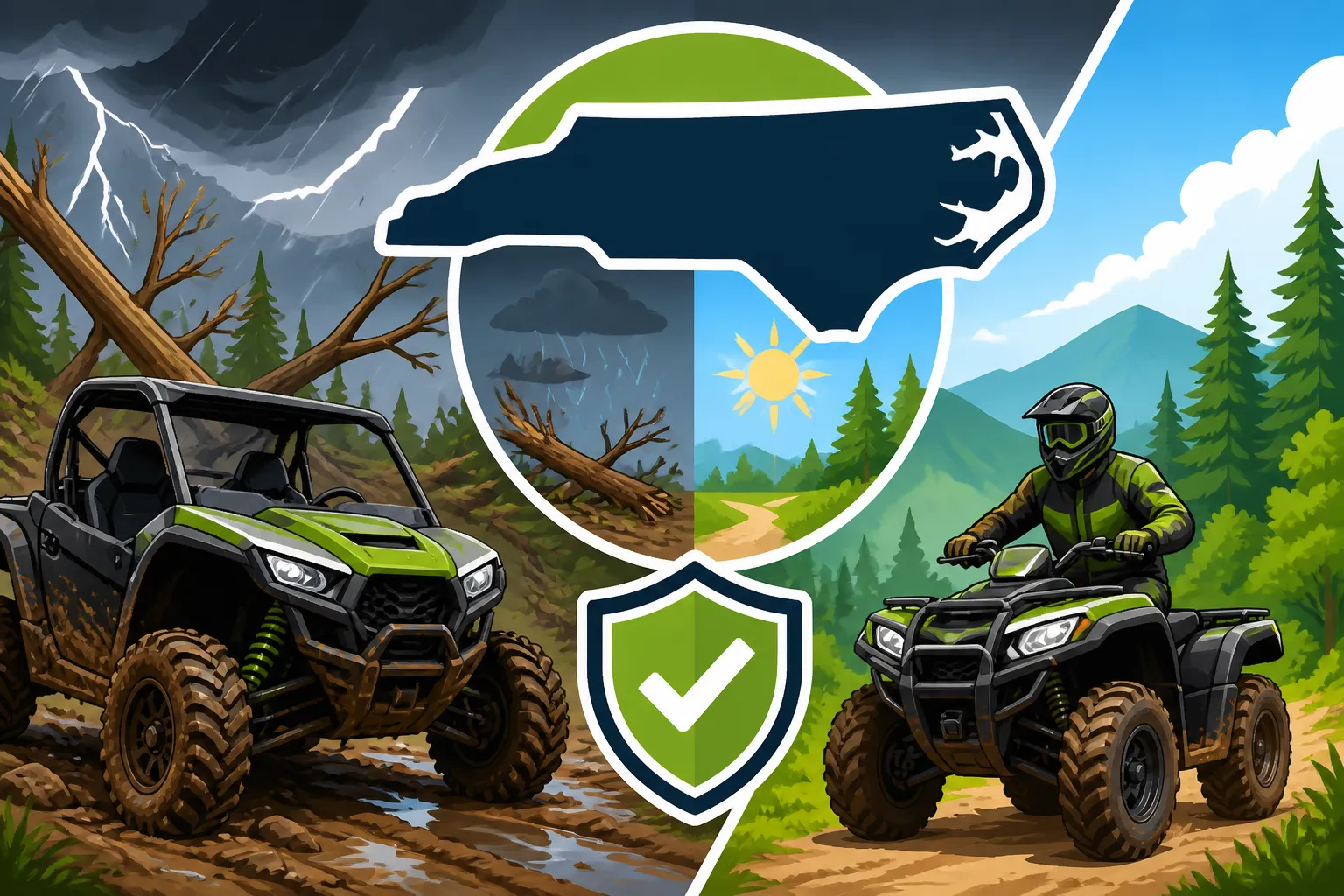
A wet trail and a closed trail are not the same thing. Rain can make riding difficult or damaging without an official closure, while an official closure can remain in force after the weather clears. Use the manager’s current status to determine whether access is allowed, then make a separate judgment about whether conditions are suitable for your group and machine.
The distinction matters because riders sometimes take a visible condition as the whole rule: “It isn’t raining,” “the road is dry,” or “the water is low.” Those observations do not cancel an official restriction. Equally, an open status does not mean the trail is safe for every rider, machine or weather condition. Check both authorization and practical conditions.
Permits are another separate layer. A permit may address access to a riding area, while a closure controls whether a route can be used at that time. Other requirements may also apply, such as trail-specific rules or a safety certificate requirement for certain riders. Check the applicable information for the location and your situation; do not treat one permit or document as a substitute for every other rule.
Before a post-storm trip, use this short checklist:
- Identify the exact riding area, trailhead and route.
- Check the latest notice from that area’s manager.
- Confirm that the notice explicitly allows access to the route you want.
- Check for signs and gates when you arrive.
- Verify that your permit applies to the area and planned ride.
- Reconsider the trip if the status is uncertain or conditions seem unsafe.
When the information conflicts, take the conservative option: do not enter a route that is posted closed, and ask the responsible office to clarify its status. For more on the consequences of entering a route that remains restricted, see North Carolina Rules for Riding a Closed Trail.
A little extra checking can prevent a wasted trip, but the main reason to respect a closure is safety and protection of the route. Storm damage can be difficult to judge from a vehicle, and early reopening assumptions can put riders, workers and the trail itself at risk. Wait for clear authorization, follow the posted boundaries and ride only on routes that are confirmed open.
Disclaimer
This article is for general informational purposes only and does not constitute professional advice. Laws, prices and regulations vary by location and change over time. Consult a qualified professional for guidance on your specific situation.