Leaving Your Permit in the Truck at Uwharrie
Leaving a Uwharrie permit in the truck is an easy mistake to make, especially when several riders are unloading at once. The important question is whether the permit is available and displayed as its instructions require before you ride. Here’s what to do if you notice it late, how to avoid confusion during a check, and how to keep the same problem from spoiling your next trip.
The short answer: go back for the permit before riding
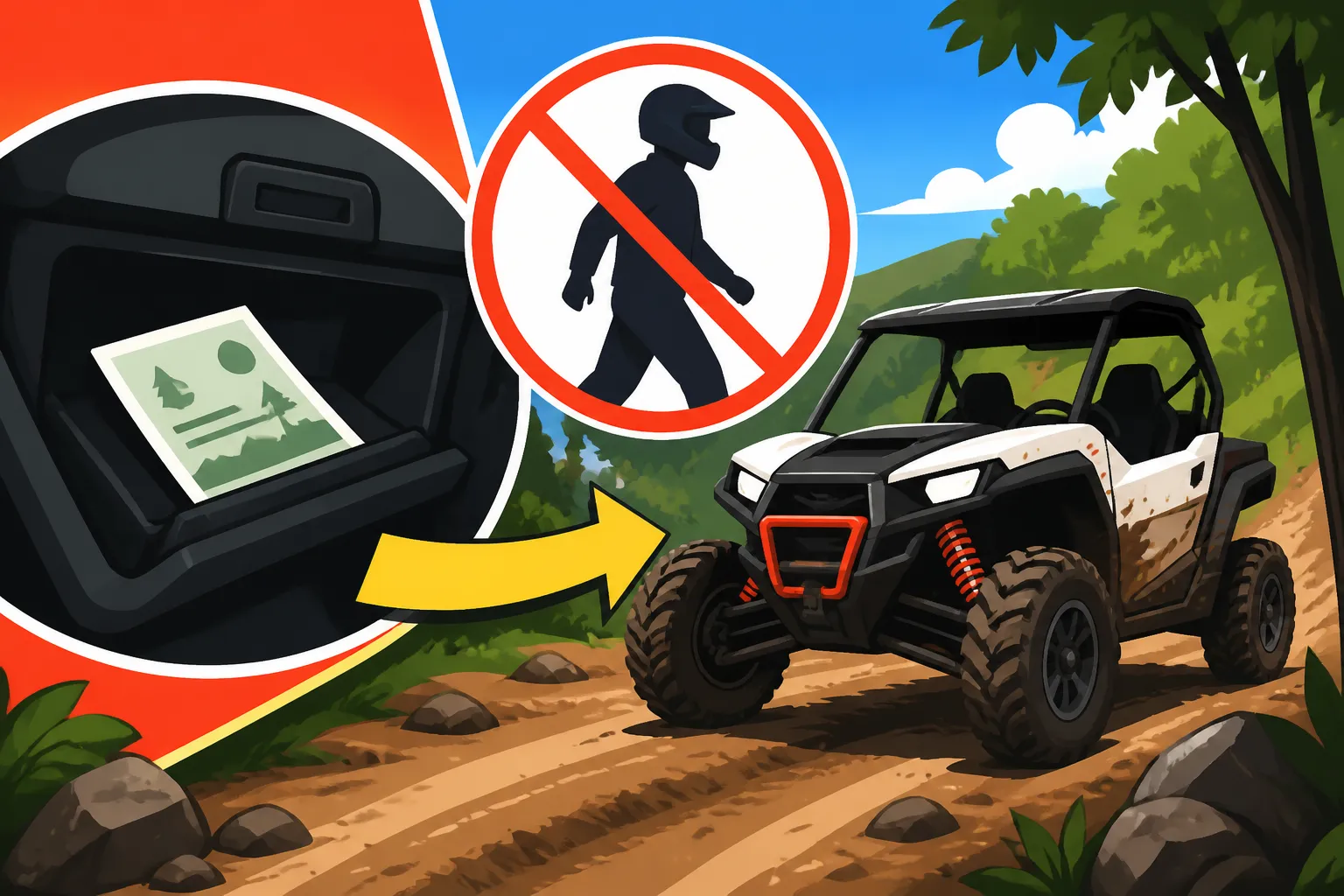
If your Uwharrie Forest OHV permit is in the truck, don’t assume that having paid for it is enough. The permit’s terms may require it to be displayed on the machine, carried with you, or presented in a particular way. A purchase receipt can help show that you bought a permit, but it may not replace the permit itself or satisfy a display requirement.
The safest move is to leave the machine parked and retrieve the permit before entering the trails. If you are already on a trail when you realize it is missing, stop at a safe place, check the permit instructions, and work out how to retrieve it without continuing to ride as though the paperwork does not matter. Don’t take a chance on a short ride back to the truck if that means using an area or route where your machine is not authorized.
Uwharrie’s OHV permit rules apply to the machine being ridden, not simply to the people in the truck. A permit for one ATV or UTV should not be assumed to cover another. Before unloading, make sure each machine has the required permit and that it is available in the form the rules require. Every Machine Needs Its Own Trailhead Box Permit explains why a group needs to check each vehicle separately.
A few distinctions are worth keeping in mind:
- A permit is not the same as vehicle registration. North Carolina does not generally register ATVs in the way it registers road vehicles. Forest access requirements are a separate matter. See North Carolina Forest OHV Permits for the broader permit picture.
- A receipt is not automatically a permit. Keep it as supporting evidence, but follow the permit’s display and carry instructions.
- A permit does not open a closed trail. Closures and access rules still apply, even if the machine has a valid permit. Check North Carolina Trail Closures to Check before traveling.
- A permit for one vehicle may not cover another. Confirm the permit type and vehicle details before leaving the staging area.
If you cannot find the permit, or you are unsure whether the item in your truck is the permit or only a receipt, pause. Read the permit instructions, check the current forest notice, or ask the appropriate forest office before riding. It is frustrating to delay a trip for a paperwork question, but it is easier than having to explain a missing permit during a trail check.
| What you have at the trailhead | Practical next step |
|---|---|
| The permit is in the truck and the machine is still parked | Retrieve it and follow its display or carry instructions before riding |
| You have a receipt but not the permit | Treat the receipt as backup, not automatic proof that display requirements are met |
| You are unsure which machine the permit covers | Check its details and make sure each machine has its own required permit |
| You notice the problem after starting the ride | Stop safely, check the permit terms, and retrieve it before continuing if needed |
| You cannot locate the permit | Don’t assume you can ride; ask the forest office or use an authorized way to obtain the required permit |
What to do when you notice the mistake
The right response depends on where you are, what kind of permit you bought, and whether you have already entered the riding area. Keep the goal simple: confirm the requirement, get the permit to the machine, and avoid making a small oversight worse by riding on without checking.
If you are still at the truck
Leave the ATV or UTV unloaded, or keep it parked, while someone retrieves the permit. Read any directions printed on the permit itself. If it is a physical permit that must be displayed, attach it where the instructions say. If it is a permit that must be carried or shown on request, keep it somewhere accessible to the rider—not buried under gear in the truck.
If you are riding with a group, tell everyone to pause while the permit is sorted out. One person can collect the permit while another checks that each machine has the right one. This is particularly useful when several riders share a staging area and permits look similar. Don’t assume that the driver who bought the permits has remembered which one belongs to which vehicle.
If you have already entered the trail area
Stop at a safe place where you are not blocking other riders or creating a hazard. Check the permit’s instructions and any official information available to you. If the requirement is to display the permit on the machine, a document left in the truck does not meet that practical purpose while you are riding.
If the truck is close and accessible by a permitted route, retrieving the permit may be straightforward. If it is not, don’t improvise a route across land or roads that are not open to your machine. Consider whether a companion can bring it to you by an authorized route, or contact the relevant forest office for direction. If you cannot resolve the issue, the cautious choice is to stop the ride until you can.
A trail permit does not grant permission to use every road or travel between locations however you choose. Rules for forest roads and trail connections can differ from rules for marked OHV routes. Forest Roads Open to North Carolina Machines is useful background if your plan involves moving between trail areas.
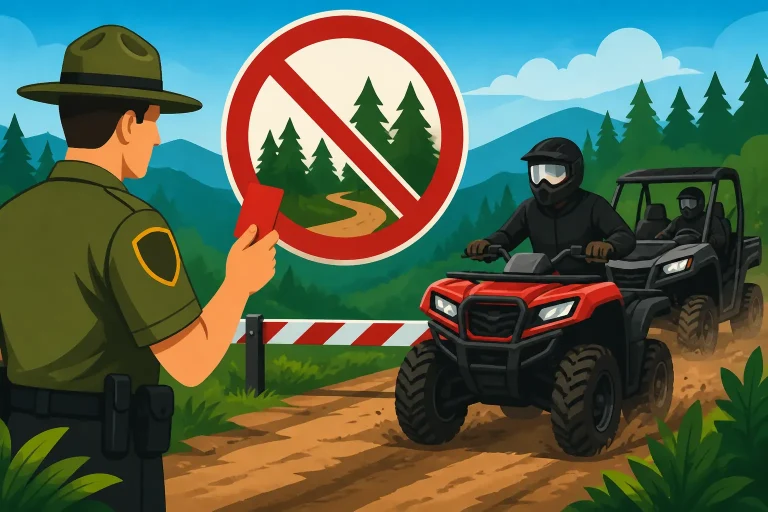
If an officer or ranger asks to see it
Stay calm, stop where directed, and be straightforward. Explain whether the permit is displayed, carried, or still in the truck, and show the permit or purchase record you do have. Don’t claim that a receipt is the same as a permit unless the permit terms say so.
An officer may need to determine whether the permit requirement is being met, and the exact outcome can depend on the facts and current rules. A purchase confirmation may help explain what happened, but it does not guarantee that you will be allowed to continue or that there will be no consequence. Follow instructions at the scene and ask where to find the applicable rule if you need clarification.
If you receive a citation or written notice, keep the paperwork and note the date, location, and circumstances while they are fresh. Use the directions on the notice for any questions or response deadlines. Avoid relying on a story from another rider as a substitute for the instructions on your own paperwork.
Prevent the problem before you leave the staging area
The easiest fix is a short pre-ride check that happens after unloading but before anyone starts moving. Make permits part of the same routine as checking fuel, helmets, and trail conditions. That way, the permit is less likely to stay on a dashboard or in a glove compartment while the machine heads onto the trail.
- Match each permit to a machine. Check that every ATV or UTV in the group has the required permit. Do not rely on one permit or one purchase receipt for the whole group unless the official terms specifically say it covers multiple machines.
- Read the permit directions. Confirm whether it must be attached to the vehicle, carried by the rider, or kept available for inspection. Don’t guess based on how another forest or riding area handles permits.
- Put it where it needs to be. If it must be displayed, attach it as directed. If it must be carried, choose a secure, accessible spot on the rider rather than leaving it in the truck.
- Check visibility and security. Make sure a displayed permit is not hidden by luggage, mud flaps, or other equipment and is fastened as instructed. Don’t alter the permit or cover its identifying details.
- Keep the purchase record separately. A receipt or confirmation can be useful if a question comes up, but keep it as backup rather than treating it as a substitute for the permit.
- Do a final walk-around. Before the group rolls out, have each rider confirm their own permit and safety gear. A quick verbal check can catch a missing item before the machines are spread across the trail system.
If your permit is a season permit rather than a day permit, don’t assume the longer validity period changes how it must be displayed. Read the specific instructions for that permit. The two permit types can have different details, and a rider should not apply one permit’s directions to another. For an overview of the distinction, see The Forest Season Permit in North Carolina and North Carolina’s Forest Day Permit.
A small document wallet or storage pouch can help keep a paper permit or receipt from getting lost among riding gear, but it does not replace any official display requirement. If you use one, make sure the permit remains easy to access and that the pouch does not obscure a permit that must be visible. Keep a spare copy of the purchase confirmation in the truck, but don’t leave the only required permit there.
Permit preparation should happen alongside a check of trail status. A valid permit does not guarantee that a trail is open, passable, or suitable for your machine that day. Review current notices before you make the drive and again if weather has changed conditions. North Carolina Trail Conditions Before You Ride offers a useful checklist for that part of planning.
Make sure you have the right permit, not just a piece of paper
The word “permit” can refer to different formats and periods of access. Riders may have a day permit, a season permit, a receipt, or another form of confirmation. Those items are not necessarily interchangeable. When you buy a permit, keep the actual permit and its instructions together until you know how it must be used.
At Uwharrie, check the current directions from the U.S. Forest Service or the authorized permit seller for details such as:
- Whether the permit must be displayed on the machine or carried by the rider
- Where and how it must be attached, if display is required
- Whether the permit is specific to an individual vehicle
- Which riding area and dates the permit covers
- Whether the permit remains valid if it is damaged or cannot be read
- What to do if it is lost before or during the trip
These details matter when you are buying the permit at a trailhead, picking it up before the ride, or using a season pass. For buying options and timing, see Buying a Uwharrie Permit the Morning of a Ride. For display questions, Where a Uwharrie Forest Permit Goes on Your Machine and Showing a Permit at a Uwharrie Forest Gate cover the practical points to verify.
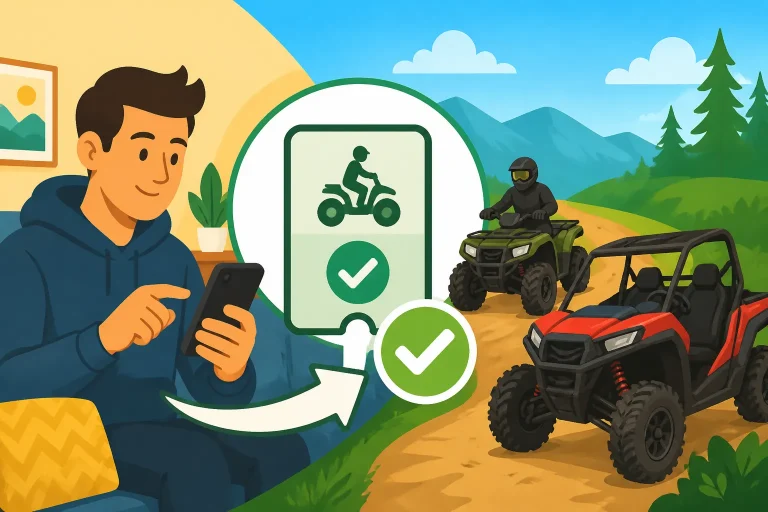
Do not rely on a photograph of the permit unless the official instructions specifically allow it. A phone image may help you remember the permit number or show a purchase record, but it may not satisfy a requirement to display an original permit. The same caution applies to a screenshot of an order confirmation: useful backup, not a guaranteed replacement.
The best routine is straightforward: buy the correct permit, read its directions, put it on or with the machine as required, and verify it before entering the trail system. If the permit is still in the truck, stop and retrieve it. That small pause can prevent confusion at a gate or during a check and let the group get on with the ride.
Disclaimer
This article is for general informational purposes only and does not constitute professional advice. Laws, prices and regulations vary by location and change over time. Consult a qualified professional for guidance on your specific situation.