Buying a Permit Before You Leave Home
Buying a permit before a North Carolina ride can save a frustrating detour, but only if you buy the permit for the right place. Forest trails and Cape Hatteras National Seashore use different permit systems. Here’s how to match the pass to your destination, handle the online purchase, and arrive with the proof you need.
First, match the permit to the place you plan to ride
A permit is not a statewide ATV or UTV pass. It applies to a specific riding area, and a permit for one area should not be assumed to work somewhere else. The Forest Service says visitors need a valid pass for the specific area where they are recreating. North Carolina’s National Forests have only four designated OHV areas, according to the Forest Service, so check that your destination is one of them before buying anything.
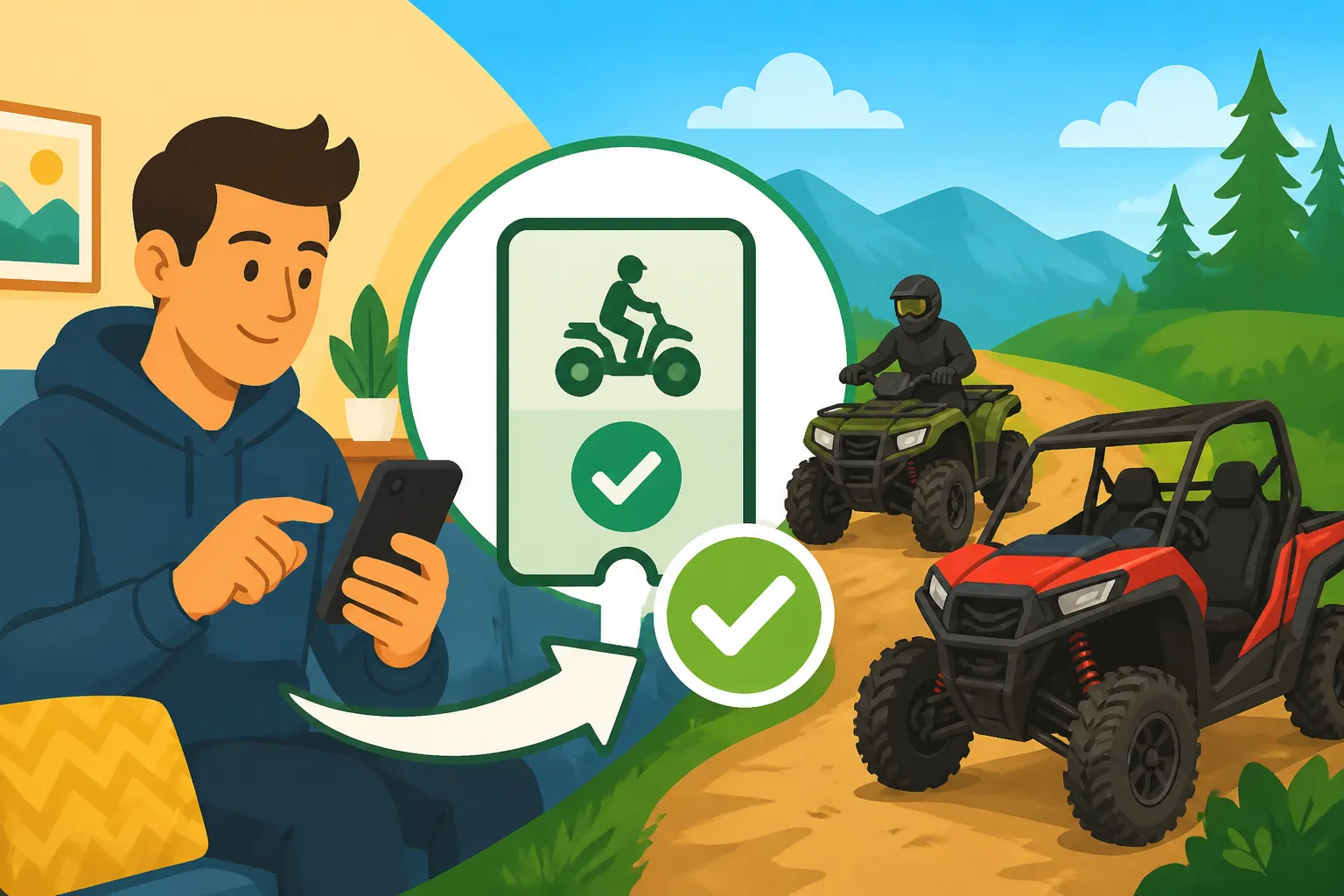
For Forest Service OHV areas, passes are sold through Recreation.gov. That makes it possible to arrange a pass before driving to a trailhead, but it also means you need to select the correct forest or riding area in the booking process. Start with the destination, not a general search for “North Carolina ATV permit.”
Cape Hatteras National Seashore is a separate case. The National Park Service requires an Off-Road Vehicle permit to drive on the beach there, and permits are available exclusively through Recreation.gov. A Cape Hatteras permit is not a Forest Service pass, and a forest pass is not permission to drive on the seashore beach. If you are comparing systems, Do You Need a Permit for North Carolina Forest Trails? and Where to Buy a North Carolina OHV Permit can help you narrow down the right route.
| Where you plan to ride | Where to get the permit | What to check before buying |
|---|---|---|
| A designated National Forest OHV area | Recreation.gov | The specific riding area, permit dates, and instructions for carrying or displaying the pass |
| Cape Hatteras National Seashore beach | Recreation.gov | That you are applying for the seashore’s ORV permit, and the current decal and temporary-proof instructions |
| A different public or private riding location | Check with the land manager or operator | Whether a permit is needed and whether it is accepted at your exact destination |
If your plans include more than one riding area, treat each permit requirement separately. A receipt or pass for the first destination does not establish access at another site. For more background on Forest Service options, see North Carolina’s Forest Day Permit and The Forest Season Permit in North Carolina.
Confirm the riding area and vehicle type
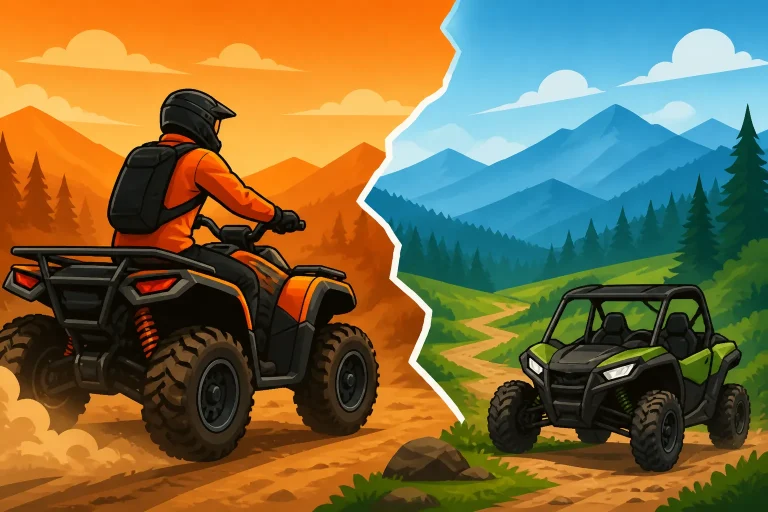
Before you start an online purchase, make sure the destination allows the type of machine you intend to bring. An ATV and a UTV may not have identical access rules, and an area’s permit does not override restrictions on vehicle type, trail use, or operating conditions.
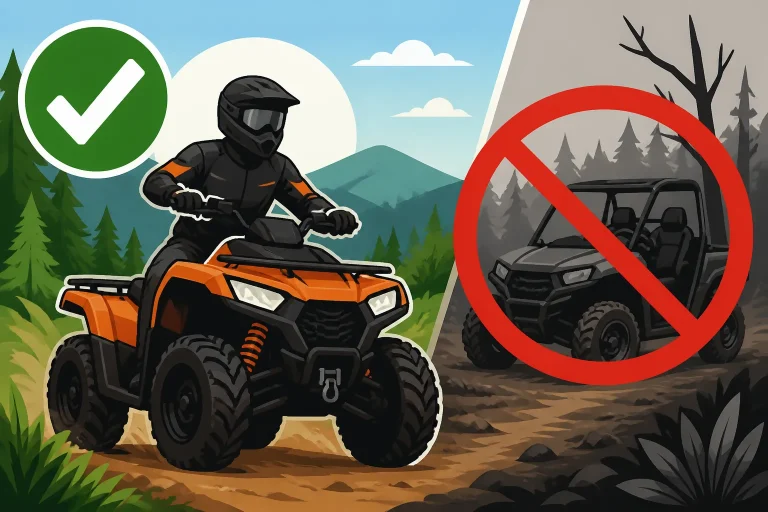
For example, the Forest Service defines an ATV as a machine with a seat the operator straddles and handlebars for steering, with three, four, or six wheels and a width under 60 inches. If your machine is a side-by-side or otherwise falls outside that description, do not assume the same pass or trail access applies. Check the area’s vehicle rules directly. What North Carolina Counts as an ATV is useful if you are unsure how your machine may be classified.
Also check whether your intended trail is open and suitable for your vehicle. A valid pass does not mean every trail is appropriate for every rider or machine. At Badin Lake, for instance, the Forest Service says the motorized trails are marked with orange diamond markers and are for two-way traffic. The agency recommends that riders start at designated trailheads rather than relying on an unfamiliar access point. If you are heading there, consult Reading a North Carolina Forest Trail Map and Badin Lake’s Season Permit as part of your planning.
Don’t confuse a riding pass with registration
A trail pass gives access under the rules of a particular recreation area. It is not the same as a state title, a vehicle registration, or a road-use permit. Forest Service rules state that ATVs cannot be registered and are not allowed on Forest Service roads; the machines must be trailered to the trailhead. In other words, buying a pass does not make an ATV legal to ride on a public road to reach the trail.
That distinction matters for visitors, too. A pass from your home state or a plate from another jurisdiction should not be treated as a substitute for the area-specific North Carolina pass. For the separate question of riding with an out-of-state machine, see Nonresident Machines in North Carolina. For title and ownership paperwork, Why a North Carolina Title Is Worth Having covers a different issue from trail access.
Buy the pass online with the details in front of you
A little preparation makes the Recreation.gov purchase easier. Before you open the booking page, decide where you will ride, when you plan to go, and which machine the permit will cover. Then read the permit description carefully instead of relying on a search result or a past trip’s paperwork.
Use a short pre-purchase checklist
- Choose the exact destination. Confirm whether you are visiting a National Forest OHV area or Cape Hatteras National Seashore. They have separate rules and permits.
- Check that your machine is allowed. Read the destination’s vehicle and trail restrictions. Do not assume that an ATV pass automatically covers a UTV.
- Select the dates or permit period that match your trip. Forest Service passes remain valid until midnight on the date written on the pass, according to the Forest Service. A pass that expires before the ride ends is not a good fit.
- Read the delivery and proof instructions. Check whether you need to print anything, wait for a decal, or attach a pass to the vehicle.
- Save the confirmation and required pass details. Keep them accessible, but do not assume a confirmation email or phone screenshot meets the area’s requirements unless the permit instructions say it does.
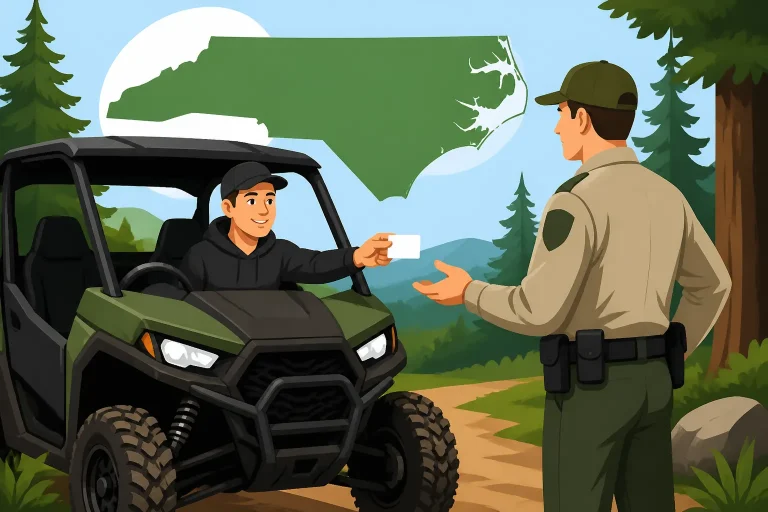
For Forest Service rides, the pass needs to be carried on the trail, and the Forest Service says riders must have a state driver’s license available to show during a compliance check. Keep the pass and license together in a secure place, but protect the pass from rain, mud, and damage. If the permit requires a particular display position, follow those instructions rather than leaving the pass loose in a bag.
The Forest Service states that passes expire at midnight on the date written on them. Build your schedule around that cutoff, including any delay loading, unloading, or returning to the trailhead. If a trip may stretch beyond the pass date, ask the relevant land manager or check the permit options before leaving home rather than counting on a grace period.
Check the permit’s vehicle information and display rules
Cape Hatteras has specific vehicle-permit instructions that differ from Forest Service trail passes. The National Park Service says that, when buying an ORV permit for an ATV or UTV, the operator’s driver’s license number should be used in place of a license plate. The agency also says ATV and UTV decals must be positioned on the driver’s-side front fender.
Cape Hatteras permits are non-transferable between vehicles, according to the National Park Service. That means a permit purchased for one vehicle should not be treated as a shared pass for another machine. If you are bringing multiple vehicles, read the current purchase instructions for each one before paying.
As of November 2026, the National Park Service says a Cape Hatteras annual ORV permit costs $120 and is valid for one year from the date of purchase. The agency says printed temporary proof of the permit is valid for up to 30 days while the annual decal is being mailed. Those details are specific to Cape Hatteras and should not be applied to Forest Service permits. Check the National Park Service’s current instructions before relying on a mailing timeline or temporary proof.
One important distinction: the National Park Service says digital proof of payment, including screenshots, is not acceptable for Cape Hatteras vehicle permits. Do not plan to show a phone image instead of the required printed temporary proof or decal. If you are visiting a Forest Service area, follow that area’s own pass instructions; do not assume Cape Hatteras rules or Forest Service rules apply across both systems.
Prepare your proof and equipment before the drive
Buying the permit is only one part of being ready. Before setting off, make sure you can produce the pass in the required form, that the machine is permitted at your destination, and that the people riding with you meet the area’s safety rules. These checks are easier to do at home than at a trailhead.
Carry what the land manager requires
For National Forest trails, the Forest Service requires riders to carry a valid pass while on the trail. A state driver’s license must also be available to show during a law enforcement compliance check. Keep both accessible, but avoid putting documents somewhere they can be lost or soaked during the ride.
The pass is tied to the particular area and date printed on it. Before loading the machine, compare those details with your plan. If your group is splitting up or using several machines, make sure every rider knows which pass goes with which vehicle and where the required proof is kept. At Black Swamp OHV, the Forest Service specifies that each OHV needs a pass, so don’t assume a single pass covers a group’s machines.
For Cape Hatteras, prepare the decal or printed temporary proof exactly as the National Park Service directs. The agency does not accept digital proof of payment, including screenshots, for vehicle permits. If you have bought the permit but do not yet have the required proof, resolve that before leaving rather than hoping the purchase confirmation will be accepted.
Check trail rules as well as pass rules
Forest Service passes do not waive safety or trail-use requirements. Riders must stay on designated trails, and the Forest Service prohibits driving off trail. The agency also requires a working spark arrester on OHVs and says operators cannot carry passengers unless the manufacturer designed the vehicle for that purpose. Check the rules for your chosen area before packing, particularly if you plan to carry a passenger or use a machine with modifications.
Age and protective-equipment rules also matter. The Forest Service says children under 16 must be under continuous visual supervision by an adult over 18 in the applicable OHV setting. ATV and motorcycle operators and passengers must wear helmets and eye protection that meet US DOT motorcycle safety standards. These requirements are separate from buying a pass; a valid permit does not make a ride compliant if required supervision or protective gear is missing.
For Cape Hatteras, the National Park Service requires seatbelts while riding in UTVs and vehicles. Its rules also address where vehicles can travel: driving or parking on or within dunes is forbidden, and driving on the sound side is not allowed. Review the route restrictions before setting out, especially if your plan depends on reaching a beach access point. North Carolina’s Ocean Beach Rule can help put beach access rules in context.
Plan for the machine, not just the paperwork
A permit confirms access under the area’s terms; it does not prepare a vehicle for a trail or beach. The Forest Service says it does not tow vehicles off the trail, and visitors are responsible for removing a stuck or broken-down vehicle from Uwharrie National Forest. Check the machine, tires, fuel, recovery gear, and communication plan before leaving. If you are riding a designated Forest Service trail, make sure your route and equipment match the trail’s difficulty rather than choosing it only because the permit is available.
Cape Hatteras has its own vehicle-preparation recommendations. The National Park Service recommends carrying a low-pressure tire gauge, shovel, jack, and jack support board for designated off-road routes. It strongly advises lowering tire pressure to 15–20 PSI before driving those routes. Those recommendations apply to the seashore’s designated off-road routes, not automatically to North Carolina forest trails.
Finally, check conditions close to departure. Permit availability is not proof that the trail or route is open, and a pass does not override a temporary closure or a local restriction. Confirm the latest area notices, access points, and permit instructions before loading. North Carolina Trail Closures to Check First and North Carolina Trail Conditions Before You Ride can help you complete that last check.
A simple leave-home plan
A reliable plan is to choose the area first, confirm the machine is allowed, buy the area-specific permit through the correct system, then prepare the required physical proof and safety gear. Keep the permit date, vehicle details, and display instructions handy. If the instructions are unclear, contact the land manager before traveling rather than assuming a pass is interchangeable.
Use this final check before departure:
- The permit matches the exact riding area.
- The permit dates cover the planned ride.
- The vehicle matches the permit and access rules.
- The required pass, decal, or printed temporary proof is ready.
- Each rider has the required license or identification available.
- Riders have the required helmet, eye protection, and other safety equipment.
- The route is open, designated for the machine, and within the permit’s scope.
For a Forest Service ride, remember that the pass is area-specific, must be carried on the trail, and expires at midnight on its printed date. For Cape Hatteras, use the National Park Service’s ORV permit system and follow its separate decal and proof requirements. Buying before you leave is useful, but matching the permit to the destination is what prevents the wrong pass from becoming an expensive and inconvenient mistake.
Sources
- Forest Service — National Forests in North Carolina | Off-Highway Vehicles (OHV) | Forest Service (checked November 3, 2026)
- National Park Service — Beach Driving Permit – Cape Lookout National Seashore (U.S. National Park Service) (checked November 3, 2026)
- National Park Service — Off-Road Vehicle Permits – Cape Hatteras National Seashore (U.S. National Park Service) (checked November 3, 2026)
- OSFM — ATV Safety | OSFM (checked November 3, 2026)
- Forest Service — National Forests in North Carolina | Black Swamp OHV Trailhead | Forest Service (checked November 3, 2026)
- Forest Service — National Forests in North Carolina | Brown Mountain OHV Trail System | Forest Service (checked November 3, 2026)
- Forest Service — National Forests in North Carolina | Off-Highway Vehicles (OHV) | Forest Service (checked November 3, 2026)
- USDA Forest Service — National Forests in North Carolina | Off-Highway Vehicles (OHV) | Forest Service (checked November 3, 2026)
- National Park Service — Wildlife Protection Zones – Cape Lookout National Seashore (U.S. National Park Service) (checked November 3, 2026)
Disclaimer
This article is for general informational purposes only and does not constitute professional advice. Laws, prices and regulations vary by location and change over time. Consult a qualified professional for guidance on your specific situation.