When a Dealer Leaves the DMV Trip to You
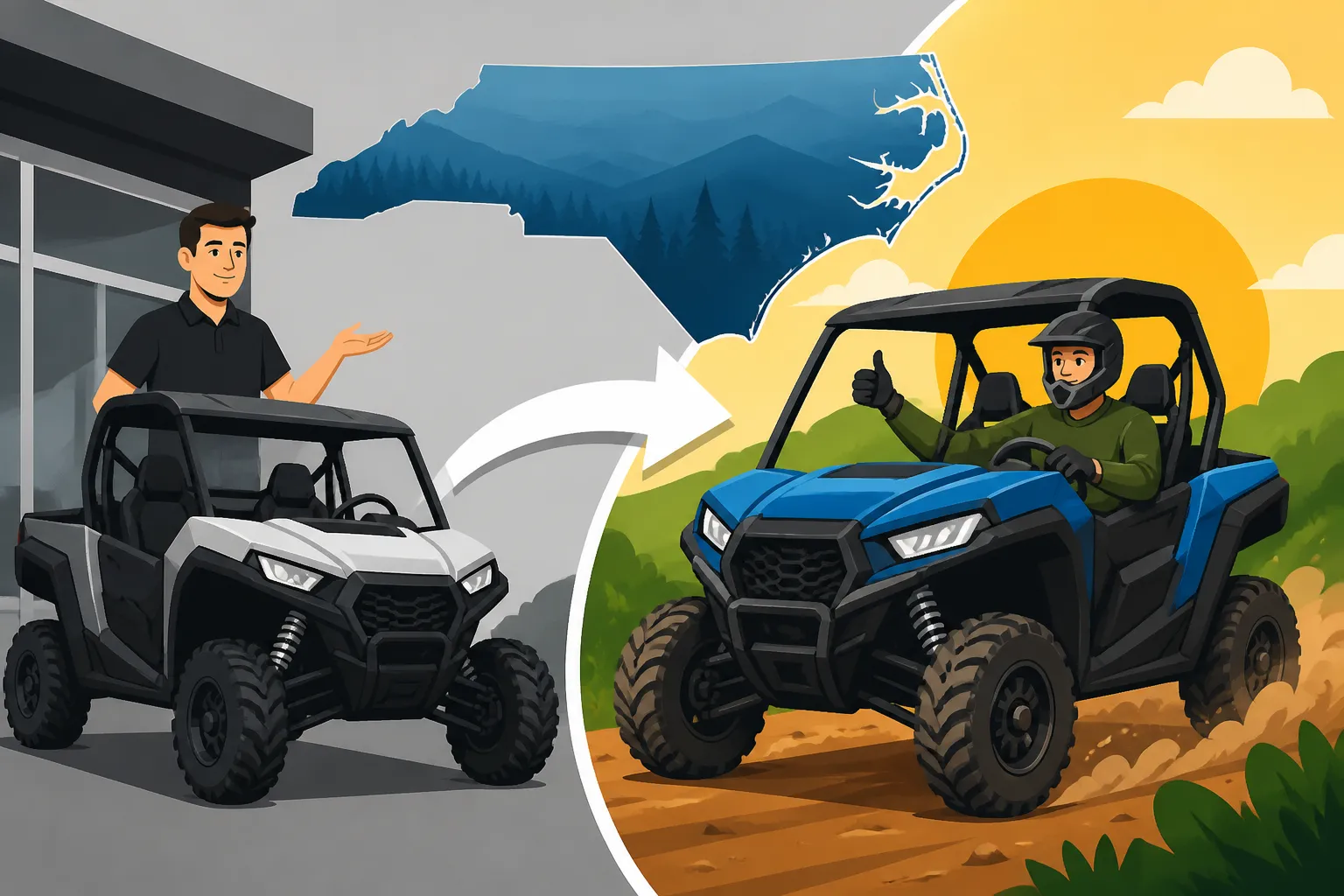
It's incredibly frustrating, isn't it? You've just made a significant investment in a new (or new-to-you) ATV or UTV, signed the dotted line at the dealership, and you're expecting everything to be handled. But then, you're told, "Oh, for these, you'll need to take care of the DMV paperwork yourself." This guide is here to shed light on why some North Carolina dealers might leave you with the titling responsibilities for your off-road machine and, more importantly, how to navigate that process like a seasoned pro.
Understanding Why Dealers Sometimes Don't Handle ATV/UTV Titling
It’s a common misconception that buying a new vehicle from a dealership automatically means they'll handle every piece of paperwork, from the temporary tag to the final title. While this is often true for cars and trucks that will be registered for highway use, the landscape for ATVs and UTVs in North Carolina can be a little different. Many buyers are caught off guard when a dealer hands them the Manufacturer's Statement of Origin (MSO) or the previous owner's title and wishes them luck at the DMV. Let's unpack some of the reasons why this might happen.
The "Off-Road Only" Misconception at the Dealer
One of the primary reasons a dealer might not handle the titling for your ATV or UTV stems from a misunderstanding of North Carolina's rules regarding these machines. Because most ATVs and UTVs aren't street legal in the traditional sense, and thus don't require annual registration in North Carolina, some dealers—especially those who primarily sell highway vehicles—might incorrectly assume that no official paperwork is needed with the Division of Motor Vehicles (DMV) at all. They operate under the belief that since there's no "registration," there's no need for titling either.
However, this isn't quite the full picture. While you don't have to register most ATVs and UTVs for off-road use, North Carolina does allow and even encourages titling them. A title serves as official proof of ownership, which is incredibly important for a variety of reasons, from proving your machine isn't stolen to securing financing or selling it down the road. It offers you a layer of protection that simply having a bill of sale might not. This can be confusing, and if the dealer isn't well-versed in the specifics of [Titling an ATV in North Carolina Is Optional], they might inadvertently pass the titling burden onto you, thinking they're being helpful by not pushing unnecessary paperwork.
Small Dealers and Limited Resources
Another common scenario involves smaller dealerships or specialty shops that focus almost exclusively on powersports. These businesses might have incredible mechanical expertise and a passion for off-road riding, but they may lack the administrative infrastructure of larger, multi-brand dealerships. Processing DMV paperwork, calculating Highway Use Tax, and staying updated on the nuances of ATV/UTV titling can be time-consuming and complex. For a small team, dedicating staff hours to this often means taking away from sales or service, which are their core business functions.
For you, the buyer, this translates into a situation where, after the excitement of the purchase, you're left with a stack of papers and instructions to "go to the tag office." It's an extra step you probably didn't anticipate, adding another item to your already busy to-do list. This is particularly prevalent when you're buying a used machine from one of these smaller outfits, as the paperwork trail might be less straightforward than with a brand-new vehicle. They might provide you with the essential documents like the previous title and a bill of sale, but the actual submission to the DMV falls squarely on your shoulders.
When a Dealer Sells Only "Parts" or "Components"
While less common, it’s worth being aware of situations where a dealer might attempt to sell an ATV or UTV in a manner that sidesteps formal vehicle sales altogether. This often happens with machines that are heavily damaged, salvaged, or even custom-built without proper manufacturer documentation. In these rare instances, a dealer might argue they are selling you a collection of parts or components, rather than a complete, titled vehicle. This is a significant red flag and should prompt immediate caution.
If a dealer frames the sale this way, they absolutely will not handle titling, and getting a title yourself might be difficult or impossible without significant effort to prove its origin and safety. Always insist on proper documentation, including a clear bill of sale and either a Manufacturer's Statement of Origin (MSO) for new machines or a clean, properly endorsed title for used ones. Understanding [Why a Buyer Should Ask to See the Title] upfront can save you a world of headaches later on. If a dealer hesitates or tries to use this "parts" argument, it's often a sign to walk away, as you could be purchasing a machine with a problematic history or one that can never legally be titled in your name.
Navigating the Titling Process When the Dealer Steps Aside
So, the dealer has handed you the keys and the paperwork, sending you on your way to the North Carolina DMV. Don't panic! While it's an extra step, it's a completely manageable process if you know what to expect. The key is to be organized and prepared. Your main goal is to secure a [North Carolina Title Application on Form MVR-1] and ensure all supporting documents are in order.
Gathering the Essential Documents
When the dealer doesn't handle the titling, your first task is to ensure you have all the necessary documentation they should provide you. This is crucial because without these foundational papers, the DMV won't be able to process your application.
- Bill of Sale: This is non-negotiable. You need a clear, legible bill of sale that includes the date of sale, the purchase price, the full names and addresses of both buyer and seller (even if the seller is a dealership), and a detailed description of the ATV or UTV, including its make, model, year, and most importantly, the Vehicle Identification Number (VIN). A well-crafted bill of sale helps establish the transaction details for both parties and is essential for tax purposes. If the dealer provides a minimalist bill of sale, or you're purchasing privately, a comprehensive template, perhaps found on a platform like LawDepot, can ensure all bases are covered and reduce potential issues at the DMV. A good bill of sale clarifies exactly what was bought and sold. [A North Carolina Bill of Sale for an ATV] will typically need to include these details.
- Manufacturer's Statement of Origin (MSO) / Certificate of Origin (MCO): For a brand-new ATV or UTV, the dealer absolutely must give you the MSO (sometimes called MCO). This document is like the birth certificate for your machine; it's issued by the manufacturer and certifies that it's a new vehicle. Without the MSO, you cannot title a new machine. It will list the VIN, engine size, and other identifying characteristics.
- Previous Title: If you bought a used ATV or UTV, the dealer should provide you with the original, properly endorsed title from the previous owner. "Properly endorsed" means the seller (which, in this case, would be the dealership or the person they acquired it from) has signed and dated the title in the designated transfer section, effectively signing the machine over to you. Make sure there are no alterations, erasures, or missing information on the title, as the DMV will scrutinize this carefully. [North Carolina ATV Title Transfer] requires a clean, correctly filled-out previous title.
Understanding the Highway Use Tax
One of the biggest surprises for ATV and UTV buyers in North Carolina, especially if they're used to traditional sales tax on other goods, is the Highway Use Tax (HUT). This isn't a sales tax in the conventional sense, but it functions similarly for vehicles. When a dealer leaves the titling to you, it almost certainly means they haven't collected this tax from you. You'll be responsible for paying it directly to the NCDMV when you submit your title application.
The [North Carolina ATV Highway Use Tax] is generally 3% of the purchase price, or the fair market value of the machine, whichever is greater. This tax applies even though your ATV or UTV won't be regularly cruising down the highway. It’s part of the state’s funding for transportation infrastructure, and it’s collected at the point of titling. It can feel like an unexpected cost if you haven't budgeted for it, so be prepared. The DMV clerk will calculate this amount based on the purchase price listed on your bill of sale or their own valuation if they deem the stated price suspiciously low. Always be honest about the transaction price to avoid complications.
The Damage Disclosure Requirement
Even if the dealer isn't submitting your title application, they are still obligated under North Carolina law to provide you with a written disclosure regarding any significant damage the ATV or UTV may have sustained. This is especially critical for used machines. North Carolina utilizes Form MVR-1A, the Damage Disclosure Statement, for this purpose.
The [North Carolina Damage Disclosure on Form MVR-1A] requires the seller to disclose if the vehicle has been subjected to specific types of damage, such as flood, fire, or collision, that resulted in the cost of repairs exceeding 25% of its fair market retail value. Even if the dealer doesn't fill out this form for you, they should at least tell you about any such damage. It's your responsibility as the buyer to ensure you receive this information and to understand its implications. If you're buying a used machine and the dealer doesn't offer this, you should specifically ask for it. This disclosure is not only for your protection but also a legal requirement that helps maintain transparency in vehicle sales and ensures you're fully aware of the machine's history before you finalize the title.
Step-by-Step: Your DMV Trip for an ATV/UTV Title
Now that you understand why you might be doing the legwork and what documents you need, let's walk through the actual process of getting your ATV or UTV titled at the North Carolina DMV. It might seem daunting, but by breaking it down, you'll see it's quite straightforward.
Preparing Your Application Packet
Before you even think about heading to the NCDMV, assemble your complete application packet. This meticulous preparation will save you immense time and frustration at the tag office. Imagine standing in line for an hour only to discover you're missing a single form!
Your packet should contain:
- North Carolina Form MVR-1, Application for Certificate of Title: You can usually download this from the NCDMV website or pick one up at any license plate agency. Fill it out completely and accurately, paying close attention to the VIN, owner information, and lienholder details if you have financing. Double-check all spellings and numbers.
- Manufacturer's Statement of Origin (MSO) or Previous Title: As discussed, this is the foundational proof of the machine's origin and ownership history. Ensure any previous titles are properly signed and dated by the seller(s).
- Bill of Sale: The document from the dealer detailing your purchase. If you feel it's lacking, you might even consider creating a more comprehensive one using a resource like LawDepot, especially if the original was just a generic receipt. Ensure the purchase price is clearly stated, as this will be used to calculate your Highway Use Tax.
- North Carolina Form MVR-1A, Damage Disclosure Statement: If applicable, and especially if the dealer provided you with one, include this. If you bought privately and there was no damage, you might need to note that on the MVR-1 or be prepared to state it to the clerk.
- Payment for Highway Use Tax and Title Fee: This is where you'll pay the 3% HUT and the standard title fee. While I can't give you exact figures, remember that the HUT will be based on the purchase price of your machine. Have a checkbook, debit card, or cash ready, as payment methods can vary by agency. [North Carolina ATV Title Cost] will break down the fee structure more generally.
Once you have everything, make photocopies of every single document. These copies are your insurance policy in case anything gets lost or if you need to reference details later. Organize your originals in a folder so they are easily accessible for the clerk.
Visiting Your Local NCDMV Office
With your meticulously prepared packet in hand, it's time for your trip to a North Carolina Division of Motor Vehicles (NCDMV) license plate agency. This isn't the same as a driver's license office; you need to go to an office that handles vehicle titles and plates. Often, these are run by private contractors on behalf of the state.
When planning your visit, consider these tips:
- Timing is Everything: Try to go during off-peak hours if possible. Early mornings, mid-week, and avoiding lunch hours or the end of the month can sometimes mean shorter wait times.
- Patience is a Virtue: Even with perfect preparation, the DMV can sometimes be a test of patience. Some clerks might be less familiar with ATV/UTV titling compared to cars, so you might need to clearly explain your situation.
- Know Your Stuff: Be prepared to answer questions about the purchase, especially the price and where you bought it. Having your bill of sale easily accessible is key.
- Locate an Office: A quick search for "North Carolina License Plate Agency" or [Where to Title an ATV in North Carolina] will help you find the closest location. Not all DMV service points handle every type of transaction, so confirming beforehand is a good idea.
What to Expect at the Counter
When your number is finally called, approach the counter with your organized packet. The clerk will meticulously review all your documents. Here's a rundown of what typically happens:
- Document Verification: The clerk will examine your MVR-1, MSO or previous title, and bill of sale. They will verify the VIN on all documents to ensure consistency and prevent fraud. If there are any discrepancies, they will ask you to correct them or explain them. They'll also check signatures on the previous title for proper transfer.
- Highway Use Tax Calculation: Based on the purchase price on your bill of sale (or their internal valuation), the clerk will calculate the exact amount of Highway Use Tax you owe. They'll add this to the title fee.
- Payment: You'll submit payment for the total amount due.
- Temporary Receipt: Once everything is approved and payment is made, the clerk will give you a temporary receipt. This receipt serves as your immediate proof that you've applied for a title and have paid the necessary fees. Keep this receipt in a safe place, preferably with your other ATV/UTV documents.
- Mailed Title: Your official North Carolina Certificate of Title will not be handed to you immediately. It will be printed and mailed to the address you provided on Form MVR-1, typically within a few weeks. The [North Carolina ATV Title Processing Time] can vary, so don't be alarmed if it takes a little while to arrive.
By being prepared, patient, and polite, your DMV trip for titling your ATV or UTV, even when the dealer leaves you to it, should be a smooth and successful one.
Dealer-Handled vs. Self-Handled ATV/UTV Titling Comparison
To help you visualize the differences and responsibilities involved, here's a quick comparison between a dealer taking care of the titling paperwork and you handling it yourself in North Carolina. This table highlights the main points you'll encounter in each scenario.
| Feature | Dealer Handles Titling (Ideal Scenario) | You Handle Titling (When Dealer Leaves It to You) |
|---|---|---|
| Convenience for Buyer | High: Dealer manages all forms, tax calculation, and submission. | Moderate to Low: Requires buyer's time for document gathering, form filling, and NCDMV visit. |
| Required Buyer Action | Primarily signing necessary forms provided by the dealer. | Gathering MSO/Previous Title, Bill of Sale, MVR-1, MVR-1A (if applicable), and payment. |
| Highway Use Tax (HUT) | Usually collected by the dealer at the time of purchase and remitted to the NCDMV. | You pay directly to the NCDMV at the license plate agency during your titling visit. |
| Title Fee | Usually collected by the dealer at the time of purchase and remitted. | You pay directly to the NCDMV at the license plate agency. |
| Time Investment (Buyer) | Minimal: A few minutes at the dealership for signing. | Significant: Research, document preparation, travel to NCDMV, potential wait times. |
| Accuracy of Forms | Generally high due to dealer's experience and systems. | Depends on buyer's diligence; potential for errors if forms aren't filled correctly. |
| Proof of Ownership | Temporary documentation from dealer immediately, official title mailed later. | NCDMV receipt immediately, official title mailed later. You have direct confirmation of submission. |
| Potential for Delays | Can occur if dealer's paperwork is incorrect or backlog at DMV. | Can occur if buyer is missing documents or forms are incorrect, requiring multiple visits. |
| Learning Curve | Low for the buyer. | Moderate to High for the buyer, who learns the specifics of NC ATV titling. |
Navigating the world of ATV and UTV titling in North Carolina can feel a bit like uncharted territory, especially when you encounter situations where the dealership isn't handling the paperwork as you might expect. But remember, being informed is your greatest asset. By understanding why a dealer might step aside, knowing precisely what documents you need, and following the step-by-step process for your DMV visit, you'll be able to secure your title confidently and correctly. Don't let an unexpected administrative task stand in the way of enjoying your machine out on the trails!
Disclaimer
This article is for general informational purposes only and does not constitute professional advice. Laws, prices and regulations vary by location and change over time. Consult a qualified professional for guidance on your specific situation.