North Carolina Landowner Permission Requirements
Riding on private land can seem straightforward, but “private” does not mean open to the public. In North Carolina, get permission before taking an ATV or UTV onto property you do not control. Clear agreement about boundaries, routes, dates, and other limits helps prevent trespass disputes and protects both the rider and the landowner.
When You Need Permission to Ride Private Land
If you do not own the land, get consent from the owner or someone authorized to manage it before riding there. Do not assume that an open gate, visible tire tracks, an unposted boundary, or a neighbor’s invitation gives you permission. A machine may cross several parcels on one ride, and approval for one property does not automatically cover the next.
Permission matters even when the route is a familiar farm lane, logging road, field edge, or creek bed. These features can look like public access routes while remaining on private property. Use the relevant guidance for North Carolina Rules for Riding a Farm Lane, North Carolina Rules for Riding a Logging Road, North Carolina Rules for Riding a Utility Corridor, and North Carolina Rules for Riding a Creek Bed to think through those different settings.
The person who says yes should have authority to do so. That may be the property owner, a tenant with permission to allow recreational use, or a manager responsible for the land. A friend, employee, hunting guest, or neighboring landowner may not have the right to grant access. If you are unsure, ask who controls the land and confirm that they can authorize ATV or UTV riding.
Permission can be withdrawn. If the owner changes their mind, a gate is closed, or you are told to leave, stop riding and comply. Permission for one visit is not an ongoing right to return. Likewise, having ridden there before does not mean permission still applies, especially if the owner, tenant, land use, or property boundaries have changed.
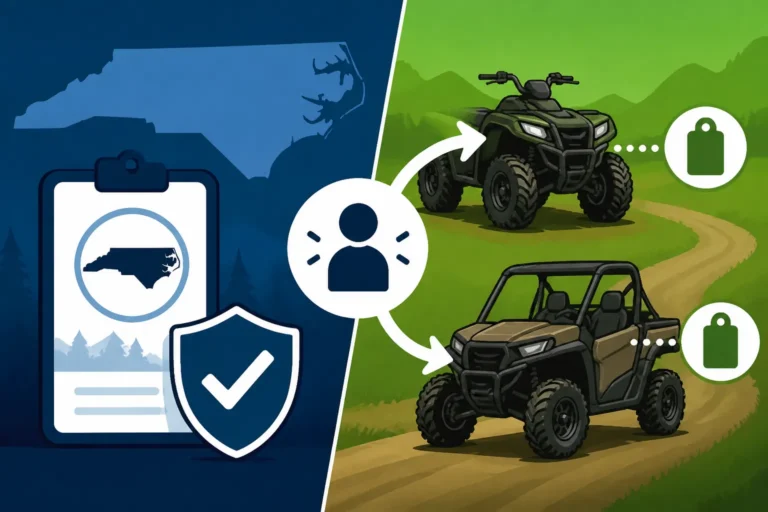
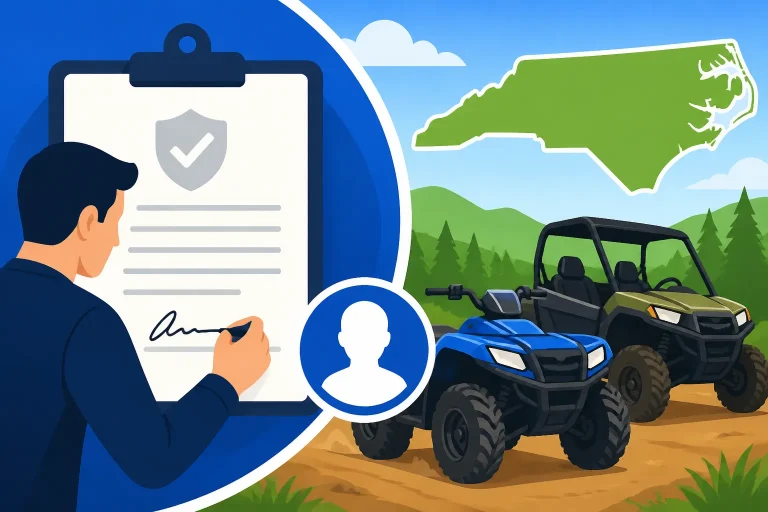
Written permission is a practical safeguard, even when the owner is willing to give verbal consent. A short text or email can record what both sides agreed to and help avoid misunderstandings about where and when you may ride. It does not replace checking the route or following applicable rules, but it gives everyone a clearer reference point.
| Situation | What to confirm before riding |
|---|---|
| A friend invites you onto their property | They own it or have authority to invite riders |
| A farm lane crosses several parcels | Permission covers each parcel and the full route |
| A tenant or caretaker offers access | They are authorized to allow recreational riding |
| A gate is open or the land is unposted | The owner or authorized manager has actually consented |
| A private trail connects to public land | Where private access ends and public-land requirements begin |
| A group ride is planned | The owner agrees to the number of machines, event, and use |
| A route changes or a new rider joins | The original permission covers the revised plan and participants |
For more on how access works on private ground, see Private Property Riding in North Carolina and North Carolina Landowner Permission Requirements. Permission addresses access; it does not, by itself, make every activity or route lawful.
What Permission Should Cover
A useful agreement answers more than “Can we ride here?” Be specific enough that the landowner and riders understand the same limits. A casual arrangement can still be clear: write down the details in a message, and ask the owner to correct anything that does not match their understanding.
Include these points where relevant:
- Who may ride. Name the riders, household, or group covered. Do not assume permission for one person automatically includes friends, children, guests, or a club.
- Which machines are allowed. Confirm whether the approval covers ATVs, UTVs, dirt bikes, or other vehicles. If the owner has limits on machine size, passenger count, or noise, record them.
- Where you may go. Identify the permitted trails, fields, roads, staging areas, and turnaround points. A map or marked route can help, particularly where property lines are hard to see.
- When access is allowed. Set the dates or general time window, and ask whether seasonal restrictions apply. Avoid arriving outside the agreed time or returning later without checking.
- How you may enter. Confirm the access point, parking or unloading location, and whether gates should be opened or left closed. Never cut a lock, move a barrier, or use another entrance because it seems more convenient.
- What is off limits. Ask about crops, livestock, buildings, equipment, hunting areas, water sources, and sensitive ground. Stay away from any area the owner excludes, even if it appears to connect to the approved route.
- What conduct is expected. Discuss speed, noise, passengers, alcohol, trash, fires, and whether the owner expects riders to avoid particular hours or conditions.
- How to handle a problem. Get a way to contact the owner or manager if a machine breaks down, a gate is damaged, someone is injured, or the route becomes unsafe.
Permission should describe the actual plan, not a broader assumption. If the owner allows a few riders on a short route, that is not the same as approval for a large gathering, commercial tour, race, or repeated club use. Ask again before changing the scale or purpose of the ride.
Written permission and proof
North Carolina riders can use a brief written note, email, or text to document an agreement. It should identify the property or route well enough to avoid confusion, the people or group covered, the allowed dates, and any limits. Both sides should keep a copy they can access while riding.
A phone photo of a message may be useful for reference, but it is not a substitute for permission in the first place. If the owner asks riders to carry a specific document or follow a check-in procedure, do so. For more practical detail, see Written Permission on Private Ground in North Carolina.
Written permission is not the same as a release of liability, insurance coverage, or a guarantee that all risks are covered. Do not assume that a landowner’s agreement shifts responsibility for injuries or property damage. If an organized event, rental, business, or paid ride is involved, the owner and organizer may need to address additional requirements separately.
Permission Does Not Replace Other Rules
A landowner can allow you to use their property, but that permission does not erase other legal, safety, or land-use requirements. Riders still need to follow applicable rules for their machines and conduct. Depending on the circumstances, that can include rules involving helmets, minors, passengers, equipment, noise, impaired riding, and damage to property.
The same distinction applies when a private route connects to a public road or public riding area. Permission to cross private land does not authorize riding on a road where the machine is not allowed. It also does not serve as a forest permit or grant access to public property. Before continuing onto a public forest trail, check whether that area requires a permit; Do You Need a Permit for North Carolina Forest Trails? explains why private-land consent and public-land access are separate questions.
A nearby trail, forest, game land, or utility corridor is not automatically included in a landowner’s approval. Public land may have its own access rules, permits, seasonal closures, and permitted routes. Game lands, in particular, should not be treated as open ATV riding areas just because they are state-managed. Check North Carolina Rules for Riding Game Lands before planning a route through or beside them.
Do not ride along roads, shoulders, or easements simply because they appear to cross private land. An easement may allow certain kinds of access without granting general recreational riding rights. Ask the property owner or the entity managing the route what use is allowed, and verify the limits before using it.
Private-property consent also does not make an ATV or standard UTV street legal. A landowner cannot authorize a rider to use a public street in a way that state law prohibits. If a route requires a public-road segment, check the rules for that machine and road before the ride rather than relying on the owner’s approval.
If you are renting a machine or joining a guided ride, ask the rental company or organizer where the route goes and who has authorized access. A rental agreement, waiver, or tour booking does not necessarily mean every trail or connecting road is open. Confirm what the rental includes and whether riders must obtain any separate access permission or permit.
A Practical Check Before You Unload
Use this short check each time you ride on someone else’s property, including land where you have ridden before:
- Confirm the person granting access has authority. If the land is leased, managed, or shared, clarify who controls recreational access.
- Get permission for the specific ride. State who is coming, what machines they will use, and when they plan to arrive.
- Confirm the route and boundaries. Use an agreed map or route description, and stop if the boundary is unclear.
- Ask about current conditions. Rain, fire risk, hunting activity, livestock, construction, or other changes may make a previously approved route unsuitable.
- Follow access instructions. Park only where allowed, close gates as directed, and do not bring additional riders without approval.
- Check every transition. If the route reaches another property, a public road, a forest, or game land, confirm the rules for that next section.
- Leave the property as agreed. Pack out trash, avoid unnecessary damage, report any incident promptly, and do not return after permission ends without asking again.
These steps are especially useful for group rides. One rider’s relationship with the landowner does not automatically authorize every participant. Have a clearly designated contact, keep the group together, and make sure everyone understands the route and restrictions before starting. If someone arrives late or brings an extra machine, pause to confirm the owner’s approval rather than treating the change as minor.
If the property is unfamiliar, do not use a navigation app as proof of access. Mapping tools can show roads and trails without confirming ownership, boundaries, or permission. When you cannot tell whether a route is approved, turn back and ask. The inconvenience of checking is smaller than the risk of trespassing, damaging property, or creating a dispute that could end future access for other riders.
Permission works best when it is specific, current, and respected. Ask before entering, stay within the agreed limits, and check separately for any public land or road on the route. For a broader overview of private access, see North Carolina Rules for Riding Private Land and North Carolina Trespass Rules for Riders.
Disclaimer
This article is for general informational purposes only and does not constitute professional advice. Laws, prices and regulations vary by location and change over time. Consult a qualified professional for guidance on your specific situation.