North Carolina’s Under-Eight Ban
One of the most heart-wrenching concerns for any parent who loves the thrill of off-roading is how to safely and legally introduce their children to the world of ATVs and UTVs in North Carolina. The rules around age and riding are notoriously confusing, often leading to conflicting information and genuine worry about doing the right thing for your kids and staying within the law. This comprehensive guide is here to untangle the complexities of North Carolina's age restrictions, with a particular focus on the infamous "under-eight ban," to ensure you have all the clear, actionable information you need to make informed decisions for your family.
Understanding North Carolina's Age Restrictions for ATV Riders
North Carolina has a clear stance when it comes to young riders and off-highway vehicles, and it's essential for every parent, guardian, and enthusiast to understand these rules inside and out. It's not just about avoiding a ticket; it's fundamentally about protecting our children from serious injury. The state has evolved its laws over the years to reflect growing concerns for rider safety, especially for the most vulnerable age groups.
The Evolution of NC's Age Rules: What's Changed?
For a long time, there was a lot of talk, and even some confusion, about specific engine size restrictions for younger riders in North Carolina. You might have heard whispers of a "70cc rule" or similar limitations. It's a common misconception that still circulates in some riding circles and old online forums. However, it's crucial to understand that North Carolina law repealed the 70cc rule for ATVs. This means that engine displacement alone is no longer the sole legal determining factor for a young rider's machine.
Instead, the focus has shifted, rightly so, to age and the manufacturer's recommendations. While the old rule aimed to match a child's size and skill to a machine, it proved to be an imperfect measure. Today's laws are designed to be more encompassing, considering the maturity and physical development of the child. This change has put more responsibility on parents and guardians to ensure their child is riding an appropriate machine, but it also provides a clearer, less ambiguous guideline than arbitrary engine sizes. We're talking about a move towards a more holistic approach to safety, rather than a single, easily outdated metric. You can read more about this in [Why the 70cc Rule Was Repealed in North Carolina].
The Strict "Under-Eight Ban" Explained
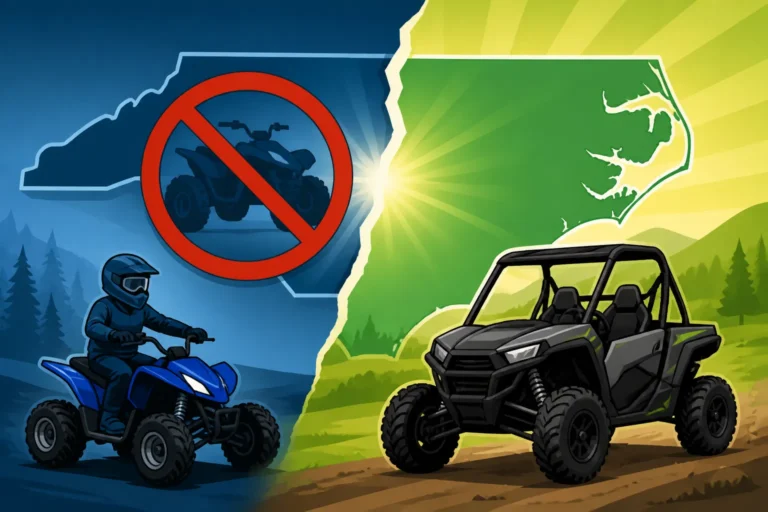
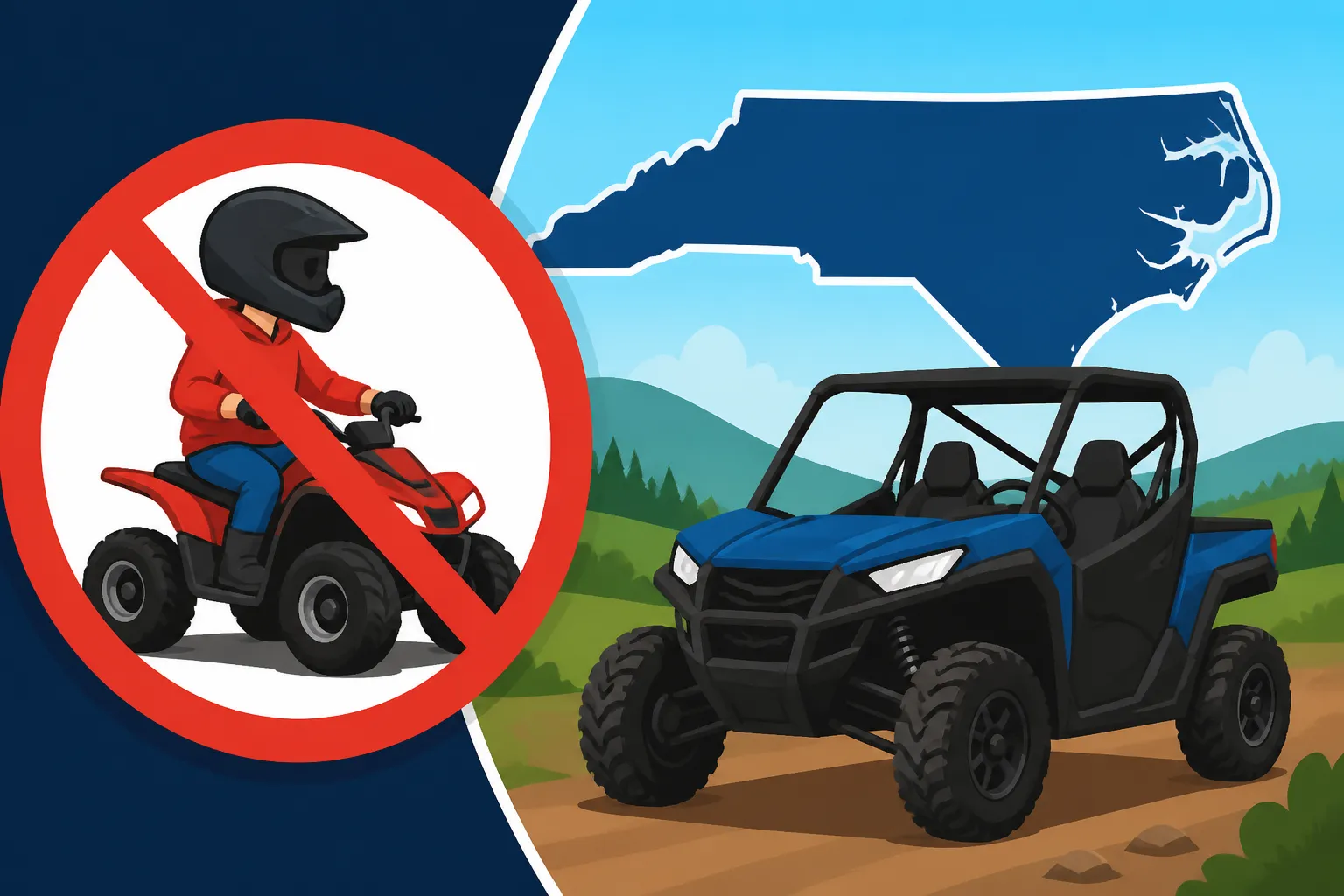
Let's cut right to the chase: North Carolina has a strict "under-eight ban" for operating ATVs and UTVs. This isn't a suggestion; it's the law. No child under the age of eight is permitted to operate an all-terrain vehicle in North Carolina, period. This rule applies across the board, whether you're on public lands, private property, or even your own backyard. There are no exceptions for farm work, parental supervision, or the size of the machine. The legislature made this rule abundantly clear because statistics show that children under eight are at a significantly higher risk of severe injury or fatality when operating these powerful machines. Their cognitive development, reaction times, and physical strength simply aren't mature enough to handle the complexities and inherent dangers of an ATV.
Imagine a situation where a curious six-year-old, even with the best intentions and some basic instruction, encounters an unexpected obstacle like a hidden rut or a sudden uphill climb. Their instincts, fine motor skills, and judgment are simply not developed enough to react appropriately, often leading to a loss of control. This ban is a protective measure, designed to shield our youngest adventurers from situations they are not equipped to handle, regardless of how "small" the machine might seem or how "careful" a parent might be. It’s a hard line, but it's drawn with safety as the absolute priority. This specific rule is detailed further in [North Carolina's Under-Eight Ban].
Continuous Visual Supervision for Young Riders
While the "under-eight ban" is non-negotiable, for children aged eight and older but under sixteen, North Carolina law mandates "continuous visual supervision." This means that if your child is between eight and fifteen years old and operating an ATV, an adult (someone at least 18 years old) must be able to see them at all times. This isn't just about being in the same general area; it means having a direct line of sight, allowing the adult to intervene immediately if an issue arises.
Think about what "continuous visual supervision" truly entails. It means no sending your child off around a blind bend while you stay back at the camp. It means not allowing them to ride alone on a trail where you can't see them for more than a few seconds. This adult supervisor needs to be close enough to shout instructions, warn them of hazards, or even physically assist them if they get stuck or into trouble. It implies an active, engaged role from the supervising adult, not merely a passive presence. This level of oversight is crucial for developing young riders, helping them build skills, learn responsible riding habits, and react to unforeseen circumstances with immediate guidance. The law specifically outlines this in [Continuous Visual Supervision Under North Carolina Law].
Why the "Under-Eight Ban" Exists
The existence of a strict age ban, particularly for such young children, is not arbitrary. It's rooted in extensive research, accident data, and the plain realities of child development and ATV mechanics. When a state draws such a definitive line, it's always for very serious, well-considered reasons, driven by a commitment to public safety, especially for its most vulnerable citizens.
Safety Concerns and Accident Data
The statistics are sobering. All-terrain vehicles, by their very nature, are powerful, dynamic machines designed for challenging terrain. They require significant physical strength, coordination, balance, and quick decision-making skills. Children under the age of eight often lack the fully developed motor skills, depth perception, judgment, and physical size to operate an ATV safely. Their bone structure is more fragile, making them more susceptible to severe injuries like broken bones, head trauma, and internal injuries in the event of an accident. Even a low-speed tip-over can have devastating consequences for a small child.
Accident data consistently shows a disproportionately high rate of serious injuries and fatalities among very young ATV riders. These machines are not toys; they are capable of high speeds and can be unstable, especially on uneven ground or during sharp turns. The "under-eight ban" directly addresses these critical safety concerns by creating a legal barrier to protect children from situations where they are inherently at greater risk. It's about preventing tragedies before they happen, recognizing that a child's desire to ride cannot override the fundamental limitations of their physical and cognitive development.
Manufacturer Age Warning Labels and Their Legal Weight
You've undoubtedly seen them: those prominent warning labels plastered on every ATV and UTV, often stating "Not recommended for children under X years old" or similar. These aren't just suggestions from the manufacturer; in North Carolina, these labels carry significant legal weight. The state law explicitly references the manufacturer's age recommendations, making it illegal to permit a child to operate an ATV that is not age-appropriate according to the manufacturer's guidelines. So, if a particular ATV has a label recommending it only for riders 16 and older, even if your 12-year-old is otherwise allowed to ride under state law, operating that specific machine would be illegal.
This legal integration of manufacturer warnings is a smart way to ensure that the people who design and test these vehicles have their safety recommendations heeded by consumers and enforced by law. It means that even if a child is legally old enough (say, 10 years old), they still must be on a machine designated by its manufacturer as appropriate for their age range. This adds another layer of protection, preventing parents from putting a child on a machine that is simply too large or too powerful for them, even if the child meets the state's minimum age requirement. Always check the machine's warning labels before allowing a child to ride. This specific aspect is covered in [The Manufacturer's Age Warning Label in North Carolina].
The Repealed 70cc Engine Rule and Its Legacy
As mentioned earlier, the "70cc engine rule" is a phantom of North Carolina ATV law. It was once a guideline, suggesting that machines with engines larger than 70cc were not suitable for young riders. However, this rule was officially repealed. Despite its repeal, the memory of this rule lingers, causing considerable confusion among riders and parents alike. It pops up in old forum posts, casual conversations at the trailhead, and even outdated local handouts.
The legacy of the 70cc rule highlights the challenges of keeping up with evolving legislation. While the intention was good – to match machine power to rider capability – it became clear that engine size alone didn't tell the whole story. A 70cc machine could still be very fast or have characteristics that made it unsuitable for a small child, while some slightly larger engines might be designed with features like speed limiters or lighter frames that make them safer. The repeal of this rule moved the focus away from a single, potentially misleading metric and towards the more comprehensive approach of manufacturer recommendations and overall rider age, skill, and physical development. It's a reminder that relying on current, accurate information is paramount when it comes to ATV laws. Many still ask about this, which is why [Why the 70cc Rule Was Repealed in North Carolina] is a helpful resource.
Navigating the Rules for Riders Eight and Older
Once a child reaches the age of eight, the landscape of ATV riding in North Carolina shifts from a complete ban to a series of specific requirements designed to ensure their safety and responsible operation. It's not a free-for-all; rather, it's about providing the necessary training, supervision, and protective gear to make riding a positive and safe experience.
North Carolina's ATV Safety Certificate Requirement
For any person born on or after January 1, 1990, who is operating an ATV in North Carolina, obtaining an ATV Safety Certificate is mandatory. This rule applies to everyone, regardless of age, once they meet the birthdate criterion. While the focus of this article is on younger riders, it's especially relevant here because most children aged eight and above will fall into this category. The safety certificate proves that the rider has completed an approved ATV safety course, which teaches critical skills, hazard awareness, and responsible riding practices.
These courses typically cover topics such as pre-ride inspections, starting and stopping, turning, climbing and descending hills, traversing obstacles, and safe passenger transport. They emphasize proper riding posture, throttle control, and how to react in emergency situations. The certificate is a foundational element for ensuring that riders have at least a baseline understanding of how to safely operate these machines. It's important to remember that simply owning a machine or having ridden one informally for years doesn't exempt a rider from this requirement if they meet the birthdate criteria. You can find more details on how to get certified in [North Carolina ATV Safety Certificate Requirements].
Helmet and Eye Protection Mandates
Safety gear isn't just a suggestion; it's a legal requirement for many riders in North Carolina. Specifically, anyone under the age of eighteen who is operating or riding as a passenger on an ATV must wear a safety helmet and eye protection. This rule is in place to protect against head injuries, which are among the most common and severe types of injuries in ATV accidents, and to shield the eyes from debris, branches, or dust that can impair vision and lead to crashes.
The helmet must be a Department of Transportation (DOT) compliant motorcycle helmet. This isn't just any helmet; it needs to meet specific safety standards designed to protect against impact. Eye protection can include goggles or a face shield that is integrated into the helmet. Wearing prescription glasses alone is not sufficient. Even for riders eighteen and older, while not legally mandated on private land, wearing a DOT-compliant helmet and eye protection is always the smartest choice. Accidents can happen to anyone, regardless of age or experience, and proper gear significantly reduces the risk of serious injury. When gearing up, consider quality options from brands like SuperATV, which offers a range of DOT-approved helmets and protective eyewear suitable for various riding styles and age groups. This emphasis on safety equipment is critical and explored further in [North Carolina Helmet Law for ATV Riders] and [North Carolina Eye Protection Requirement].
Passenger Rules: When Can You Ride Double?
The question of carrying passengers on an ATV is another area where clarity is crucial, especially when children are involved. In North Carolina, it is generally illegal to carry a passenger on an ATV unless the vehicle is specifically designed by the manufacturer to carry more than one person. This means if you have a traditional single-seat ATV, you cannot legally or safely carry a child (or any passenger) on it, regardless of their age or how small they are.
Many UTVs (utility terrain vehicles or side-by-sides) are factory-designed with multiple seats and seatbelts, making them suitable for carrying passengers. However, even with a multi-passenger UTV, specific rules may apply regarding the age and size of the passengers, especially children. For example, children must be able to properly reach the handholds and footrests and be securely belted in. A key factor is whether the machine came from the factory with multiple seating positions, complete with seatbelts and appropriate footrests. Retrofitting a single-rider ATV with a "buddy seat" or allowing a child to sit in front or behind the operator on a single-seat machine is both illegal and incredibly dangerous. These machines are balanced for a single rider and adding an unsupported passenger dramatically alters the stability, making rollovers far more likely. Ensuring your machine is a genuine factory two-seater is vital for safety and legality when carrying any passenger, particularly a child. For more comprehensive details, refer to [North Carolina Passenger Rules on an ATV].
Exceptions and Special Circumstances for Youth Riding
While North Carolina's age restrictions are quite strict, there are specific contexts and scenarios that sometimes lead to confusion or where different rules might seem to apply. Understanding these nuances is key to navigating the state's ATV landscape responsibly, especially when young riders are involved. It's not about finding loopholes, but understanding the full scope of the law.
Riding on Private Land
Perhaps the most common environment for young riders to learn and enjoy ATVs is on private property. And indeed, North Carolina law largely defers to landowners when it comes to ATV use on their own property. Generally, the state's strict age restrictions, like the "under-eight ban" and the "continuous visual supervision" requirement, do apply even on private land. This is a critical point that many people misunderstand; they believe that "my land, my rules" completely overrides state law. However, while a landowner might permit riding, they cannot override a state statute designed for public safety.
What does differ on private land is primarily the enforcement of some other regulations, such as those pertaining to street-legal status, registration, and certain equipment requirements that are geared towards public roads or regulated trails. However, when it comes to the safety of minors, the state's intent is clear: these are fundamental safeguards. This means that if you're on your own sprawling farm or a friend's hunting lease, you still cannot let a child under eight operate an ATV, and a rider between eight and sixteen must still be under continuous visual supervision by an adult. Always ensure you have express permission to ride on private property, and be mindful that landowners can set additional rules beyond state law. For more on private land rules, see [North Carolina Rules for Riding Private Land].
Farm Operations and Exemptions
North Carolina law does recognize certain exemptions for ATVs when they are used as part of a legitimate "farming operation." This typically applies to farm owners, family members, or employees who use ATVs for tasks directly related to agricultural work, such as checking fences, herding livestock, or transporting tools and supplies across fields. These specific exemptions primarily concern road use, allowing ATVs involved in bona fide farming operations to briefly cross public roads or use certain public roads to move between fields, under very strict conditions.
However, it's vitally important to understand that these farming exemptions generally do not override the fundamental age restrictions for operating the ATV itself. A child under eight is still prohibited from operating an ATV even if it's for farm work. Similarly, riders under sixteen engaged in farm work would still likely need to meet the continuous visual supervision requirement, though the exact interpretation in a commercial farming context might vary slightly depending on the specific tasks and the direct supervision involved. The spirit of the law remains focused on rider safety. These exemptions are usually narrow and designed to facilitate agricultural activities, not to create loopholes for general recreational riding by minors. Always consult the specific statute or a legal professional if you believe a farming exemption might apply to your unique situation involving a minor.
Rental Machines and Age Requirements
Renting an ATV or UTV in North Carolina, whether for a guided tour or self-guided exploration, introduces another layer of age-related rules. Rental companies operate under strict liability and insurance considerations, and as such, they often have their own minimum age requirements that are higher than the state's minimum operating age. It's very common for rental companies to require operators to be at least 16 or even 18, and sometimes 21 years old, with a valid driver's license.
Even if North Carolina law allows a 10-year-old to operate an ATV under supervision, a rental company will almost certainly not permit a 10-year-old to be the primary operator of one of their machines. For UTVs, while children might be allowed as passengers, there will still be strict age, height, and seating requirements. Rental companies are highly motivated to minimize risk, and their policies reflect that. If you're planning a family trip that involves renting machines, always call ahead and confirm the exact age requirements for both operators and passengers with the specific rental outfitter. Don't assume that state law automatically means your child can rent or operate a machine from a commercial entity. They're typically going to be much stricter due to their insurance and liability concerns, which is a sensible business practice.
Consequences of Violating North Carolina's Age Laws
Ignoring North Carolina's age restrictions for ATV operation isn't just a minor oversight; it carries serious legal and personal consequences. These laws are in place to save lives and prevent injuries, and the state treats violations accordingly. As a parent or guardian, understanding these repercussions is crucial, not only for your own legal standing but for the well-being of your children.
Fines and Penalties for Non-Compliance
If a child under the age of eight is caught operating an ATV in North Carolina, or if a child between eight and fifteen is operating one without continuous visual supervision, the adult who permitted or enabled this operation can face significant penalties. This isn't just a slap on the wrist. Violations of these safety statutes are typically classified as infractions or misdemeanors, depending on the specific circumstances and the severity of the offense.
Fines can range from hundreds of dollars for a first offense, and subsequent offenses can see those fines increase substantially. In addition to monetary penalties, a conviction could lead to a criminal record, which can have long-lasting implications. Furthermore, if an accident occurs while these laws are being violated, the legal consequences can escalate dramatically, potentially involving charges of reckless endangerment or even more severe felony charges if serious injury or death results. Law enforcement officers, including sheriff's deputies, state troopers, and forest service rangers, are empowered to enforce these rules. Ignorance of the law is never a valid defense, so staying informed is your best protection. You can learn more about potential penalties in [North Carolina Fines for an ATV Violation].
Insurance Implications and Liability
Beyond the legal penalties, violating North Carolina's ATV age laws can have devastating insurance implications. If an accident occurs while a minor is operating an ATV in violation of state law, your homeowner's insurance policy (which often provides some liability coverage for ATV use on your property) could deny coverage. This means you would be personally responsible for any medical bills, property damage, or legal fees resulting from the accident. Imagine an accident involving serious injury where the medical costs could easily climb into the tens or hundreds of thousands of dollars. Without insurance coverage, your personal assets could be at severe risk.
Furthermore, if your child injures another person or damages someone else's property while illegally operating an ATV, you, as the parent or guardian, could be held personally liable in a civil lawsuit. This liability can extend to the owner of the ATV, even if they weren't the direct operator. The "negligent entrustment" doctrine could come into play, where a person who entrusts a vehicle to someone they know or should know is not competent or legally permitted to operate it can be held responsible for any resulting harm. The financial and emotional toll of such a situation can be catastrophic, far outweighing the momentary fun of allowing an underage child to ride.
Protecting Your Young Rider and Yourself
Ultimately, North Carolina's age restrictions are designed to protect everyone involved: the young rider, their family, and the wider community. By adhering strictly to these laws, you are not only avoiding legal and financial repercussions, but you are also actively promoting a safer environment for your child to learn and grow in the sport. There's plenty of time for children to ride ATVs safely and responsibly when they reach the appropriate age and have the necessary training. Pushing them into it too young, or without proper supervision and gear, is a gamble with incredibly high stakes.
Investing in approved safety courses, ensuring proper protective gear (including options from reputable brands like SuperATV), and strictly following age and supervision mandates are the best ways to protect your child from harm and yourself from liability. It sets a positive example for responsible off-roading, teaching your children that safety is always the priority. The thrill of the ride should never come at the expense of a child's well-being or a family's financial stability.
Ensuring a Safe Riding Experience for All Ages
Once your child meets North Carolina's age requirements and you understand the legal landscape, the focus shifts to creating the safest possible riding environment. It's not enough to simply be "legal"; true safety goes above and beyond, incorporating proper equipment, comprehensive training, and continuous vigilance. This proactive approach ensures that every ride is not only fun but also as risk-free as possible.
Choosing the Right Machine for a Young Rider
Selecting an appropriately sized and powered ATV or UTV for a young rider is perhaps the single most important decision a parent will make, second only to ensuring they meet the legal age requirements. A machine that is too large, too heavy, or too powerful for a child's stature and skill level is an accident waiting to happen, even if the manufacturer's age label technically allows for it.
Here's what to consider:
- Physical Fit: Can the child comfortably reach the handlebars, footrests, and brake levers? Can they easily shift their body weight for steering and balance? A child should never have to stretch or strain.
- Engine Size and Power: While the 70cc rule is gone, common sense still applies. Start small and slow. Many manufacturers offer youth models specifically designed with lower power outputs, speed limiters, and lighter frames. As your child gains experience, they can gradually move up in machine size and power.
- Safety Features: Look for machines with features like speed limiters (which can be adjusted as skill improves), remote shut-off switches (allowing a supervisor to kill the engine from a distance), and sturdy construction. When looking for parts or accessories that might enhance control or safety, such as narrower handlebars or specific tire types for varied terrain, don't hesitate to check out offerings from companies like SuperATV to tailor the machine to your child's needs.
- Manufacturer Recommendations: Always defer to the manufacturer's age and size recommendations for a specific model. This is critical for both safety and legal compliance.
Remember, a child's skill and confidence grow over time. Starting them on a machine that allows them to master fundamental controls without being overwhelmed is crucial for building a strong foundation.
Proper Training and Safety Courses
The mandatory ATV Safety Certificate for those born after 1990 is just the beginning. While it provides a foundational understanding, ongoing training and practice are invaluable. Think of it like learning to drive a car; you get your license, but you continue to learn and refine your skills with every mile.
- Hands-on Training: Encourage your child to participate in approved hands-on training courses. These courses, often offered by organizations like the ATV Safety Institute (ASI), provide supervised, practical instruction in a controlled environment. They teach proper riding techniques for various terrains, emergency braking, turning, and how to handle obstacles safely.
- Parental Instruction: As a supervising adult, you play a critical role in reinforcing these lessons. Regularly review safety rules, practice skills in a safe area, and lead by example. Talk to your child about potential hazards, risk assessment, and decision-making on the trail.
- Progressive Learning: Don't throw your child into difficult terrain too soon. Start on flat, open ground, gradually introducing gentle slopes, turns, and small obstacles as their skills develop. Celebrate small victories and reinforce good habits. Consistency in training builds confidence and competence.
A well-trained rider is a safer rider, and ongoing education should be a continuous part of your family's off-roading journey. This also directly ties into the requirements outlined in [North Carolina ATV Safety Certificate Requirements].
Essential Safety Gear Beyond Helmets
While helmets and eye protection are legally mandated for minors, a comprehensive approach to safety gear extends far beyond these basics. Proper attire and additional protective equipment can significantly mitigate injuries in the event of a fall or collision.
Here's a checklist of essential gear for every rider, especially children:
- Long-Sleeved Shirt and Pants: Thick, durable fabrics like denim or specialized riding gear protect against scrapes, cuts, and brush. Even in warm weather, lightweight long sleeves are preferable to shorts and t-shirts.
- Over-the-Ankle Boots: Sturdy boots protect feet and ankles from impacts, crushing injuries, and hot engine parts. Avoid sneakers or open-toed shoes.
- Gloves: Riding gloves protect hands from blisters, impacts, and provide a better grip on the handlebars, especially in dusty or wet conditions.
- Chest Protector/Body Armor: For more aggressive riding or rocky terrain, a chest protector or full body armor can shield the torso, shoulders, and back from impacts. This is highly recommended for youth riders learning advanced skills.
- Knee and Elbow Pads: These add another layer of protection for joints, which are vulnerable in a fall.
Ensuring your child is fully geared up, from head to toe, for every single ride is non-negotiable. This isn't about being overprotective; it's about minimizing the risk of serious injury in a sport that inherently carries some level of danger. When outfitting your young rider, remember that quality gear is an investment in their safety. Look into reputable brands and retailers, like SuperATV, for durable, protective gear designed for the rigors of off-road riding.
By combining the right machine, thorough training, and comprehensive safety gear, you can create an environment where your children can safely and responsibly enjoy the exciting world of North Carolina ATV and UTV riding, always keeping in mind the foundational [What North Carolina Counts as an ATV].
| North Carolina ATV Age Requirements & Associated Rules |
|---|
| Age Group |
| Under 8 Years Old |
| 8 to 15 Years Old |
| 16 Years Old & Older |
| All Ages |
Disclaimer
This article is for general informational purposes only and does not constitute professional advice. Laws, prices and regulations vary by location and change over time. Consult a qualified professional for guidance on your specific situation.