Crossing a North Carolina Road and Nothing More
It's a familiar scenario for many off-road enthusiasts in North Carolina: you've got a fantastic trail system or a sprawling piece of private land, but to get from one section to another, there's that pesky public road in between. This seemingly small obstacle can feel like a giant wall, leaving you wondering if you're risking a hefty ticket just to cross it. This guide is here to untangle the rules, clarify the common misconceptions, and help you understand exactly when and how you can legally cross a North Carolina road with your ATV or UTV without inviting trouble.
The Basic Rule: Are ATVs Street Legal in North Carolina?
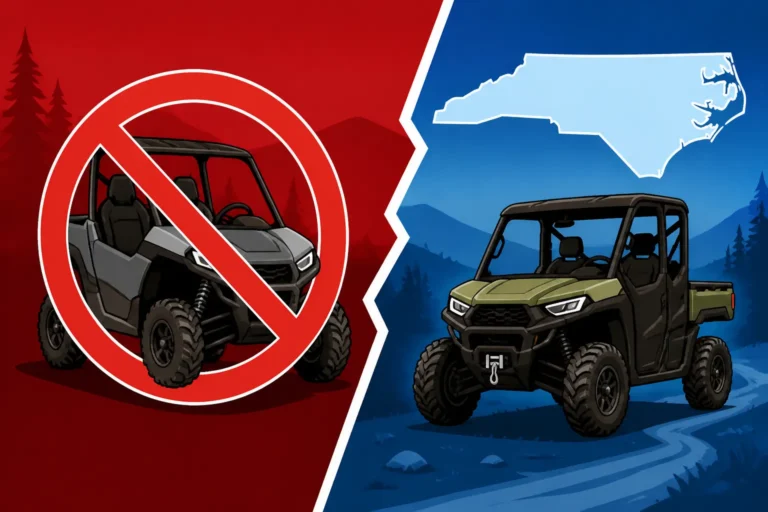
Let's get this out of the way upfront, because it's the root of so much confusion and frustration for riders. Generally speaking, ATVs and UTVs are not street legal in North Carolina. You can't just hop on your quad or side-by-side and cruise down the highway to the grocery store or a friend's house. The state defines these machines as off-road vehicles, and for good reason—they aren't designed with the same safety features as conventional cars or trucks, nor are they regulated for road use in the same way. This fundamental prohibition can feel like a real barrier when all you want to do is bridge a short gap between your favorite riding spots.
The General Prohibition and Rider Frustration
The law is pretty clear: a typical ATV or UTV isn't equipped or intended for use on public streets, highways, or even most secondary roads in North Carolina. They lack things like turn signals, proper headlights and taillights for consistent road use, and often have tires that are too aggressive for pavement. For many riders, this rule is a constant headache. You might own vast tracts of land, or have permission to ride on multiple parcels, but if a county road splits them, suddenly your freedom is curtailed. This is especially frustrating for folks living in rural areas where the nearest trail access might involve a quick jaunt down a quiet road. The feeling of being "stuck" is very real, even if you’re just trying to get from your driveway to a logging road across the street.
When the Pavement Becomes a Barrier
Imagine you're riding a beautiful network of trails that are perfectly legal and permitted, but a two-lane state road bisects the property. Or perhaps you have a sprawling farm, and you need to move equipment—and yourself—from the hayfield on one side of a public road to the barn on the other. In these situations, the pavement isn't just an inconvenience; it becomes a genuine barrier. Riders often ask, "Can't I just quickly cross?" because the alternative – loading up a heavy machine onto a trailer for a 50-foot journey – seems utterly absurd. This is where the nuanced understanding of North Carolina's regulations comes into play, particularly when dealing with the rules for [Are ATVs Street Legal in North Carolina?].
The Simple "Crossing" Loophole
Thankfully, North Carolina law does provide a very specific, limited exception to the general prohibition against riding ATVs and UTVs on public roads. This isn't a carte blanche to ride down the road for miles, but rather a narrow allowance for crossing. The intent of this exception is to facilitate access to legal riding areas or private property that may be divided by a public thoroughfare. It's designed for those instances where the road is merely an obstacle to overcome, not a pathway to travel upon. Understanding the precise definition of "crossing" is absolutely crucial, because misinterpreting it can lead to tickets and fines.
Understanding the "Crossing" Exception
The core of the matter lies in understanding what "crossing" actually means in the eyes of North Carolina law. It's not about riding along a road, even for a short distance, but about moving directly across it. This distinction is paramount and often where riders get into trouble if they're not careful. The law intends for this to be a swift, direct maneuver to get from one side to the other, minimizing the time spent on the public right-of-way.
Defining "Crossing" vs. "Riding Along"
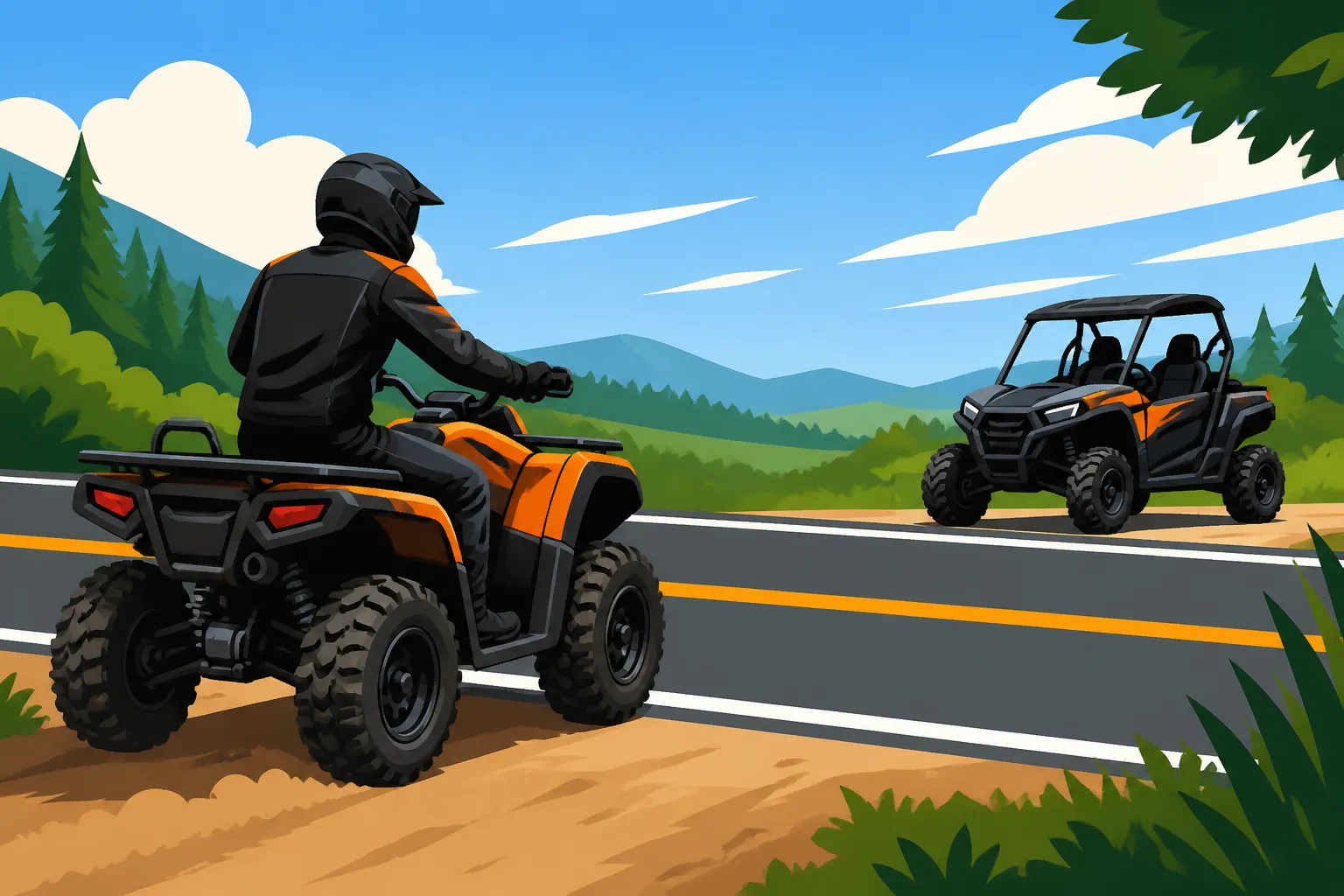
North Carolina law permits an ATV or UTV to cross a public street or highway at an angle of approximately 90 degrees to the direction of the road, and only if the operation is otherwise lawful. This means you must enter the road, move directly across to the opposite side, and exit the road as quickly and safely as possible. Think of it like crossing a creek – you go straight across, not up or down stream. You absolutely cannot drive along the road, even for a short stretch, to find a more convenient entry point on the other side, or to avoid an obstacle on private land. That's where the "riding along" violation comes in, and that's a different animal entirely. The whole point is to minimize your exposure to regular traffic and maintain the off-road nature of your machine's use. For more details on this, check out [North Carolina Rules for Crossing a Road].
The "Most Direct Route" Principle
When crossing, you must take the most direct route across the highway. This isn't just about the angle; it also means you can't weave, make turns to prolong your time on the road, or use the road to bypass a muddy spot on your trail. The intent is clear: get off the public road as quickly and safely as possible. This requires a bit of planning, especially if you're navigating between two trail segments or pieces of private property. You need to identify your entry and exit points clearly and make sure they align for a direct crossing. It also means you need to be constantly aware of traffic conditions. Pausing in the middle of a lane to decide where to go next is not only unsafe but also contrary to the "most direct route" principle.
When is a Road Not a Road?
This can be a tricky area, especially in very rural parts of North Carolina. While the law generally refers to "public streets or highways," there are often private driveways, unpaved logging roads, or dirt paths that look like public roads but are, in fact, privately owned and maintained. Riding on these private roads with the landowner's permission is usually fine, but the moment they intersect or become a clearly marked public right-of-way, the "crossing" rules kick in. It's crucial to understand the legal status of the road you're on or about to cross. A good rule of thumb is: if it's maintained by the state, county, or municipality, and open to general public vehicle traffic, assume it's a public road subject to these crossing rules. If you're unsure, it's always safer to assume it's public. This due diligence can save you a lot of grief.
Specific Scenarios for Road Crossings
While the general rule for crossing is straightforward, real-world situations often present unique challenges. Understanding how the "crossing" exception applies in various contexts, from connecting private parcels to assisting with farm work, is crucial for staying on the right side of the law.
Connecting Private Lands or Trail Segments
This is perhaps the most common reason riders want to cross a public road. You might own property that's divided by a county road, or you might have permission to ride on two adjacent parcels owned by different individuals, with a public road running between them. In these cases, the crossing exception is your go-to. You are permitted to cross directly from one side to the other to access the other portion of your land or the authorized riding area. This isn't an invitation to ride down the street to the next entrance; it's strictly for traversing the road to continue your off-road journey. Always prioritize safety: come to a complete stop, look both ways multiple times, and yield to all traffic. Even if the road seems deserted, a vehicle can appear quickly, especially on rural roads where speeds might be higher. This is also where good visibility features on your machine, like bright lights or even a tall flag, come in handy.
The Farm Operations Exemption
North Carolina has a specific provision for ATVs and UTVs used in farming operations. This is a bit different from the general "crossing" rule. Under the [North Carolina Farming Exception for ATVs], these machines can be operated on public roads and highways for the purpose of farming operations, but only on roads that have a posted speed limit of 35 miles per hour or less. This exception allows farmers to move their machines from one field to another, or to transport feed or tools, without having to trailer their machines every time. However, this is not a general permit for recreation or non-farm-related travel. The machine must be directly engaged in or supporting a bona fide farming operation, and the operator must adhere to road rules. This is a critical distinction that many recreational riders misunderstand, sometimes attempting to apply the farm exception to their leisure rides.
Emergency Situations and Utility Work
In true emergency situations, common sense and public safety often override specific recreational vehicle statutes. For example, if a severe storm has downed trees and a property owner needs to quickly access equipment with their UTV to clear a blocked driveway or assist a neighbor, they would likely be afforded leniency for a short, direct road use. Similarly, utility workers often use ATVs and UTVs to access remote power lines or infrastructure, and they may need to briefly use or cross public roads as part of their official duties. These are not recreational uses and are generally covered under different statutes or common-law allowances for emergency or necessary public service. For the average rider, however, relying on an "emergency" excuse for casual road use is a dangerous gamble and almost certainly won't hold up in court.
Equipment and Safety Considerations for Crossing
Even though you're only on the road for a fleeting moment, safety should be your absolute top priority. Public roads are designed for vehicles moving at higher speeds, and your ATV or UTV can be less visible and maneuverable than a car. Making sure you and your machine are prepared for that brief interaction with traffic is vital.
Visibility is Key: Lighting and Flags
Your off-road machine might be perfectly equipped for the trails, but a public road requires a different kind of awareness. Bright headlights and taillights are essential, especially if you find yourself needing to cross near dusk or dawn. While your machine might not need full DOT-approved street lighting for a simple crossing, having bright, functional lights significantly increases your visibility to oncoming traffic. Many riders also use tall, brightly colored safety flags, often mounted on a whip, to make their presence known, particularly if they're coming out of a wooded area onto a road with limited sight lines. Companies like SuperATV offer a range of lighting and flag accessories that can greatly enhance your safety during these brief road interactions. Remember, the goal is to be seen well in advance, giving motorists ample time to react to your presence. Consider the advice in [North Carolina Lighting Requirements for ATVs] and [North Carolina Rules for Riding After Dark].
Personal Protective Equipment: Helmets and Eye Protection
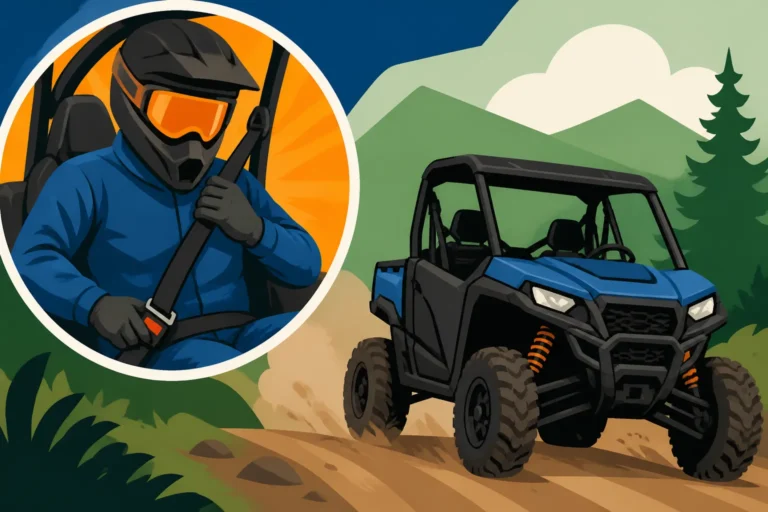
Even for a quick crossing, you should always be wearing appropriate personal protective equipment (PPE). In North Carolina, riders under 18 are legally required to wear a DOT-approved safety helmet and eye protection when operating an ATV or UTV. While this specific rule might not apply to adults over 18, it's an incredibly wise practice for everyone, regardless of age. The risks associated with a collision on a public road are severe, and a helmet can literally be a lifesaver. Shattered windshields, flying debris, or even just dust from passing vehicles can impair your vision, so eye protection is also non-negotiable. Don't let the short distance lull you into a false sense of security; always gear up properly. For more information, refer to [North Carolina Helmet Law for ATV Riders] and [North Carolina Eye Protection Requirement].
Rider Responsibility and Due Diligence
Ultimately, the responsibility for a safe and legal crossing rests squarely on the operator. This means being acutely aware of your surroundings, understanding traffic patterns, and having your machine in good working order. Before you even think about entering a public road, stop completely at the edge of the pavement. Look both ways multiple times. Listen for approaching vehicles. If there's a blind curve or a hill crest, consider whether it's truly safe to proceed. If visibility is poor, or traffic is heavy, it might be better to find an alternative, even if it means trailering your machine. Never assume that motorists will see you or anticipate your presence. Exercise extreme caution and good judgment every single time you cross.
Penalties and Enforcement
Ignoring North Carolina's rules for road use can lead to consequences that go beyond a simple slap on the wrist. Law enforcement in the state takes these regulations seriously, primarily due to safety concerns for both ATV/UTV operators and other road users. Understanding what constitutes a violation and the potential penalties can help you avoid costly mistakes.
What Constitutes a Violation
A violation occurs if you operate your ATV or UTV on a public street or highway in North Carolina outside of the very specific "crossing" or farm operations exceptions. This includes riding along the shoulder, using the paved surface as a trail connector for more than a direct crossing, or failing to yield to traffic while crossing. If you're spotted by a law enforcement officer engaging in any of these prohibited activities, you could be stopped. The key distinction is the "direct crossing" requirement; anything that deviates from that brief, perpendicular traverse is likely to be considered illegal road use. This is why being absolutely clear on [North Carolina Rules for Riding a Public Street] is so important.
Potential Fines and Consequences
Operating an ATV or UTV illegally on a public road in North Carolina is typically treated as a Class 3 misdemeanor. This can result in fines, court costs, and potentially even points on your driver's license, depending on the specifics of the charge and any other infractions. While I can't provide specific dollar amounts, these fines are generally not trivial and can quickly add up once court fees and other charges are factored in. Beyond monetary penalties, repeat offenses or dangerous driving could lead to more severe consequences, including confiscation of the machine in extreme cases, or even charges for reckless driving. It's simply not worth the risk to yourself, your machine, or your wallet. Learn more about [North Carolina Fines for an ATV Violation] to understand the potential impact.
Interacting with Law Enforcement
If you are stopped by a law enforcement officer while operating your ATV or UTV on a public road, remain calm and cooperative. Officers are primarily concerned with safety and ensuring compliance with the law. Clearly explain your intentions (e.g., "I was making a direct crossing between my two pieces of property to access my trail system"). Be prepared to show any relevant documentation, such as proof of ownership or land permission, if asked. While cooperation doesn't guarantee you won't receive a ticket, it generally leads to a more favorable interaction than being argumentative or non-compliant. Officers are enforcing laws designed to prevent accidents and protect everyone on the road.
Alternatives to Road Crossings and Limited Road Use
Sometimes, even with the crossing exception, the safest and most practical option isn't to take your chances on a public road. Thankfully, there are other strategies and specific machine types that offer legitimate ways to navigate the landscape without breaking the law or risking your safety.
Trailering: The Safest Bet
For many riders, the most straightforward and legally compliant solution to road barriers is simply to trailer their ATV or UTV. If the distance between two riding areas is significant, or if the road crossing feels too dangerous due to heavy traffic or poor visibility, trailering is always the safest option. It removes all doubt about legality and eliminates the risk of collision with other vehicles. While it might take a few extra minutes to load and unload, that time is a small price to pay for peace of mind and safety. Many riders invest in a small utility trailer precisely for this purpose, allowing them to easily move their machines between different riding spots across the state, from the Uwharrie National Forest to the trails around Badin Lake.
The Modified Utility Vehicle (MUV) Route
North Carolina does have a specific classification for certain UTVs that allows them to be legally operated on public roads under certain conditions: the Modified Utility Vehicle, or MUV. This is a very distinct category with strict requirements. To qualify as an MUV, a UTV must meet specific criteria regarding engine size (more than 2,400cc), dimensions (length, width, height), and a top speed of at least 40 mph. Additionally, MUVs must be registered with the North Carolina DMV and be equipped with standard street-legal features like turn signals, a speedometer, mirrors, and seatbelts. This is the only true path to making a UTV street-legal in North Carolina, and it's not a simple modification. Most standard side-by-sides do not meet these requirements without significant, often impractical, upgrades. If you're serious about limited road use, understanding [North Carolina MUV Street Legal Requirements] is crucial, but remember, this is a distinct path from the general ATV/UTV crossing rules. You can explore products from a company like SuperATV to see if they offer specific MUV conversion kits or components that could help, but always verify compliance with NC DMV regulations. The difference between an MUV and a standard UTV is night and day in the eyes of the law, as highlighted in [Why an MUV Is the Only Street-Legal Path].
Seeking Local Government or Landowner Solutions
In some cases, especially in areas with extensive private land holdings or dedicated trail networks, local governments or large landowners might have specific agreements or alternative solutions in place. For instance, a county might designate specific short stretches of unpaved road as ATV-friendly to connect trail systems, or a large private land owner might create private access roads that bypass public routes entirely. It's always worth checking with local county commissioners, parks and recreation departments, or large land managers (like forest services) to see if such solutions exist in your riding area. Additionally, if you're riding on private land that borders a road, good communication with the landowner about safe crossing points and practices is always beneficial. Respect for private property, including adhering to [North Carolina Landowner Permission Rules], can open doors to more flexible riding opportunities.
Comparison of Road Use Scenarios
To help clarify the distinctions between permitted and prohibited road uses for ATVs and UTVs in North Carolina, here’s a quick overview:
| Scenario | Legality (NC Law) | Key Conditions / Requirements | Operator Actions & Notes |
|---|---|---|---|
| Direct Crossing | Generally Permitted (Limited Exception) | – Approximately 90-degree angle to the road. – Most direct route across. – Yield to all traffic. – Must be legal to operate off-road on both sides. |
– Stop completely at the road's edge. – Look/listen carefully, multiple times. – Cross quickly and safely. – Prioritize visibility (lights, flag). – Example: Going from your land on one side of a county road to your land on the other. |
| Riding Along a Road | Generally Prohibited | – Any travel parallel to the road for any distance. | – Illegal. This is a common violation. – Example: Driving down the shoulder for 100 yards to reach a field entrance. |
| Farm Operations | Permitted (Specific Exemption) | – Directly involved in bona fide farming operations. – Road speed limit 35 mph or less. – Operator must adhere to road rules. |
– Requires the machine to be used for farming tasks. – Not for recreational use. – Example: Farmer moving tools between fields on a rural road with a 25 mph limit. |
| Modified Utility Vehicle (MUV) | Permitted (Full Street Legal, Limited Roads) | – Must meet specific engine, dimension, speed requirements. – Registered with NC DMV. – Equipped with full street-legal features (lights, signals, mirrors, etc.). – Operable on roads with speed limits of 55 mph or less (unless otherwise posted). |
– Requires significant machine modification and official registration. – Only applies to qualifying UTVs. – This is a dedicated street-legal category, not a general ATV/UTV rule. – Example: A custom-built UTV meeting all MUV specs, registered, and driven to a nearby store on a 45 mph road. |
| Recreational Road Use | Generally Prohibited | – Any use of public roads for leisure, commuting, or non-exempt purposes. | – Illegal. This is the general rule for ATVs and most UTVs. – Example: Taking your quad for a joyride down a residential street. |
Disclaimer
This article is for general informational purposes only and does not constitute professional advice. Laws, prices and regulations vary by location and change over time. Consult a qualified professional for guidance on your specific situation.