North Carolina Farming Exception for ATVs
It's incredibly frustrating when you rely on your ATV or UTV for essential farm tasks, only to feel caught in a legal gray area every time you need to cross a road or move equipment down a short stretch of pavement. North Carolina's rules about riding off-road vehicles on public roads can feel incredibly restrictive, often making simple tasks like getting to the back forty feel like a high-stakes gamble with law enforcement. This guide is here to untangle the specifics of North Carolina's farming exception, helping you understand when and how you can legally use your ATV or UTV on public roads for agricultural purposes without running afoul of the law.
What is the North Carolina Farming Exception?
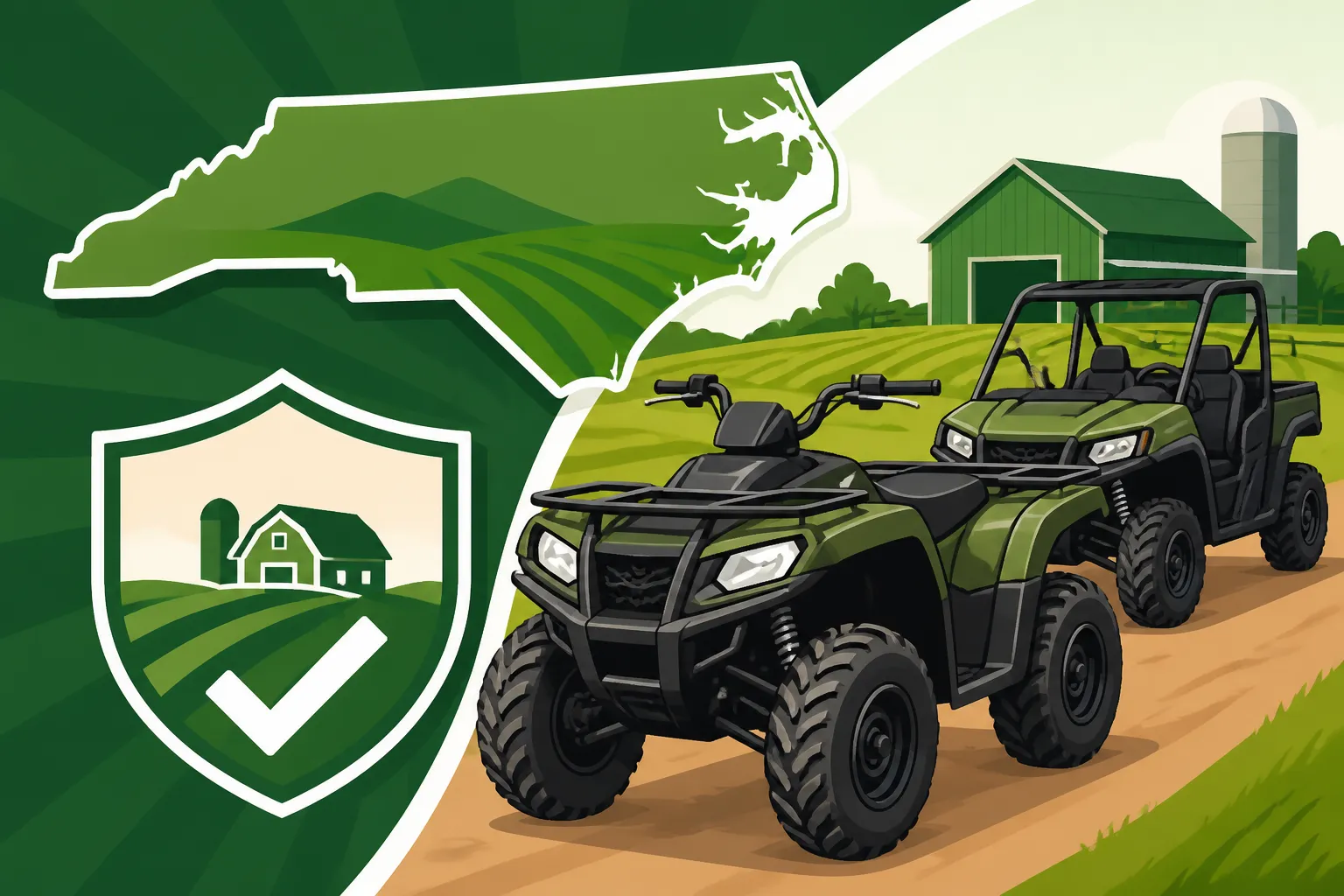
North Carolina, like many states, recognizes that an ATV or UTV isn't just a recreational toy for farmers; it's a vital piece of equipment for daily operations. Imagine having to hook up a tractor to move a small trailer of feed just to get it across the street to another pasture, or needing to drive a pickup truck around a mile-long perimeter road when your side-by-side could do it in minutes. The North Carolina farming exception exists precisely to prevent these kinds of unnecessary logistical headaches and to acknowledge the practical realities of modern agriculture. It's a specific allowance carved out in the state's vehicle laws that permits the limited use of ATVs and UTVs on public roads when directly engaged in bona fide farming operations.
The Core Purpose: Why It Exists for Agriculture
At its heart, the farming exception is about efficiency and necessity for those making a living from the land. Farmers in North Carolina often own multiple tracts of land, or their fields might be bisected by a public road. They need to move tools, feed, supplies, or even check on livestock in adjacent pastures quickly and efficiently. Hauling an ATV on a trailer just to cross a 50-yard stretch of pavement is simply not practical or time-efficient for the constant, small movements required on a working farm. This exception isn't about giving farmers a free pass to joyride on public roads; it's a recognition that their vehicles are work implements and sometimes the "work" requires traversing public ways for short distances as part of a continuous farming operation. Without this exception, the logistical burden on North Carolina's agricultural community would be significant, hindering productivity and increasing operational costs.
Defining "Farm Business": What Activities Are Covered
The key to understanding the North Carolina farming exception lies in the phrase "bona fide farming operations." This isn't just about owning land; it's about actively engaging in agriculture. So, what exactly falls under "farm business"? Think about the daily grind of a farmer:
- Moving Equipment: Transporting a sprayer from one field to another across a public road.
- Checking Livestock: Driving to an isolated pasture to check on cattle or fencing.
- Hauling Supplies: Taking a small load of fertilizer, seeds, or feed from a barn to a field, or from one part of the farm to another.
- Inspecting Crops: Driving along field edges that border a public road to inspect crop health.
- Repairs and Maintenance: Transporting tools or parts to a piece of machinery broken down in a distant field.
It's crucial that the use is directly and immediately related to these tasks. It's not for a leisurely ride after chores or a trip to the local convenience store for a soda, even if you’re still in your work clothes. The intent and purpose of the trip must be unequivocally agricultural. For further context on what roads might be accessible, you can look at [North Carolina Rules for Riding a Public Street] generally, but remember the farm exception is a very specific carve-out.
Distinction from Street Legal MUVs: How It's Different from Full Road Registration
It's really important not to confuse the farming exception with the full street-legal Modified Utility Vehicle (MUV) registration route. While both allow some road use, they are fundamentally different in their scope and requirements. The MUV designation is a separate, more rigorous pathway that essentially converts certain UTVs into street-legal vehicles akin to low-speed cars. This involves specific modifications, inspections, and traditional vehicle registration with the DMV, as detailed in articles like [North Carolina's Modified Utility Vehicle Route] or [North Carolina MUV Registration Requirements].
The farming exception, on the other hand, does not require your ATV or UTV to be registered or titled for road use, nor does it demand specific MUV-level modifications like turn signals, horns, or windshield wipers. It's an exemption from the general prohibition of ATVs/UTVs on public roads, specifically for farming activities. You're not making your ATV "street legal" in the same way an MUV is; you're simply being permitted a very limited, purpose-driven use on public roads. This means your farming ATV is still fundamentally an off-road vehicle in the eyes of the law, even when you're briefly crossing a road on farm business. You're not expected to have full road-going headlights or tail lights in the same way an MUV would, though basic lighting is always a good idea for safety, especially if you're out near dusk or dawn.
Who Qualifies for the Farming Exception?
Understanding who can actually use this exception is just as important as knowing what it covers. It’s not a free-for-all for anyone who owns a property with a few rows of tomatoes. The law is quite specific about the operator and the context. You wouldn't want to find yourself explaining to a state trooper that you were "farming" your backyard when you're miles from any agricultural activity.
Farmers and Farm Employees: Who Can Operate
The farming exception is generally granted to bona fide farmers and their employees. This means:
- The Landowner/Operator: If you own and actively manage a farm, you're the primary person this exception is designed for. Your daily tasks often require these quick, necessary road crossings.
- Immediate Family Members: Often, family members who are directly involved in the farm's operations also qualify. Think of a son or daughter helping with chores or driving supplies.
- Farm Employees: Hired hands who are performing tasks as part of their employment on the farm are also covered. This is crucial for larger operations where multiple people are working the land.
The key thread here is the direct involvement in the farm's operations. If your cousin comes to visit and takes your UTV for a spin on the road, even if it's "to see the cows," they likely wouldn't qualify unless they are genuinely a part of the farm's workforce. The rule of thumb is: if they're not getting paid or actively contributing to the farm's production, they probably shouldn't be on a public road under this exception. For specifics on who is covered under the exception, you'd want to understand [Who in the Household May Ride on Farm Business].
Type of Machine: What an ATV or UTV Needs to Be
North Carolina's statutes refer to "all-terrain vehicles," which broadly covers both traditional ATVs (quads) and side-by-sides (UTVs). There aren't specific dimension or engine size requirements for a machine to qualify for the farming exception itself, unlike the strict criteria for a Modified Utility Vehicle. The assumption is that you're using a standard, factory-built ATV or UTV designed for off-road use.
However, a word of caution: while the law doesn't specify equipment requirements for the exception, general safety still applies. If your machine is falling apart or lacks basic operational safety features, you could still be cited for other violations. It's wise to ensure your machine is well-maintained and in good working order. A SuperATV winch or a good set of tires might be essential for farm work off-road, but on the pavement, ensure your brakes are in top shape and your tires have adequate tread for road contact. The goal is safe operation, regardless of the legal exception.
The Nature of the "Farm Business" Trip: Specific Scenarios
This is where many people get tripped up. The trip must be directly and solely for farm business. Let's look at some clear examples of what is covered:
- From one field to another: Driving your UTV carrying tools to repair a fence on an adjacent property that's part of your farm.
- Accessing a specific farm structure: Moving supplies from the main barn to a distant pump house or storage shed located just across a public road.
- Transporting items critical for immediate farm work: For instance, carrying newly purchased parts for a tractor that broke down in a distant field, directly from your farm shop to that field, using the shortest public road route.
What is not covered, despite how convenient it might seem:
- Running errands: You can't use the exception to drive to the hardware store for non-farm items, or even for farm items if the main purpose of the trip isn't to immediately apply those items in a continuous farming operation that directly involves the ATV's use on the road.
- Commuting: Driving your ATV to a friend's farm down the road to help them out, even if they're also farming, generally isn't covered under your farm exception, as it's not your "bona fide farming operation."
- Recreational use: This is the most obvious one, but bears repeating. Any joyriding, even on roads adjacent to your farm, is strictly prohibited. The moment your activity shifts from direct farm business to leisure, the exception evaporates.
Essentially, think of it this way: are you crossing the road because the farm business demands it, and is there no practical alternative? If the answer is yes, you're likely within the spirit of the exception. The article on [Riding a North Carolina Street on Farm Business] offers further insight into these scenarios.
How to Use the Farming Exception Responsibly
Even with the legal green light for farming operations, responsible use is paramount. Just because you can use your ATV on the road doesn't mean you should ignore basic safety or common sense. Other drivers aren't expecting an ATV on a public road, and you have a heightened responsibility to ensure safety for everyone.
Road Types and Speed Limits: Where and How Fast You Can Go
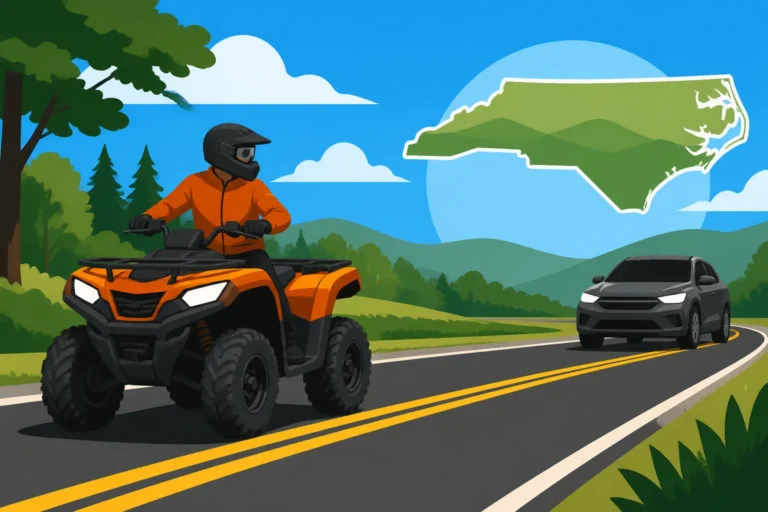
The farming exception generally applies to public roads, but there are still practical limitations. You're typically thinking about two-lane country roads or paved lanes that bisect your property. It's highly unlikely this exception would cover use on major highways, interstates, or heavily trafficked urban thoroughfares. The spirit of the law is for short, direct crossings or movements where the farm business dictates.
As for speed, the law often implies you should operate at a speed that is reasonable and prudent for the conditions, and certainly at a speed that allows you to safely maintain control and not impede traffic unnecessarily. While there isn't usually a specific maximum speed limit for ATVs under the farm exception (unlike the 35 mph limit often associated with MUVs in certain scenarios), you should never exceed posted speed limits for the road. More importantly, drive at a speed that is significantly less than what a typical car would travel, especially on narrow roads or those with poor visibility. Remember, ATVs and UTVs have different handling characteristics than cars, particularly at speed on pavement. They are not designed for high-speed road use. Be prepared to slow down significantly, and always be mindful of traffic around you. This also ties into [Crossing a Road on an ATV in North Carolina].
Equipment Considerations for Road Use: Practical Safety Add-ons
While the farming exception doesn't mandate the same equipment as an MUV, common sense and safety suggest some practical considerations for any road use:
- Visibility: Ensure your ATV/UTV is as visible as possible. Brightly colored machines, flags, and perhaps even an aftermarket SuperATV light bar (used appropriately, not glaring at oncoming traffic) can help. Running with your headlights on during the day is always a smart move. If you're using the exception to cross or use a road after dark, your machine must have functional headlights and taillights. You can review [North Carolina Rules for Riding After Dark] for more context.
- Signaling: While not required to have turn signals, using clear hand signals for turns or stops is crucial. Make eye contact with other drivers if possible.
- Brakes: Ensure your brakes are in excellent working order. Pavement offers less traction than dirt for stopping an ATV, and you might need to stop quickly.
- Tires: Knobby off-road tires can be squirrely on pavement. While you probably won't swap them out for every road crossing, be aware of their reduced grip and adjust your driving accordingly.
These aren't legal mandates under the exception, but they are crucial for your safety and the safety of others sharing the road. A little proactive safety can save you a lot of grief.
Navigating Public Streets Safely: Best Practices for Sharing the Road
When you're operating your ATV or UTV on a public road under the farming exception, you are sharing that space with vehicles that are much larger, faster, and driven by people who might not be expecting you. Here are some best practices:
- Stay Alert: Your full attention should be on the road, traffic, and your surroundings. Avoid distractions.
- Drive Predictably: Make your intentions clear. Signal turns well in advance (with hand signals), and don't make sudden movements.
- Yield to Traffic: Assume other vehicles have the right-of-way. Be prepared to pull over or stop to allow cars to pass safely, especially on narrow roads.
- Shortest Route: Always take the most direct and shortest route across or along the public road. The exception is not for extended travel.
- Single File: If you're moving multiple machines, always travel in a single file line.
- Wear a Helmet: While [North Carolina Helmet Law for ATV Riders] specifies requirements for riders under 18, wearing a helmet is a smart decision for any ATV operator on a public road, regardless of age. It dramatically increases your safety in case of an unforeseen accident.
- Be Prepared to Explain: Carry documentation that indicates you are a farmer or farm employee, should a law enforcement officer stop you. While not legally required for the exception itself, it can smooth over interactions and demonstrate your legitimate use.
Think of it as a brief, necessary intrusion into vehicle traffic, not a normal part of your ride. Courtesy and caution go a long way.
Common Misconceptions and What It Doesn't Cover
The North Carolina farming exception is a vital tool for the agricultural community, but it's often misunderstood, leading to potential legal troubles. It’s not a blank check to ride your ATV anywhere you please, and assuming it covers more than it does can result in fines, or worse, accidents.
It's Not a Blanket Road Pass: Limits of the Exception
This is perhaps the most critical point to grasp: the farming exception is not a blanket road pass. It doesn't mean your ATV is suddenly "street legal" for general purposes. It's a narrowly defined exception for a specific set of circumstances. You cannot use this exception to drive your ATV:
- To a friend's house for dinner, even if they're a farmer.
- To the gas station for personal vehicle fuel.
- To go hunting or fishing, even if the hunting land is adjacent to your farm. While [North Carolina Rules for Riding While Hunting] exist, they are separate from this exception for road use.
- To pick up groceries or run errands in town.
The moment your journey deviates from the direct and immediate needs of a bona fide farming operation, the exception no longer applies. Law enforcement officers are well aware of this distinction and will often look closely at the intent and destination of your trip. If it looks like personal use, you could be facing a citation.
Personal Use vs. Farm Business: The Critical Difference
The distinction between personal use and farm business can sometimes feel blurry, especially when your home is on the farm. However, the law generally requires the use to be solely for agricultural purposes.
- Farm Business: Driving from the barn to the south pasture to feed livestock is farm business.
- Personal Use: Driving from your house, which is on the farm, to a neighboring parcel you own but don't actively farm, just to look at the view, would generally be considered personal use.
- Farm Business (with nuance): If you're driving to that same neighboring parcel, which is part of your farming operation, to inspect a new irrigation line, that's farm business.
The intent really matters. If you find yourself thinking, "Well, it could be for the farm," then it's probably venturing into the gray area, and that's a risky place to be on a public road. When in doubt, err on the side of caution and use a conventional road-legal vehicle if your trip isn't unequivocally for direct farming operations.
Other Exceptions: Briefly Compare with Beach or Other Limited Uses
It's helpful to understand that North Carolina has other very specific, limited exceptions for ATV use on public lands or roads, but these are entirely separate from the farming exception and have their own distinct rules.
- Ocean Beaches: Some areas of North Carolina's coast allow ATVs/UTVs on designated ocean beaches, but these areas are highly regulated, often require permits, and have strict age and time restrictions. This is specifically covered in [North Carolina's Ocean Beach Rule].
- Emergency Services: Law enforcement, fire, and emergency personnel may use ATVs for official duties on public roads.
- Utilities: Utility companies sometimes have specific permissions for using ATVs/UTVs to access remote infrastructure.
Each of these exceptions is unique and cannot be interchanged. You cannot, for example, claim the farming exception to ride your ATV on an ocean beach, just as you can't claim beach access to drive your ATV down a country road for personal errands. Always refer to the specific legal allowance that applies to your situation, and if there's no clear exception, assume your ATV or UTV is restricted to private land. For broader rules on private land, you might want to consult [North Carolina Rules for Riding Private Land].
So, while the North Carolina farming exception is a valuable tool for farmers, it's a tool with very specific boundaries. Use it wisely, safely, and always within the confines of genuine agricultural necessity.
| Feature | North Carolina Farming Exception (ATV/UTV) | North Carolina Modified Utility Vehicle (MUV) | General ATV Use (No Exception) |
|---|---|---|---|
| Purpose | Bona fide farming operations only | General street-legal use | Off-road, private land only |
| Road Use | Limited, direct crossings/short travel on public roads | Extensive road use allowed on certain roads | Prohibited on public roads |
| Registration | Not required for road use | Required; titled and registered with NCDMV | Not required for off-road use |
| Modifications | Not specifically mandated, but safety recommended | Required (lights, signals, mirrors, etc.) | Not required, but safety is good |
| Inspection | No specific state inspection requirement | Annual safety inspection required | Not required |
| Insurance | Not specifically required by law for exception | Required, like any road vehicle | Recommended (e.g., liability) |
| Operator | Farmer, farm employee, immediate family | Licensed driver | Any age (with supervision rules for minors) |
Disclaimer
This article is for general informational purposes only and does not constitute professional advice. Laws, prices and regulations vary by location and change over time. Consult a qualified professional for guidance on your specific situation.