North Carolina Spark Arrester Requirement
Picture this: you've packed up your rig, loaded the ATV or UTV, and you're dreaming of hitting those incredible North Carolina trails—maybe the challenging loops of Uwharrie or the scenic routes of Brown Mountain. But then a nagging thought pops up: "Do I have all the right equipment? What about a spark arrester?" It's a question that can cause a lot of head-scratching and, frankly, unnecessary stress. This guide is here to clear up the confusion about North Carolina's spark arrester requirement, explaining what it is, where it applies, and how to ensure your machine is always trail-ready and compliant.
What Exactly Is a Spark Arrester, and Why Does North Carolina Care So Much About It?
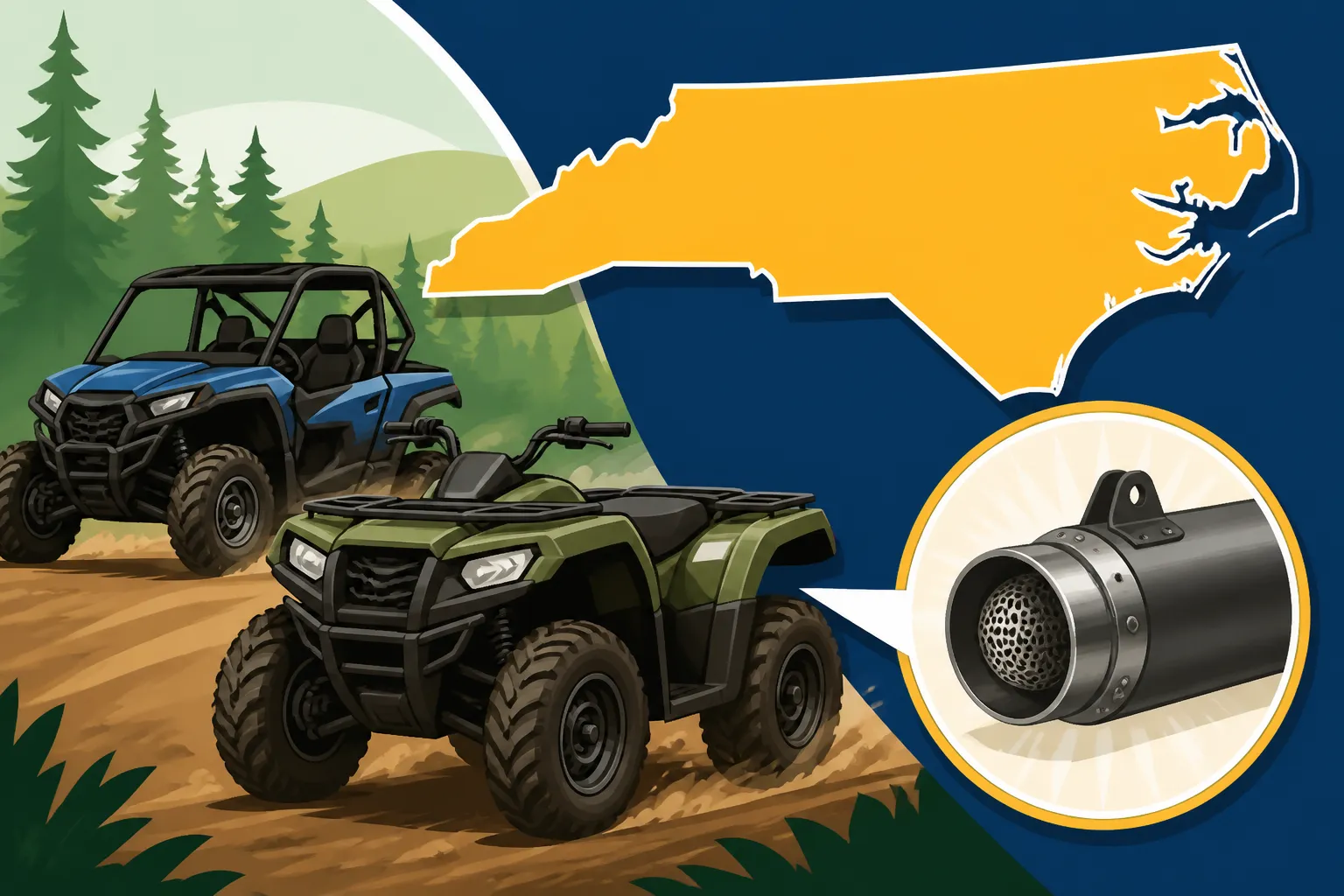
Let's get down to basics. An ATV or UTV spark arrester isn't some obscure, fancy piece of high-performance gear; it's a vital safety component designed to prevent wildfires. In the simplest terms, it’s a device incorporated into your machine's exhaust system that traps or destroys incandescent carbon particles – those tiny, super-hot embers – that are expelled from the engine. Without it, these glowing bits of carbon can easily fly out of your exhaust, land on dry leaves, grass, or pine needles, and start a devastating fire.
Imagine you're deep in the Pisgah National Forest, the ground covered in dry leaf litter from a warm autumn. Your engine is running hot, working hard up a climb. If your exhaust spits out a tiny, fiery ember, it's like flicking a lit match into a tinderbox. That's why forest management and state regulations take spark arresters so seriously. North Carolina, with its beautiful, vast, and often dry forests, is particularly vulnerable to wildfires. Our natural landscapes, from the sandy coastal plains to the dry mountain coves, depend on us being responsible riders. It's not just about protecting the land, though that's a huge part of it; it's also about protecting homes, livelihoods, and the very trails we love to ride. The requirement for a spark arrester is deeply rooted in public safety and environmental protection, ensuring that our passion for off-roading doesn't inadvertently lead to ecological disaster. It's a small device with a massive responsibility.
Where the Spark Arrester Rule Absolutely Applies in North Carolina
When we talk about spark arrester requirements in North Carolina, we are primarily talking about public lands, especially our magnificent National Forests. These are the places where most riders hit the designated OHV trails, and these are the places where the rules are strictly enforced. The Uwharrie National Forest, home to the popular [Badin Lake OHV Trail Complex], and the Pisgah National Forest, where you'll find the challenging [Brown Mountain OHV Trail System], are prime examples. The Nantahala National Forest also has areas like [Wayehutta OHV in Western North Carolina] where this rule is paramount.
Anytime you're riding on federally managed land, whether it's a designated trail system or a forest service road explicitly open to ATVs and UTVs, your machine must be equipped with a USFS (United States Forest Service) approved spark arrester. This isn't a suggestion; it's a non-negotiable requirement. While North Carolina doesn't have a universal, statewide ATV registration requirement, the federal rules governing its vast public lands fill that gap when it comes to equipment like spark arresters. Local county or city ordinances generally won't override federal regulations, so if you're on federal land, assume the rule applies.
Now, what about private land? If you're riding on your own property or land where you have explicit permission, the federal spark arrester rule technically doesn't apply. However, that doesn't mean it's a good idea to skip it. Fires don't respect property lines, and even on private land, you could easily start a blaze that spreads to neighboring properties or even public forests. Most seasoned riders would tell you it's simply good practice to always have a working spark arrester, no matter where you plan to ride. It's about being a good steward of the land and a responsible member of the riding community. Always make sure to [Riding Private Ground in North Carolina] safely and responsibly.
How to Check Your Machine's Spark Arrester and Stay Compliant
Ensuring your ATV or UTV is compliant with North Carolina's spark arrester requirement is usually straightforward, but it does require a bit of attention on your part. Most modern ATVs and UTVs come from the factory equipped with an integrated spark arrester in the muffler. The key is knowing how to confirm it's there and that it's in good working order.
First, you'll want to locate your exhaust system. The spark arrester screen is typically found at the very end of the muffler, or sometimes it's an internal component. What you're looking for is a stamp or marking that explicitly states "USFS Approved" or "Spark Arrestor" on the muffler itself. If you bought your machine new from a reputable dealer, it's highly likely it came with one. If you've got an older machine, or if you've made aftermarket modifications to your exhaust, that's when you need to be more vigilant. For example, if you've installed an aftermarket exhaust system, you need to verify that the new muffler still incorporates a USFS-approved spark arrester. Many performance exhausts are designed with these in mind, but it's essential to check the product specifications. Reputable suppliers like SuperATV often clearly list whether their exhaust components or accessories are spark arrester compatible or approved, so always [Checking a VIN Before a North Carolina Purchase] for any machine modifications.
Maintenance is crucial too. Over time, the spark arrester screen can become clogged with carbon deposits, especially if your machine burns oil or runs rich. A clogged screen can restrict exhaust flow, reduce engine performance, and even cause your machine to run hotter. So, before every major ride, especially when heading to [North Carolina's Three National Forest Systems], make it a habit to visually inspect the end of your muffler. If you see carbon buildup or any damage to the screen, it's time for cleaning or replacement. Cleaning typically involves removing the screen (if it's removable), gently scraping off carbon deposits with a wire brush, and then reinstalling it. Some manufacturers offer replacement spark arrester inserts, and you can often find these parts, or even entire USFS-approved mufflers, through aftermarket suppliers like SuperATV, ensuring you have the correct [North Carolina Equipment Rules for ATVs].
Here's a quick checklist to keep you compliant:
| Aspect | Check | Notes |
|---|---|---|
| Factory Exhaust | Is it original equipment? | Most new ATVs/UTVs include USFS-approved spark arresters. |
| USFS Stamp | Look for "USFS Approved" or "Spark Arrestor" on the muffler. | This stamp is key proof of compliance for public lands. |
| Aftermarket Exhaust | Verify spark arrester inclusion/approval for public lands. | Not all aftermarket exhausts are compliant. Check product specs or ask the manufacturer/vendor like SuperATV. |
| Condition | Is the screen clear of debris and damage? | Carbon buildup or holes can render it ineffective or illegal. |
| Pre-Ride Check | Visually inspect before every trip to a public trail. | Crucial for preventing issues at the trailhead or on the trail. |
| Regular Cleaning | Clean carbon deposits from the screen regularly. | Prevents performance loss and ensures effectiveness. |
By being proactive about these checks, you can ride with confidence, knowing you're meeting the requirements and doing your part to protect North Carolina's beautiful environment. This simple act of ensuring your [North Carolina Spark Arrester Requirement] is met makes a huge difference.
The Real-World Consequences of Riding Without a Proper Spark Arrester
Let's not sugarcoat it: riding without a compliant spark arrester on North Carolina's public lands is a serious matter, and the consequences can range from inconvenient to truly devastating. It's not just a minor infraction that you might brush off; it's an issue with significant legal, financial, and environmental implications.
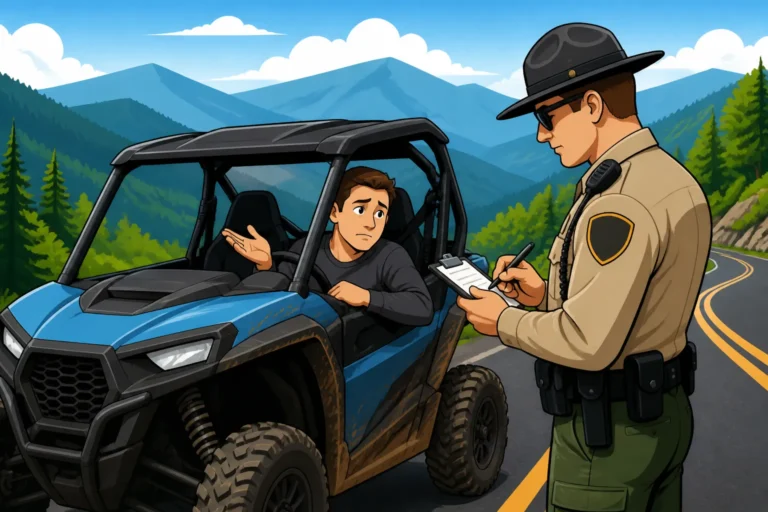
The most immediate consequence you're likely to face is an encounter with a forest ranger, park officer, or other law enforcement personnel. They regularly patrol popular riding areas, especially those designated OHV trails within our National Forests. If they pull you over for a routine check or observe your machine operating without the proper equipment, you could be cited. Forest Service officers have the authority to issue tickets, and the fines for operating without a spark arrester can be substantial. It's not just a warning; it’s a formal citation that can quickly dampen your riding day and lighten your wallet. Imagine driving all the way to [Badin Lake OHV Trail Complex] or [Brown Mountain OHV Trail System] only to be turned away at the gate or, worse, receive a hefty fine minutes into your ride. It’s an easy way to turn a fun outing into a frustrating and expensive ordeal. To avoid this, always be aware of [North Carolina Fines for an ATV Violation].
Beyond the immediate financial hit, there are other repercussions. If you're caught, you might be escorted off the trail system, prohibited from re-entering until your machine is compliant. This isn't just a minor inconvenience; it means your entire trip is effectively over. In some cases, repeated violations or particularly egregious circumstances could even lead to your machine being impounded, though that's generally reserved for more severe offenses. Moreover, if your machine is deemed non-compliant, you might be stopped from participating in organized rides or events that require all participants to adhere to safety regulations, including spark arrester rules.
But the most severe consequence, and the one that truly drives these regulations, is the risk of starting a wildfire. If your machine is responsible for igniting a fire, even accidentally, the liability can be immense. You could face charges for property damage, environmental destruction, and the costs associated with fighting the fire, which can quickly run into hundreds of thousands or even millions of dollars. Imagine being held responsible for devastating acres of our beloved Pisgah National Forest or the valuable timber resources in the Uwharries. Such an incident could also lead to long-term trail closures, punishing the entire riding community for the actions of a few non-compliant individuals. We've seen areas like [Upper Tellico Closed for Good] due to environmental concerns, and a major fire could easily lead to similar outcomes for other popular trails. It’s a stark reminder that our individual actions have collective consequences, impacting not just our personal riding opportunities but those of everyone who enjoys North Carolina's natural beauty. Always consult [North Carolina Trail Closures to Check] before you head out.
Disclaimer
This article is for general informational purposes only and does not constitute professional advice. Laws, prices and regulations vary by location and change over time. Consult a qualified professional for guidance on your specific situation.