North Carolina Brake Requirements for ATVs
It can be incredibly frustrating to sift through all the rules and regulations for ATVs and UTVs in North Carolina, especially when you're just trying to figure out something as fundamental as whether your brakes are up to snuff. We all want to ride safely and legally, but the lack of clear-cut, universally applicable guidelines can make you feel like you're constantly guessing. This guide is here to cut through that confusion, helping you understand North Carolina's brake requirements for ATVs and UTVs, whether you're sticking to private land, hitting the forest trails, or exploring the rare possibility of street-legal riding.
The Basics of North Carolina ATV Brake Laws
When you're out there enjoying the incredible landscapes North Carolina has to offer, from the rolling hills of the Piedmont to the rugged terrain of the Blue Ridge Mountains, the last thing you want is a mechanical issue, especially with your brakes. Unlike passenger cars, ATVs and UTVs don't always have a strict, universal laundry list of brake specifications mandated by the state. This can be a bit of a double-edged sword; on one hand, it offers some flexibility, but on the other, it leaves room for uncertainty about what truly constitutes "adequate."
Why Brake Requirements Matter on (and Off) the Trail
Let's be real: brakes are your lifeline. They're not just about stopping; they're about control, preventing accidents, and ensuring the safety of yourself and anyone riding with you or nearby. Imagine you're on a challenging descent at the [Brown Mountain OHV Trail System], cresting a muddy ridge, and suddenly, your brakes feel spongy. That heart-stopping moment is exactly what proper maintenance and understanding of requirements aim to prevent. It's not just about avoiding a ticket; it's about avoiding a trip to the emergency room.
The frustration many riders face comes from the disconnect between common sense safety and specific legal mandates. While North Carolina's general statutes might not spell out "must have X-inch rotors" for every ATV, they absolutely expect your machine to be safe and operational. If a law enforcement officer, park ranger, or even a landowner observes your ATV to be unsafe due to faulty brakes, you could face consequences, from being asked to leave a trail to receiving a citation for unsafe equipment. The unwritten rule is always: if you're riding, your brakes better be working as they should. You can find more general information about what the state expects in terms of safety features by checking out [North Carolina Equipment Rules for ATVs].
North Carolina's Broad Definition of "Adequate Brakes"
So, what exactly does North Carolina consider "adequate brakes" for an ATV or UTV? For most off-road machines, the state largely defers to the manufacturer's original design and the expectation of safe operation. This means your ATV, when it left the factory, was designed with a braking system sufficient for its intended use. The key is maintaining that system to perform at or near its original specifications.
This broad definition means there isn't a specific statute detailing minimum pad thickness, rotor diameter, or brake line material for every ATV you take into the [Uwharrie National Forest]. Instead, the focus is on function: Can your machine stop safely and effectively under normal operating conditions? This includes stopping cleanly, without excessive pulling to one side, and being able to hold the machine stationary when parked, especially on an incline.
However, this lack of hyper-specific regulation doesn't give you a pass on maintenance. If your brakes are squealing, grinding, or feel weak, they are not adequate, regardless of what the law might explicitly say. It's on you, the rider, to ensure your machine is in proper working order. Neglecting this isn't just irresponsible; it can be incredibly dangerous, especially when navigating unexpected obstacles or varying terrain that's so characteristic of North Carolina riding.
Understanding Brake Standards for Different Riding Scenarios
The kind of brake requirements your ATV or UTV needs can subtly shift depending on where you're riding and how your machine is classified. It's not a one-size-fits-all situation, and understanding these nuances is crucial for staying safe and legal.
Private Property and Manufacturer Standards
For the vast majority of ATV and UTV riders in North Carolina, their adventures happen on private land, whether it's their own property, a friend's farm, or a dedicated private off-road park. In these scenarios, the primary standard for your brakes defaults back to what the manufacturer intended for the machine. When you buy a brand-new Polaris RZR, a Honda FourTrax, or a Can-Am Defender, it comes equipped with a braking system designed to handle the machine's weight, power, and typical off-road demands.
The expectation here is that you maintain your machine according to the manufacturer's guidelines. This means regularly checking brake fluid, inspecting pads and rotors for wear, and ensuring all components are free from damage. While there's no state trooper inspecting your brakes on your back forty, personal safety and liability are still huge factors. If an accident occurs due to faulty brakes, even on private land, you could face significant issues. Many riders on private land also adhere to general safety practices found in guides like [North Carolina Rules for Riding Private Land]. Aftermarket suppliers like SuperATV offer a range of replacement parts and upgrades that meet or exceed OEM standards, ensuring that even as components wear, you can keep your machine performing safely.
The "Modified Utility Vehicle" (MUV) Exception and Road Use
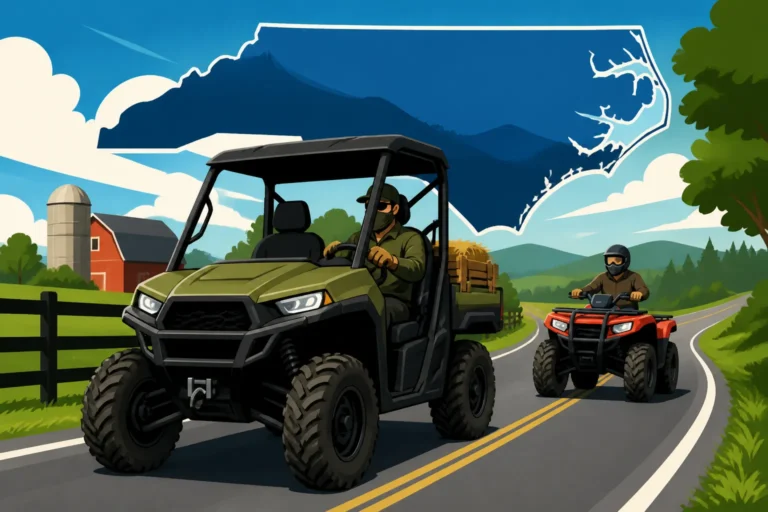
This is where North Carolina introduces specific, road-legal requirements that directly impact brakes. Most ATVs and UTVs are not street legal in North Carolina. However, there's a specific classification known as a "Modified Utility Vehicle" (MUV) that can be registered for limited road use. If your machine qualifies as an MUV, then suddenly, your braking system comes under much closer scrutiny, similar to a regular vehicle.
To qualify as an MUV and be registered for the road, your vehicle must meet several criteria, including minimum engine size, dimensions, and speed capabilities, as explained in resources like [North Carolina's Modified Utility Vehicle Route]. Crucially for brakes, an MUV must be equipped with a full braking system that includes a parking brake, capable of holding the vehicle on an incline. The North Carolina DMV may also require a safety inspection for MUVs, which will certainly include a thorough check of the braking system. This could involve ensuring proper hydraulic function, sufficient stopping power, and the functionality of the parking brake.
The frustration with MUVs often stems from the strict and detailed requirements. It's not just about having a brake; it's about having one that meets road-worthy standards, sometimes even requiring a professional inspection. This is a significant step up from the "adequate" standard for purely off-road machines. For more details on what an MUV needs to pass muster, you might want to look into [North Carolina MUV Inspection Requirements] and specifically [North Carolina MUV Parking Brake Requirement].
Forest Trails and Public Lands – Beyond the Basic Check
Even if your ATV isn't an MUV and you're not riding on public roads, taking your machine to designated public riding areas like the [Badin Lake OHV Trail Complex] or [Wayehutta OHV in Western North Carolina] still carries an implicit expectation of safety and functionality. While forest service officers might not perform a white-glove inspection of your brake pads, they are absolutely looking for visibly unsafe conditions.
If a ranger at a trailhead sees your machine leaking brake fluid, or hears you describe a "minor brake issue," they have every right to deny you access to the trails. Their priority is the safety of all users and the preservation of the trail system. Riding with faulty brakes can lead to accidents, trail damage, and the need for costly rescues, none of which they want to deal with. So, while specific brake specifications might not be posted at the entrance, a common-sense assessment of your machine's safety, including its ability to stop reliably, is always in play. This is why a thorough pre-ride check is non-negotiable before you load up and head out for a day of adventure. Even if you're not on a "street," the principles of safe operation still apply to [North Carolina Rules for Riding a Public Street] or designated public riding areas.
Maintaining and Upgrading Your ATV's Braking System
No matter where you ride in North Carolina, keeping your ATV's braking system in top-notch condition is paramount. It’s not just about compliance; it’s about control, confidence, and safety. You wouldn't drive your truck without functioning brakes, so why would you risk it on your ATV?
Essential Brake Maintenance for North Carolina Riders
Let's face it, our ATVs and UTVs work hard. They're exposed to mud, water, dust, and debris that can wreak havoc on brake components. Regular maintenance isn't just a suggestion; it's a necessity, especially if you spend a lot of time on trails with varied conditions like those found in the Nantahala National Forest.
Here’s a practical checklist for keeping your brakes in shape:
- Check Fluid Levels: For hydraulic brake systems, regularly inspect the brake fluid reservoir. If it's low, top it off with the correct type of fluid. Low fluid often indicates worn pads or a leak, so investigate further.
- Inspect Pads and Rotors: Pull off your wheels and visually inspect your brake pads. If they're worn down to the metal, or close to it, it’s time for replacements. Also, check your rotors for deep grooves, warping, or excessive rust. Grooved rotors can dramatically reduce braking efficiency.
- Examine Brake Lines: Look for any signs of cracks, chafing, or leaks in your brake lines, especially where they might rub against other components or be exposed to trail hazards. A damaged line can lead to sudden brake failure.
- Test Caliper Function: Make sure your calipers are moving freely and not seized. Sticky calipers can cause uneven braking or continuous pad wear.
- Test the Parking Brake: If your machine has a parking brake, ensure it engages firmly and holds the ATV securely, particularly on an incline. This is crucial for safety when stopped on hills or for an MUV that needs to meet [North Carolina MUV Parking Brake Requirement].
A routine maintenance schedule, perhaps every 50 hours of riding or before every major trip, can save you a lot of headache and potentially prevent an accident. After a particularly muddy ride, a quick rinse around the calipers and rotors can prevent abrasive particles from grinding down your pads prematurely.
When to Consider Aftermarket Brake Upgrades
While factory brakes are generally adequate for most riders, there are specific situations where an upgrade can significantly enhance performance and safety. If you're consistently pushing your machine's limits, hauling heavy loads, or frequently tackling extreme terrain with steep descents, you might notice your stock brakes feeling less responsive or fading under stress.
This is where aftermarket options shine. Companies like SuperATV offer a wide range of performance brake components, from heavy-duty brake pads made from more aggressive compounds to braided stainless steel brake lines that resist expansion under pressure, providing a firmer, more consistent lever feel. You can even find full brake kits designed to give you superior stopping power.
Reasons to consider an upgrade:
- Increased Weight: If you've added heavy accessories like plows, winches, or large cargo boxes, or frequently ride with a passenger or heavy gear, your machine's stopping distance will increase. Upgraded brakes can help compensate for this added mass.
- Aggressive Riding: For competitive riders or those who push hard on challenging trails, stronger brakes provide more confidence and control, allowing for later braking and faster cornering.
- Steep Terrain: If you're a regular in the mountains, especially on long, winding descents where you're constantly on the brakes, upgraded components can reduce fade and improve durability.
- Improved Feel: Aftermarket brake lines and higher-quality fluids can improve the "feel" at the lever or pedal, giving you a more direct connection to your braking system.
Choosing the right components is key. Make sure any aftermarket parts are compatible with your specific make and model and are installed correctly. A good brake system is a sound investment in your safety and enjoyment of the ride.
DIY Brake Checks vs. Professional Service
For many riders, checking fluid levels, inspecting pads, and even replacing basic components like brake pads are manageable DIY tasks. Learning these skills can save you money and give you a better understanding of your machine. There are tons of online tutorials and service manuals available that walk you through these processes.
However, there are times when calling in the professionals is the smartest move. If you're dealing with a loss of brake pressure, spongy brakes after bleeding, or any issue that seems beyond a simple component swap, it's best to take your ATV or UTV to a qualified mechanic. Brake systems are critical safety components, and improper repairs can have serious consequences. For instance, correctly bleeding a complex ABS system or diagnosing an internal master cylinder issue often requires specialized tools and expertise.
Finding a trusted local power sports shop in North Carolina is invaluable. They'll have the experience to quickly diagnose issues and perform repairs to factory standards, ensuring your brakes are as safe and reliable as possible. Don't be afraid to ask questions and learn from them; a good mechanic will appreciate your interest in understanding your machine.
Ultimately, your brakes are the most important safety feature on your ATV or UTV. Whether you're navigating the casual paths around a lake or tackling the challenging climbs in the Pisgah National Forest, knowing your brakes are reliable gives you the confidence to truly enjoy the ride.
| Riding Scenario | Key Brake Requirements / Considerations | Common Issues & Solutions |
|---|---|---|
| Private Land | Manufacturer's design standards. Functional, well-maintained system. | Worn pads/rotors (replace with SuperATV parts), low fluid (top off, check for leaks), seized calipers (clean/rebuild). |
| Forest/Public Trails | Safe, reliable operation. Ability to stop effectively in varied conditions. Often subject to visual inspection by rangers. | Mud/debris contamination (clean regularly), reduced stopping power on long descents (consider aftermarket pads/lines), parking brake failure (adjust/repair). |
| Modified Utility Vehicle (MUV) Road Use | Specific road-legal standards. Full braking system, functional parking brake. May require inspection by NC DMV. | Failure to meet inspection standards (ensure all components are road-worthy), inadequate parking brake (adjust/replace [North Carolina MUV Parking Brake Requirement]). |
Disclaimer
This article is for general informational purposes only and does not constitute professional advice. Laws, prices and regulations vary by location and change over time. Consult a qualified professional for guidance on your specific situation.