North Carolina Rules for Riding After Dark
Trying to figure out when and where you can safely – and legally – ride your ATV or UTV after the sun dips below the horizon in North Carolina can feel like navigating a maze in the dark. It’s a common frustration for many riders who just want to extend their outdoor adventures or get work done, only to hit a wall of confusing rules. This guide will shine a light on North Carolina’s regulations regarding after-dark operation of off-road machines, helping you understand the equipment you need and the places you might actually be allowed to ride.
Navigating the Night: Why After-Dark ATV Riding in North Carolina Is Tricky
Let’s be honest, the moment dusk starts to settle, many of us feel a pull to keep riding. Whether it’s that cool evening air, the thrill of a new perspective on a familiar trail, or simply needing to finish up chores on the back forty, riding after dark has its appeal. But in North Carolina, the rules around operating ATVs and UTVs once the sun goes down can feel less like clear guidelines and more like a jumble of half-truths and local legends. The main challenge stems from the fact that ATVs are generally not considered street-legal vehicles, and public lands often have strict operating hours.
The General Presumption Against Night Riding
The foundational principle here is that ATVs and UTVs are primarily designed for off-highway use, and that distinction carries significant weight when it comes to riding after dark. On public roads, operating an ATV or UTV at any time is largely prohibited unless it fits into a very specific category, like a Modified Utility Vehicle (MUV), or falls under a specific exception, such as for farming operations. This blanket prohibition naturally extends to nighttime hours, where the safety concerns amplify due to reduced visibility. For most conventional ATVs and UTVs, the state isn’t really set up for you to be cruising down a public thoroughfare once the streetlights come on. The law isn't just about when you ride, but where you ride, and most public spaces simply aren't open for after-hours motorized recreation.
Rider Frustrations and the Gray Areas
I’ve heard it countless times from fellow riders: "My machine has lights, why can't I ride it at night?" or "It's just a short hop down a gravel road, what's the big deal?" These frustrations are completely valid. Many modern ATVs and UTVs come equipped with fantastic lighting systems right from the factory, far exceeding what many older cars had. Yet, the legal framework often doesn't differentiate between a dimly lit, ancient quad and a brand-new side-by-side with stadium-grade LEDs. The "gray area" often arises when riders encounter varied interpretations from local law enforcement or landowners. One sheriff's deputy might overlook a quick dash across a field access road at dusk, while another might issue a citation immediately. It’s this inconsistency that can drive riders crazy, and it underscores the need to be fully informed and err on the side of caution. Remember, just because your machine can light up the night, doesn't mean it's automatically legal to do so on all types of property.
Essential Gear for Low-Light and Night Operation
Okay, so we know the legal landscape for night riding is challenging. But if you are in a situation where night riding is permissible, like on private land with permission, or if your machine qualifies as a specific type of vehicle for limited road use, then having the right equipment is non-negotiable. This isn't just about avoiding a ticket; it's about staying safe and ensuring others can see you.
Headlights and Taillights: More Than Just Visibility
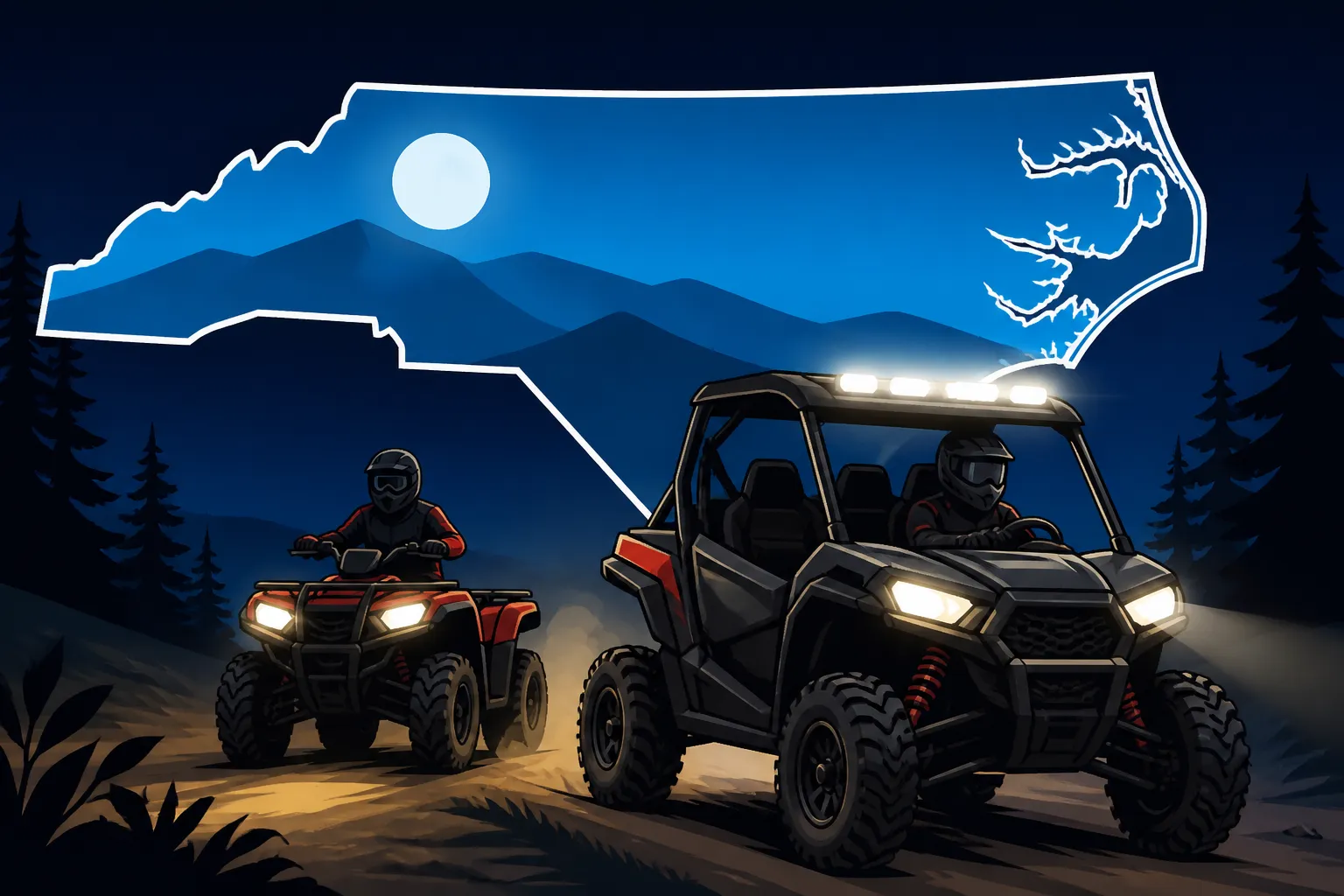
When we talk about riding after dark, the first thing that comes to mind is lighting, and for good reason. [North Carolina Lighting Requirements for ATVs] might seem vague for off-road machines because they aren't generally street-legal, but the spirit of the law, and certainly common sense, demands proper illumination. Your machine absolutely needs a working headlamp that can illuminate the path ahead effectively and a taillamp that is clearly visible from the rear. This isn't just about you seeing where you're going; it's about making sure others, whether they are other riders, pedestrians, or even other vehicles on private land, can see you.
Think about the conditions you might encounter: dense woods, open fields, or even just crossing a dark driveway. A single, weak headlight simply won't cut it. Many riders choose to upgrade their factory lights with aftermarket LED light bars or auxiliary pods. Companies like SuperATV offer a wide range of incredibly bright and durable lighting solutions that can turn night into day, significantly enhancing both your visibility and your ability to spot obstacles. But remember, while powerful lights are fantastic for seeing, they can also be blinding to others, so aim them responsibly.
Reflectors, Markings, and Other Must-Haves
Beyond active lighting, passive visibility aids are crucial. Reflectors are your best friend if your active lights fail or if your machine is parked. Many ATVs and UTVs come with factory-installed reflectors, typically red on the rear and amber on the sides, but adding more can only help. You might consider reflective tape on the front, rear, and sides of your machine, or even on your helmet and riding gear.
Another often-overlooked item is a high-visibility flag, especially for slower-moving machines or those operating in dusty conditions. While not always a legal requirement for night riding, a flag with reflective material can add another layer of detection for others. Furthermore, if you're pulling a small trailer or other equipment, ensure it also has proper taillights and reflectors. Imagine pulling a dark trailer across a field at night with no lights – that’s a recipe for disaster. Always assume that if you're riding after dark, you need to be seen from all angles, not just the front and back.
Equipping Your Machine for Safety, Day or Night
While lights are paramount for after-dark riding, other safety equipment applies universally. A properly fitting helmet is non-negotiable, especially when visibility is reduced. [North Carolina Helmet Law for ATV Riders] applies to all riders on public lands, but it's just smart practice everywhere. Eye protection, whether it's goggles or a full-face helmet visor, is also critical to shield your eyes from dust, debris, and insects, which can be even harder to see at night.
Consider a small first-aid kit, a flashlight (separate from your machine’s lights), and a communication device like a cell phone (though be aware of [Cell Dead Zones in the Nantahala] and other remote areas). Carrying extra fuel, even if you don't think you'll need it, is also a good idea. Breaking down in the dark, far from home, is a much more serious predicament than a daytime breakdown. And, of course, a working spark arrester is crucial to prevent wildfires, a hazard that doesn't disappear when the sun sets. [North Carolina Spark Arrester Requirement] is there for a reason, regardless of the time of day.
Table: Essential Night Riding Equipment Checklist
| Item | Purpose | Importance | Notes |
|---|---|---|---|
| Headlamp | Illuminates path ahead, alerts others | Critical | Ensure adequate brightness and aim; consider auxiliary lights from SuperATV |
| Taillamp | Alerts others from the rear | Critical | Bright, clearly visible, and securely mounted |
| Reflectors | Passive visibility, especially if lights fail | High | Red (rear), Amber (sides); add reflective tape to machine and gear |
| Helmet | Head protection, legal requirement on public land | Critical | DOT-approved, properly fitting, full-face or with goggles for eye protection |
| Eye Protection | Shields eyes from debris, dust, insects | Critical | Goggles or helmet visor |
| First-Aid Kit | Addresses minor injuries | High | Small, waterproof kit for emergencies |
| Flashlight | Personal light source, emergency use | High | Battery-powered, separate from machine's lights |
| Communication | Emergency contact, coordination | High | Fully charged cell phone or satellite messenger |
| Spark Arrester | Prevents wildfires | Critical | Inspect regularly, keep clean |
| High-Vis Flag | Alerts others to your presence (optional but good) | Medium | With reflective material for added night visibility |
| Extra Fuel | Avoids being stranded | Medium | Securely stored in an approved container |
Where the Sun Sets on Your Riding Opportunities
Knowing what equipment you need is only half the battle. The other, arguably more important, half is understanding where you are actually allowed to ride your ATV or UTV after dark in North Carolina. This is where most riders get into trouble, as the rules are highly dependent on the type of land.
Private Property: Your Safest Bet for Night Riding
When it comes to riding after dark, private property is almost always your best and safest bet. If you own the land, or if you have explicit, written [North Carolina Landowner Permission Rules] from the owner, you generally have a lot more leeway. On private land, the primary concerns shift from state traffic laws to issues of personal safety, noise ordinances, and respecting the property itself.
Even on private land, it's wise to use all the lighting and safety equipment discussed earlier. Accidents happen, and visibility is always a factor, especially when encountering unfamiliar terrain or unexpected obstacles in the dark. If you’re riding on a friend’s farm after dark, for instance, you should still have robust headlights and taillights. You never know when another person might be out, or when farm equipment might be left in an unusual spot. While the state won't ticket you for riding without lights on your own land, a night-time collision, even with a fence post, is still an accident.
Public Roads and the MUV Path
This is where things get really sticky. For the vast majority of ATVs and UTVs, riding on public roads in North Carolina, whether it's a paved highway or a dirt county road, is prohibited, day or night. [North Carolina Rules for Riding a Public Street] are clear: these machines are not designed or registered for road use.
However, there is a specific exception: the Modified Utility Vehicle (MUV). An MUV is a UTV that has been modified and registered to be street-legal. But qualifying for MUV status is incredibly strict. Your UTV needs to meet specific criteria regarding engine size, dimensions, speed capability, and must be equipped with full street-legal gear, including turn signals, a speedometer, mirrors, a parking brake, and a horn. Most importantly, it must have headlamps and taillamps that meet federal motor vehicle safety standards, just like a car. If your machine is registered as an MUV, then [North Carolina MUV Street Legal Requirements] allow you to operate it on public roads with speed limits of 55 mph or less, including after dark, provided you adhere to all standard traffic laws. This is a very narrow path, and most side-by-sides won't meet the requirements without significant modifications and inspection by the DMV.
There's also a limited [North Carolina Farming Exception for ATVs] which allows the use of ATVs on public roads for agricultural purposes during daylight hours, but this exception generally does not extend to after-dark operation except in very specific, limited circumstances (e.g., crossing a road at an intersection). Even then, extreme caution and visibility are paramount.
Forest Trails and Game Lands: Specific Night Restrictions
Riding on national forest trails or state game lands is another common desire, and here, too, night riding is almost universally restricted. [North Carolina Rules for Riding a Game Land] typically stipulate specific operating hours, which usually align with daylight or very early evening. The official OHV trail systems like Brown Mountain, Badin Lake, and Wayehutta also have defined seasons and operating hours, which means they are generally closed after dark.
Why the strict rules? Several reasons. For one, these areas are multi-use, shared with hikers, mountain bikers, and equestrians, who might not expect to encounter a motorized vehicle in the dark. Wildlife management is another major factor; disturbing nocturnal animals or interfering with hunting seasons (where machines are typically only used for retrieving game, not active riding) is a concern. Moreover, night riding introduces increased risks of accidents, getting lost, or causing damage to trails, which are already heavily managed and maintained. Always check the specific regulations for the particular forest or game land you plan to visit. Often, these rules are clearly posted at trailheads or on the respective forest service websites. For example, [North Carolina Forest Trail Maps] will often include information about operating hours.
Staying Safe and Legal: Best Practices for Night Riding
Even when you're sure you're riding in a legal spot after dark, there are still layers of safety and consideration you need to add to your routine. Night riding isn't just daytime riding with the flick of a switch; it's a completely different experience that demands extra vigilance.
Visibility is Paramount: Beyond Just Lights
Yes, we've talked about lights, but let's emphasize visibility from a broader perspective. It's not just about having lights; it's about being seen. This includes your personal gear. Wearing bright, reflective clothing can make a huge difference if you have to dismount or if your machine loses power. Think about the stark contrast between a rider in dark gear against a dark background versus someone with reflective strips on their jacket and helmet.
Beyond your own gear, consider the environment. If you're riding in an area with a lot of dust, your lights can actually become less effective, creating a "whiteout" effect. Slow down in these conditions. If you're riding with a group, maintain safe distances so each rider’s lights don’t obscure the vision of the rider behind them. And always be aware of your surroundings, listening for sounds you might not pick up during the day. A well-placed set of mirrors from a brand like SuperATV can also dramatically improve your situational awareness by showing you what's coming up behind you.
Local Ordinances and Landowner Specifics
While North Carolina has overarching state laws, individual counties, towns, and even specific private land management groups can have their own rules. For instance, some municipalities might have noise ordinances that kick in after a certain hour, even on private property. What’s perfectly acceptable on a large, rural farm might lead to a visit from the sheriff on a smaller lot closer to town.
Always confirm specific rules with the landowner if you're on private property. Don't assume. A simple conversation can prevent misunderstandings and legal headaches. For example, if you’re riding on land managed by a hunting club, there might be specific rules about night riding to avoid disturbing game animals or other hunters. [Riding Private Ground in North Carolina] always comes with the responsibility of understanding and respecting the owner's wishes and any local regulations that apply.
Preparing Your Machine for the Unexpected
Night riding stresses your machine differently. Electrical systems are working harder to power lights. The chances of hitting an unseen obstacle, like a branch or a rock, are higher. That's why pre-ride inspections are even more critical before an after-dark excursion.
- Check all lights: Headlights, taillights, brake lights, and any auxiliary lights. Make sure they are clean and fully functional.
- Tire pressure and condition: Inspect for any cuts or low pressure that could lead to a flat in a dark, remote area. A good quality tire is essential for navigating unseen terrain.
- Brakes: Ensure your brakes are in top working order. Stopping quickly to avoid a surprise obstacle is vital.
- Fluids: Check oil, coolant, and fuel levels. You don’t want to run out of anything crucial when it's pitch black.
- Winch: If your machine has a winch, ensure it’s working. Getting stuck at night is far more serious, and a winch could be your best friend for self-recovery. SuperATV, for example, makes robust winches that can be a real lifesaver.
- Tools: Carry a basic tool kit for minor repairs. A flat tire repair kit is a must.
Ultimately, riding after dark in North Carolina requires a heightened sense of awareness, preparation, and adherence to rules. By being thoroughly equipped and informed about where you can legally operate, you can make those unique night rides safer and more enjoyable.
Disclaimer
This article is for general informational purposes only and does not constitute professional advice. Laws, prices and regulations vary by location and change over time. Consult a qualified professional for guidance on your specific situation.