North Carolina Trespass Rules for Riders
There’s nothing quite like the thrill of exploring North Carolina’s beautiful landscapes on your ATV or UTV, but that excitement can quickly turn into a nightmare if you find yourself on land where you shouldn't be. Many riders get caught off guard by confusing property lines or simply misunderstanding the rules, leading to fines, confrontations, and even legal trouble. This guide is here to walk you through North Carolina's trespass rules for riders, helping you understand how to stay on the right side of the law and enjoy your off-road adventures worry-free.
Understanding North Carolina's Trespass Laws for Off-Road Vehicles
Let's face it, when you're out on your machine, the last thing you want to worry about is whether you're technically breaking the law. But understanding trespass is critical, not just for legal reasons, but for maintaining good relationships with landowners and keeping trails open for everyone. In North Carolina, the rules about who can ride where are pretty straightforward, but they often get misinterpreted.
What Constitutes Trespassing on an ATV or UTV?
Simply put, trespassing means entering or remaining on someone else's property without their permission. It sounds simple enough, right? But with ATVs and UTVs, it can get a little murky. It’s not just about obvious signs or fences. If you drive your machine onto land that isn't yours, isn't a designated public trail, or isn't a public road where your machine is legally allowed, you are trespassing. This applies whether you intended to trespass or not. The law often looks at the act itself, not necessarily your state of mind. Maybe you saw a tempting path leading off a public road, or perhaps you genuinely thought a piece of land was abandoned. Unfortunately, "I didn't know" isn't a valid defense.
Think of it this way: imagine someone walking through your backyard without asking. You wouldn't appreciate it, even if they meant no harm. The same principle applies when you're on a powerful machine that can potentially damage property, disturb livestock, or simply create a nuisance. Even if no physical damage is done, the act of being there without consent is what the law concerns itself with. That’s why clarity around property lines and explicit permission is so crucial.
The Legal Consequences of Trespassing
The repercussions of trespassing with your ATV or UTV in North Carolina can range from a stern warning to significant legal penalties. At the very least, you might be asked to leave the property. However, it can escalate quickly. Law enforcement can issue citations, which often come with fines. These fines can add up, and if it's not your first offense, the penalties can become more severe. In some cases, your vehicle could even be impounded, leaving you stranded and facing the hassle and cost of retrieving it.
Beyond immediate fines and impoundment, you could face civil liability. If your machine causes any damage to the landowner's property – say, tearing up a field, damaging a fence, or disturbing crops – they have every right to sue you for those damages. This means you could be on the hook for repair costs, lost revenue, and even emotional distress. In more egregious situations, especially if there's a history of disregard for property rights or if the act is deemed malicious, trespassing can even be elevated to a criminal offense. It's a stark reminder that what seems like a harmless shortcut can carry a heavy price tag. You might want to review [North Carolina Fines for an ATV Violation] to understand the potential costs.
Common Misconceptions About Private Land Access
There are a lot of myths floating around about private land access that can get riders into hot water. One common misconception is "implied consent" – the idea that if land isn't explicitly marked with "No Trespassing" signs, it's fair game. This simply isn't true in North Carolina. Landowners are not legally required to post signs for their property to be considered private. If you don't have explicit permission, assume it's private. Another myth is that land that looks "abandoned" or "unused" is okay to ride on. Even if a field is overgrown or a cabin looks dilapidated, it still has an owner, and you still need their permission.
Some riders also believe that if a path looks like a trail, it must be a public one. Many private landowners have paths or logging roads on their property for their own use, or for permitted activities like hunting. Just because it looks like a trail doesn't make it open to the public. Always do your homework. Check maps, look for official trail markers, and if in doubt, seek out the owner. A great way to prepare is to know [Riding Private Ground in North Carolina] rules inside and out before you head out.
The Golden Rule: Always Get Permission to Ride
This isn't just a friendly suggestion; it’s the cornerstone of responsible off-roading. Getting permission isn't just about avoiding trouble; it's about building trust and ensuring that access to riding areas, both public and private, remains available for future generations of riders. When you respect landowners, you make it easier for all of us to enjoy our machines.
How to Secure Written Landowner Permission in North Carolina
When it comes to permission, always, always aim for written consent. A simple handshake or a casual conversation, while friendly, offers no legal protection if there's a dispute down the road. A written permission slip acts as a clear, undeniable record of your agreement.
What should this permission slip include? At a minimum:
- Date: When the permission was granted.
- Landowner's Full Name and Contact Information: This verifies who gave permission.
- Rider's Full Name and Contact Information: This identifies who is granted permission.
- Specific Property Description: Include the address, parcel number, or a clear description of the boundaries you’re allowed to ride within. Don't just say "the back forty"; be specific.
- Scope of Permission: Clearly state what you are allowed to do. Is it just riding? Can you bring guests? Is there a time limit (e.g., "for the day," "for this weekend," "for the month of October")?
- Vehicle Description: While not always required, noting the type of machine (ATV, UTV), and even its make or VIN, can add an extra layer of clarity.
- Signatures: Both the landowner and the rider should sign and date the document.
A good example might be: "I, [Landowner Name], grant [Rider Name] permission to operate an ATV/UTV on my property located at [Address/Parcel Number] within the designated trails/areas shown on the attached map, from [Start Date/Time] to [End Date/Time]. This permission is revocable at any time." Make sure you carry a copy of this document with you when you ride. It might seem like a lot of hassle upfront, but it could save you countless headaches. For more specific guidance, check out [North Carolina Landowner Permission Rules].
Distinguishing Between Verbal and Written Permission
While verbal permission might seem easier in the moment, it's inherently risky. Picture this: you run into a farmer, they wave and say "Sure, go ahead and ride the fields!" You have a great ride. A week later, you return, but the farmer isn't there, and their son-in-law, who doesn't know you, calls the sheriff. Without written proof, you're in a tough spot. It's your word against theirs, or perhaps against someone who wasn't even part of the original conversation. Memories fade, people move, and property changes hands.
Written permission eliminates ambiguity. It provides a tangible document that clarifies the terms and duration of your access. It acts as a shield against misunderstandings and protects both you and the landowner. If you're ever confronted by law enforcement or another individual, presenting a signed document can quickly resolve the situation. It shows you've done your due diligence and have legitimate access. So, even if the landowner offers verbal permission, always follow up by asking if they'd be willing to sign a simple permission form. Most reasonable landowners will appreciate your professionalism.
Understanding Posted Land in the Piedmont and Beyond
North Carolina law recognizes several ways that private property can be "posted" to signify no trespassing. It's not just about those classic "No Trespassing" signs nailed to trees, although those are certainly effective.
Here's what to look for:
- "No Trespassing" Signs: These are the most obvious. They usually state "No Trespassing," often with an explicit warning about prosecution.
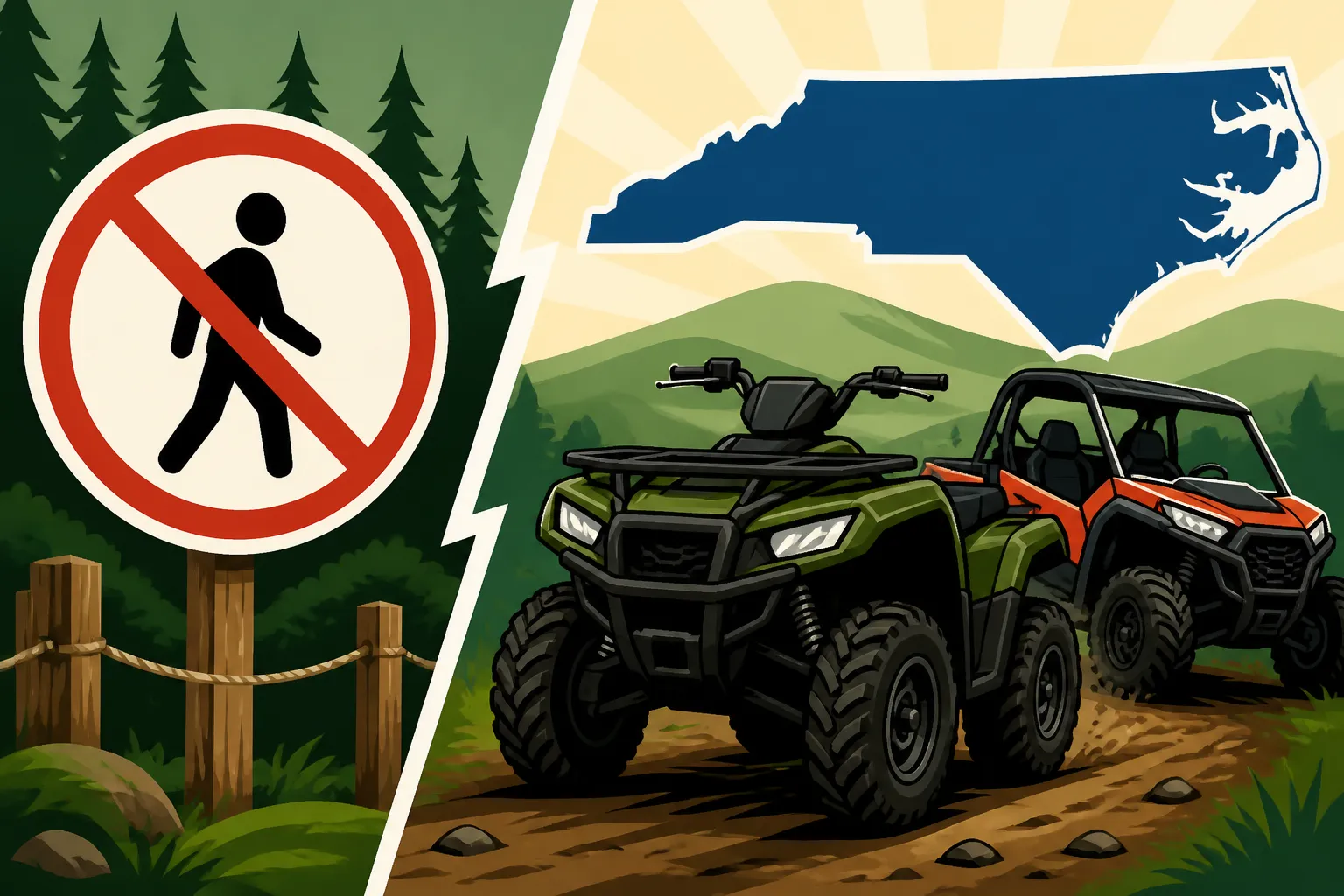
- Purple Paint: In North Carolina, purple paint marks on trees or posts can legally signify "No Trespassing." These marks must be visible from any point of entry, be at least 8 inches long, and be placed no more than 100 yards apart. This is a common and legally recognized method, especially in more rural and wooded areas.
- Fences and Enclosures: While a fence doesn't automatically make entry illegal if no signs are present, crossing a fence or other enclosure, especially if there's an obvious intent to keep people out, can still constitute trespassing. If property is clearly fenced and maintained, even without signs, it strongly indicates private land.
- Cultivated Fields: Entering and riding in cultivated fields (crops, pastures with livestock) is generally understood to be trespassing, regardless of specific signage.
The presence of any of these indicators should immediately tell you to stay out unless you have explicit, written permission. Ignoring these signs is a clear act of disregard for property rights and will almost certainly lead to legal trouble. Familiarize yourself with how [Posted Land in the Piedmont] and other regions in North Carolina mark their boundaries. Even a quick scout of the area before you unload your machine can save you a lot of grief.
Navigating Public and Permitted Riding Areas to Avoid Trespass
The best way to avoid trespassing is to stick to places where riding is explicitly allowed and encouraged. North Carolina offers a surprising variety of public and private riding opportunities, but knowing the specific rules for each is key. Even within designated riding areas, there are often rules about staying on marked trails and respecting boundaries.
Knowing Where You Can Legally Ride in North Carolina
North Carolina has several fantastic public and private options for ATV and UTV riders. The Uwharrie National Forest, for example, offers miles of challenging trails at the [Badin Lake OHV Trail Complex]. The Pisgah National Forest also has the popular [Brown Mountain OHV Trail System]. These national forests operate under specific rules and require permits, but they are clearly designated for off-highway vehicle use.
Beyond the national forests, there are also numerous private off-road parks across the state. These parks are businesses designed specifically for ATV and UTV riding, offering everything from beginner-friendly loops to extreme rock crawling. Examples might include smaller, locally-run parks or larger, more established ones. Many of these parks are well-equipped, often with staging areas, restrooms, and even mechanics on-site. The beauty of private parks is that permission is typically granted by purchasing a day pass or membership, making access clear and legitimate. Always check their websites for specific rules, hours, and any required gear, as they often have their own regulations in addition to state laws. Knowing [Where to Ride an ATV in North Carolina] is your first step.
Staying on Marked Trails and Boundaries
Even within a designated OHV park or national forest, simply being "in the area" doesn't mean you can ride anywhere. Almost universally, these areas have marked trails, and you are expected to stay on them. Going off-trail, or "trail blazing," is a serious offense that can lead to fines, loss of riding privileges, and significant environmental damage. Remember, those trails are built and maintained specifically to handle vehicle traffic and protect sensitive ecosystems. Diverting from them can cause erosion, harm wildlife habitats, and create safety hazards for other riders.
Using a good GPS unit or a detailed trail map is crucial. Apps like Gaia GPS or dedicated GPS devices from brands like Garmin can be invaluable for keeping you on track. Familiarize yourself with the area's map before you even start your engine. Many trails are marked with numbers or colors, and it's your responsibility to know which ones you're allowed on. A quality mount from a company like SuperATV can keep your GPS visible and secure while you ride, helping you navigate confidently and avoid accidentally straying onto forbidden ground. Respecting these boundaries helps keep these trails open for everyone. You can find useful information on [North Carolina Forest Trail Maps].
The Importance of Checking Local Ordinances and Game Land Rules
While state laws provide a general framework, local ordinances can add another layer of complexity. Some counties or municipalities might have specific rules regarding noise, hours of operation, or even where ATVs/UTVs can be transported. Always do a quick check of the local laws for the specific area you plan to ride in. A simple online search or a call to the local sheriff's office or county administration can save you a lot of hassle.
If you plan to ride on game lands, which are managed by the North Carolina Wildlife Resources Commission, there's another set of rules to contend with. These lands are primarily for hunting, fishing, and wildlife observation, and ATV/UTV access is often highly restricted or only allowed during specific periods for specific purposes (like retrieving downed game, and even then, usually only on designated roads). [North Carolina Rules for Riding Game Lands] are very specific and often change seasonally. During hunting season, for example, access might be limited to foot traffic only in certain zones, or specific safety requirements like wearing blaze orange may apply even to riders. Never assume that game land access is the same as OHV park access. Always consult the Wildlife Resources Commission's regulations for the specific game land you're interested in.
What to Do If You Suspect You've Trespassed or Are Confronted
Despite your best efforts, there might come a time when you realize you’ve made a mistake or you’re confronted by a landowner or law enforcement. How you handle these situations can significantly impact the outcome. Remaining calm, respectful, and cooperative is always the best approach.
Responding Respectfully to Landowners or Authorities
If a landowner approaches you, even if they seem angry or accusatory, keep your cool. Do not argue, raise your voice, or become defensive. Apologize sincerely for any misunderstanding or intrusion, explain that you were trying to find your way, and immediately offer to leave. Ask for clear directions on how to exit their property without causing further disturbance. Remember, they are protecting their property, and a polite, apologetic response can de-escalate the situation rapidly. They might simply want you off their land, rather than wanting to press charges.
The same applies if you are approached by law enforcement. Pull over, turn off your engine, and keep your hands visible. Provide any requested identification or documentation (like your written permission, if you have it). Answer their questions truthfully and respectfully. Do not lie or try to evade responsibility. If you've genuinely made a mistake, admit it. Being cooperative is often viewed much more favorably than being confrontational. It might influence whether you receive a warning or a citation. You might also be carrying recovery gear like a SuperATV winch, but you should not attempt to use it to "escape" if you are being asked to stay put. Your priority is to comply.
Documenting the Incident and Knowing Your Rights
While being cooperative, it's also wise to calmly observe and document the situation if possible, without being obvious or confrontational. Note the date, time, location, and a brief description of what happened. If there are other people present, discreetly note their appearance or any vehicle information. If you're given a citation, read it carefully and make sure you understand the charges.
You have the right to remain silent beyond providing your identification, and the right to an attorney. If you feel pressured to say something that could incriminate you, you can politely state that you would prefer to speak with a lawyer before answering further questions. However, refusing to identify yourself or obstructing an officer can lead to additional charges. It's a delicate balance: be cooperative and respectful, but also be aware of your basic rights. This isn't about challenging authority in the moment, but about protecting yourself legally later if necessary.
Seeking Legal Advice After a Trespass Incident
If you receive a citation, have your vehicle impounded, or are facing potential civil charges for damages, it's highly advisable to seek legal counsel. A local attorney specializing in property law or criminal defense can assess your specific situation, explain your options, and represent your interests. They can help you understand the charges, negotiate with the landowner (if it's a civil matter), or represent you in court.
Don't try to navigate complex legal processes on your own, especially if the penalties are significant. An attorney can often find nuances in the law or procedural errors that you might miss. The cost of legal advice upfront could save you far more in fines, fees, and potential civil judgments down the road. Remember, even a minor trespass charge can have long-term consequences, so taking it seriously is always the best course of action.
| Type of Permission | Description | Best Practice | Risks of Not Having |
|---|---|---|---|
| Written | Signed document from landowner, specifying access details. | Always obtain. | None. |
| Verbal | Spoken agreement from landowner. | Avoid if possible. | Disputes, fines, impoundment. |
| Implied | Assuming permission based on lack of signs or "abandoned" land. | Never assume. | Guaranteed trespass. |
| Public Land | Designated OHV parks, national forest trails. | Always verify open status and permit requirements. | Fines, park closure, environmental damage. |
Disclaimer
This article is for general informational purposes only and does not constitute professional advice. Laws, prices and regulations vary by location and change over time. Consult a qualified professional for guidance on your specific situation.