Does a 17-Year-Old Need a Helmet Off-Road?
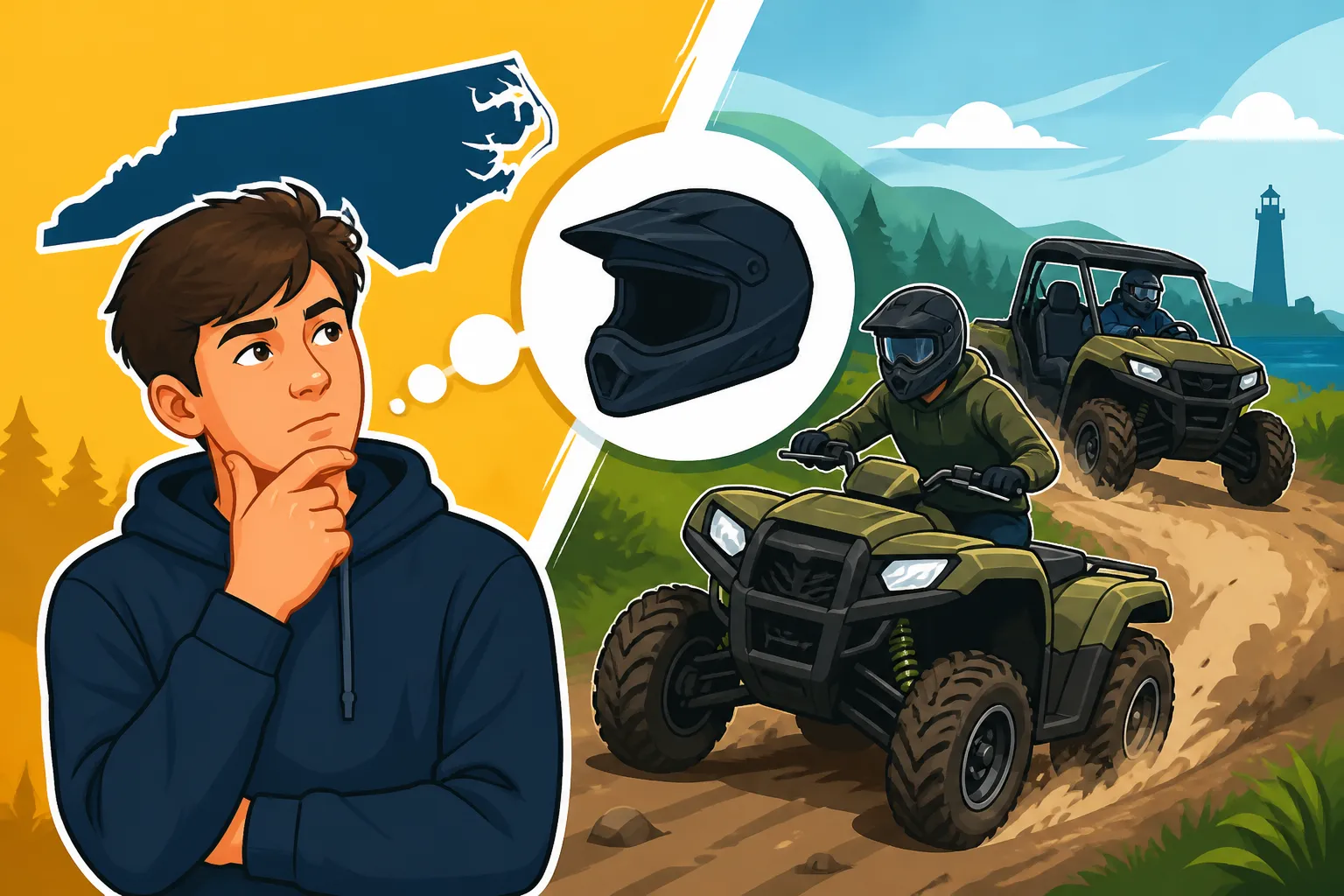
It can be incredibly confusing trying to keep up with all the ins and outs of ATV laws here in North Carolina, especially when you've got teenagers who are itching to hit the trails. One of the most common questions that comes up, and rightly so, is about helmet requirements for those younger riders. This guide is going to clear up that specific headache, focusing squarely on whether a 17-year-old needs a helmet when riding an ATV off-road in our beautiful state.
North Carolina's Core Helmet and Eye Protection Rules for Off-Road Riding
When you're out there enjoying the incredible off-road opportunities North Carolina has to offer, whether it's the winding trails of the Uwharrie National Forest or the rugged terrain near Brown Mountain, safety should always be your number one priority. And when it comes to riding an ATV or UTV, certain safety gear isn't just a good idea – it's the law for specific age groups. This is where a lot of folks get tangled up, because the rules aren't always what you might assume, especially for teens on the cusp of adulthood.
The Mandate for Riders Under 18
Let's get straight to it: for any rider under the age of 18, North Carolina law is crystal clear when it comes to helmets and eye protection on public lands and designated OHV trails. If your 17-year-old is operating an ATV or UTV on these types of areas, they must wear a U.S. DOT-approved motorcycle helmet. It’s not an option, and it’s not just a recommendation from a well-meaning parent – it's a legal requirement. This rule applies to everyone from the youngest child allowed to ride all the way up to someone who is 17 years and 364 days old.
Think about it this way: imagine you’ve just unloaded your machine at the Badin Lake OHV Trail Complex with your teenage son or daughter. Before they even turn the key, you need to ensure that helmet is securely fastened and that they have appropriate eye protection, like goggles or a face shield, ready to go. This isn't just about avoiding a ticket; it's about safeguarding them against head injuries, which can be devastating. The law recognizes the increased vulnerability of younger riders and aims to provide a layer of protection. This also ties into the broader [North Carolina Helmet Law for ATV Riders] and [North Carolina Eye Protection Requirement].
The Role of the Manufacturer's Age Warning Label
Beyond the letter of the law, there's another crucial layer of guidance that often sparks confusion: the manufacturer's age warning label. Every new ATV comes with a prominent sticker, usually on the machine itself, that specifies a minimum age for operation. For many adult-sized ATVs, this might be 16 years and older. While these labels aren't direct state laws, they are incredibly important for several reasons. First, they represent the manufacturer's extensive safety testing and risk assessment for their particular machine. Ignoring them can void warranties and, more importantly, put a rider at undue risk.
Second, these labels are often referenced in ATV safety courses and by instructors. They reinforce the idea that skill and maturity are just as vital as physical size for safe operation. For a 17-year-old, understanding and respecting these manufacturer warnings, in addition to following state laws, shows a greater commitment to safety. It's about building good habits that will serve them well on every ride. While the law mandates helmets for anyone under 18 on public lands, adhering to these age recommendations ensures the rider is on a machine designed for their capabilities. This guidance is part of the overall discussion in [What North Carolina Counts as an ATV] when considering machine and rider compatibility.
Why the Confusion Around Age and Helmets Persists
It’s easy to feel like you need a law degree to understand all the rules surrounding ATVs and UTVs in North Carolina. The topic of helmets, especially for those in their late teens, is one area where the waters can get particularly muddy. There are several reasons why folks, even seasoned riders, sometimes get these rules mixed up, leading to unnecessary risks or even citations.
Misconceptions About 18 as the Dividing Line
One of the biggest sources of confusion stems from the common belief that once someone hits 18, they're considered an adult for all legal purposes, and therefore, all "underage" restrictions vanish. While 18 is certainly a significant milestone for many aspects of life – voting, signing contracts, buying certain items – it's not universally the magic age for all recreational vehicle safety laws. For off-road helmets in North Carolina, the law clearly states "under 18." This means that even if a rider is just weeks away from their eighteenth birthday, they are still legally required to wear a DOT-approved helmet on public trails.
This misconception might be reinforced by comparing ATV laws to on-road motorcycle helmet laws, which often have different age cutoffs or provisions. Since ATVs are not street-legal (with the rare exception of a Modified Utility Vehicle, which has its own strict set of rules, including insurance and inspections), the laws governing them are distinct from those for street-licensed vehicles. It's crucial not to conflate the two. Parents, especially, need to be aware that their almost-adult 17-year-old still falls under the youth helmet mandate when riding in a designated OHV area. This applies to [North Carolina Rules for Riders Under 16] as much as it does to a 17-year-old.
Changes to North Carolina's ATV Laws Over Time
Another reason for persistent confusion is that laws, much like our beautiful landscape, are not static. They evolve. North Carolina's ATV regulations have seen their fair share of adjustments over the years. What might have been true a decade or two ago may no longer apply. For instance, there used to be a specific "70cc rule" that created a grandfather clause for certain riders, but that rule has since been repealed. However, bits and pieces of outdated information can linger in conversations, older brochures, or even local club rules that haven't been updated.
These historical changes can make it challenging to discern current requirements. It’s why relying on the latest information from the North Carolina Department of Environmental Quality (NCDEQ) or the U.S. Forest Service for specific trail rules is so important, especially before you head out to ride spots like [Riding Brown Mountain for a Day]. Old habits or old information can inadvertently put riders in a tricky spot, either violating the law or simply not being as safe as they could be. Always make sure you're working with the most up-to-date regulations.
Practical Advice for Ensuring Your Young Rider's Safety
Beyond just following the letter of the law, ensuring your 17-year-old is safe on their ATV or UTV involves a blend of proper gear, consistent training, and clear communication. It's about fostering a culture of safety that goes beyond mere compliance.
Selecting the Right Gear for a 17-Year-Old
The helmet, as we’ve established, is non-negotiable for a 17-year-old on North Carolina's public trails. But it’s not just any helmet; it needs to be a U.S. DOT-approved motorcycle helmet, meaning it meets specific safety standards. Crucially, it must fit properly. A helmet that's too loose can shift during an impact, failing to protect effectively, while one that's too tight can be uncomfortable and distracting. When you're shopping, make sure you take the time to measure your rider's head and try on different styles. The helmet should feel snug all around, with no excessive pressure points, and shouldn't move when your rider shakes their head.
Eye protection, whether it's impact-resistant goggles or a helmet with an integrated face shield, is equally vital. It protects against dust, debris, branches, and even insects, all of which can severely impair vision and cause a dangerous moment on the trail. But don't stop there! While not legally mandated for 17-year-olds in all off-road situations, other protective gear significantly reduces the risk of injury. This includes sturdy over-the-ankle boots, gloves, long pants, and long-sleeved shirts or a riding jacket. Many experienced riders also opt for chest protectors, knee pads, and elbow pads, especially when tackling more challenging terrain. You'll find a wide selection of helmets and riding gear from manufacturers like SuperATV, who also specialize in UTV parts and accessories, ensuring you have access to quality options for every part of your machine and rider protection.
The Importance of a Safety Course, Regardless of Age
North Carolina has specific requirements for ATV safety certificates, particularly for riders born on or after January 1, 1990. While a 17-year-old would fall into this category and thus legally needs a certificate to ride on public land, the real value of a safety course extends far beyond simply checking a box. These courses, often offered by the ATV Safety Institute (ASI) and approved by the Commissioner of Insurance, teach fundamental riding techniques, hazard awareness, environmental considerations, and basic machine maintenance.
For a teenager, learning these skills in a structured environment from certified instructors is invaluable. It helps them develop good judgment, understand the limits of their machine, and recognize potential risks. Even if the immediate legal requirement wasn't there, encouraging your 17-year-old to complete such a course is an investment in their long-term safety and riding proficiency. It empowers them to make smarter decisions on the trail, which is the best protection of all. You can learn more about these requirements in [North Carolina ATV Safety Certificate Requirements].
Where These Rules Apply (Public vs. Private Land)
Understanding where North Carolina's helmet laws apply is just as important as knowing the laws themselves. The distinction between public and private land is a key factor that often creates confusion.
Public Lands and Designated Trails
When we talk about North Carolina's legal requirement for riders under 18 to wear a DOT-approved helmet and eye protection, we are primarily referring to public lands and designated OHV trail systems. This includes the fantastic trails within the Uwharrie National Forest, the challenging loops at Brown Mountain, and the scenic routes around Badin Lake. These areas are managed by federal or state agencies, and their rules are enforced by forest rangers, park officers, and local law enforcement. If your 17-year-old is caught riding without a helmet in these locations, you could face fines and potentially have your riding privileges revoked.
These public spaces are where the state has a vested interest in rider safety, not only for the individual but also for the overall well-being of all users of the forest and trail systems. When you pay for a day permit or a season pass, you're agreeing to abide by these rules. So, before you load up your rig for a trip to [Brown Mountain OHV Trail System] or [Badin Lake OHV Trail Complex], double-check that every rider under 18 has the required safety gear. This isn't just about avoiding a ticket, but about ensuring everyone can enjoy these precious resources safely.
Private Property Considerations
Now, what about riding on private land? This is where the legal landscape shifts. North Carolina's state laws regarding ATV helmets for minors generally do not extend to private property. If you own a large tract of land, or you have explicit permission from a landowner to ride, the state helmet mandate for those under 18 typically does not apply. On private land, the landowner sets the rules. However, this doesn't mean it's a free-for-all.
Even on private property, there are compelling reasons to insist on helmets and other protective gear, especially for young riders. First, safety is paramount. The risk of injury doesn't disappear just because you're on private ground. A fall on a private farm field can be just as dangerous as one on a public trail. Second, liability is a serious concern. As a parent or landowner, you could face significant legal repercussions if a minor is injured while riding without appropriate safety gear on your property. Many personal insurance policies, as well as any liability waivers you might have, often stipulate the use of proper safety equipment. Therefore, while not legally mandated by the state on private land, common sense and a strong commitment to safety strongly dictate that all riders, regardless of age, should wear a helmet. This advice is also relevant in discussions around [Riding Private Ground in North Carolina].
Here's a quick look at the helmet and eye protection requirements for ATVs and UTVs in North Carolina:
| Rider Age | Public Land Helmet Required? | Public Land Eye Protection Required? | Private Land Helmet Required (NC Law)? | Strong Recommendation |
|---|---|---|---|---|
| Under 18 | Yes (DOT-approved) | Yes | No (Landowner's discretion) | ALWAYS |
| 18 and Over | No | No | No (Landowner's discretion) | ALWAYS |
So, to definitively answer the burning question: yes, if your 17-year-old is hitting the public trails and designated off-road areas in North Carolina, they absolutely need a U.S. DOT-approved helmet and eye protection. It’s a crucial part of responsible riding and ensures everyone can enjoy the thrill of the ride while staying as safe as possible. Always prioritize safety, understand the rules, and encourage good habits – it makes every adventure more enjoyable and worry-free.
Disclaimer
This article is for general informational purposes only and does not constitute professional advice. Laws, prices and regulations vary by location and change over time. Consult a qualified professional for guidance on your specific situation.