What a $200 ATV Infraction Actually Costs
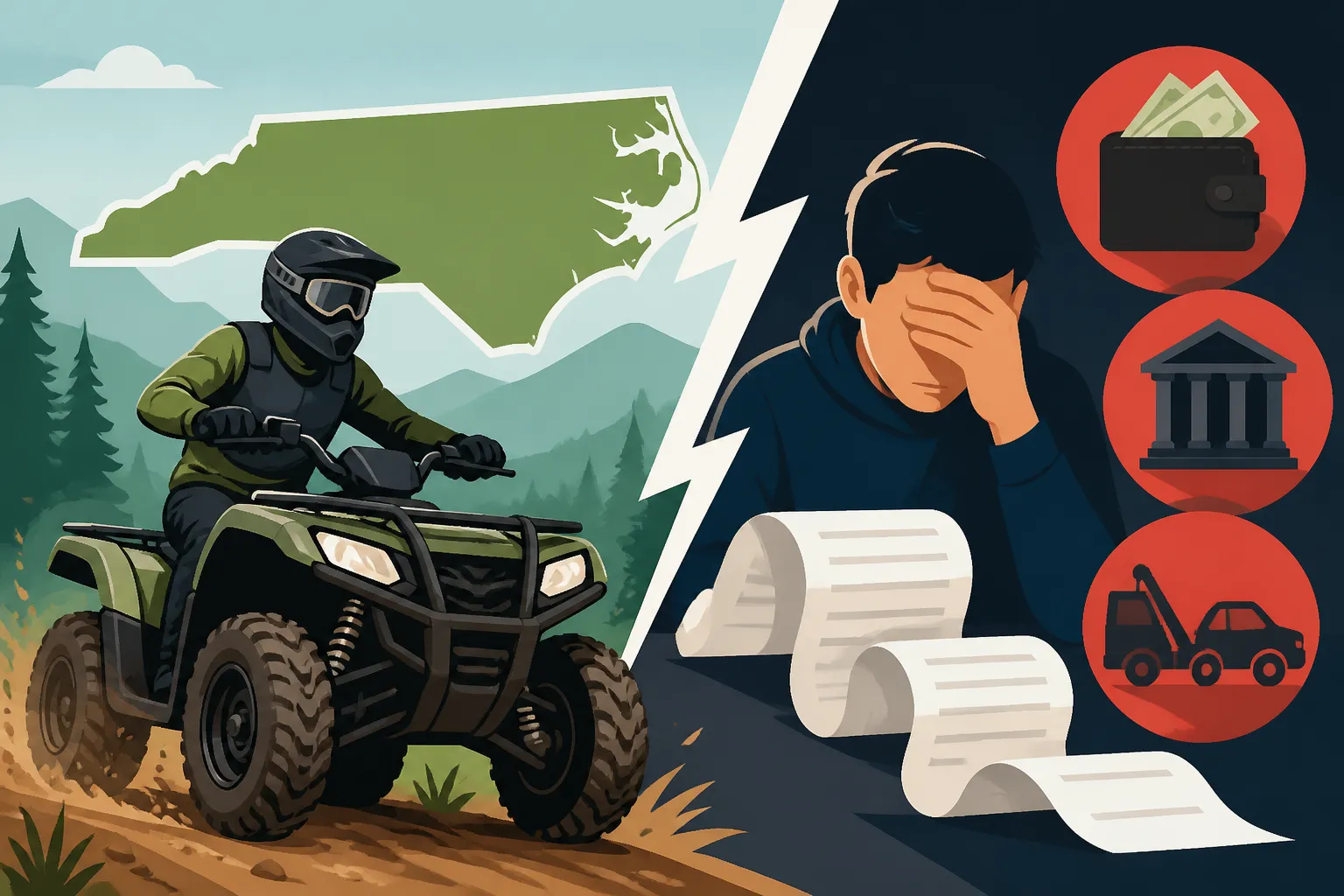
Oh, the dreaded $200 infraction! When you get that piece of paper from a wildlife officer or a county sheriff, stating a $200 fine for an ATV violation in North Carolina, it often feels like a punch to the gut. But here's the thing many folks don't realize until it's too late: that initial dollar amount is rarely, if ever, the actual total cost. This guide is here to pull back the curtain and show you all the hidden fees, time sinks, and long-term headaches that can quickly turn a seemingly minor $200 ticket into a much more expensive ordeal.
The Immediate Financial Blow: Beyond the Base Fine
That $200 fine printed on your citation is just the starting point, the tip of the iceberg, if you will. It's what the state assesses for the specific violation, but it doesn't account for all the other charges and fees that pile on top, making the final bill significantly larger. This is a common frustration, and honestly, it can feel a bit deceptive if you're not prepared for it.
Court Costs and Administrative Fees
First and foremost, virtually every traffic or equipment-related citation in North Carolina, even those for off-road machines, comes with additional court costs and administrative fees. These aren't negotiable and are tacked on by the court system itself, regardless of whether you fight the ticket or just pay it. Think of them as the operating expenses for processing your infraction. These fees can often be as much as, or even more than, the original fine, easily doubling or tripling your initial $200 expectation. For instance, if you're cited for riding where you shouldn't be, [Who Writes an ATV Ticket in North Carolina] might involve a county sheriff, and that county's court system will have its own set of standard fees. It’s not uncommon to see a $200 fine suddenly become $350 or even $450 once all the court and administrative charges are added in. You're not just paying for the infraction; you're paying for the system to process your infraction.
Missed Work and Travel Expenses
Consider the time you'll inevitably lose dealing with this. If you decide to contest the citation, you'll need to appear in court, which means taking time off work. Even if you simply choose to pay the fine without argument, you might still need to visit the courthouse or a local tag office to ensure everything is processed correctly. This isn't usually something you can just handle during your lunch break. For many working folks, a day or even a half-day off means lost wages. And let's not forget the cost of getting to and from the courthouse – gas, mileage on your vehicle, maybe even parking fees in a busy county seat. These seemingly small expenses add up, chipping away at your hard-earned cash and pushing the true cost of that $200 infraction ever higher. It’s not just about the money leaving your wallet for the court; it’s also about the money not coming in.
The Hidden Costs: Impacts on Your Wallet and Beyond
The immediate fees are one thing, but a $200 ATV infraction can also trigger a cascade of less obvious financial hits and inconveniences that you might not anticipate. These are the "hidden" costs that truly reveal how much a seemingly minor violation can set you back.
Potential Insurance Premium Hikes
While ATV-specific insurance isn't always mandatory for off-road riding in North Carolina, if your ATV is covered under a broader powersports policy or even your homeowner's insurance, an infraction could potentially lead to higher premiums. Insurance companies assess risk, and a citation, especially if it involves reckless riding or property damage (even minor), could flag you as a higher risk rider. They might view it as an indicator of future incidents. Even if the infraction isn't directly tied to a crash, it's still a mark on your record that demonstrates a violation of regulations. Always check with your insurance provider to understand how such infractions might affect your rates. Sometimes, the cost of increased premiums over a few years can far outweigh the initial fine. This is especially true if the infraction was for something like violating [North Carolina Rules for Riding a Public Street], which might cross over into typical vehicle regulations.
Equipment Modifications and Compliance
Depending on the nature of your infraction, you might find yourself needing to modify your ATV to comply with regulations, or simply to prevent future citations. For example, if you were ticketed for excessive noise, you might need to invest in a quieter exhaust system. If the issue was a lack of a spark arrester on public lands, you'll need to purchase and install one – and trust me, not having a [North Carolina Spark Arrester Requirement] met on forest trails is a ticket waiting to happen. Companies like SuperATV offer a wide range of aftermarket parts, but even basic compliance components can be an unexpected expense. These modifications, while necessary for legal riding, represent an additional cost directly stemming from the infraction. It's a "fix-it" cost that can range from a few dozen dollars for a simple part to hundreds for more complex system changes.
Mandatory Safety Courses
In some scenarios, particularly if the infraction involved a minor rider or a serious safety lapse, the court might mandate that you (or the rider) complete an ATV safety course. While these courses are invaluable for learning safe riding practices and understanding [What North Carolina Law Says About a Rider's Age] and its implications, they also come with a fee. Although the cost of a safety course might only be around $100-$150, it's another expense added to your tally. Plus, it involves more time commitment – typically a full day or a couple of evenings – which again, can mean lost work hours or sacrificing personal time. This is not just about paying for the ticket; it's about investing in education to prevent recurrence, which is a good thing, but still a direct financial consequence. To learn more, check out [North Carolina Safety Certificate Requirements].
The Long-Term Repercussions: More Than Just Money
Beyond the immediate and hidden financial costs, a $200 ATV infraction can have longer-lasting consequences that impact your riding life, your reputation, and even your peace of mind. These are the costs that aren't measured in dollars but in frustration and limitations.
Restrictions on Riding Opportunities
An infraction, especially if it was for riding on a closed trail or private land without permission, can directly impact your future riding opportunities. Repeated offenses might lead to being banned from certain public trail systems like those in the Uwharrie National Forest. If you're cited for [North Carolina Rules for Riding a Closed Trail] or [North Carolina Landowner Permission Rules], it could mean losing access to your favorite riding spots. Furthermore, some private riding parks or organized events might inquire about your riding history, and an infraction could lead to denial of entry. This isn't just about money; it's about losing the freedom to enjoy your passion where you want to. It's a long-term restriction that can feel incredibly unfair, even if it's a direct consequence of a past action.
The Paperwork and Mental Load
Dealing with any legal infraction is a hassle, plain and simple. There's paperwork to fill out, deadlines to meet, court dates to remember, and phone calls to make. This creates a significant mental load, adding stress and taking up valuable brainpower that could be used for more enjoyable things. Even after you've paid the fine, you might find yourself worrying about whether it's truly off your record, or if it will pop up again when you least expect it. The constant nagging feeling of having an unresolved issue, even a minor one, can be a real drag. You might find yourself checking [North Carolina Fines for an ATV Violation] more often, just to be sure you don't repeat any mistakes. All this stress and administrative burden is a very real, albeit intangible, cost of that initial $200 ticket.
The Domino Effect and Reputation
An infraction, particularly if it's public knowledge in your local riding community, can affect your reputation among fellow riders or local officials. Nobody wants to be seen as the person who disregards rules or causes problems. This might seem minor, but if you're part of a riding club or frequent certain areas, a poor reputation can lead to being ostracized or viewed with suspicion. Moreover, one infraction might lead to increased scrutiny from law enforcement in the future. You might find yourself pulled over more often for "random" checks or under more intense observation when you're out riding. This "domino effect" of one small incident leading to broader, more intrusive consequences is a very real, non-monetary cost that can impact your overall enjoyment of the sport.
A $200 ATV Infraction: A Cost Comparison
Let's put it all into perspective. What you think you'll pay versus what you actually pay can be a stark difference.
| Cost Category | Initial Expectation (Base Fine) | Realistic Cost (Estimate) |
|---|---|---|
| Base Fine | $200 | $200 |
| Court/Admin Fees | $0 | $100 – $250 (varies by county and specific infraction) |
| Lost Wages | $0 | $50 – $200 (for court appearance, safety course) |
| Travel Expenses | $0 | $10 – $50 (gas, parking for court, etc.) |
| Insurance Increase | $0 | $0 – $300+ (annual increase over 1-3 years) |
| Equipment/Compliance | $0 | $50 – $500+ (e.g., spark arrester, lights from SuperATV) |
| Safety Course Fee | $0 | $100 – $150 (if mandated) |
| Total Monetary Cost | $200 | $510 – $1,650+ |
| Non-Monetary Costs | None | Stress, lost riding access, damaged reputation, time spent |
As you can see, the $200 quickly inflates into something much more substantial when you factor in all the variables.
How to Avoid the Costly Lesson: Ride Smart, Ride Legal
The best way to avoid all these headaches and financial drains is, quite simply, to ride legally and responsibly. It sounds basic, but many infractions come from a lack of awareness or a moment of poor judgment.
Know the Rules of the Road (and the Trail)
North Carolina has specific, sometimes nuanced, laws regarding ATV and UTV use. For example, understanding [North Carolina Equipment Rules for ATVs] can save you from a preventable ticket. Before you head out, especially to a new area or a public trail system, take the time to research the local regulations. This includes understanding speed limits, age restrictions, and where you are actually permitted to ride. For instance, knowing when and where [North Carolina's Modified Utility Vehicle Route] might apply could be crucial if you're hoping to ride a UTV on certain roads. A quick check of a Forest Service website or a county ordinance can save you a world of trouble. Don't rely on assumptions or what "everyone else is doing."
Keep Your Machine Compliant and Safe
Ensure your ATV or UTV is always in good working order and equipped with any required safety features. This includes working brakes, proper lighting if riding at dusk or dark, and that all-important spark arrester for public lands. Checking your machine before each ride is not just about performance; it's about compliance. If you need parts or accessories to bring your machine up to snuff, consider trusted brands. SuperATV, for instance, offers many products that can help you meet various safety and equipment requirements, from lighting kits to exhaust components. Investing a little upfront in the right gear can prevent a much larger expense down the line.
Secure Permission and Respect Boundaries
One of the most common reasons for infractions is trespassing or riding on unauthorized land. Always obtain explicit permission before riding on private property, and respect all posted signs and barriers on public lands. If a trail is marked as closed, there's a good reason for it – often for safety or environmental protection. Ignoring these warnings is a surefire way to get a ticket and potentially damage fragile ecosystems. When in doubt, don't ride. A bit of caution and respect goes a long way in keeping you out of trouble and keeping your wallet full.
Riding ATVs and UTVs in North Carolina is an incredible experience, offering countless hours of fun and adventure. But that enjoyment can quickly be overshadowed by the consequences of an infraction. That "small" $200 ticket is rarely just $200. By understanding the true costs and taking proactive steps to ride responsibly, you can ensure your adventures remain thrilling and free from unnecessary financial burdens and stress.
Disclaimer
This article is for general informational purposes only and does not constitute professional advice. Laws, prices and regulations vary by location and change over time. Consult a qualified professional for guidance on your specific situation.