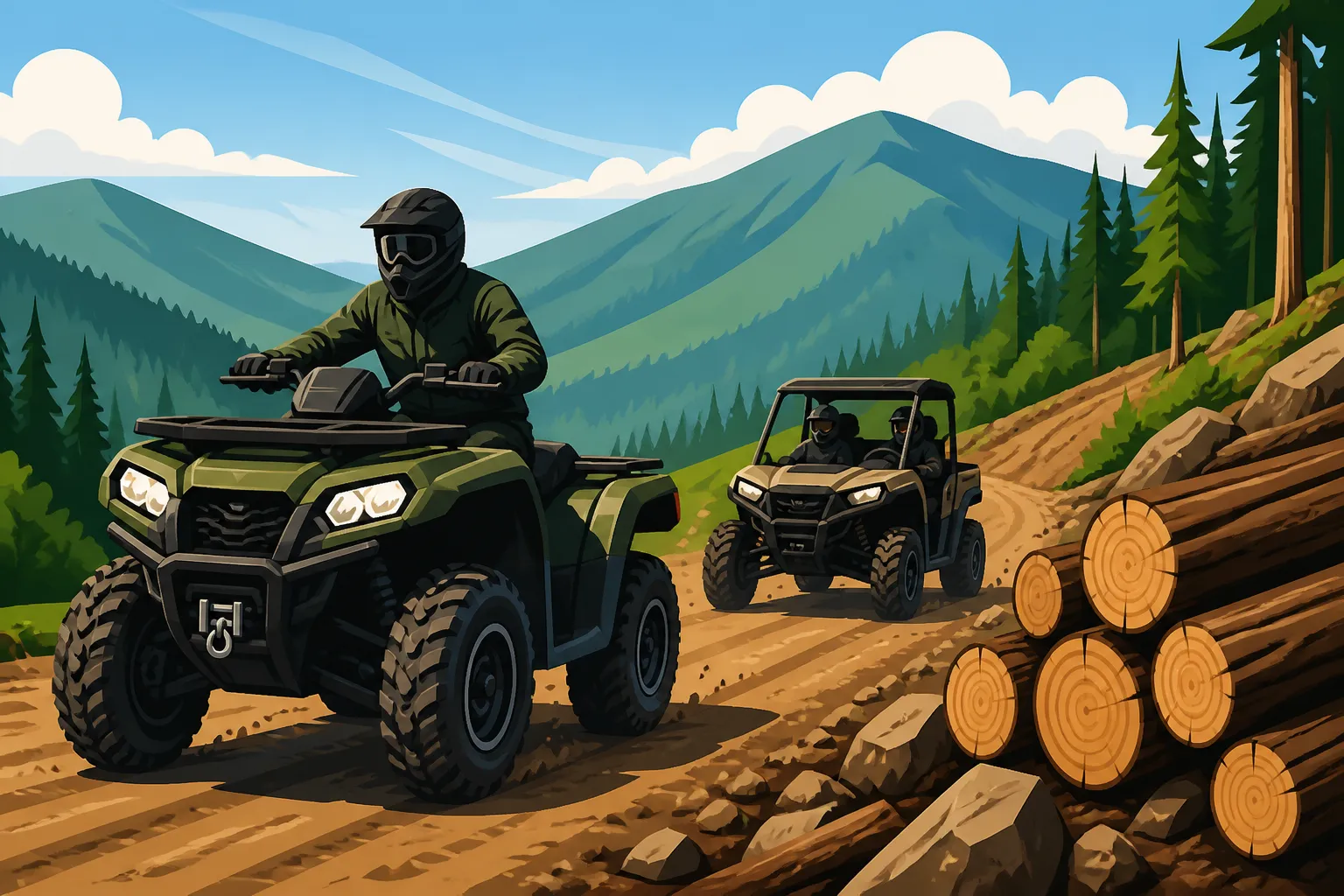
Riding a Logging Road in the Mountains
The call of the North Carolina mountains for ATV and UTV riders is undeniable, offering stunning vistas and a sense of adventure that's hard to beat. However, many riders feel a deep frustration when trying to figure out if those inviting logging roads winding through the forests are actually open for recreational use. It often feels like a secret club you're not a part of, with conflicting information and confusing rules. This guide will cut through that confusion, clarifying the legalities, safety considerations, and best practices for exploring logging roads in our beautiful mountain regions, helping you ride responsibly and avoid costly mistakes.
The Allure and Legal Landscape of Mountain Logging Roads
There's something incredibly magnetic about a logging road snaking its way through the dense North Carolina mountains. For many of us who love our ATVs and UTVs, these paths represent the ultimate escape, a chance to truly connect with the rugged beauty of the Blue Ridge and the Appalachians. But that sense of freedom often bumps right up against a wall of regulations, leaving riders scratching their heads.
Why Logging Roads Call to Riders
Imagine topping a ridge and being greeted by an expansive view of peak after peak, the morning mist still clinging to the valleys below. That's the dream of riding mountain logging roads. These trails, often less manicured than official OHV parks, offer a raw, authentic riding experience. They can lead to hidden waterfalls, secluded overlooks, or simply provide miles of challenging terrain away from the crowds. For many, it's about the journey itself – the chance to navigate varied surfaces, from gravel and packed earth to mud and rocky climbs. It feels like real exploration, unlocking parts of the state you might never see from a paved road. It's that yearning for undiscovered paths and challenging rides that draws us in, promising an adventure that's truly off the beaten path.
The Complex Legalities of Mountain Roads
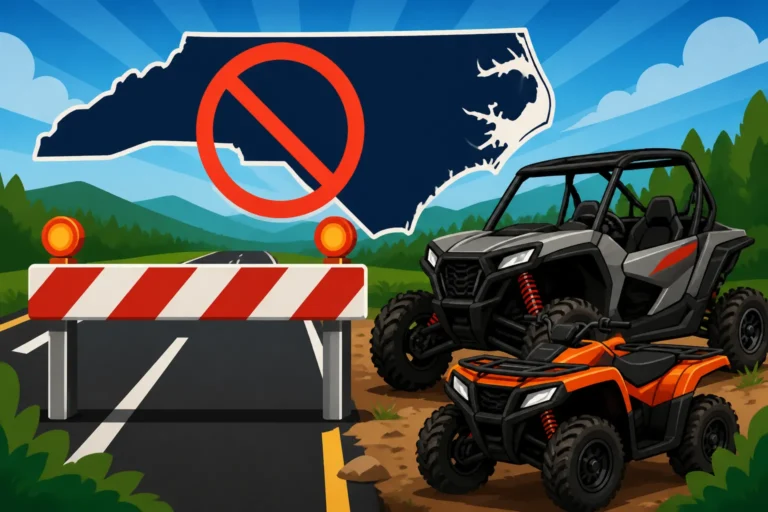
Here's where the frustration really sets in: that picturesque logging road you're eyeing might look inviting, but its legal status for ATV and UTV use is often anything but clear. The vast majority of logging roads in North Carolina, especially in the mountains, are either privately owned by timber companies or individual landowners, or they are administrative roads within national forests. What this means for riders is that public access for ATVs and UTVs is extremely limited.
You can't just assume a dirt road is fair game, even if there isn't a "No Trespassing" sign every fifty feet. Public roads maintained by the state or counties are generally off-limits to unregistered ATVs and UTVs, with only very specific exceptions like crossing a road or the [North Carolina Farming Exception for ATVs]. Within our national forests, like the Pisgah or Nantahala, most unpaved roads are designated for administrative use only – meaning they're for Forest Service vehicles, logging operations, or other official purposes, not recreational OHV riding. It's a frustrating reality for riders who see these miles of open-looking trails but are left wondering why they can't access them legally. Understanding this distinction between "looks open" and "is legally open" is the first critical step to responsible riding in the mountains.
Navigating Public Logging Roads in North Carolina's National Forests
When it comes to public lands, specifically our national forests, the rules around logging roads are very particular. It's not a free-for-all, and simply seeing a dirt path doesn't mean it's an open invitation for your ATV or UTV. We have to be meticulous about where we ride to protect these lands and avoid legal trouble.
Understanding National Forest Regulations
North Carolina is blessed with incredible national forests, including the Pisgah and Nantahala, which boast countless miles of logging roads. However, the crucial point to grasp is that almost all of these roads are designated for administrative or permitted commercial use (like timber operations) only. Recreational ATV and UTV use is generally restricted to specific, designated OHV trail systems. Think of places like the [Brown Mountain OHV Trail System] or the [Badin Lake OHV Trail Complex] in the Uwharrie National Forest. These are specific networks where OHV riding is welcomed and managed.
Outside of these designated trails, a logging road, even if it appears unused, is typically not open to your machine. The U.S. Forest Service has strict guidelines to protect natural resources, prevent erosion, and ensure safety for all forest users. Riding on undesignated roads can lead to hefty fines, environmental damage, and closure of areas for everyone. Before you even load your machine, it is absolutely vital to check the current forest service maps and local ranger district advisories. These resources will show you exactly which trails or roads are open to OHVs. You'll also need to understand the [North Carolina Forest OHV Permits] system, as day or season passes are often required even on designated trails. Always consult the [North Carolina Trail Closures to Check] before heading out, especially after heavy rains or during certain seasons, as conditions can change rapidly in the mountains.
Essential Gear and Preparedness for Forest Roads
Riding the legitimate, designated trails that sometimes incorporate old logging roads in the mountains demands a higher level of preparedness than a flat, groomed track. The terrain can be unpredictable, remote, and challenging. First and foremost, safety gear is non-negotiable. This means a DOT-approved helmet, eye protection, sturdy boots, gloves, and long-sleeved clothing. Even on a designated trail, a hidden branch or an unexpected rock can turn a fun ride into a painful memory. Make sure you understand [Helmet and Eye Protection Rules in North Carolina].
Beyond personal protection, your machine needs to be up to the task. Mountain trails, especially those that have seen logging activity, can be rocky, steep, and include water crossings. Good tires with aggressive tread are essential for traction – perhaps an upgrade from a brand like SuperATV could give you the grip you need on loose climbs or muddy sections. A winch, securely mounted and properly rated, is an invaluable piece of equipment for self-recovery or assisting a fellow rider who might get stuck. Carry a comprehensive tool kit, tire repair kit, air pump, and enough fuel for your planned ride plus a reserve. Never underestimate the remote nature of mountain trails; cell service can be spotty or nonexistent. Pack a first-aid kit, plenty of water, high-energy snacks, a reliable map (both paper and GPS), and a way to signal for help. If you anticipate riding into the evening, be sure your machine's lighting is robust and you're familiar with [North Carolina Rules for Riding After Dark].
The Reality of Private Logging Roads and Landowner Permission
While national forests offer some designated riding, the vast majority of logging roads in the North Carolina mountains are on private land. This is where many riders get into trouble, either intentionally or by mistakenly thinking that an un-gated road implies public access. Understanding and respecting private property rights is paramount.
Securing Private Land Access
Let's be blunt: if a logging road isn't clearly marked as a public OHV trail or part of a managed park, it's almost certainly private property. This includes vast tracts owned by timber companies, smaller family forests, and even land managed for hunting or conservation. The biggest mistake riders make is assuming "no sign, no problem." In North Carolina, that couldn't be further from the truth. Without explicit permission, you are trespassing, and landowners have every right to prosecute.
The key to accessing these private mountain logging roads legally is securing permission directly from the landowner. This often means doing your homework: identifying who owns the land (county GIS maps can be helpful), and then making a polite, well-reasoned request. Written permission is always best, outlining the dates, times, and specific areas you're allowed to ride. Landowners often have legitimate concerns about liability, property damage, and disruption to their operations or wildlife. Being respectful, offering to show proof of insurance, and demonstrating a commitment to "tread lightly" can go a long way. Some landowners might grant access for a fee, others might be open to it if you volunteer to help with trail maintenance. Always remember that permission is a privilege, not a right, and it can be revoked if trust is broken. For a deeper dive into these requirements, check out [North Carolina Landowner Permission Rules] and [North Carolina Rules for Riding Private Land].
Respecting the Land and Its Owners
Once you've secured permission to ride a private logging road, your responsibility multiplies. This isn't just about avoiding a ticket; it's about maintaining good relationships with landowners and ensuring future opportunities for yourself and other riders. The cardinal rule is to leave no trace. Pack out everything you pack in, and if you see litter, pick it up. Stay strictly on the approved logging roads and trails; do not create new paths, cut across switchbacks, or venture into sensitive areas.
Be mindful of the environment. Logging roads can be susceptible to erosion, especially on steep mountain grades. Avoid riding during or immediately after heavy rains if conditions are overly muddy, as this can exacerbate damage. Wildlife is another major consideration. These mountain forests are home to deer, bear, turkeys, and countless other species. Ride quietly and cautiously, especially in remote areas, and be aware of hunting seasons. If riding during hunting season, wearing blaze orange is a smart move, even if not explicitly required by law for ATV riders – it's a common-sense safety measure that applies to hunters and non-hunters alike. [Blaze Orange on a November Uwharrie Ride] discusses this in a different context, but the principle of visibility holds true. If you are riding while hunting, be sure to understand [North Carolina Rules for Riding While Hunting]. The relationship between riders and landowners is built on trust, and demonstrating respect for their property and the environment is the best way to ensure that trust endures.
Equipment and Safety Considerations for Mountain Logging Roads
Riding logging roads in the North Carolina mountains is a unique challenge that requires specific machine setups and a vigilant approach to safety. These aren't your typical groomed trails, and being prepared is key to a successful and enjoyable outing.
Machine Setup for Mountain Terrain
The steep grades, varied surfaces, and potential obstacles of mountain logging roads demand a robust machine that's well-maintained and appropriately equipped. Your stock ATV or UTV might handle some of it, but certain upgrades can make a world of difference. Ground clearance is crucial for navigating over rocks, ruts, and fallen branches without damaging your undercarriage. Aftermarket skid plates, perhaps from a reputable brand like SuperATV, can provide vital protection for your engine, transmission, and suspension components against sharp impacts.
Tires are another critical factor. Aggressive, multi-ply radial tires offer superior traction on loose gravel, mud, and rocky climbs compared to standard-issue tires. You'll want to carefully consider tire pressure as well, as adjusting it can improve traction and ride comfort over different terrains. Suspension adjustments can also help absorb impacts and maintain stability on uneven surfaces. Don't forget the importance of your braking system; disc brakes on all four wheels are standard on most modern machines, but ensure they are in top working order. Engine braking is also a significant advantage for safely descending steep grades, helping to control your speed without overheating your friction brakes. Finally, a reliable winch is non-negotiable. Mountain roads can be unpredictable, and getting stuck is always a possibility. A well-installed and maintained winch can be your best friend for self-recovery or helping out a buddy.
Encountering Other Users and Wildlife
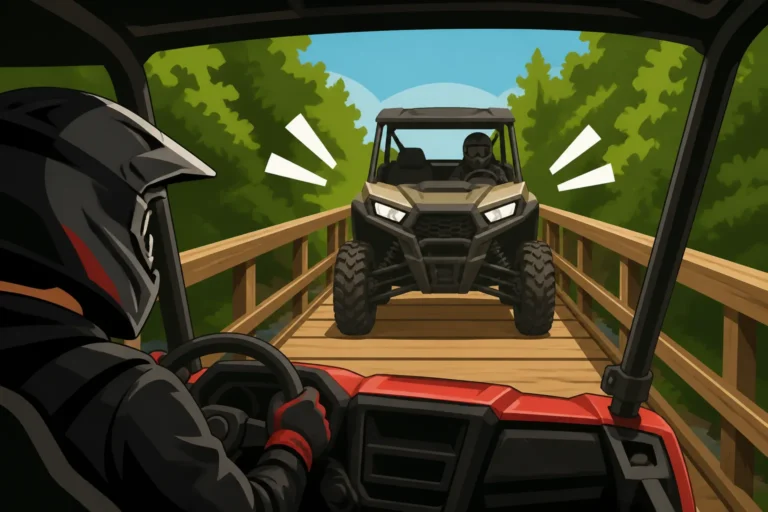
Logging roads, whether public or private, are rarely exclusive to ATV and UTV riders. In the mountains, you're likely to encounter a variety of other users, and knowing how to react ensures safety for everyone. The most critical encounter on an active logging road will be with a logging truck. These are massive vehicles with limited maneuverability and sightlines, and they always have the right of way. If you hear or see a logging truck, pull over immediately, move as far off the road as safely possible, and stop your engine. Make yourself visible, but stay clear. [Meeting a Log Truck in the Nantahala] details just how serious this can be.
You'll also likely share these areas with hikers, mountain bikers, hunters, and even other off-road enthusiasts in different types of vehicles. Slow down significantly when you encounter anyone else, offer a friendly wave, and be prepared to yield. Remember, your machine can be loud and dusty, so be considerate.
Beyond human encounters, the mountains are teeming with wildlife. Always be on the lookout for deer, bear, wild turkeys, and other animals that might dart across the trail, especially at dawn or dusk. Respect their habitat, and never harass or approach wildlife. If you're riding during hunting season, it's not just about wearing blaze orange yourself; be extra aware of hunters who might be camouflaged and focused on game. Their safety, and yours, depends on mutual awareness. Being mindful of these shared spaces is crucial for enjoying our mountain logging roads safely and responsibly.
Public vs. Private Logging Roads: Key Differences for Riders
Understanding the distinctions between public and private logging roads is critical for legal and safe ATV/UTV riding in North Carolina's mountains. Here's a quick comparison to keep in mind:
| Feature | Public Logging Roads (e.g., National Forests) | Private Logging Roads (e.g., Timber Company Land) |
|---|---|---|
| Primary Purpose | Administrative access, timber operations, specific designated OHV trails | Timber operations, private land access, often gated/restricted |
| ATV/UTV Access | ONLY on specific, designated multi-use roads/trails; very limited outside these | ONLY with explicit, prior, and often written landowner permission |
| Permits Required | Yes, for designated OHV trails (day or season passes) | Not for access itself, but potentially required by landowner for liability/tracking |
| Regulatory Body | U.S. Forest Service (or other public land agency) | Landowner (individual, corporation) |
| Key Risk | Riding off-designated trails (fines, environmental damage, closures) | Trespassing (fines, legal action, machine impoundment, loss of trust) |
| Safety Concerns | Logging trucks, other forest users, remote conditions | Logging trucks, other private users, remote conditions, liability concerns |
| Navigation | Forest Service maps, apps (check for current OHV designations) | Property deeds, GIS maps (to identify landowner), direct communication |
This article is for general informational purposes only and does not constitute professional advice. Laws, prices and regulations vary by location and change over time. Consult a qualified professional for guidance on your specific situation.