Where to Wash Before Loading at Uwharrie
Coming off Uwharrie with red clay packed around your tires is one thing; getting that mud into your truck, trailer, or home is another. The tricky part is that a trailhead is not automatically a wash station. This guide explains how to clean up responsibly, where to look for washing options near the forest, and what to do if you need to load before you find one.
Why washing at the trailhead is not a safe assumption
Treat trailheads as staging areas, not wash bays
At Uwharrie, riders commonly stage near areas such as Badin Lake and the trailheads serving the Uwharrie National Forest. Those places are useful for unloading, checking gear, and preparing for a ride, but you should not count on finding a designated vehicle wash bay there. Facilities can vary, and a hose, wash pad, or water source that appears convenient may not be intended for cleaning machines.
Before washing anywhere on public land, check posted notices and current forest guidance. A trailhead drain or roadside ditch can lead toward a stream or other sensitive area. Mud, fuel residue, oil, and cleaners can be carried into waterways, so rinsing a machine beside a parking space may create a runoff problem even when the water looks harmless.
This is especially worth thinking about after a wet ride. The red clay and grit that cling to a skid plate or fender can seem like ordinary dirt, but a heavy rinse can push a large amount of sediment into a nearby drainage area. If you’re planning a ride after rain, Uwharrie Mud After a Week of Rain can help you think through trail conditions and cleanup before you leave home.
Check the actual facility before driving over
A commercial self-service wash in or near a town such as Troy or Mount Gilead may be a practical option, but don’t assume that every location has a bay large enough for a trailer, permits off-road vehicles, or welcomes a machine covered in thick mud. Some businesses may have restrictions on vehicle type, trailer parking, heavy mud, or washing equipment with exposed mechanical parts.
Call ahead or check the business’s posted rules before building your return route around a wash stop. Ask whether an ATV or UTV is permitted, whether you can bring the trailer into the property, and whether the wash area can handle the size of your machine. If the unit is heavily caked with clay, be upfront about it. That avoids arriving at a busy wash and discovering that the operator does not want mud washing into its drains.
A quick check is particularly helpful on a busy weekend when the wash may be crowded or a nearby road may be inconvenient for a long trailer. You can also use North Carolina Trail Conditions Before You Ride to make checking access and conditions part of the trip-planning routine, rather than trying to solve everything once the machine is already loaded.
Keep water, soap, and mud away from streams
Avoid washing an ATV or UTV in a creek, lake, or other natural water source. Don’t use a stream as a convenient rinse point, and don’t apply soap near water or drainage channels. Even products marketed as biodegradable can affect aquatic environments, and “just a quick rinse” can still carry dirt and residue downstream.
If you’re unsure whether a specific place is approved for washing, don’t wash there. Ask the relevant land manager or property operator. For a broader look at what to expect around staging areas and cleanup, see Washing Off at a North Carolina Trailhead. The safest plan is to use a designated commercial wash facility or wait until you’re home and can wash in a place where runoff can be managed appropriately.
How to plan a wash stop near Uwharrie
Choose the wash location before your ride
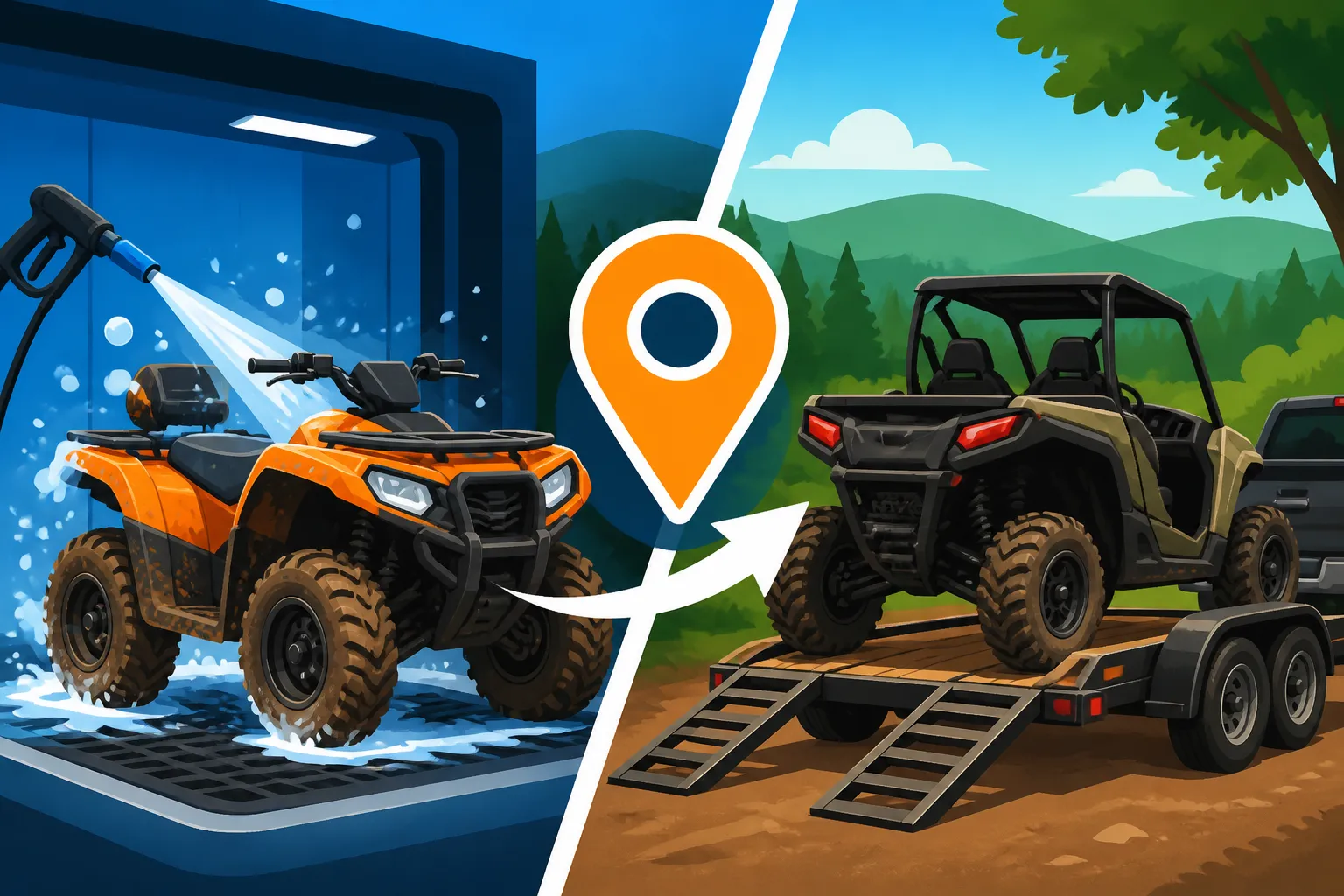
Start by deciding whether you want to wash before loading, after loading at a nearby facility, or at home. Washing before loading keeps loose clay out of the trailer, but it may require finding a suitable wash close to your route. Washing after loading may be easier if a trailer-friendly commercial wash is available, though it can leave mud on the trailer floor and tie-down points. Washing at home gives you more control, provided you can manage the runoff and have the space to work safely.
When you research a stop, check more than whether a location has a pressure washer. Confirm that it permits ATVs or UTVs, has enough room for your truck and trailer, and is open when you expect to arrive. If you’re riding around Badin Lake, route planning matters: a wash stop that looks close on a map may be awkward to reach with a trailer if it involves a narrow road or a difficult turn.
| Wash option | Best suited for | Check before you go |
|---|---|---|
| Commercial self-service wash | A quick rinse before loading or after leaving the forest | ATV or UTV rules, trailer access, mud restrictions, and hours |
| Wash at home | A thorough cleanup with your own equipment | Drainage, water use, surface stability, and space around the machine |
| Trailhead or forest parking area | Staging and basic checks, not assumed washing | Posted rules and whether a specific wash facility is expressly provided |
| No wash before departure | A machine that must be loaded promptly | Mud containment, secure tie-downs, and a plan to clean it later |
Use a mapping tool to compare the wash option with your route, but verify the property’s rules directly. onX Offroad can help you orient yourself around roads and riding areas while planning, but it should not replace posted signs, land-manager notices, or a call to a private business. If you use it to find a route toward a wash, be careful not to treat every visible road as an open public route.
Think about trailer access and the return route
A wash facility can be close to Uwharrie and still be a poor stop for a truck and trailer. Look for clear access, enough room to turn around, and a place to park without blocking other customers. If you’re uncertain, ask the business whether a trailer can enter and exit without backing through a crowded lot.
If your trip involves a Badin Lake staging area, review parking details ahead of time. Parking a Trailer at a Badin Lake Trailhead covers a related part of planning: making sure your trailer setup works before you arrive. For current permit and staging information, Buying a Pass at the Eldorado Outpost may also be useful when you’re organizing a ride in the area. Don’t assume a store or outfitter is a wash facility unless it specifically confirms that service.
Route planning apps can help you compare roads, but use them as one piece of the picture. onX Offroad may help you visualize your ride area and possible connections, while official notices and direct confirmation help you avoid closed roads, private property, or a wash location that cannot accommodate your rig. If you’ll be navigating unfamiliar forest roads, North Carolina Forest Trail Maps is a useful companion topic.
Build in time for a realistic cleanup
A quick rinse is not the same as a full wash. Before you head out, decide which areas need attention for safe transport: tires and wheel wells, fenders, the underside, footwells, and any spot where mud could fall onto the road. Avoid directing high-pressure water at electrical connectors, seals, bearings, radiator fins, or other components that can be damaged by careless spraying. Follow the machine manufacturer’s cleaning guidance, especially if your UTV has a winch, exposed wiring, or accessories.
Give yourself enough time to check the machine once the wash is done. Look for mud hiding around the brakes, lights, plate area if applicable, and hitch. Confirm that the tires are not packed with chunks that could come loose on the road. If the machine is still wet, check that your straps and tie-down points remain secure before driving away.
If you cannot find a wash before loading
Remove loose mud without creating runoff
Sometimes the practical answer is to load and go. Maybe the nearest wash is closed, the trailer won’t fit, or you’re ready to leave before dark. In that case, focus on limiting the mess and transporting the machine safely rather than rinsing it in an unsuitable spot.
Use a brush, plastic scraper, or hand tool to remove loose clumps where you’re allowed to do so, taking care not to damage hoses, wiring, boots, or protective components. Keep the debris contained rather than pushing it toward a ditch or storm drain. A tarp or removable liner in the trailer can catch some falling dirt, but make sure it does not interfere with traction, tie-downs, or safe loading.
Do not leave piles of mud in a forest parking area, and don’t use a natural water source to clean the machine. If you’re camping near the riding area, remember that a campsite is not automatically a wash pad either. Camping Near Badin Lake can help you plan overnight logistics, but confirm the campground’s rules before assuming you can wash a machine there.
Secure the machine and protect your tow vehicle
Before loading, check that mud is not interfering with the loading ramp or tires. Clay can make a ramp slick, especially if it has been raining. Keep people clear of the machine’s path, use a spotter if needed, and avoid rushing a climb onto the trailer. If the ramp or loading surface is slippery, stop and improve the setup rather than trying to power through.
Once the machine is on the trailer, tie it down at secure points using the method recommended for your equipment. Make sure mud is not hiding damage or loose components that could shift during travel. Check that the trailer lights, safety chains, and straps are in good condition, then check your truck’s lights and rear visibility. A heavily muddy machine can obscure lights or make it harder to see what is happening behind you.
If you planned your trip using onX Offroad, review the return route before leaving the staging area, particularly if weather or trail conditions changed during the ride. The app can support orientation, but the road you take should still be appropriate for your truck and trailer, and any posted closure or restriction should take priority.
Finish the wash later, where it is appropriate
If you have to leave Uwharrie with mud still on the machine, make a plan for the next suitable stop rather than letting cleanup become an afterthought. At home, choose a surface and drainage arrangement that keeps wash water and sediment out of storm drains and nearby waterways. If you rent a wash bay, follow its instructions for mud disposal and equipment use.
For a thorough cleanup, work from the dirtiest exposed areas toward smaller details, but avoid blasting water into bearings, electrical connections, air intakes, or seals. Let the machine dry as recommended before storage, and inspect areas where mud can hide, including underneath guards and around the suspension. After a muddy trip, a few minutes of inspection can reveal loose fasteners, damaged boots, or trapped debris that a rinse alone would miss.
A little planning makes the end of a Uwharrie ride less stressful. Check the trail and access information before you leave, identify a wash option that accepts your machine and trailer, and keep a no-wash backup plan. onX Offroad can help with orientation and route planning, while official forest information and direct conversations with businesses help confirm where you can actually go and what you can do once you get there.
Disclaimer
This article is for general informational purposes only and does not constitute professional advice. Laws, prices and regulations vary by location and change over time. Consult a qualified professional for guidance on your specific situation.