Does a North Carolina Permit Work in Tennessee?
A North Carolina forest OHV permit is easy to mistake for a general riding pass, especially when a trip crosses the state line. It is not a portable credential for every trail. The key is to identify the Tennessee riding area and confirm its own access rules before unloading your ATV or UTV.
Does a North Carolina permit work in Tennessee?
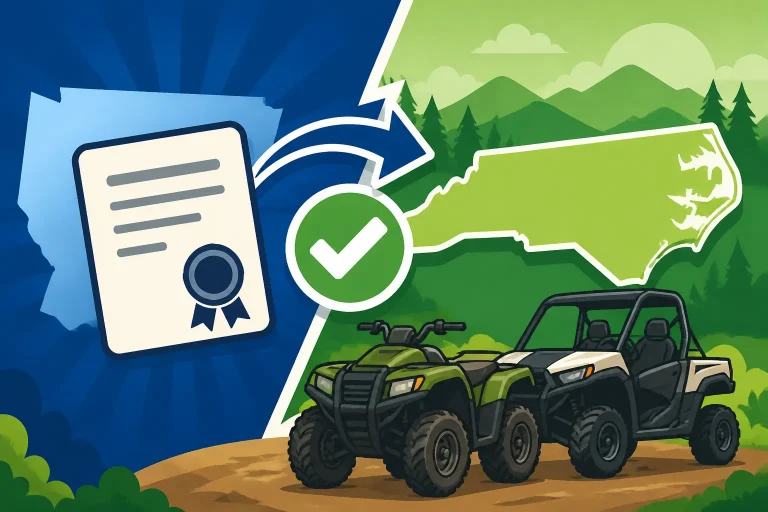
In general, no: a North Carolina permit for a designated riding area does not automatically give you access to trails in Tennessee. It is tied to the place and access system for which it was issued, not to your machine as a statewide or nationwide riding credential.
North Carolina forest permits are associated with specific off-highway vehicle areas. A pass intended for a North Carolina riding area should not be treated as valid at a Tennessee trail, park, or forest. The Tennessee destination may have a separate permit or fee, require a particular pass, or use a different system altogether. Requirements can vary by land manager and riding area, so there is no safe substitute for checking the destination’s current rules.
| What you have | What it usually covers | What to confirm for Tennessee |
|---|---|---|
| North Carolina forest OHV permit | Access under the rules of the North Carolina riding area named by the permit | Whether the Tennessee destination accepts it; do not assume that it does |
| Tennessee site pass or permit | Access at the Tennessee property or trail system named by its issuer | Which machines and riders it covers, and where it must be displayed |
| ATV or UTV title | Ownership documentation | Whether the destination requires proof of ownership or other machine documents |
| Safety certificate | A rider qualification where a rule requires one | Whether the Tennessee location requires a certificate and which ones it accepts |
| Registration or plate | A credential issued under a particular state’s rules | Whether it applies to the intended use and destination |
The word “permit” can refer to different things: a trail-access pass, a vehicle credential, or a rider qualification. Those are not interchangeable. A permit that lets you ride at a particular place does not necessarily register your machine, satisfy a safety requirement, or grant permission to use a different trail system.
This distinction matters when planning trips to North Carolina areas such as Brown Mountain, Badin Lake, or Wayehutta. Their permit arrangements are for their own riding locations. For details on those North Carolina systems, see North Carolina Forest OHV Permits and Where to Buy a North Carolina OHV Permit. Neither title nor a North Carolina forest pass, by itself, establishes permission to ride in Tennessee.
Tennessee also does not operate as one uniform riding area with a single access rule that applies everywhere. A private off-road park, a public trail network, and land managed by a public agency can have different permit processes. One may sell a day pass, another may require advance arrangements, and another may not allow the machine you plan to bring. Confirm with the specific site rather than relying on a rule from a different property or state.
What to check before riding in Tennessee
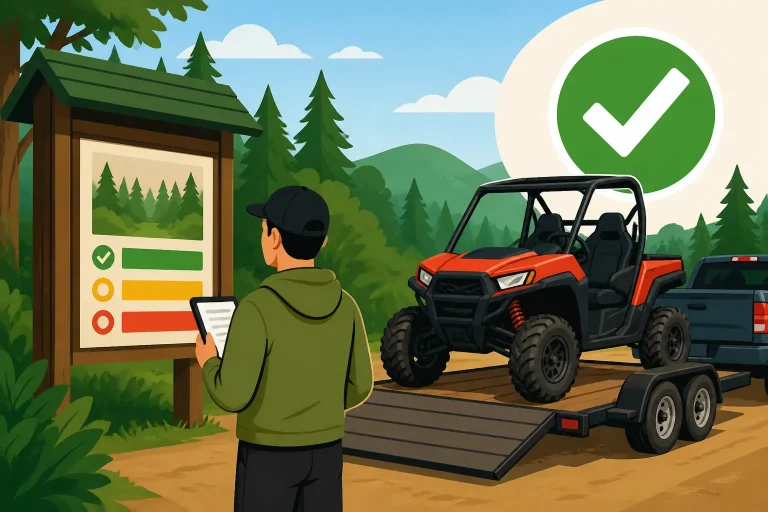
Start with the exact destination, not just the state. “Tennessee trails” is too broad to answer whether a pass is accepted. Find the official page or contact information for the park, trail system, or land manager where you intend to ride. Ask about the specific machine and riding dates, and get the answer from the party that controls access.
Confirm the permit and its scope
Ask whether you need a pass or permit for the machine, the rider, or both. Then verify what the permit covers. A site may issue a vehicle pass, charge per rider, or require another credential in addition to the access pass. It may also specify where a decal or receipt must be displayed.
Check these details before leaving:
- Whether a North Carolina permit is accepted at all. Unless the destination clearly confirms that it is, plan to obtain the Tennessee site’s required access credential.
- Whether the permit is for one vehicle, each vehicle, each rider, or a group.
- Whether the permit is valid for your planned dates and the specific trails you intend to use.
- Whether it must be purchased ahead of time or can be obtained at the entrance.
- Whether the permit has to be displayed on the machine, carried by the rider, or kept with the tow vehicle.
- Whether the permit is transferable if you switch machines or travel with another group.
A pass may cover only designated trails or a particular property. It does not necessarily authorize riding on nearby public roads, connecting land, or trails managed by someone else. Follow posted boundaries and directions even if the trail seems to continue beyond the permitted area.
Check machine and rider rules separately
A valid trail pass does not automatically settle whether your ATV or UTV is allowed. Ask about vehicle types, width limits, age rules, passengers, required equipment, and any restrictions on modified machines. A rule for one trail system may not apply at another.
If you are bringing a rented vehicle, ask the rental company what access the rental includes. The company’s permit or agreement may apply only to certain properties. Do not assume that renting a machine means the fee for riding is included; confirm this with both the rental provider and the destination. The same care applies to a guided trip: ask which land the tour uses and who arranges the required access.
Rider qualifications are a separate issue from trail permits. North Carolina’s safety-certificate rules do not turn a North Carolina trail permit into a Tennessee permit, and a certificate is not itself an access pass. If a riding area requires proof of training or another rider credential, ask what it accepts. North Carolina’s own rules for visitors are covered in North Carolina Rules for a Visiting Rider, while North Carolina ATV Safety Certificate Requirements explains the state’s certificate requirements.
Verify access conditions close to the trip
A permit that was valid on a previous visit may not answer whether a trail is open now. Closures, weather damage, seasonal schedules, and operational changes can affect access. Check the destination’s current notices before loading the machine, and recheck if your trip is several days away.
Ask whether the trail system has limits related to:
- Heavy rain, flooding, fire danger, or storm damage.
- Seasonal openings or temporary closures.
- Machine size, tire type, sound, or other equipment.
- A required check-in, trail map, or safety briefing.
- Parking, staging, and overnight storage.
- A trail permit that must be purchased for each vehicle.
For North Carolina trips, the same habit is useful: check the relevant land manager’s notices rather than assuming a pass guarantees that every trail is open. North Carolina Trail Closures to Check First and North Carolina Rules for Riding a Closed Trail cover why a permit does not override a closure.
Planning a cross-state ride without permit surprises
A little preparation can prevent a wasted drive or an avoidable violation. Make the permit check part of trip planning, not something to sort out at the trailhead after the machine is unloaded.
- Name the destination precisely. Record the trail system or property, not just the nearest town or the state.
- Contact the land manager or operator. Use its current official information and ask whether the North Carolina permit is accepted. If the answer is unclear, treat the permit as not accepted.
- List every machine. Include the type of ATV or UTV, and ask whether each vehicle needs its own pass or a separate approval.
- Ask about riders. Confirm age, supervision, passenger, helmet, and safety-certificate requirements that apply at that particular site.
- Check access dates and restrictions. Verify opening status, permit validity, purchase options, and any machine limits for your travel dates.
- Keep proof available. Save confirmation and purchase records, and follow the site’s instructions for displaying or carrying the permit.
- Check again before departure. Look for updated closures or notices, especially after severe weather.
If your route includes riding in both states, treat the two portions as separate access plans. A North Carolina forest permit may be needed for a North Carolina trail, while the Tennessee property may require its own pass. A permit for one state does not replace the other state’s location-specific rules.
It also helps to separate riding permission from ownership paperwork. A title or bill of sale can help document who owns a machine, but it does not grant trail access. Likewise, a permit does not replace any title, registration, or equipment requirement that applies to the machine or its use. For North Carolina permit questions, Why North Carolina Has Nothing to Reciprocate explains why visitors should not assume that credentials issued elsewhere will satisfy North Carolina’s forest access requirements.
If an operator gives you a specific answer by phone or email, keep a note of it with your trip information. Confirm that the answer applies to your vehicle and dates, not merely to general visitor access. Trail rules can depend on the exact property, the type of machine, and whether the ride is private, guided, or part of an organized event.
The practical answer is straightforward: do not carry a North Carolina permit into Tennessee expecting it to work everywhere. Identify the Tennessee trail, confirm its permit and rider requirements directly, and buy or obtain whatever that site requires. A few minutes of checking is far easier than arriving with the wrong pass or being turned away at the gate.
Disclaimer
This article is for general informational purposes only and does not constitute professional advice. Laws, prices and regulations vary by location and change over time. Consult a qualified professional for guidance on your specific situation.