Who in the Household May Ride on Farm Business
Navigating the rules for riding ATVs and UTVs on public roads in North Carolina can feel like untangling a fishing line after a big catch – confusing, frustrating, and often leaving you scratching your head. Especially when it comes to vital farm business, many folks wonder who exactly in the household can hop on that machine and take it down the road without running afoul of the law. This guide aims to clear up that confusion, specifically addressing the "who" part of North Carolina's farm operations exception.
The North Carolina Farm Exemption: Understanding "Who" Can Ride
For many folks in rural North Carolina, an ATV or UTV isn't just for recreation; it's a workhorse. It hauls feed, checks fences, and helps maintain the property. But the moment those tires touch a public road, even just to cross it, questions arise. North Carolina law does provide an exception for machines used in farm operations, but it's crucial to understand who qualifies to operate them under this provision.
Defining "Farm Business" Under North Carolina Law
First and foremost, let's talk about what activities actually count as "farm business." This isn't a blanket pass to run all your errands on your quad. The intent behind the exception is clear: it's for activities directly related to the operation and maintenance of a farm. Think about tasks like transporting tools or small equipment from one field to another, moving livestock between pastures, checking on irrigation systems that span across a small county road, or even just getting to a remote part of your property that's only accessible via a quick jaunt down a paved lane. [Riding a North Carolina Street on Farm Business] can be tricky, but these core activities are generally what the law has in mind.
What doesn't qualify? Well, a casual ride to the general store for a snack, taking the kids for a joyride on the paved road, or using your UTV to commute to your off-farm job are definitely out. The spirit of the law requires a direct, undeniable link between the ATV's use on the road and the essential functions of your farming operation. If a state trooper were to stop you, you should be able to clearly articulate how that particular journey is integral to your farm's productivity and daily needs. It’s all about context and intent.
The critical link here is the purpose of the ride. Is it essential for the farm? Are you truly moving something or checking on something related to the agricultural enterprise? If you're simply using it as a convenient mode of transport for personal reasons, even if you just came from the barn, you're likely stepping outside the bounds of the exemption. Always ask yourself, "Is this absolutely necessary for my farm's operation?" before putting tires on pavement.
Who Qualifies as a "Farm Operations" Member
This is where the "who" question truly comes into play. North Carolina General Statute §20-4.01(23) defines an "all-terrain vehicle" and includes specific language about the farm exemption, noting it applies when the machine is "operated by the owner or lessee of the farm premises, or their employees or family members." This statement is the key to understanding who can legally operate the machine on public roads for farm business. It's a pretty concise list, but it covers a lot of ground for actual farm work.
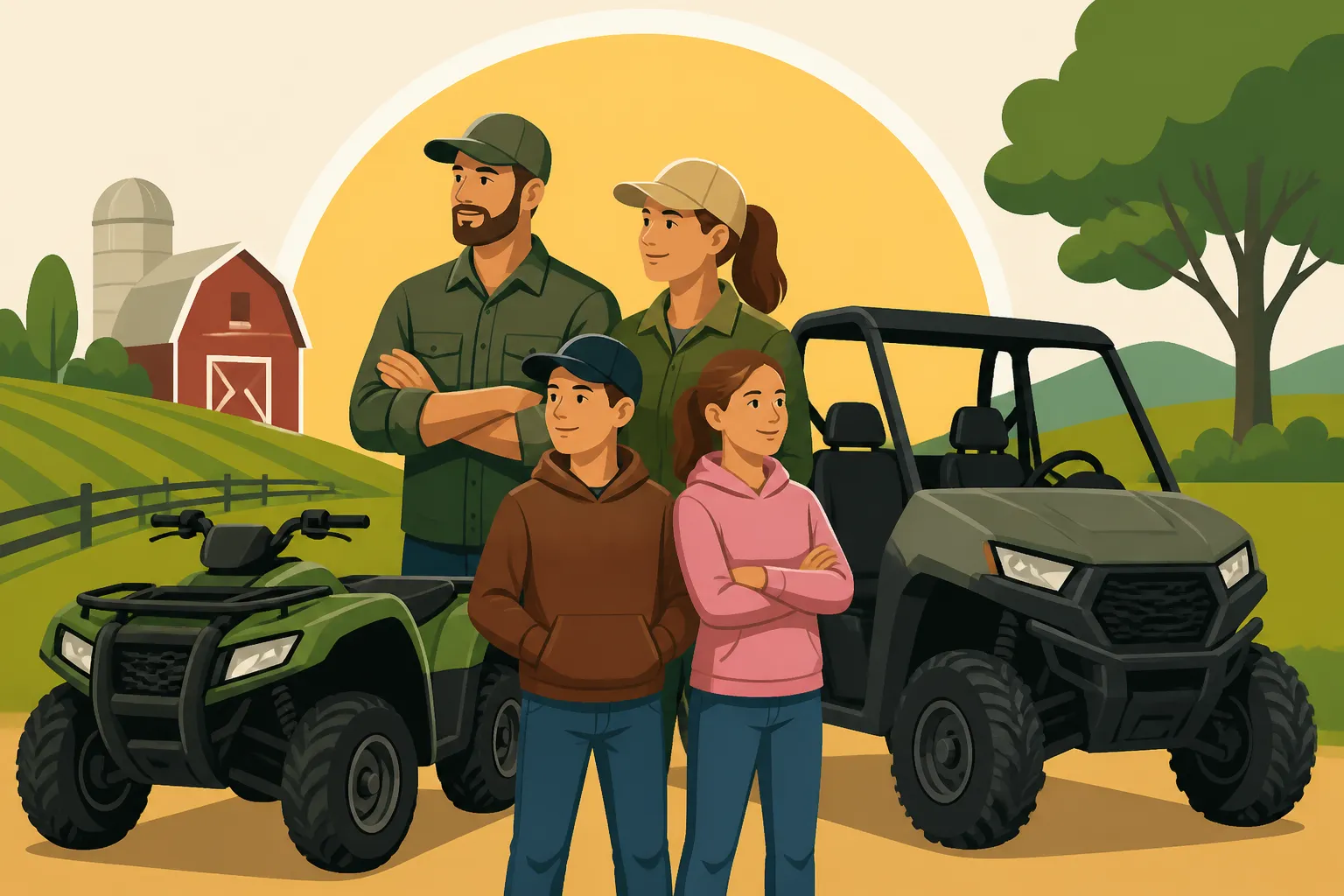
The "owner or lessee" part is straightforward: if you own or lease the land being farmed, you're good to go. But it doesn't stop there. "Family members" typically refers to your immediate family living in the household, or those directly and actively involved in the farm's day-to-day operations. This often includes spouses, children (provided they meet age and safety requirements, which we’ll discuss next), and sometimes parents or siblings who are integral to the farm's functioning. It's about genuine participation in the farm, not just occasional visits.
Then there are "employees." This refers to individuals formally employed by your farming operation. These are people on your payroll, working directly for your farm. This distinction is important because it doesn't extend to just any friend or neighbor who might be "helping out" casually. An employee is an official part of your farm's labor force. So, whether it's your spouse, a teenage child learning the ropes, or a hired hand, if they're acting under one of these capacities and conducting legitimate farm business, the exemption generally applies.
Age and Training Considerations for Operators
While the farm exemption clarifies who can operate an ATV or UTV for farm business, it doesn't nullify general safety regulations or age restrictions for operating these machines. This is a common misunderstanding that can lead to dangerous situations and potential legal issues. For example, [North Carolina Rules for Riders Under 16] are still critically important. A young family member, even if helping on the farm, must meet the state's age requirements for operating an ATV and ideally have completed a safety course.
The emphasis here is on responsible operation. Even if the law allows a family member or employee to ride for farm business, it doesn't mean they should be on a machine they can't handle or without proper instruction. North Carolina law generally requires continuous visual supervision for riders under 16, and while the farm exemption is for road use, the underlying safety principles for operating the machine remain. This means ensuring that any operator, regardless of age, has the necessary skills, experience, and protective gear to safely navigate both the machine and the specific road conditions.
Therefore, before handing over the keys to anyone, especially younger family members, ensure they are adequately trained. An ATV Safety Institute (ASI) course can provide valuable skills and reinforce safe riding practices. Even for experienced riders, a refresher course or simply a review of safe operating procedures specific to farm use can be beneficial. Remember, the exemption is for the purpose of the ride, not a waiver of common-sense safety or state-mandated age rules for machine operation.
Permitted Road Use and the Farm Exemption's Boundaries
Even with the right person on board doing legitimate farm business, the farm exemption isn't a free pass to treat public roads like private trails. There are definite limitations to how and when an ATV or UTV can be used on public roads under this exception. Understanding these boundaries is essential to avoid fines or accidents.
Crossing Public Roads: The Primary Intent
The farm exemption in North Carolina is primarily intended for crossing public roads or traveling short distances along them to facilitate farm operations. Imagine your property is split by a two-lane county road. The exemption allows you to take your UTV from the north parcel to the south parcel to work, or to drive a hundred yards down the road to access a gate on another part of your land. This is precisely what [North Carolina Rules for Crossing a Road] are designed to address in the context of farm machinery.
It is absolutely not meant for extended travel on public highways, even if you are technically doing farm business. The law doesn't provide a specific mileage limit, but the spirit of the exemption implies minimal necessary road use. If you need to travel several miles down a highway to get to a distant field, you're likely pushing the boundaries of what's considered "farm operations" under this specific exception. Stick to the shortest, most direct route possible when using public roads for farm tasks.
Think of it as bridging gaps. You're using the public road as a necessary connector between private pieces of your farm, not as a primary thoroughfare for your machine. This nuanced understanding is crucial because misinterpreting the "short distance" aspect is a common pitfall. Always err on the side of caution and minimize public road exposure.
Equipment and Safety Requirements for Farm Use
While the farm exemption allows certain ATVs and UTVs on roads for specific purposes, it does not exempt them from basic safety equipment, especially if operating during times of reduced visibility. Common sense, and often the law, dictate that if you're going to put any vehicle on a public road, it needs to be visible and controllable. For example, if you're moving hay bales across a road at dusk, you absolutely need proper lighting. [North Carolina Equipment Rules for ATVs] generally apply even for farm use, meaning functioning headlights, taillights, and effective brakes are non-negotiable.
Many stock ATVs and UTVs come with basic lighting, but consider upgrading, especially if your farm operations frequently involve road crossings after dark or in adverse weather. Aftermarket accessories like brighter LED lights, turn signals, or even a horn from a reputable brand like SuperATV can significantly enhance safety and visibility when you're briefly sharing the road with other vehicles. A rear-view mirror can also be incredibly useful, allowing you to monitor traffic before making a crossing or turning onto your property.
The expectation is always safe operation. While you might not need a full suite of street-legal modifications required for a Modified Utility Vehicle (MUV), adequate lighting and brakes are paramount. Don't assume the exemption means you can operate a poorly maintained or ill-equipped machine on a public road, even for a short time. Your safety, and the safety of others, depends on your machine being in good working order and properly lit.
Local Ordinances and State Law Interplay
North Carolina state law provides the overarching framework for ATV and UTV use, including the farm exemption. However, it's always wise to be aware that local municipalities or counties might have specific ordinances that could impact your operations. While it's rare for a local government to completely override a state farm exemption for brief road crossings, some may have additional guidelines regarding speed, hours of operation, or signage for farm equipment on local roads.
Most local ordinances you might encounter would focus more on general recreational ATV use or comprehensive street-legal regulations, not typically on the specific, limited scope of farm exemption crossings. However, if you are operating very close to town limits or in areas that are becoming more suburbanized, it’s worth a quick check with your county or local town hall. This proactive step can prevent misunderstandings or conflicts with local authorities who may not be as familiar with the nuances of state farm laws.
Ultimately, state law provides the primary guidance for the [North Carolina's Farming Operations Exception]. But having a general awareness of local rules is part of being a responsible land user. It's about being a good neighbor and ensuring your operations don't inadvertently create issues for others in your community.
Real-World Scenarios for Farm ATV/UTV Use
Let’s put these rules into practical context with some real-world scenarios that often pop up for North Carolina farmers. Understanding these examples can help clarify who can ride and under what circumstances, making it easier to manage your farm safely and legally.
Immediate Family on Farm Business
Consider your spouse. If they are actively involved in the farm and need to drive a UTV loaded with tools across a state highway to mend a fence on the far side of your property, this activity generally falls squarely within the farm exemption. They are a family member, conducting legitimate farm business, and using the road minimally to connect parts of the farm. This is a clear-cut case.
Now, imagine your 16-year-old son, who regularly helps with morning chores, needs to move a small trailer of hay bales from one barn to another. These barns are separated by a short stretch of a public, low-traffic road within the farm's boundaries. Provided your son is a competent and trained rider, and you maintain continuous visual supervision as required for his age group, this would also typically be permissible under the farm exemption as a family member conducting farm business. [Riding a Farm Lane] that happens to cross a road is precisely what this part of the law is designed for.
What about your college-aged daughter home for the summer? If she needs to take the quad to check irrigation lines that snake across a gravel public road on your property, she's also covered. She's a family member, involved in farm operations, and using the machine for an essential farm task. The key here is the direct involvement in farm operations and the familial relationship to the owner or lessee.
Farm Employees and Hired Hands
The exemption explicitly includes "employees," which is a crucial distinction. Let's say you have a full-time farmhand who needs to transport a load of feed across a public road to a different pasture. Since they are a formal employee of your farming operation, this activity would be covered. They are performing a necessary task for the farm, and their employment status is recognized by the law.
Similarly, if you hire temporary workers for harvest season, and one of them needs to drive a side-by-side to gather produce from a distant field accessible only by crossing a small public road, that's also generally acceptable. The temporary worker is acting as an employee during their period of employment, and the task is directly related to farm business. It’s important to ensure these employees are also trained and understand safe operating procedures.
However, a critical distinction needs to be made: a friend "helping out" for a few hours is generally not considered an employee under this legal definition. While their help might be invaluable to you, the law specifies "employees" – meaning someone on your payroll, working under your direction as part of your farm's labor force. So, if your buddy from down the road is just lending a hand and takes your ATV on the road, they might not be covered, even if they are doing farm work.
Lending Machines to Neighbors or Friends
This is where the farm exemption can get particularly tricky and often misunderstood. If you lend your ATV or UTV to a neighbor, and they use it to work their farm, your farm exemption likely does not extend to them. The exemption is tied to the "owner or lessee of the farm premises, or their employees or family members" of the farm doing the work. So, if your neighbor is borrowing your machine to transport fertilizer on their land, which also requires a brief road crossing, they must meet the criteria as the owner/lessee of their farm, or their own employees/family members.
Your machine might be designed for farm work, but the legal exemption is specific to whose farm business is being conducted and who is operating it in relation to that farm. The critical question becomes: Is your neighbor operating your machine for your farm's business, or for theirs? If it's for their farm, then they need to ensure their operation falls under the exemption, not yours.
Furthermore, consider the liability implications. If your neighbor is involved in an accident while borrowing your machine and operating it on a public road, even for farm business, your insurance might come into play, and the nuances of the farm exemption could become highly scrutinized. Always be mindful of the legal and insurance ramifications when lending out your farm equipment for use on public roads.
| Operator Type | Relationship to Farm Owner | Farm Business? | Generally Covered? | Key Considerations |
|---|---|---|---|---|
| Owner/Lessee | Self | Yes | Yes | Primary operator, direct farm work. |
| Spouse | Immediate Family | Yes | Yes | Active involvement in farm operations. |
| Children (16+) | Immediate Family | Yes | Yes | Trained, competent rider, active in farm work. |
| Children (<16) | Immediate Family | Yes | Yes (with supervision) | Must meet age requirements for machine operation, continuous visual supervision required. [North Carolina Rules for a Rider Under 16] are crucial. |
| Parents/Siblings | Extended Family | Yes | Potentially | Must be actively involved in farm's daily operations, not just casual visitors. |
| Farm Employees | Hired/Paid Labor | Yes | Yes | Formally employed by the farm for farm operations. |
| Friends Helping | Casual Assistance | Yes | No | Not an "employee" in the legal sense, your exemption likely doesn't cover them. |
| Neighbors | Separate Farm | Yes (their farm) | No (your exemption) | Your exemption only applies to your farm's business and designated operators. They need their own legal basis. |
Beyond Farm Use: When an MUV Might Be Necessary
While the farm exemption is incredibly helpful for agricultural operations, it has clear limitations. Many riders eventually find that their needs extend beyond what the exemption allows, leading them to consider other avenues for legal road use.
The Limitations of the Farm Exemption
It's vital to reiterate that the farm exemption is not, repeat, not a loophole for general road use. It does not allow you to take your ATV or UTV on long trips down public roads for personal errands, recreational rides, or commuting to town. [North Carolina's Farming Operations Exception] is very specific in its intent and scope. Misinterpreting this can quickly land you in trouble with law enforcement, resulting in fines or other penalties.
If you find yourself frequently wishing you could drive your side-by-side into the nearest town for supplies, or take it on longer stretches of paved road to access trail systems or other properties not directly part of your farm, the farm exemption simply isn't going to cut it. It's designed for the functional, limited movement necessary for farm work, not for broader public road access. Many people get caught here, believing that because they "use it for farm work," it's generally street legal, which is a dangerous misconception.
The moment your activity veers away from direct, essential farm business on public roads, you lose the protection of the exemption. So, if you're consistently bumping up against these limits, or if your operational needs require more expansive road use, it's time to consider a different path. Relying solely on the farm exemption for anything beyond its intended purpose is a risky gamble.
The Modified Utility Vehicle (MUV) Alternative
For those who need more expansive road use for their UTV, North Carolina offers a specific, albeit rigorous, path: the Modified Utility Vehicle (MUV) designation. This is the state's route for making certain UTVs genuinely street-legal on eligible public roads. Becoming an MUV is a formal process that requires your machine to meet stringent equipment, dimension, and engine size requirements. This is a completely different ballgame from simply operating under the farm exemption. [North Carolina MUV Street Legal Requirements] are extensive.
To qualify as an MUV, your machine needs to have specific safety equipment, including a windshield, wipers, a speedometer, rearview mirrors, headlamps, taillamps, brake lights, turn signals, seat belts, and a parking brake. These aren't just suggestions; they are legal necessities. Brands like SuperATV offer a wide range of aftermarket accessories – from full windshields to complete signal kits – that can help transform a standard UTV into one that meets these MUV requirements. Without these modifications, your UTV cannot be registered as an MUV.
Beyond the equipment, MUVs also have specific dimension and engine size requirements, which often means that many standard ATVs and even some smaller UTVs won't qualify. You'll need to submit an application to the North Carolina DMV, and your machine will be subject to inspection to ensure it meets all the criteria before it can be titled and registered for road use. This path provides much greater freedom for road travel but comes with a significant investment in time, money, and modifications.
Choosing the Right Path for Your Needs
Deciding between relying on the farm exemption and going through the MUV conversion process boils down to your specific needs and how you intend to use your machine on public roads. If your road use is truly limited to short crossings or brief travel between farm parcels for essential farm business, and the operators fall within the "owner, family, or employee" criteria, the farm exemption is sufficient and appropriate. It's designed for exactly that.
However, if you envision driving your UTV regularly on public roads for non-farm errands, longer commutes, or to access recreational areas that aren't part of your farm, then the MUV route is your only legal option. Don't try to stretch the farm exemption to cover these broader uses, as it simply won't. [North Carolina MUV Registration Requirements] are clear about what's involved. While converting to an MUV is a more involved process, it provides the peace of mind of genuine street legality for wider use cases.
Carefully assess your primary use case. If you're a farmer whose machine rarely touches pavement beyond a quick field crossing, the exemption works. But if your UTV is becoming a utility vehicle for more than just farm tasks that require public road interaction, investing in the MUV conversion means you can ride legally and safely wherever the state allows a registered MUV to go.
Disclaimer
This article is for general informational purposes only and does not constitute professional advice. Laws, prices and regulations vary by location and change over time. Consult a qualified professional for guidance on your specific situation.