Getting Cited by a Forest Service Officer
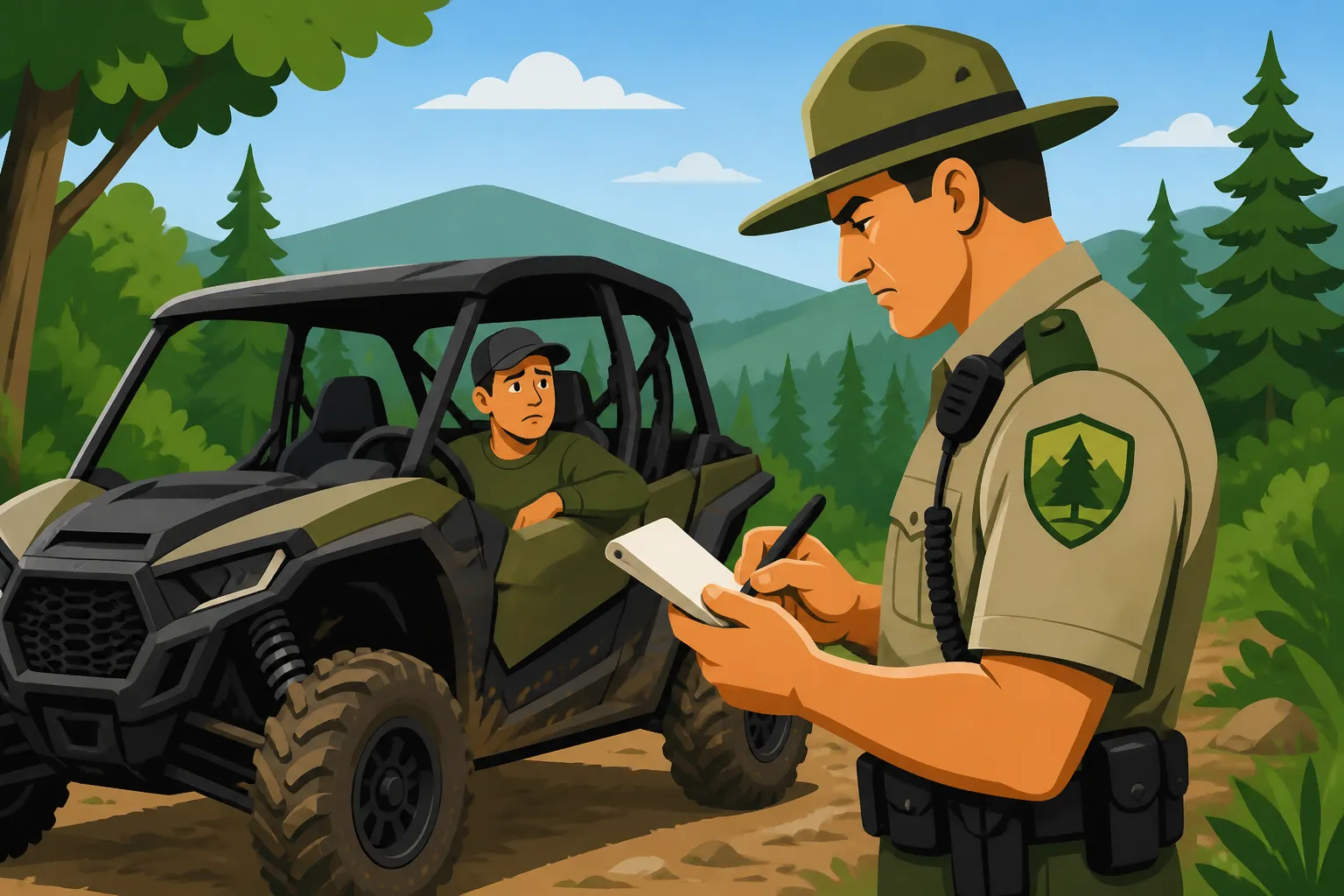
Getting cited by a Forest Service officer on a North Carolina trail can be stressful, especially when you are unsure whether the issue was a missing permit, a closed route, or another rule. Stay calm, understand what the notice says, and preserve the details you may need to respond. A careful roadside response can help you avoid making the situation harder to sort out later.
What to do when an officer stops you
Pull over safely, turn off the machine, and follow reasonable instructions. Keep your hands visible and speak calmly. If you are riding with a group, ask everyone to remain stopped and avoid crowding the officer. A respectful conversation does not guarantee a warning, but arguing on the trail is unlikely to improve your position.
An officer may ask to see your permit, safety certificate, identification, or other information relevant to the ride. Provide what is requested, and answer questions truthfully. If you do not understand a question, ask for clarification rather than guessing. Do not offer a false explanation or claim that a permit or certificate exists if you cannot show it.
If you receive paperwork, read it before you leave the area. Check the issuing agency, the alleged violation, the date and location, and the instructions for responding. A citation is not the same as an informal warning, and ignoring it can create additional problems. The notice should explain what to do next or identify where to get that information.
| What you receive | What it generally means | What to do |
|---|---|---|
| Verbal warning | The officer has cautioned you, but may not have issued a formal notice | Ask what conduct needs to change and comply |
| Written warning | The incident has been documented, but the notice may not require the same response as a citation | Read it carefully and keep a copy |
| Citation or violation notice | A formal allegation with instructions and a response process | Follow the notice’s directions and deadlines |
| Equipment or access instruction | The officer is directing you to correct a safety or trail-access issue | Do not continue riding in a way that repeats the issue |
The categories and procedures can vary by issuing agency and circumstance. Do not assume that a document is harmless because the officer called it a warning, or that every citation can be handled by paying a stated amount. Read the actual paperwork.
If a document is unclear, ask the officer to point out the response instructions or provide the relevant agency contact. Keep the exchange brief and courteous. If you disagree with the allegation, you can preserve that disagreement for the formal process rather than trying to settle it through an argument beside the trail.
It also matters who issued the notice. A Forest Service officer, a state wildlife officer, and a local law enforcement officer may handle violations under different authorities and procedures. The agency name and contact information on the paperwork are more reliable than assumptions based on the uniform or location. If you are unsure which rules apply, use the contact listed on the notice to clarify the process.
Why Forest Service officers may issue citations
On designated trails in North Carolina’s national forests, a common issue is riding without the required forest OHV permit. Requirements, sales locations, and permit details can differ by riding area, so check the rules for the forest and trail system you plan to visit. North Carolina Forest OHV Permits explains the general permit framework, while Where to Buy a North Carolina OHV Permit can help you plan how to obtain one.
A permit is not a blanket authorization to ride anywhere in a forest. It does not make a closed trail open, allow travel off a marked route, or override other restrictions. Forest maps and notices matter, including temporary closures. Before riding, review North Carolina Trail Closures to Check and North Carolina Forest Trail Maps. If the specific concern is leaving a marked route, North Carolina Rules for Riding Off the Trail provides more context.
Other possible issues can include riding on a closed trail, failing to follow posted restrictions, or not carrying required safety documentation. Riders subject to North Carolina’s birth-year safety certificate requirement should understand what proof to carry; see Carrying a Safety Card on a North Carolina Ride. A permit or card left at home may not be treated the same as having it available when asked.
The right document may also depend on where you are riding. A pass for one forest or riding area should not be assumed to cover another. If you are headed to Uwharrie, check where and how the permit must be displayed, and review Showing a Permit at a Uwharrie Forest Gate. Do not rely on an old receipt, an image of a permit, or another rider’s pass unless the current rules specifically allow it.
An officer may also stop a rider over conduct or equipment that raises a safety or access concern. The reason should be stated on the notice if a citation is issued. If the paperwork uses a term you do not recognize, write it down and ask the issuing agency what rule it refers to. Avoid trying to interpret a brief roadside explanation as a complete account of the legal process.
Potential consequences depend on the alleged violation and the issuing authority. The amount, response options, and deadlines can change or differ by case, so do not rely on a friend’s account or an old online post. For permit-related allegations, North Carolina Fines for Riding Without a Permit and North Carolina Fines for Riding a Closed Trail offer issue-specific background, but the notice and current official instructions control what you need to do.
How to handle the citation after the ride
Once you are safely away from the trail, make a record while the details are fresh. Write down the location, approximate time, trail or road name, weather, and what happened before the stop. Note the officer’s agency and any instructions you received. Keep your description factual, including details that may not support your view of the incident.
Save the citation, permit receipt, safety card information, trail map, photographs, and relevant messages. If the allegation concerns access, preserve any map or posted notice you relied on. Take care not to alter or discard evidence, and keep copies of documents rather than sending away the only copy unless the official process specifically requires it.
Then read the response instructions closely. Confirm whether you need to contact an agency, respond to a court or other office, pay, request a hearing, or take another step. Note any deadline on a calendar and contact the listed office promptly if you cannot understand the instructions. Do not assume that calling the officer or explaining your side informally cancels a formal response requirement.
If you believe the citation is mistaken, organize the facts before you respond. For example, a permit receipt may help show that you obtained a permit, but it may not establish that it was valid for that riding area or displayed as required. A map may help explain your route, but its value depends on whether it was current and whether the trail was open at the time. Present relevant information through the process described on the notice.
For a serious allegation, uncertainty about the process, or a possible court appearance, consider getting advice from a qualified legal professional familiar with the relevant jurisdiction. The best next step depends on the specific notice and facts, so a general explanation cannot replace case-specific advice. More about the response process is available in Appealing an ATV Citation in North Carolina.
A citation can be inconvenient, but missing a deadline or responding through the wrong channel can make the problem more difficult. Keep a copy of every communication, record the date and person you spoke with, and ask for clarification if you are told to take a step that is not clear from the paperwork.
How to reduce the chance of another citation
Before leaving home, confirm that your destination is open to the type of machine you are bringing. Review current forest notices and the official trail map, and check again close to your departure because closures and conditions can change. A trail that was open on a previous trip may not be open now.
Make a short pre-ride checklist for each machine:
- Confirm the riding area permits your machine and that your planned route is open.
- Obtain the correct permit and make sure it is displayed or carried as instructed.
- Bring any required safety certificate and identification.
- Review posted rules on trail use, equipment, and rider conduct.
- Save the permit receipt and current map somewhere accessible, with a backup copy if useful.
- Tell the group where the route goes and agree to turn back if a gate or closure notice changes the plan.
Do not treat a trailhead gate as the only place where rules are checked. Officers may encounter riders elsewhere on the system, so carry required documents and make sure each vehicle has what it needs. A group leader can help everyone prepare, but each rider should verify their own machine’s permit and documentation rather than assuming another person has handled it.
Pay attention to signs at gates and trail junctions. If a sign conflicts with an old map, a saved screenshot, or what you remember from a prior visit, stop and verify the current access rules before proceeding. Never ride around a barrier or continue onto a route marked closed. The safest choice when the status is uncertain is to turn back and confirm it with the relevant forest office.
If an officer gives a direction during a stop, follow it safely. Ask concise questions if you need to understand where to go or what to stop doing. Once the encounter is over, note the direction and include it in your trip records, especially if it affects where the group can continue riding.
A little preparation is usually easier than sorting out a citation afterward. Check permits, maps, closures, and required documents before loading the machines, then keep them available during the ride. If a citation still occurs, handle the paperwork promptly and use the formal response process rather than relying on assumptions.
Disclaimer
This article is for general informational purposes only and does not constitute professional advice. Laws, prices and regulations vary by location and change over time. Consult a qualified professional for guidance on your specific situation.