Blaze Orange on a Game Land
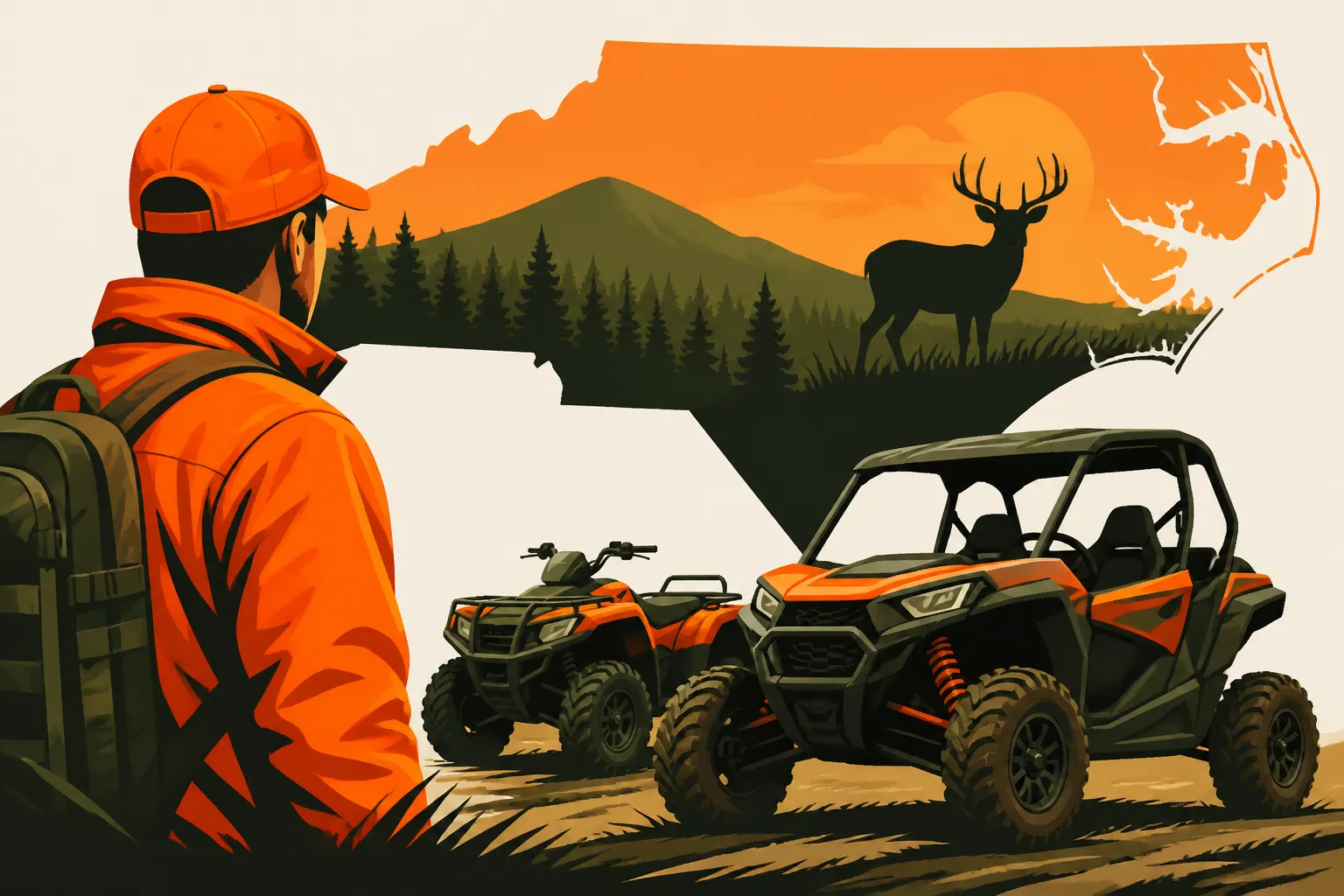
Blaze orange can make an ATV or UTV rider easier to spot during hunting activity, but wearing it does not grant permission to drive on a North Carolina game land. The key is to separate hunter-clothing rules from vehicle-access rules, then check the specific property and dates before you ride.
What blaze orange means on a North Carolina game land
Blaze orange, also called hunter orange, is bright fluorescent orange clothing intended to help people see one another in the woods. It is not a trail permit, vehicle registration, or sign that a route is open to motorized use. Those are separate questions, and answering one does not answer the others.
The clothing requirement is tied to hunting rules and circumstances, not simply to being on public land. If you are hunting, or accompanying someone who is hunting, you may be subject to hunter-orange requirements during applicable seasons and activities. The exact rule can depend on what is being hunted, the season, and the location. Check the current North Carolina hunting regulations and the rules for the specific game land rather than assuming one rule applies to every visit.
A recreational ATV rider who is not hunting should not assume that a general hunter-orange requirement automatically applies to every ride. At the same time, a rider should not assume that no orange is ever required. A property may have its own conditions, and a ride connected to hunting could put riders within rules that would not apply to an ordinary recreational trip. When the situation is unclear, confirm it with the land manager before unloading.
It also helps to distinguish blaze orange from other high-visibility clothing. A red, yellow, or reflective vest may be easy to see but may not meet a rule that specifically calls for hunter orange. If a regulation applies, use clothing that meets the stated requirement. Do not rely on an orange accessory that is mostly hidden by a jacket, backpack, helmet, or machine.
| Situation | What to check | Practical approach |
|---|---|---|
| Recreational ride with no hunting activity | Whether motorized access is allowed on that property and route | Verify access first; use orange as a visibility measure if desired |
| Riding with someone who is hunting | Applicable hunter-orange rules and any property conditions | Check the current hunting regulations and make sure everyone covered by the rule complies |
| Riding during a busy hunting period | Seasonal access restrictions, closures, and hunting activity | Confirm the route is open and consider postponing if there is heavy activity |
| Riding on a designated route | Route designation, vehicle limits, and current closure notices | Stay on the authorized route; clothing does not change where you may drive |
If your plan involves both riding and hunting, treat the two activities as connected when checking the rules. A rider who is not carrying a firearm may still be accompanying a hunter or traveling as part of a hunting party. The details matter, so do not use the phrase “I’m only riding” as a substitute for checking the rules that apply to the group.
Does an ATV or UTV rider have to wear blaze orange?
The short answer is: not necessarily just because the person is riding an ATV or UTV on a game land. A clothing requirement associated with hunting is different from a blanket requirement for every person operating a recreational vehicle. But the answer can change with the rider’s role, the activity, the season, and property-specific rules.
A useful starting point is to ask three questions:
- Are you hunting or accompanying someone who is hunting? If so, check the hunter-orange rule for that activity and season. Do not assume the rule applies only to the person carrying a firearm.
- Is the ride taking place on a game land with additional access conditions? The property may have restrictions or seasonal notices that affect who can enter, where vehicles can go, or what activities are allowed.
- Is the route actually open to your machine? A public game land is not automatically an ATV trail. Confirm the motorized access rules independently of clothing requirements.
For more on vehicle access, see North Carolina Rules for Riding Game Lands and Game Land Access for North Carolina Riders. These are separate from the rules for hunting clothing. A rider can comply with an orange requirement and still be on an unauthorized road or trail.
When people are riding together, it is wise to make a clear plan before arriving. Ask whether anyone in the group will be hunting, whether the group is accompanying a hunter, and whether everyone understands the property’s seasonal rules. If some people are riding while others hunt, do not assume that each person can follow a different rule just because they are doing different things. Confirm how the regulations apply to the group’s actual plan.
Even when orange is not required for a purely recreational ride, it can be a sensible visibility choice during hunting activity. A helmet, vest, or outer layer in a bright color can help other people notice you through trees or brush. It is a visibility aid, not a guarantee: terrain, vegetation, low light, and machine noise can still make it difficult for people to see or hear one another.
If the regulation calls for a particular amount or type of hunter-orange clothing, follow its wording rather than substituting your own judgment. Do not assume an orange helmet alone is enough, or that a small patch on a backpack satisfies the rule. Check the official current instructions for the requirement that applies to your activity. The safest choice is clothing that is clearly visible and worn on the body, not a small detail that disappears when you sit on the machine.
Blaze orange does not make a route legal
A common mistake is to treat game-land access as a clothing problem: wear orange, then ride. The more important question often comes first: is motorized travel allowed on that land and on that specific route?
Game lands are managed for wildlife and public access, but that does not mean every road, fire lane, trail, or open-looking track is available to ATVs and UTVs. Access can be limited to designated roads, specific uses, or particular periods. A route that appears passable may be closed to motor vehicles, and a gate or trail sign may impose conditions that do not appear on a general map.
Before the trip, identify the exact property and route. Check the land manager’s current rules, maps, signs, and notices. If you cannot establish that a route is open to your vehicle, do not treat the absence of a barrier as permission. Keep to routes that are clearly authorized, and turn around if a sign, gate, or current notice indicates a closure.
This is especially important when a public road crosses or borders game land. A road’s public status does not necessarily authorize riding off the road, and an open road does not necessarily allow an ATV to use every connecting path. Likewise, a trail permit for an off-highway vehicle area should not be assumed to authorize riding on nearby game land. Access permissions are property-specific. For broader context, see North Carolina Rules for Riding a Game Land and North Carolina Forest OHV Permits.
Game lands and national forest OHV areas are not interchangeable. A designated OHV trail system may have its own permit and operating conditions; a nearby game land is governed by its own access rules. For example, information about a Uwharrie ride should be checked against the rules for the actual trail system and land unit involved. Do not assume that a trailhead, forest boundary, or nearby hunting area has the same vehicle rules. North Carolina Forest Trail Maps can help with trip planning, while the relevant land manager’s current information determines whether a route is open.
Seasonal changes matter too. Hunting activity, weather damage, maintenance, and management decisions can affect access. Check North Carolina Trail Closures to Check when your route uses a managed trail system, and verify game-land notices separately. A map saved on a phone or printed earlier may not show a new closure or temporary restriction.
How to plan a visible and rule-compliant ride
A few checks before leaving can prevent a frustrating or unsafe trip. Make them in this order: confirm that the property and route are open to your vehicle, check whether hunting rules apply to anyone in your party, and then choose visibility gear.
- Name the exact destination. “A game land near the trail” is not specific enough. Identify the property, access point, and route you plan to use.
- Confirm motorized access. Look for current information from the land manager and read signs at the entrance. If the route is not clearly authorized for your machine, do not ride it.
- Check the activity and season. If anyone is hunting or accompanying a hunter, review the current hunter-orange rules for that activity. Also check for seasonal restrictions or closures.
- Choose visible clothing. If orange is required, use clothing that meets the rule and stays visible while you are riding. If it is not required, bright outerwear can still help other trail users see you.
- Brief the group. Make sure every rider knows the route, where the group will stop, and what to do if someone becomes separated. Avoid assuming that a rider who is not hunting has no responsibility to follow the group’s plan or property rules.
- Recheck on arrival. Read the entrance signs and notices before unloading. A previous visit does not establish that the same route remains open.
For clothing, a high-visibility vest or outer layer is usually more useful than a small orange item hidden beneath a coat. It should fit securely and not interfere with the helmet, controls, seat belt, or protective equipment. In a UTV, consider how clothing appears from outside the cab, especially if the rider is seated behind a door or panel. In an ATV group, keep enough space between machines and avoid stopping where another rider cannot see you around a bend or rise.
Some riders look for visibility gear through outdoor retailers or marketplaces such as Amazon. If you shop online, check the garment description carefully: ordinary bright orange is not automatically the same as compliant hunter orange, and a product’s color alone does not establish that it meets a particular legal requirement. Choose gear that can be worn comfortably over your riding layers and verify its suitability against the current rule when compliance is required.
Visibility clothing also has limits. It does not replace a helmet, eye protection, lights required for the conditions, or safe riding practices. Do not assume that a hunter or another rider can hear your ATV approaching. Reduce speed where sightlines are short, avoid surprising people on foot, and stop well off the route if you need to check a map or regroup.
If conditions change, adapt the plan. A closure notice, active hunting activity, poor visibility, or uncertainty about access is a reason to stop and confirm rather than press ahead. If the land manager cannot verify that a route is open, choose a clearly authorized riding area instead. Blaze Orange on a November Uwharrie Ride discusses visibility during a forest ride, but the access rules for any particular game land still need their own check.
The practical rule is straightforward: use blaze orange when a hunting regulation or property condition requires it, and consider it as added visibility when hunting activity is nearby. But never treat orange clothing as permission to ride. Confirm access, follow the route’s restrictions, and check current notices before every trip.
Disclaimer
This article is for general informational purposes only and does not constitute professional advice. Laws, prices and regulations vary by location and change over time. Consult a qualified professional for guidance on your specific situation.