A Spark Arrester North Carolina Requires
Riding your ATV or UTV in North Carolina offers some truly incredible experiences, from the rolling hills of the Uwharries to the rugged trails of the Pisgah National Forest. But before you even think about hitting those trails, there's a crucial piece of equipment often overlooked until it becomes a problem: the spark arrester. Many riders don't fully understand what it is, why it's required, or the serious consequences of not having one, which can lead to frustrating fines, trail closures, and even devastating wildfires. This guide will walk you through everything you need to know about spark arresters in North Carolina, ensuring your machine is compliant and your rides are worry-free.
Understanding North Carolina's Spark Arrester Mandate for ATVs and UTVs
When you're out enjoying the thrill of off-road riding, the last thing you want to worry about is inadvertently starting a wildfire. That's precisely why spark arresters are not just a suggestion but a legal requirement on public lands across North Carolina, and really, across the country. It's about protecting our beautiful natural resources and ensuring the longevity of our riding areas.
Why Spark Arresters Are Non-Negotiable on Public Lands
Imagine the dry leaves and pine needles on a hot summer day in the Uwharrie National Forest. A single, superheated carbon particle, ejected from your ATV's exhaust, could land in that tinder-dry environment and, in mere moments, ignite a blaze that devastates thousands of acres. This isn't just a hypothetical scenario; it's a very real risk, and it's why organizations like the U.S. Forest Service, which manages many of our cherished riding spots like the [Brown Mountain OHV Trail System] and the [Badin Lake OHV Trail Complex], take spark arrester compliance so seriously.
The mandate for spark arresters serves multiple critical purposes. First and foremost, it's about fire prevention. Your ATV or UTV engine produces hot exhaust gases, and along with those gases can come incandescent carbon particles, especially if your engine isn't running perfectly clean or if you're pushing it hard. A spark arrester acts as a filter, trapping these particles before they can escape into the environment. Beyond preventing catastrophic fires, these regulations also protect the delicate ecosystems we ride through. A massive wildfire not only destroys forests but also impacts wildlife habitats, water quality, and air quality for years to come. Moreover, there's a significant legal liability aspect. If your machine is found to be responsible for starting a fire, even accidentally, the consequences can be severe, ranging from hefty fines to criminal charges, and you could be on the hook for millions of dollars in damages and firefighting costs. These aren't just abstract threats; they are very real possibilities that can ruin lives and landscapes.
The Legal Framework: What North Carolina Law Says
Navigating the specific legal requirements for ATVs and UTVs in North Carolina can sometimes feel like trying to ride a trail in the fog – confusing and a bit disorienting. While North Carolina doesn't have a single, standalone state law that specifically dictates spark arrester use for all off-road vehicles everywhere, it's crucial to understand how federal regulations, particularly those enforced by the U.S. Forest Service, apply within the state's national forests and other public lands.
Essentially, when you're riding on federal land, which includes the Pisgah, Nantahala, and Uwharrie National Forests, you are subject to federal regulations. These regulations explicitly require all off-road vehicles to be equipped with a U.S. Forest Service-approved spark arrester that is in good working order and regularly maintained. This is not a suggestion; it's a mandatory requirement. Forest rangers and law enforcement officers patrolling these areas have the authority to check for compliance, and if your machine doesn't meet the standard, you could face immediate penalties. While private land might not have the same strict federal oversight, many private parks and landowners still require spark arresters as part of their own rules, recognizing the inherent fire risk. Always check with the specific riding area or landowner for their requirements. It's a key part of responsible riding and falls under broader [North Carolina ATV Equipment Rules].
What Exactly Is a Spark Arrester and How Does It Work?
It's easy to think of a spark arrester as just another part of your exhaust, something that's just "there." But understanding how it actually functions can help you appreciate its importance and ensure you're maintaining it correctly. This little device is a marvel of simple engineering, designed to keep our trails safe.
The Mechanics of Fire Prevention
At its core, a spark arrester is a mechanical device designed to prevent the escape of incandescent (glowing) carbon particles from the exhaust system of internal combustion engines. Think of it as a tiny, highly specialized sieve for your exhaust. As hot exhaust gases exit your engine and pass through the muffler, they are routed through a chamber or series of baffles within the spark arrester. Inside this chamber, there's usually a screen, mesh, or a series of plates that create a tortuous path for the gas flow.
The magic happens as these hot gases, carrying potentially incendiary carbon particles, are forced to change direction rapidly or pass through tiny openings. The heavier carbon particles, due to their inertia, cannot make these sharp turns or pass through the small mesh holes as easily as the gas. They strike the screen or baffles, lose energy, cool down, and are retained within the arrester. The cooled, filtered exhaust gas is then allowed to exit the system. This process ensures that by the time any particles do escape, they are no longer hot enough to ignite flammable materials. Aftermarket exhausts, especially those designed for performance, sometimes prioritize exhaust flow over particle retention and might not come with an integrated spark arrester, or the one they have might not meet the necessary standards. This is a common pitfall for riders who upgrade their systems without checking for compliance. You might find brands like SuperATV offering specific spark arrester inserts for their aftermarket exhaust systems, which is a great way to maintain performance while staying legal.
Types of Spark Arresters and Certification Standards
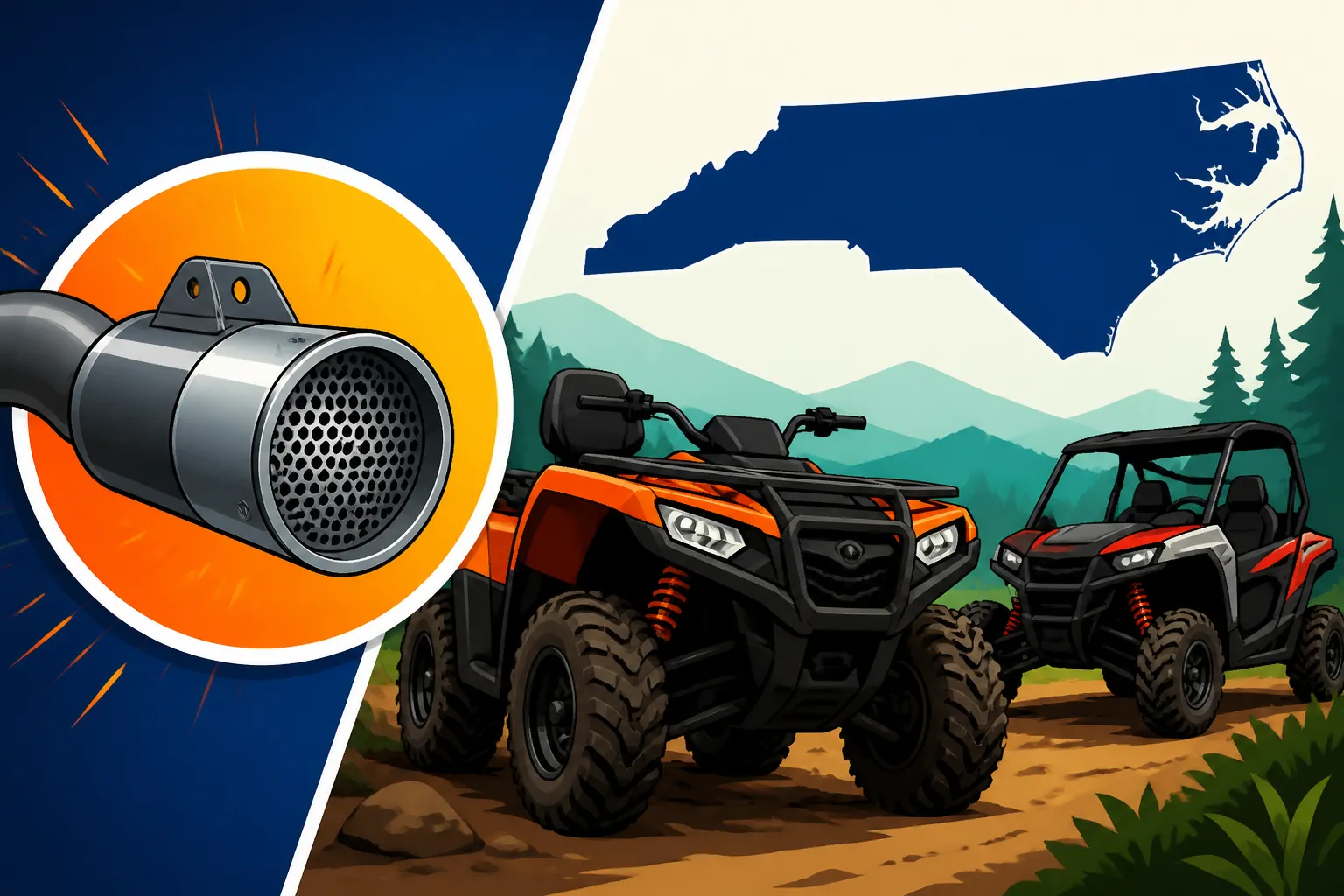
Not all spark arresters are created equal, though they all aim to do the same job. Generally, you'll find two main types: screen-type and centrifugal-type. Screen-type arresters are the most common and typically feature a stainless steel wire mesh or perforated plate screen at the end of the muffler. The exhaust gases pass directly through this screen, trapping particles. They are simple, effective, and relatively easy to inspect and clean. Centrifugal-type arresters, on the other hand, use the rotational force of the exhaust gases to spin particles out of the gas stream, depositing them into a collection chamber. These are often self-cleaning to a degree, but might be more complex to inspect.
Regardless of the type, the key is certification. For public lands, a spark arrester must be U.S. Forest Service (USFS) approved. This approval usually means the device has met specific performance criteria, often tested according to the Society of Automotive Engineers (SAE) J350 standard. When you look at an approved spark arrester, you'll typically see a stamp directly on the device itself, often on the end cap or muffler body, indicating its USFS approval. This stamp is your proof of compliance. Without this stamp, even if your exhaust looks like it has a screen, it might not pass muster with a forest ranger. It's essential to understand that this isn't just a label; it signifies that the device has been rigorously tested to ensure it effectively prevents sparks under various operating conditions.
Ensuring Your Machine is Compliant: Checks and Maintenance
Having a spark arrester is one thing; ensuring it's working effectively is another. Just like any other part of your ATV or UTV, it requires attention and care. Regular checks and maintenance are key to staying compliant and, more importantly, preventing fires.
Locating and Inspecting Your Spark Arrester
For most ATVs and UTVs, the spark arrester is integrated into the muffler or located at the end of the exhaust pipe, often secured by bolts or screws. It's usually identifiable by a fine mesh screen or a series of small, perforated plates. On some machines, it might be a removable insert within the exhaust outlet. The first step to inspection is simply locating it. Consult your owner's manual if you're unsure; it will have diagrams showing the exhaust system components.
Once located, a visual inspection is critical. Look for any signs of damage:
- Holes or Tears: Is the mesh screen intact, or are there any tears, holes, or gaps that could allow sparks to escape? Even a small tear can compromise its effectiveness.
- Blockages: Is the screen or perforated plate clogged with carbon buildup? Excessive carbon will restrict exhaust flow, reduce engine performance, and can make the arrester less effective.
- Corrosion: Check for rust or corrosion, especially on metal screens, which can weaken the material over time and lead to failure.
- Loose Fittings: Ensure all bolts or fasteners securing the spark arrester are tight. A loose component could vibrate free, allowing the arrester to fall out or create gaps.
- USFS Stamp: Double-check for the U.S. Forest Service approval stamp. If you can't find it, or if it's illegible, you might have issues proving compliance on federal lands.
If you ride frequently, especially in dusty conditions or at high RPMs, you should inspect your spark arrester regularly – perhaps every few rides or before any trip to a public trail system like the [Wayehutta OHV in Western North Carolina].
Cleaning and Maintaining Your Spark Arrester
Carbon buildup is the biggest enemy of a spark arrester's efficiency. Over time, soot and carbon particles will accumulate on the screen or baffles, reducing its ability to trap sparks and restricting exhaust flow, which can actually degrade your machine's performance.
Here's a general process for cleaning:
- Remove the Arrester: Most spark arresters are designed to be removable. You'll typically need a wrench or socket to unbolt the end cap or remove the insert from your muffler. Be careful, as exhaust components can be hot if you've recently ridden.
- Scrape/Brush Off Carbon: Once removed, use a wire brush, a stiff bristled brush, or a screwdriver to gently scrape away the carbon buildup from the screen and surrounding areas. Be firm, but avoid damaging the delicate mesh. For stubborn deposits, some riders use carburetor cleaner or a mild degreaser, but always ensure proper ventilation and follow product instructions.
- Inspect Thoroughly: After cleaning, re-inspect the screen for any hidden damage that might have been obscured by carbon. This is your chance to catch small tears before they become big problems.
- Reinstall: Once clean and inspected, carefully reinstall the spark arrester, ensuring all fasteners are tightened securely.
The frequency of cleaning depends heavily on your riding habits and machine. If you primarily ride short distances or at lower RPMs, carbon buildup might be slower. Aggressive riding or machines that run richer (more fuel) will accumulate carbon faster. A good rule of thumb is to clean it at least at the beginning of each riding season and then periodically throughout, especially after extended periods of riding or if you notice a decrease in performance. Proper maintenance ensures that your machine not only performs optimally but also remains legally compliant for all your adventures.
What to Do If Your Spark Arrester is Missing or Damaged
Discovering your spark arrester is missing, damaged, or simply not USFS-approved can be a disheartening moment, especially if you're geared up for a ride on public lands. However, it's a problem with straightforward solutions, and addressing it promptly is non-negotiable for both safety and legal reasons.
First and foremost, do not ride on public lands with a non-compliant spark arrester. The risk of fire and the potential fines are simply not worth it. If your existing arrester is damaged – a torn screen, a warped baffle, or excessive corrosion – it needs to be replaced. Attempting makeshift repairs is generally not advisable, as they often don't meet the stringent performance standards required for USFS approval and could fail under riding conditions.
Your best course of action is to source a replacement.
- OEM Parts: Check with your ATV or UTV manufacturer's dealership or parts department. They can provide an original equipment manufacturer (OEM) spark arrester that is guaranteed to fit your machine and meet all necessary standards. This is often the easiest and most reliable path.
- Aftermarket Solutions: Many reputable aftermarket companies specialize in off-road accessories, including exhaust components. Brands like SuperATV offer a variety of spark arrester inserts and complete exhaust systems that are USFS-approved. When looking at aftermarket options, always confirm that the product explicitly states it is U.S. Forest Service approved. Don't just assume an aftermarket exhaust includes one, or that if it does, it meets the standard. Look for the specific certification stamp or documentation.
- Universal Inserts: For some custom or older setups, you might find universal spark arrester inserts. However, ensure these are designed for your exhaust diameter and, crucially, carry the USFS approval. Installation might require some mechanical aptitude.
When purchasing, make sure you have your machine's make, model, and year handy to ensure you get the correct part. Replacing a spark arrester is usually a relatively simple DIY task that involves removing a few bolts, swapping the component, and re-tightening. If you're unsure, a local powersports mechanic can quickly perform the replacement for you. It's a small investment in time and money that protects our trails and keeps you riding without worry.
The Consequences of Non-Compliance on North Carolina Trails
Ignorance is not bliss when it comes to spark arrester rules. The repercussions of riding without a compliant device on North Carolina's public trails can range from a hit to your wallet to a permanent loss of riding privileges, and even contribute to devastating environmental damage.
Fines, Penalties, and Machine Impoundment
When you're out on federal lands like the national forests, you're under the jurisdiction of federal regulations, and forest rangers are empowered to enforce them. Getting caught without a U.S. Forest Service-approved spark arrester in good working order can lead to significant penalties. We're not talking about a slap on the wrist here. Fines for such violations can be substantial, often running into hundreds of dollars. This is not just a minor traffic ticket; it's a federal offense.
In addition to financial penalties, rangers have the authority to issue a citation, and in more severe or repeated cases, they might even impound your machine. Imagine being deep in the [Uwharrie National Forest in North Carolina], miles from your truck, only for a ranger to discover your non-compliant exhaust. Not only would your day of riding be over, but you'd face the hassle and expense of having your ATV or UTV recovered from the forest, often requiring a specialized towing service and additional fees to get it back. Beyond the immediate legal and financial impact, repeated violations can also lead to a temporary or even permanent ban from riding on specific public lands. This isn't just a concern for individual riders; it's a collective responsibility to uphold the rules that keep our trails open. For more on what violations can cost you, check out [North Carolina Fines for an ATV Violation].
Environmental Impact and Trail Closures
The most severe, and often irreparable, consequence of riding without a spark arrester is the risk of starting a wildfire. A single spark from your exhaust can transform a beautiful forest into a charred wasteland in a matter of hours. North Carolina's forests, especially in the dry summer and fall months, are incredibly vulnerable to fire. A large wildfire doesn't just destroy trees; it wipes out wildlife habitats, contaminates water sources, erodes topsoil, and releases massive amounts of carbon into the atmosphere. The ecological recovery from such an event can take decades, if not centuries.
Beyond the immediate devastation, wildfires also have a direct impact on our ability to enjoy these areas. When a wildfire occurs, the affected trails and surrounding forest areas are often closed indefinitely, sometimes for years, to allow for recovery and rehabilitation. This means fewer places to ride for everyone. It's a harsh reality that one person's negligence can lead to the closure of beloved trails for thousands of other responsible riders. Moreover, a consistent pattern of non-compliance and fire incidents in a particular area can lead to stricter regulations, reduced access, or even permanent closure of entire trail systems. This is why groups dedicated to trail preservation and access constantly emphasize the importance of spark arresters – they are critical to ensuring the future of off-road riding in North Carolina. This responsibility extends to adhering to other rules like [North Carolina Spark Arrester Rules on Forest Land] and being mindful of [North Carolina Rules for Riding Off the Trail].
Beyond the Basics: Spark Arresters and Specific North Carolina Scenarios
While the core rules for spark arresters are fairly universal on public lands, there are nuances depending on where and how you ride in North Carolina. Understanding these specific scenarios can help you navigate the landscape of regulations more effectively.
Spark Arresters on Private Land vs. Public Trails
The distinction between private and public land is a critical one when it comes to spark arrester requirements in North Carolina. As we've discussed, on federal public lands like the national forests, a USFS-approved spark arrester is a legal requirement enforced by forest rangers. These are the places where you absolutely must have one, and it must be in good working order. Riding on trails like those at the [Badin Lake OHV Trail Complex] or [Brown Mountain OHV Trail System] without one is asking for trouble.
However, when you're riding on private land—whether it's your own property, a friend's farm, or a privately owned pay-to-ride park—the legal landscape changes slightly. State and federal spark arrester laws generally do not apply to private property unless there are specific local ordinances or fire bans in effect. That said, even on private land, it is still highly recommended to use a spark arrester. Most responsible landowners and private park operators will still require spark arresters as part of their own rules, simply because the risk of fire remains the same. A spark from your exhaust can ignite dry grass or brush just as easily on private land as on public land. Ignoring this safety measure could not only lead to an accidental fire but could also put you in breach of the private land owner's rules, potentially leading to you being banned from their property or even facing civil liability if a fire does occur. Always prioritize safety and environmental protection, regardless of the legal mandate.
Aftermarket Exhausts and Spark Arrester Integration
The lure of aftermarket exhaust systems for ATVs and UTVs is strong. Riders often seek improved performance, a different exhaust note, or simply a custom look. However, this is where many riders inadvertently run afoul of spark arrester regulations. Many aftermarket performance exhausts are designed with maximum exhaust flow in mind and may not come with an integrated spark arrester, or the one they do have might not be USFS-approved. It's a common oversight that can quickly lead to problems on the trail.
If you're considering an aftermarket exhaust, or if you already have one, here's what you need to know:
- Check for USFS Approval: The most crucial step is to verify that any aftermarket exhaust system you purchase or currently use explicitly states it is USFS-approved and features the necessary stamp. Do not assume. Read the product description carefully and look for verification.
- Inserts and End Caps: Many reputable aftermarket exhaust manufacturers offer separate spark arrester inserts or specific end caps that are designed to be installed into their exhaust systems. This allows you to maintain the performance benefits of the aftermarket pipe while adding the necessary fire prevention component. For instance, if you're exploring options from brands like SuperATV, they often provide compatible spark arrester kits or designs that integrate these features into their exhaust offerings. This is a great way to have the best of both worlds.
- Installation: If you need to add an insert, ensure it's installed correctly and securely. A loosely fitted arrester is as good as no arrester.
- Regular Inspection: Just like with an OEM spark arrester, your aftermarket one will require regular cleaning and inspection to prevent carbon buildup and ensure it remains in good working order.
The bottom line is that modifying your machine for performance or aesthetics should never come at the expense of safety or compliance. Always ensure your aftermarket exhaust system includes a USFS-approved spark arrester if you plan to ride on any public lands in North Carolina. It's a small detail that makes a huge difference in protecting our trails and keeping them open for everyone to enjoy.
Disclaimer
This article is for general informational purposes only and does not constitute professional advice. Laws, prices and regulations vary by location and change over time. Consult a qualified professional for guidance on your specific situation.