Gravel Roads and North Carolina Riders
It's incredibly frustrating, isn't it, when you're itching to ride your ATV or UTV and you see what looks like a perfectly good gravel road stretching out before you, but you're just not sure if it's legal? North Carolina's rules around off-road machines and public roads, even unpaved ones, can feel like a confusing maze. This guide will cut through the uncertainty, explaining exactly when and where you can legally ride your ATV or UTV on a gravel road in the Tar Heel State, and more importantly, when you absolutely cannot.
The General Rule: Why Most Gravel Roads Are Out of Bounds
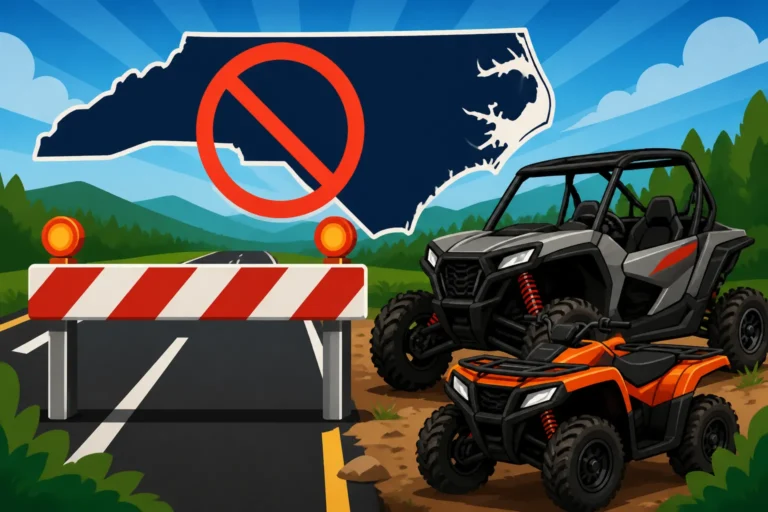
Let's get straight to the heart of the matter: for the vast majority of ATV and UTV owners in North Carolina, riding on any public road, paved or unpaved, including gravel roads, is generally off-limits. This often comes as a shock to new riders or those visiting from other states, but North Carolina law is quite clear on this distinction between off-road vehicles and highway-legal machines. Your quad, side-by-side, or other off-road vehicle is designed and intended for private property or designated trail systems, not for sharing space with cars and trucks on public thoroughfares.
Understanding North Carolina's "Street Legal" Definition
When we talk about "street legal" in North Carolina for vehicles like ATVs and UTVs, it's a very specific and often limiting definition. Most standard ATVs and UTVs simply don't meet the criteria to be considered road-worthy. They lack essential safety features required for highway use, such as proper turn signals, DOT-approved tires, windshields, specific lighting configurations, and often, a speedometer. These machines are built for performance and durability in rugged, off-highway conditions, not for cruising down a county road, gravel or otherwise. It's a fundamental difference in design and purpose that leads to their exclusion from most public roadways.
It's truly a common point of confusion and frustration for many riders. You might have added some fantastic upgrades to your machine – maybe some heavy-duty axles from SuperATV or an aftermarket lighting kit – and feel like it's perfectly capable of handling a gravel road. And mechanically, it probably is! But the law doesn't care about your machine's capabilities; it cares about its classification and whether it meets specific, often stringent, requirements for operating on public ways. This distinction means that even a well-equipped UTV that feels perfectly safe on gravel is still legally restricted if it hasn't gone through the proper channels to be classified for road use. Many people are left scratching their heads, wondering why their robust machine can't handle a simple unpaved road, while a golf cart might be permitted in some communities.
The Road Classification Conundrum
Here’s where it gets tricky for many: a gravel road, whether it's maintained by the state, a county, or a municipality, is generally considered part of the public highway system. The fact that it's unpaved doesn't magically change its legal status. These are public rights-of-way, subject to the same traffic laws as paved roads. This means that if your ATV or UTV isn't registered and titled as a street-legal vehicle (which, as we discussed, most aren't), you're essentially operating an unregistered, non-compliant vehicle on a public road. This is why you cannot ride on many gravel roads.
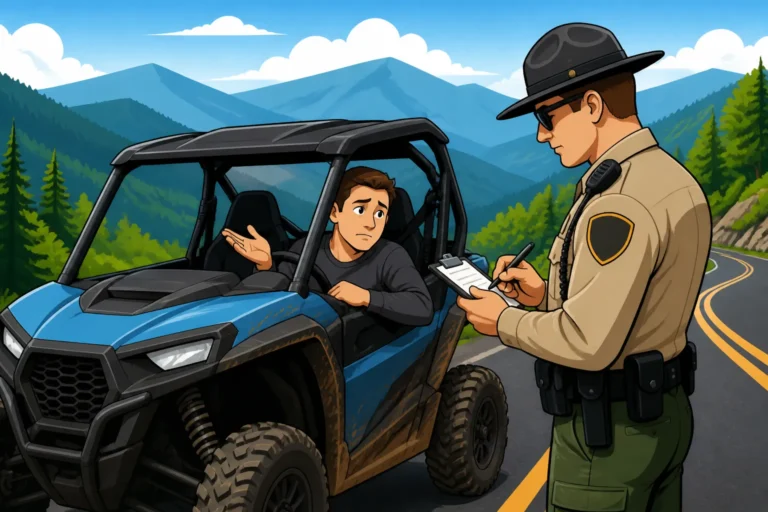
The implications of this are significant. If a state trooper, county sheriff, or even a local police officer spots you riding your standard ATV or UTV on one of these public gravel roads, you could be cited for various offenses. This could range from operating an unregistered vehicle to violating specific ATV laws that prohibit their use on public roads. These tickets can be costly, and depending on the circumstances, could even lead to your machine being impounded. It’s a harsh reality that many riders discover the hard way, thinking a quiet, unpaved back road would be an exception. Remember, the law views these gravel roads as arteries of public travel, just like a bustling highway, even if they see far less traffic. To understand more about why registration is not generally required for off-road use, check out [Why North Carolina Has No ATV Registration]. If you get cited, it's often the local authorities who handle it; [Who Writes an ATV Ticket in North Carolina] offers more detail.
Exceptions to the Rule: When Gravel Roads Are Permissible
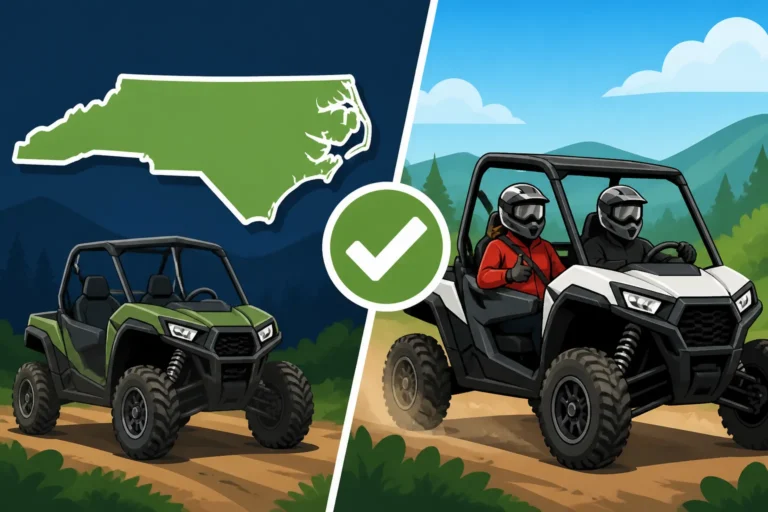
While the general rule paints a pretty clear picture of prohibition, there are indeed specific scenarios and classifications in North Carolina where riding an ATV or UTV on a gravel road is permissible. These exceptions are important to understand, as they are often the source of the confusion and anecdotal stories you might hear from other riders. It's not a free-for-all, but rather a set of narrowly defined circumstances.
Private Property with Permission
This is perhaps the most straightforward exception: if the gravel road is on private property and you have the express permission of the landowner, you are absolutely free to ride your ATV or UTV on it. This includes personal driveways, farm lanes, logging roads, or any other unpaved path that is entirely within the boundaries of private land. The key here is "private property" and "permission." Without explicit permission, even riding on what appears to be an abandoned private road can lead to trespass charges.
Imagine your buddy has a sprawling rural property outside of Statesville with a long, winding gravel driveway that snakes through his woods to his cabin. As long as he's given you the green light, you can ride your machine up and down that driveway to your heart's content. The same goes for a large tract of land you might lease for hunting in the Uwharrie Mountains; if the lease agreement includes access for ATVs on the internal gravel roads, you're good to go. It’s always best practice to have this permission in writing, or at least clearly understood, especially if you’re riding on land you don’t personally own. This prevents misunderstandings and potential legal headaches. When considering [North Carolina Rules for Riding Private Land], always prioritize obtaining clear permission.
Designated OHV Trail Systems (Forest Roads)
North Carolina is home to incredible natural beauty, and within its national forests, you'll find designated Off-Highway Vehicle (OHV) trail systems that often incorporate gravel roads. These are specific areas managed by the U.S. Forest Service where ATV and UTV use is permitted, but usually requires a permit and strict adherence to trail rules. These aren't just any gravel roads; they are clearly marked and part of a recognized trail network.
Think of places like the Badin Lake OHV Trail Complex in the Uwharrie National Forest or the Brown Mountain OHV Trail System in the Pisgah National Forest. Within these systems, certain gravel roads might connect trail sections, serve as access points, or even be part of the designated OHV route itself. When you're riding in one of these areas, you're expected to have the necessary forest pass, adhere to sound limits, stay on marked trails, and follow all other posted regulations. Always check the specific forest district's website for current conditions and rules before you head out, as trails can close due to weather or maintenance. You can learn more about these areas in [North Carolina's Three National Forest Systems] and plan your trip with [North Carolina Forest Trail Maps]. These are fantastic opportunities for legal gravel road riding that many riders in North Carolina enjoy.
The Farming Operations Exception
North Carolina law carves out a very narrow exception for ATVs and UTVs used directly in connection with farming operations. This exception allows these vehicles to be operated on public roads, including gravel roads, for the sole purpose of transporting equipment, livestock, or agricultural products from one field to another, or from a farm to a market. It is not a loophole for recreational riding. The machine must be used as part of bona fide farming activities, and the operator must be engaged in those activities.
This exception is designed to support the state's agricultural community, allowing farmers to efficiently move their implements and products across properties that might be separated by a public road. For example, a farmer near Kinston might use their UTV, perhaps outfitted with a utility bed from SuperATV to carry tools, to cross a short stretch of gravel county road between two fields they own. However, this exception does not permit that same farmer to take their UTV for a joyride down the road on a Sunday afternoon. The use must be incidental to, and necessary for, the farming operation itself. Understanding the strict confines of this rule is crucial to avoid misinterpretation, which could lead to fines. Delve deeper into the specifics with [North Carolina's Farming Operations Exception].
Modified Utility Vehicles (MUVs)
If you're truly aiming for street-legal status for a UTV-like machine in North Carolina, the "Modified Utility Vehicle" (MUV) classification is the only official pathway. However, this is not for the faint of heart, as the requirements are incredibly stringent and few standard UTVs will qualify without significant, specialized modifications and official inspection. An MUV is essentially a UTV that has been modified and registered to meet state highway safety standards, allowing it to be driven on public roads posted 55 mph or less.
To qualify as an MUV, a machine must meet precise dimension requirements (length, width, height), engine displacement criteria (over 2,400cc), a minimum top speed (at least 40 mph), and must be equipped with full highway safety features including headlamps, taillamps, turn signals, brake lights, a horn, mirrors, a speedometer, seatbelts for all seating positions, and a parking brake. It also needs a Vehicle Identification Number (VIN) assigned by the North Carolina DMV. Many UTVs, even highly customized ones, will fall short on one or more of these requirements. Even if you've invested heavily in aftermarket parts from companies like SuperATV to enhance your UTV's performance or utility, it's highly unlikely these modifications alone will transform it into a legal MUV. This is a very specific designation, not a general allowance. For more detailed MUV requirements, see [North Carolina's Modified Utility Vehicle Route] and [North Carolina MUV Registration Requirements].
Navigating the Rules: Practical Advice for Riders
Understanding the letter of the law is one thing, but applying it practically to your riding adventures is another. North Carolina's varied landscape, from the mountains to the coast, offers fantastic opportunities for off-road enthusiasts, but it also means encountering different local jurisdictions and land management rules. Here's some practical advice to help you stay on the right side of the law and enjoy your ride safely.
Do Your Homework Before You Ride
The single most important piece of advice for any rider in North Carolina is to do your research before you load up your machine and head out. Rules can vary significantly depending on whether you're on federal land (like a national forest), state land (like game lands, which have their own specific regulations), county roads, or municipal property. What might be perfectly acceptable in one area could get you a hefty fine in another. Never assume that just because one gravel road was okay, all others will be.
Always check with the specific land management agency (e.g., U.S. Forest Service district office, local county sheriff's department, or town hall) for the most up-to-date regulations. Websites, phone calls, or even a quick visit to a ranger station can save you a lot of trouble. This is especially true for gravel roads, as their classification can sometimes be ambiguous to the casual observer. A gravel road that serves as a forest service access road might be open to OHVs during certain seasons, while a similar-looking county gravel road is strictly off-limits. Being proactive in your research is your best defense against inadvertently breaking the rules. Always be aware of [North Carolina Rules for Riding a Public Street] no matter how quiet the street appears.
Gear Up for Safety, Not Just Legality
Regardless of where you're riding – whether it's a private gravel road, a designated forest trail, or even a short cross-over as part of a farming operation – safety should always be your top priority. While North Carolina's laws for off-road vehicle equipment might be less stringent than for highway vehicles, common sense and a commitment to personal safety dictate that you should always wear appropriate gear. This isn't just about avoiding a ticket; it's about protecting yourself from serious injury.
At a minimum, always wear a DOT-approved helmet. This is a non-negotiable piece of equipment for any serious rider. Eye protection, such as goggles or a face shield, is also crucial to shield your eyes from dust, debris, and insects, which are especially prevalent on gravel roads. Sturdy over-the-ankle boots, long pants, and long sleeves will protect your skin from scrapes, branches, and engine heat. Remember, a mishap on a gravel road, even at low speeds, can lead to painful injuries if you're not properly protected. For specific requirements regarding headgear, refer to [North Carolina Helmet Law for ATV Riders]. A small investment in quality gear can prevent a lifetime of regret, making your ride much more enjoyable and safer.
The Importance of a Title (Even for Off-Road)
While North Carolina generally doesn't require registration for ATVs and UTVs used exclusively off-road, having a title for your machine is still incredibly important. The title is the official document proving legal ownership. Even if you only plan to ride on private land or designated OHV trails, a title provides a critical layer of protection and simplifies many aspects of ownership.
Consider what happens if your machine is stolen. Without a title, proving ownership to law enforcement or an insurance company can become an uphill battle. A title also makes it much easier to sell your machine down the road, as most buyers will understandably want proof that you are the legal owner. It also simplifies things if you ever need to finance your ATV or UTV, as lenders almost always require a clear title. Think of it as your machine's birth certificate – essential for its identity and your legal claim to it. Even though you might not be registering it for the road, securing that title from the DMV is a wise move for any North Carolina ATV or UTV owner. To understand why it's worth the effort, take a look at [Why a North Carolina Title Is Worth Having].
Gravel roads in North Carolina present a unique set of challenges and opportunities for ATV and UTV riders. While the general rule is to avoid public gravel roads due to their classification as highways, understanding the specific exceptions for private property, designated OHV trails within forests, bona fide farming operations, and the highly specialized MUV pathway, empowers you to make informed and legal decisions. Always prioritize safety, do your due diligence before each ride, and ensure you have the proper documentation for your machine. By staying educated and responsible, you can fully enjoy the diverse riding experiences North Carolina has to offer.
Disclaimer
This article is for general informational purposes only and does not constitute professional advice. Laws, prices and regulations vary by location and change over time. Consult a qualified professional for guidance on your specific situation.