North Carolina Rules for Riding in Winter
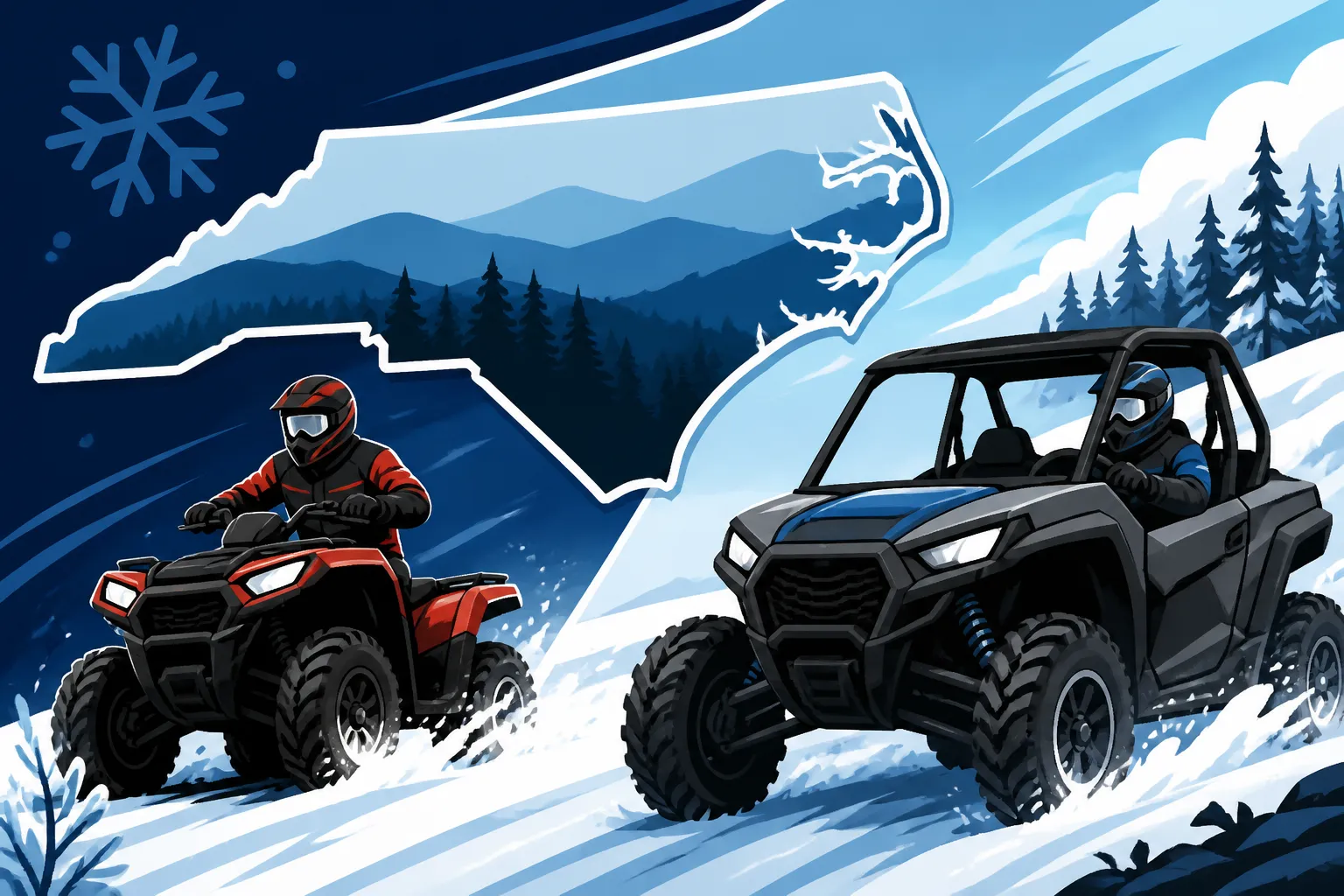
Winter riding in North Carolina can be a truly breathtaking experience, with crisp air and stunning, often snow-dusted, landscapes that look completely different from the summer months. However, the season also brings a unique set of challenges, from unpredictable weather and trail conditions to forest closures that can derail your plans. This guide will walk you through the essential rules, preparations, and considerations for safely and legally enjoying your ATV or UTV in the Old North State during those colder months.
Understanding Winter Riding Realities in North Carolina
Riding your ATV or UTV in North Carolina during winter isn't just about bundling up. It means being acutely aware of how the changing weather impacts everything from trail accessibility to machine performance and, most importantly, your safety. The state's diverse geography, from the coastal plains to the towering Blue Ridge Mountains, means "winter" can look drastically different depending on where you plan to ride. What might be a chilly, damp ride in the Piedmont could be a full-blown snow adventure in the high country.
The Impact of Freezing Temperatures and Precipitation
When those temperatures dip below freezing, and especially when precipitation is involved, the game changes entirely. Rain quickly turns to ice on shaded trails or elevated surfaces, creating extremely hazardous conditions that can easily lead to a loss of control. Snow, while beautiful, can obscure hidden obstacles like rocks, roots, or deep ruts, turning familiar trails into treacherous unknowns. Even if the sun is out, sections of trail, particularly those on north-facing slopes or deep in valleys, can remain icy and slick for days after a freeze. This isn't just about comfort; it's about physics. Your tires lose grip, your brakes become less effective, and even steering can feel sluggish when battling slick surfaces. It’s crucial to remember that what might be a minor puddle in July could be a hidden sheet of ice in January.
Shorter Days and Changing Light
One of the most immediate shifts we notice in winter is how quickly the daylight fades. What felt like an endless summer evening ride now becomes a race against the setting sun. Shorter days mean less available riding time, and the light itself changes. The sun hangs lower in the sky, creating long shadows that can play tricks on your eyes, making it harder to spot hazards. If you do get caught out after dark, the cold becomes even more pronounced, and visibility drops dramatically. Always plan your winter rides to finish well before sunset, giving yourself a generous buffer. If there’s any chance you’ll be out in the dusk or dark, ensure your machine’s [North Carolina Lighting Requirements for ATVs] are met and that your lights are in perfect working order. A good headlamp for yourself isn't a bad idea either, for those moments you might be off the machine tending to something.
Forest Trail Closures and Conditions
For many of us, the national forests like Uwharrie, Pisgah, and Nantahala are our go-to spots for ATV and UTV adventures. However, winter brings a unique rhythm to these cherished public lands, often involving seasonal closures and variable conditions that demand your attention before you even load up the trailer. Nothing is more frustrating than driving hours to your favorite trailhead only to find a locked gate.
Seasonal and Weather-Related Closures
North Carolina's National Forests operate on seasonal schedules for their OHV trail systems. For instance, you might find that trails like Brown Mountain in the Pisgah National Forest and the Badin Lake OHV Trail Complex in Uwharrie National Forest close down for a period in winter, often from early January through March or April. These closures aren't just for a break; they're vital for trail preservation. Winter conditions, especially cycles of freezing and thawing, can make trails incredibly vulnerable to damage from heavy off-road use. Riding on soft, muddy, or frozen-and-thawing ground can quickly lead to deep ruts and erosion that takes years and significant resources to repair.
Beyond scheduled seasonal closures, forests can also implement temporary closures due to severe weather events. Heavy snow, ice storms, or even prolonged periods of heavy rain can render trails impassable or dangerous. Flooding can wash out sections of trail, create hazardous creek crossings, or simply make the ground too saturated to ride responsibly. It's not uncommon for sections to remain closed for weeks or even months while crews work to clear debris, repair washouts, and assess safety. Before every winter trip, you absolutely must check the specific ranger district's website or call them directly for the most current information. Don't rely on old information or hearsay. [North Carolina Trail Closures to Check] are a real thing, and staying informed is your best defense against disappointment.
Monitoring Trail Conditions
Even when trails are officially open, conditions can vary wildly. A sunny day at the trailhead might belie icy patches lurking in the shade a few miles in. Recent rainfall can turn sections into deep, slick mud, even if the main trail is well-drained. The best practice is to check local weather forecasts for the exact area you plan to ride, not just your home address. Pay attention to overnight lows, not just daytime highs, as those freezing temperatures can create black ice that lingers. Many forest service websites will post alerts about trail conditions, but these might not be updated daily. Fellow riders on local forums or social media groups can also be a good source of real-time anecdotal information, though always cross-reference with official sources. Understanding [North Carolina Riding After Heavy Rain] is crucial, as winter rains often lead to prolonged muddy conditions due to less evaporation. You'll likely encounter more mud and water crossings, so assess your machine's capabilities and your own comfort level carefully.
Safety and Preparation for Winter Riding
Winter riding demands a higher level of preparation and a sharper focus on safety than any other season. The risks are amplified, from hypothermia to mechanical failures exacerbated by the cold. Being prepared isn't just about convenience; it could be critical to your well-being.
Essential Gear for Rider and Machine
When the mercury drops, layering is your best friend. Start with a moisture-wicking base layer to keep sweat away from your skin, followed by insulating layers like fleece, and topped with a waterproof and windproof outer shell. Don't forget extremities: warm, waterproof gloves are non-negotiable, as are insulated socks and waterproof boots. A balaclava or neck gaiter will help protect your face and neck from the biting wind. For your machine, consider a winch – it's an invaluable tool year-round, but especially when deep mud or snow can leave you stranded far from help. SuperATV makes some robust winches and plows that can be incredibly useful for winter conditions, whether you're clearing a path or pulling yourself out of a sticky situation. Snow plows are fantastic if you're using your UTV for property maintenance, but for trail riding, focus on recovery gear.
Beyond personal warmth, think about what happens if you get stuck or break down. A small emergency kit should include:
- First-aid supplies: For cuts, scrapes, and minor injuries.
- Fire starter: Waterproof matches, a lighter, or a ferro rod.
- Emergency blanket or bivy: Essential for staying warm if stranded.
- High-energy snacks and water: Even in cold weather, hydration is key.
- Tools: Basic tools for minor repairs, tire repair kit.
- Navigation: A fully charged phone (with a power bank), GPS device, and a physical [North Carolina Forest Trail Maps] as a backup. Cell service can be spotty in the mountains.
- Recovery gear: Tow strap, shovel (collapsible is fine), and that winch we mentioned!
Machine Maintenance for Cold Weather
Winter puts extra stress on your ATV or UTV, so a pre-winter check-up is paramount.
- Battery: Cold weather dramatically reduces battery performance. Make sure yours is fully charged and in good condition. Consider a trickle charger if your machine sits for extended periods.
- Fluids: Check coolant levels and ensure it's rated for freezing temperatures. Engine oil viscosity can be affected by cold; consult your owner's manual for recommendations on winter-grade oil.
- Tires: Lower temperatures will decrease tire pressure. Check and adjust your tire pressure before each ride. Aggressive tread patterns are ideal for snow and mud.
- Brakes: Ensure your brakes are in top working order. Icy conditions require maximum stopping power.
- Fuel System: Consider adding a fuel stabilizer or de-icer to your tank, especially if you're using ethanol-blended fuel, to prevent condensation and fuel line freezing. A clean air filter is also crucial for optimal engine performance in varied conditions.
Communication and Emergency Planning
Never ride alone in winter, especially in remote areas. Riding with a buddy or a group significantly increases safety. Always let someone know your riding plan, including your route, where you're parking, and your expected return time. Give them a realistic window for when they should expect to hear from you. In areas with limited cell service, consider investing in a satellite messenger or a two-way radio system. These devices can be literal lifesavers if you encounter an emergency where your phone won't work. The potential for [Cell Dead Zones in the Nantahala] or other national forests is a very real concern, and it's best to prepare for it.
Roads, Private Land, and Other Considerations in Winter
While forest trails are often the main draw, winter conditions also influence how and where you can ride on private land and, in very limited circumstances, on public roads in North Carolina. The general rules about where you can legally operate your ATV or UTV don't change just because it's cold, but the practical implications certainly do.
Riding on Private Land
Many riders have access to private property, whether their own land, a friend's farm, or leased hunting ground. The rules for riding on private property remain the same in winter: you must have explicit [North Carolina Landowner Permission Rules]. However, the condition of private land can change dramatically with winter weather. Logging roads or farm lanes that are perfectly navigable in summer can become impassable mud pits or icy slopes in winter. If you're using your machine for [Riding While Hunting] in the colder months, be aware that conditions can make retrieving game much more challenging. Snow-covered fields might look tempting, but hidden fences, rocks, or uneven terrain could be lurking beneath. Always inspect the area if you can, or proceed with extreme caution. Remember, just because it's private land doesn't mean it's immune to the dangers of winter.
Limited Road Use and Farm Exemptions
North Carolina strictly limits ATV and UTV use on public roads. Generally, these machines are not street legal. However, there are a few very specific exceptions, primarily for farming operations. If you are operating an ATV or UTV for bona fide [North Carolina Farming Exception for ATVs], you might be allowed to cross or even briefly operate on a public road. This is usually for things like moving equipment or hauling feed between fields. The key phrase here is "farming operations," and this exception does not extend to recreational riding. Even when legally operating on a road under this exception, winter conditions add another layer of risk. Icy patches, reduced visibility due to fog or snow, and other drivers who might not expect an ATV on the road make it extra hazardous. Always use extreme caution, ensure your machine is highly visible, and obey all traffic laws.
Safety Certificates and Permits
The requirements for a [North Carolina ATV Safety Certificate Requirements] don't change with the seasons. If you were born on or after January 1, 1990, you need this certificate to operate an ATV on public lands, regardless of the time of year. Likewise, if you're riding on public lands that require them, you'll still need the appropriate [North Carolina Forest OHV Permits], such as a day pass or a season permit for areas like Uwharrie or Pisgah. These permits help maintain the trails, and carrying one is a year-round responsibility. Don't let the thought of a cold ride tempt you into thinking rules are relaxed; they are not.
Environmental Considerations
Winter riding, particularly in sensitive areas, requires heightened environmental awareness. Frozen ground might seem more resilient, but thawing periods can expose trails to severe erosion. Always stick to marked trails to prevent widening them or damaging fragile ecosystems. Be extra careful around frozen water bodies; never assume ice is thick enough to support your machine. The colder temperatures also mean that any spills or leaks, however minor, take longer to dissipate and can have a more prolonged environmental impact. Being a responsible rider means respecting the environment no matter the season.
| Winter Riding Aspect | Summer Riding Aspect | Key Differences & Considerations |
|---|---|---|
| Trail Conditions | Mostly dry, dusty, some mud | Often muddy, icy patches, snow cover. Higher risk of erosion. |
| Visibility | Long daylight, clear | Shorter days, lower sun angle, fog, snow, mist. |
| Temperature | Warm, hot, potential heatstroke | Freezing to cold, hypothermia risk. |
| Clothing | Light, breathable | Layers, waterproof, windproof, insulated. |
| Machine Prep | Basic fluid checks | Battery check, coolant anti-freeze, winter-grade oil, fuel treatment. |
| Hazards | Dust, heat exhaustion | Black ice, hidden obstacles under snow, freezing water. |
| Emergency Prep | Water, sunscreen | Fire starter, emergency blanket, extra warm layers. |
| Forest Access | Generally open | Seasonal closures, weather-related closures common. |
| Environmental | Dust suppression, fire risk | Erosion prevention, avoiding frozen waterways, slower breakdown of spills. |
As you can see, North Carolina offers incredible opportunities for ATV and UTV enthusiasts throughout the year, but winter demands a different mindset and a more rigorous approach to planning and safety. By understanding the challenges and preparing accordingly, you can still experience the magic of the trails, even when the air is crisp and the landscape is frosted white.
Disclaimer
This article is for general informational purposes only and does not constitute professional advice. Laws, prices and regulations vary by location and change over time. Consult a qualified professional for guidance on your specific situation.