Who Writes an ATV Ticket in North Carolina
It's incredibly frustrating when you're out enjoying your ATV or UTV in North Carolina, maybe just cruising down a farm path or crossing a quiet road, and suddenly you see flashing lights. One of the biggest questions that often pops into riders' minds isn't just what they might have done wrong, but who actually has the authority to pull them over and write a ticket. This guide is here to untangle that confusion, breaking down the various law enforcement agencies you might encounter and what their roles are in enforcing ATV and UTV laws across our beautiful Tar Heel State.
The Primary Responders: Local Law Enforcement
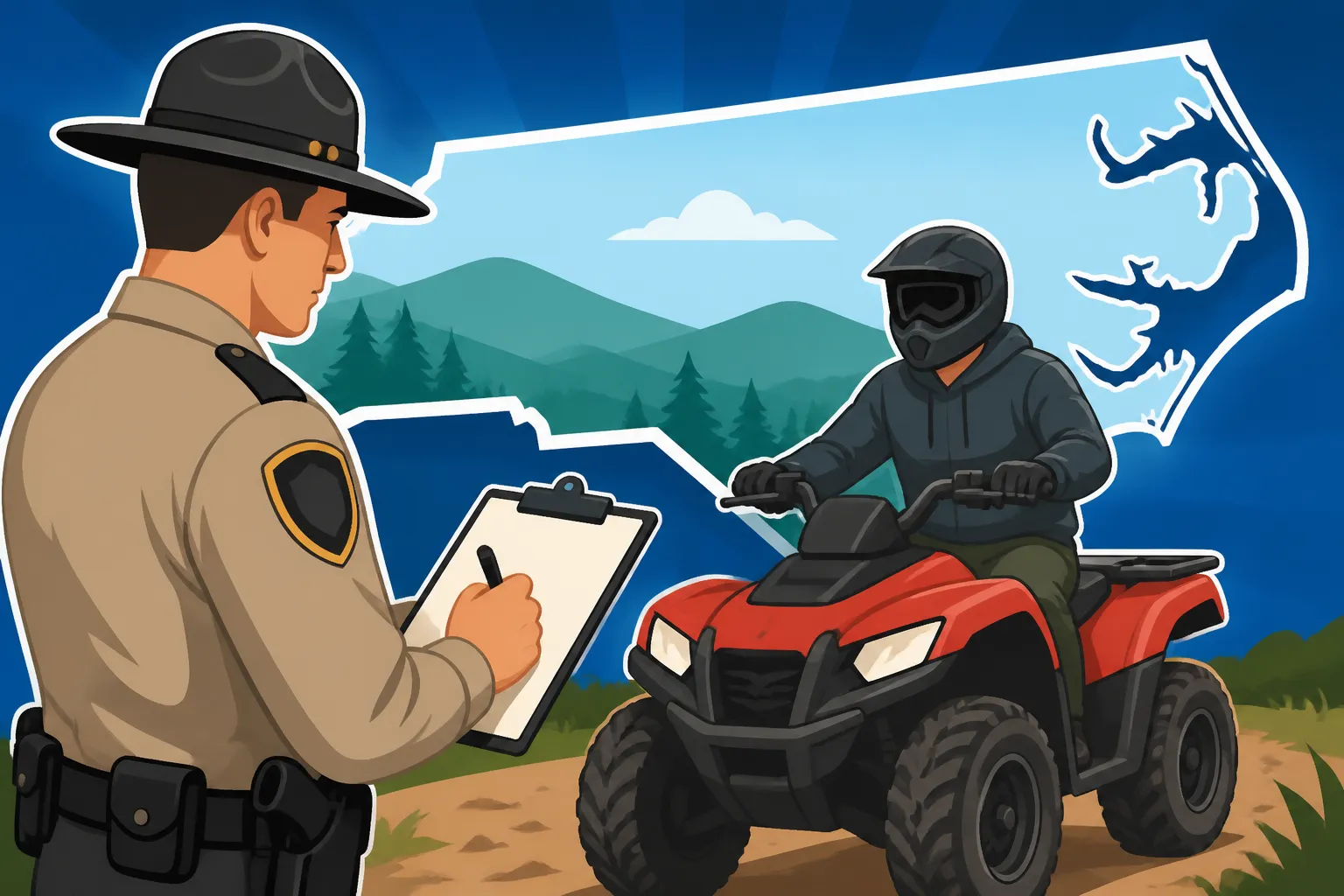
When you're riding, especially closer to towns or populated areas, the most common faces you'll see enforcing laws are your local city police or county sheriff's deputies. These are the folks patrolling your neighborhoods and local roads daily, and they are definitely authorized to address ATV and UTV infractions.
City and Town Police Departments
If you find yourself riding within the incorporated limits of a city or town – even if it's just a quick hop across a street to get to a friend's property – the local police department has jurisdiction. They are primarily concerned with maintaining order and enforcing traffic laws within their municipal boundaries. This means if you're riding your ATV on a paved city street, or even an unpaved alleyway that's still considered public property within city limits, they can absolutely issue a citation.
Think about it this way: a police officer in Charlotte, Raleigh, or even a smaller town like Troy, is responsible for all vehicles operating on public thoroughfares in their area. An ATV or UTV, even if it's generally considered an off-road vehicle, isn't exempt from their purview if it's in a place where it shouldn't be. They'll be looking for things like riding on sidewalks, operating an untagged vehicle on a public road, or any other violations of local ordinances or state statutes that apply within their jurisdiction. If you're riding somewhere you shouldn't be, they're often the first ones to arrive.
County Sheriffs' Offices
Moving beyond city limits, into the broader county areas, it's the county sheriff's office that takes the lead. Sheriffs' deputies have jurisdiction throughout their entire county, including unincorporated areas and sometimes even assisting within city limits. This makes them a very common sight for riders who spend time on rural roads, farm lanes, or simply moving between large tracts of private land.
A sheriff's deputy might pull you over if you're riding on a county road, a state secondary road that isn't a major highway, or if there's a complaint about ATV use in an area that falls under county jurisdiction. They handle everything from suspected trespassing on private land to enforcing traffic laws on the public roads that crisscross the countryside. Many deputies are very familiar with the local riding hotspots and common areas where ATVs are used, both legally and illegally, so they know what to look for. They are also often the ones called to investigate accidents involving ATVs on rural properties or roads.
State-Level Enforcement Agencies
While local law enforcement handles a lot, there are specific situations and types of land where state-level agencies step in. These groups have broader jurisdiction and often specialize in certain types of enforcement, from highway safety to natural resource protection.
North Carolina Highway Patrol
The North Carolina Highway Patrol (NCHP) is primarily responsible for enforcing traffic laws on the state's highways and interstates. While ATVs and UTVs are generally not permitted on these major roadways, if you're seen operating one on a highway, or even crossing one improperly, the NCHP has full authority to intervene. Their focus is on highway safety, and an off-road vehicle operating on a public road is a significant safety concern.
They're not typically patrolling logging roads or private trails, but if your ride takes you across a state-maintained road or highway, even for a brief moment, and you don't adhere to the strict rules for [North Carolina Rules for Crossing a Road], you could find yourself talking to a trooper. This is especially true if your machine isn't a qualified [North Carolina's Modified Utility Vehicle Route], which has its own set of strict requirements for road use. Troopers are also often the primary responders to serious accidents on state roads, regardless of the vehicle type involved.
Wildlife Resources Commission Officers
North Carolina Wildlife Resources Commission (NCWRC) officers, often referred to as "game wardens" or "wildlife officers," play a crucial role in regulating outdoor activities across the state. Their primary focus is on hunting, fishing, and boating laws, but their jurisdiction extends to the use of vehicles on state-managed game lands, wildlife areas, and sometimes even private property when related to hunting and trapping.
If you're riding your ATV or UTV on game lands or other areas managed by the NCWRC, they are the ones enforcing the rules. This includes regulations about vehicle types allowed, hours of operation, and whether a permit is required. For example, some game lands might have specific rules about where you can drive your ATV to retrieve game. They are also vigilant about protecting natural resources, so if your riding activities are causing environmental damage or disrupting wildlife habitats, an NCWRC officer can definitely write you a ticket. They have a deep understanding of land use regulations and can be quite strict about adherence to rules designed to protect North Carolina's natural beauty.
Forest Service Law Enforcement
For those who love to hit the trails in North Carolina's national forests, such as the Uwharrie, Pisgah, or Nantahala, it's the U.S. Forest Service law enforcement officers or Forest Service Rangers who are the primary authorities. These officers are sworn federal law enforcement personnel with the power to enforce federal laws and regulations, as well as state laws, on federal lands.
They are the ones ensuring that riders have the correct [North Carolina Forest OHV Permits], are staying on designated trails, and adhering to rules like sound limits or spark arrester requirements. Riding off a marked trail or in an area closed to ATVs is a serious offense on federal land and these officers will not hesitate to issue citations. They are also responsible for fire prevention, so they'll be checking for things like proper [North Carolina Spark Arrester Requirement] on your machine and ensuring no illegal campfires are started. Understanding their authority and respecting the rules of the national forests is paramount for a safe and legal ride.
Specialized Enforcement Scenarios
Beyond the general patrols, there are specific situations where certain types of enforcement become particularly relevant. These often involve distinct legal frameworks or specialized units.
Private Property Trespass Violations
One of the most common complaints involving ATVs and UTVs, especially in rural areas, is trespassing. While this is fundamentally a civil matter between landowners, law enforcement often gets involved when it escalates or becomes a repeated issue. If you're riding on private land without explicit permission, and the landowner calls the sheriff's office or local police, you could face criminal trespassing charges.
It's not uncommon for landowners in North Carolina to post their property with "No Trespassing" signs. Even if it's not posted, you still need permission. Law enforcement officers, particularly county sheriffs, will respond to these calls. They will investigate whether you had permission, whether the land was adequately marked, and if any damage occurred. Trespassing isn't just a minor infraction; it can lead to significant fines and even impoundment of your machine if you're caught. Always make sure you have [North Carolina Landowner Permission Rules] clear before you even think about putting a tire on someone else's property. Getting permission is vital, and a friendly phone call or written note can save you a lot of grief.
Modified Utility Vehicle MUV Enforcement
North Carolina has a very specific and somewhat complex category for street-legal off-road vehicles known as Modified Utility Vehicles (MUVs). These aren't your standard ATVs or side-by-sides; they have to meet a strict set of criteria, including engine size, dimensions, and safety equipment, to be considered street legal. Due to their unique status, enforcement for MUVs involves a blend of agencies.
Because an MUV is, by definition, operating on public roads, the North Carolina Highway Patrol and local police/sheriff's offices are the primary enforcers of MUV regulations. They'll be checking for proper registration, insurance, and the specific equipment requirements that make an MUV road-legal, such as seatbelts, mirrors, and turn signals. If your side-by-side has been modified with a lift kit or aftermarket tires, like those often provided by a company such as SuperATV, it's absolutely critical to ensure those modifications still allow the vehicle to meet all MUV specifications. If you're pulled over in a machine you believe is an MUV but it doesn't meet the precise [North Carolina MUV Registration Requirements], you could face a range of citations for improper vehicle operation, lack of registration, or equipment violations. It's a very narrow path to street legality in North Carolina, and law enforcement is well aware of the regulations.
Environmental and Land Use Violations
Beyond just where you ride, how you ride can also attract the attention of law enforcement, particularly agencies concerned with environmental protection. This includes tearing up sensitive landscapes, riding in creek beds, or causing excessive erosion. While a local sheriff's deputy might issue a ticket for basic environmental damage, larger or more complex cases could involve state environmental agencies or even federal bodies.
For example, riding in a protected wetland or causing significant damage to a stream bank could lead to citations from the NCWRC or even specialized state environmental police units if the impact is severe enough. These violations often carry heavier penalties because they affect public resources and can have long-lasting ecological consequences. It's not just about getting a ticket; it's about being a responsible land user. Making sure your machine is properly maintained and equipped to minimize its environmental footprint, perhaps with exhaust systems that keep noise down, is always a good idea. Even seemingly minor actions, like riding through a small creek, can accumulate into larger issues that law enforcement will address.
Understanding What Triggers a Ticket
Knowing who can write a ticket is one thing, but understanding why they might is equally important. Law enforcement officers aren't just looking to spoil your fun; they're enforcing laws designed for safety and environmental protection.
Common Violations on Public Roads and Land
The most frequent reason riders get tickets is operating their ATV or UTV where it's not permitted, particularly on public roads. Unless your machine is a legally registered MUV, riding on any public street, road, or highway is generally prohibited in North Carolina. This includes state-maintained roads, county roads, and city streets. Officers will look for:
- Operating an unregistered vehicle on a public road: Since ATVs don't register for road use (unless they're MUVs), any appearance on a public road can be a red flag.
- Improper crossing of roads: Even if you're allowed to cross a road to access another section of trail or private property, there are rules. You must do so safely, usually perpendicular to the road, and often at specific intersections. Cutting across diagonally or riding down the shoulder is a common mistake.
- Riding on sidewalks, bike paths, or greenways: These are not designated for ATVs and UTVs and are often heavily used by pedestrians and cyclists, making ATV use extremely dangerous and illegal.
- Operating on closed trails or in prohibited areas: On forest lands or designated OHV parks, officers regularly patrol to ensure riders stay on marked trails and respect closures, which can happen due to weather, maintenance, or environmental concerns. Ignoring these signs will almost certainly lead to a ticket. [North Carolina Rules for Riding a Closed Trail] are there for your safety and the preservation of the land.
Age and Safety Equipment Infractions
North Carolina has clear laws regarding rider age and required safety equipment, especially for younger riders. These are heavily enforced by all levels of law enforcement, particularly if a minor is involved.
- Minimum age violations: North Carolina has rules about the minimum age to operate an ATV, as well as supervision requirements for younger riders. If a child is operating an ATV without meeting these criteria, an officer can issue a ticket to the responsible adult. It’s crucial to know the [North Carolina Minimum Age to Ride an ATV] before letting a young one take the handlebars.
- Helmet and eye protection: For riders under 18, wearing an approved helmet and eye protection is mandatory in North Carolina. This applies on both public and private land. An officer seeing a minor without a helmet, whether on a trail or even just a field, can cite the adult responsible for their supervision. Ensuring your young rider has a properly fitting helmet is not just about avoiding a ticket; it's about protecting them. Many riders also choose to upgrade their helmets and goggles, and SuperATV, for example, offers various accessories that can improve safety and comfort for all ages.
- Passenger violations: Most ATVs are designed for a single rider. Carrying a passenger on a single-rider ATV is illegal and extremely dangerous. Some UTVs are designed for multiple passengers, but everyone must be seated properly and use available restraints. Law enforcement will check for this, especially if they see multiple people crammed onto a machine not designed for it.
Noise and Exhaust Violations
While often overlooked, noise can be a significant issue, especially in residential or sensitive environmental areas. Excessive noise from an ATV or UTV can lead to complaints from residents or other trail users, drawing the attention of law enforcement.
- Loud exhaust systems: Most public riding areas, including national forests, have sound limits for OHVs. Aftermarket exhaust systems that exceed these limits can result in a ticket. Officers might carry decibel meters or simply use their judgment based on complaints. Ensuring your machine has a properly functioning muffler and, if required, a [North Carolina Spark Arrester Requirement] is essential not just for the environment but also for keeping peace with others.
- Disturbing the peace: Even if your exhaust system is technically legal, riding in a manner that creates excessive noise, especially late at night or early in the morning near residential areas, can lead to a "disturbing the peace" or similar local ordinance violation. These are often enforced by local police or sheriff's deputies responding to citizen complaints. Maintaining your vehicle, including checking for loose exhaust components, can help prevent unintended noise.
The Consequences of an ATV Ticket
Getting an ATV ticket in North Carolina isn't just a slap on the wrist. The consequences can range from monetary fines to more serious issues like vehicle impoundment and even impacts on your future driving privileges, depending on the nature of the offense.
Fines and Court Costs
The most immediate consequence of an ATV ticket is the fine. These can vary significantly depending on the specific violation and the county or municipality where it occurred. For example, a simple trespassing violation might incur a base fine, but more serious offenses, such as reckless operation or environmental damage, can carry much steeper penalties.
Beyond the base fine, you'll also be responsible for court costs and administrative fees, which can sometimes add substantially to the overall cost. Failing to pay a fine or appear in court can lead to further legal complications, including warrants for your arrest or suspension of your driver's license (even if the ATV wasn't a road-registered vehicle, some traffic-related offenses can impact your license). It’s not uncommon for a "minor" ATV infraction to quickly add up to several hundred dollars once all the associated fees are factored in. Understanding [North Carolina Fines for an ATV Violation] is crucial to avoid unpleasant surprises.
Machine Impoundment and Recovery
In more serious cases, or if you're operating an ATV illegally, law enforcement has the authority to impound your machine. This can happen for violations such as:
- Operating an unregistered vehicle on public roads: If your ATV is being used on a public road and is clearly not street legal, it might be towed.
- Driving while impaired: Operating an ATV under the influence of alcohol or drugs carries the same serious penalties as operating any other motor vehicle, including impoundment.
- Trespassing with refusal to leave: If you're on private property and refuse to leave when ordered by law enforcement, your machine could be impounded.
- Operating a stolen machine: Obviously, this will lead to immediate impoundment and criminal charges.
Retrieving an impounded machine is rarely a simple or inexpensive process. You'll typically have to pay towing fees, storage fees (which accrue daily), and any fines associated with the offense before your vehicle is released. These costs can quickly escalate, sometimes even exceeding the value of the ATV itself, making it a very expensive lesson.
Impact on Your Driving Record (if applicable)
While an ATV itself isn't a road-registered vehicle in most cases, certain ATV-related violations can still have an impact on your standard driver's license. This is particularly true for offenses that are considered "moving violations" or those that involve impaired driving.
For instance, if you're cited for reckless driving while on an ATV, or for driving under the influence, those charges will absolutely affect your regular driving record, leading to points on your license, increased insurance premiums, and potential license suspension or revocation. Even seemingly minor traffic offenses, if committed on an ATV on a public road, might transfer to your driver's license record. It's a common misconception that because an ATV isn't a car, it won't affect your license. The reality is that if the offense is one that would apply to a motor vehicle on a public roadway, it can absolutely carry consequences for your legal ability to drive any vehicle.
| Enforcement Agency | Primary Jurisdiction | Common Violations Enforced (ATV/UTV Related) | Impact on Rider |
|---|---|---|---|
| City/Town Police | Within incorporated city/town limits | Riding on city streets, sidewalks, noise ordinances, trespassing within city limits | Fines, court costs, potential impoundment, driver's license impact for serious offenses |
| County Sheriff's Office | Entire county (unincorporated areas, often assists in cities) | Riding on county roads, private land trespassing, noise complaints, reckless operation on rural roads | Fines, court costs, potential impoundment, driver's license impact for serious offenses |
| NC Highway Patrol | State highways, interstates, primary roads | Operating on highways, improper road crossings (if not an MUV), MUV compliance checks | Fines, court costs, points on driver's license, license suspension, vehicle impoundment |
| Wildlife Resources Comm. | Game lands, wildlife areas, hunting/fishing related activities | Riding on game lands (outside designated areas/times), environmental damage, permit violations, hunting rules | Fines, court costs, loss of hunting/fishing privileges, vehicle impoundment for serious damage |
| US Forest Service L.E. | National Forests (Uwharrie, Pisgah, Nantahala) | Riding off designated trails, no permit, sound violations, spark arrester, environmental damage | Fines (federal), court costs, exclusion from forest, potential impoundment, environmental restoration |
Disclaimer
This article is for general informational purposes only and does not constitute professional advice. Laws, prices and regulations vary by location and change over time. Consult a qualified professional for guidance on your specific situation.