Insurance a Registered MUV Carries
Navigating the world of ATVs and UTVs in North Carolina can feel like untangling a Gordian knot, especially when you start thinking about taking your machine on public roads. It's a common frustration: you've invested in a powerful side-by-side, maybe even added some fantastic accessories, and you want to use it for more than just trails. The question of insurance, particularly for a registered Modified Utility Vehicle (MUV), often leaves folks scratching their heads. This comprehensive guide is here to demystify the insurance requirements and options for your North Carolina road-legal MUV, helping you ride with confidence and compliance.
Understanding North Carolina's Modified Utility Vehicle (MUV) Classification
Before we dive into the nitty-gritty of insurance, it's absolutely crucial to grasp what North Carolina considers a "Modified Utility Vehicle" (MUV). This isn't just a fancy name; it's a very specific classification with strict criteria that dictate whether your off-road machine can ever see a public road. Without meeting these requirements, any discussion of road-legal insurance is, quite frankly, moot.
What Exactly Qualifies as an MUV in North Carolina?
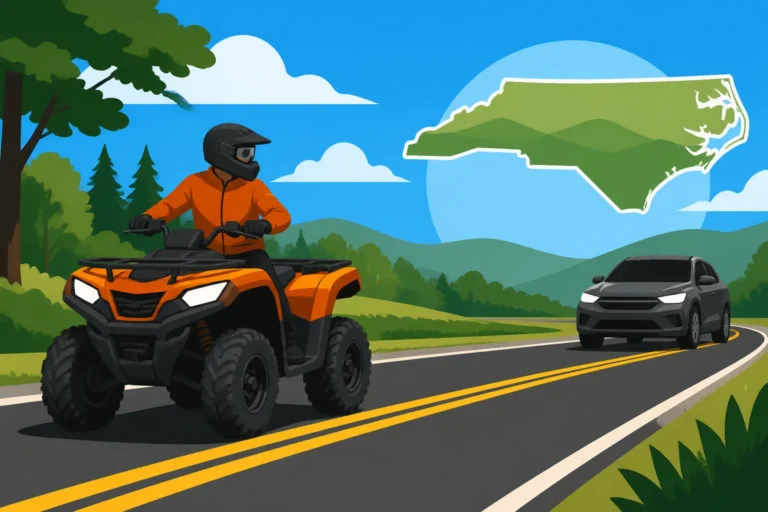
The term MUV often gets thrown around loosely, but in North Carolina, it refers to a particular type of side-by-side or utility terrain vehicle that has been modified to meet specific safety and dimension standards, allowing it to be registered for limited street use. We're not talking about your everyday recreational ATV or UTV you take to the [Badin Lake OHV Trail Complex]. Instead, an MUV must adhere to some pretty tight rules set forth by the state's DMV.
To even be considered an MUV eligible for a highway plate, your machine has to tick several boxes. First, there are engine size requirements: it needs to be more than 2,400 cubic centimeters. Then come the physical dimensions: a maximum length of 142 inches, a maximum width of 58 inches, and a maximum height of 70 inches. These are incredibly strict, and honestly, most modern side-by-sides, especially the popular sport models, often exceed that 58-inch width limit right from the factory. Additionally, it must be capable of exceeding 40 miles per hour on a paved level surface and be equipped with features like a speedometer, headlamps, taillamps, turn signals, mirrors, a parking brake, and, crucially, seat belts for all designated seating positions. It’s a pretty tall order, and why you see so few true MUVs out there. You can delve deeper into the specifics in our article on [North Carolina MUV Engine Size Requirement] and [North Carolina MUV Dimension Requirements].
Why the MUV Designation Matters for Road Use
The MUV designation isn't just bureaucratic red tape; it's the only pathway for an ATV or UTV to gain any semblance of street legality in North Carolina. Without meeting these stringent MUV criteria, your off-road machine remains just that: an off-road machine. This means it's restricted to private property, designated OHV trails, and specific exceptions like bona fide farming operations, but absolutely not public streets. This is a common point of confusion for riders, as many assume that if they add turn signals and a horn, they're good to go. Unfortunately, that's not how North Carolina law works.
This distinction is critical because it directly impacts whether you can even apply for a vehicle registration and, subsequently, road-legal insurance. If your machine doesn't qualify as an MUV, the DMV simply won't issue you a plate, and no insurance company will write a policy for road use on a vehicle that isn't legally allowed on the road. Understanding this fundamental concept is the first step toward responsibly using your machine. For a broader overview of street legality, check out [Are ATVs Street Legal in North Carolina? The Short Answer] and [Why an MUV Is the Only Street-Legal Path].
The Mandatory Insurance for a Registered MUV
Once your modified utility vehicle successfully jumps through all the hoops and secures that coveted North Carolina license plate, it transitions from being solely an off-road toy to a legitimate, albeit limited, motor vehicle in the eyes of the law. And with that transition comes a very important, and mandatory, requirement: road-legal insurance. This isn't optional; it's a non-negotiable part of operating any registered vehicle on North Carolina's public roads.
North Carolina's Basic Liability Requirements for Road-Legal Vehicles
Just like your family car or pickup truck, a registered MUV in North Carolina must carry minimum liability insurance. This isn't about protecting your MUV from damage; it's about protecting other people and their property in the event that you cause an accident while operating your MUV on a public road. Think of it as your responsibility to the community you're sharing the road with.
North Carolina law mandates specific minimum coverage amounts for bodily injury and property damage liability. These typically cover the costs if you're at fault in a collision, injuring another person or damaging their vehicle, fence, or other property. For example, if you're cruising down a secondary road on your MUV, enjoying the ride, and accidentally swerve into another car, your liability insurance would step in to cover the other driver's medical bills and vehicle repair costs, up to your policy limits. Without this coverage, you'd be personally responsible for those expenses, which can quickly add up to a financial catastrophe. It’s the cornerstone of responsible vehicle ownership in our state, and something [What a North Carolina Trooper Checks Roadside] will certainly include.
Why Standard ATV/UTV Policies Won't Cut It for MUVs
Here's where many riders get confused. You might already have an ATV or UTV insurance policy for your machine, perhaps from when you bought it. You might think, "Great, I'm covered!" But here's the crucial distinction: a standard off-road recreational vehicle policy is designed to cover your machine for trail riding, private property use, or transport. It explicitly does not extend to legal operation on public roads once your MUV is registered.
Insurance companies assess risk differently for off-road use versus on-road use. The risks of colliding with another motor vehicle, a pedestrian, or public infrastructure are far greater and more costly than, say, hitting a tree on a designated trail. Therefore, your existing policy, while valuable for your off-road adventures, will almost certainly not provide coverage if you have an accident while operating your MUV on a North Carolina public road. Trying to claim a road accident under an off-road policy would likely result in denial, leaving you fully exposed. You need a dedicated, road-legal policy that recognizes your machine as an MUV. This is directly related to [North Carolina MUV Insurance Requirements].
Beyond Basic Liability: Additional Coverage Options for MUVs
While basic liability insurance is mandatory for any registered MUV hitting North Carolina roads, it's really just the bare minimum. Most seasoned riders and vehicle owners understand that relying solely on liability can leave you vulnerable to a host of other potential financial headaches. Thinking proactively about additional coverage options can provide immense peace of mind and protect your investment far beyond what the state legally requires.
Collision and Comprehensive Coverage for Your Investment
Your MUV, especially after all the modifications and effort to get it road-legal, represents a significant investment. Basic liability insurance does nothing to protect your machine. That's where collision and comprehensive coverage come into play, offering a much-needed financial safety net for the MUV itself.
Collision coverage is designed to pay for damage to your own MUV if it collides with another vehicle, an object (like a guardrail or a ditch), or even if it rolls over, regardless of who is at fault. So, if you misjudge a turn on a gravel road and clip a mailbox, collision coverage would help repair your MUV. Comprehensive coverage, on the other hand, steps in for damage caused by things other than a collision. This could include theft, vandalism, fire, natural disasters (like a fallen tree branch or hail), or even hitting an animal. Imagine your MUV, equipped with top-notch upgrades from a brand like SuperATV, is parked overnight, and someone decides to make off with it. Comprehensive coverage would be your saving grace, helping you replace your stolen machine. Given the value and often unique nature of MUVs, these coverages are highly recommended to protect your ride.
Uninsured/Underinsured Motorist Coverage and Medical Payments
Unfortunately, not everyone on North Carolina roads adheres to the law, and some drivers operate without any insurance or with coverage that's woefully inadequate. This is where Uninsured/Underinsured Motorist (UM/UIM) coverage becomes incredibly important for your MUV policy. If you're involved in an accident that isn't your fault, but the other driver either has no insurance or insufficient insurance to cover your damages and medical bills, UM/UIM steps in to cover those costs, up to your policy limits. It’s an extra layer of protection against the irresponsibility of others.
Additionally, consider Medical Payments (MedPay) coverage. This coverage can help pay for medical expenses for you and your passengers, regardless of who is at fault for the accident. It typically covers things like ambulance rides, hospital visits, and doctor's fees. While you might have health insurance, MedPay can often cover deductibles or co-pays, and it can also provide immediate funds for medical care without waiting for liability claims to be processed. When you're out enjoying the limited [North Carolina Rules for Riding a Public Street] available to MUVs, having this protection ensures that you and your riding companions are looked after should an unforeseen incident occur.
Navigating the Insurance Market for Your MUV
Finding the right insurance for your North Carolina registered MUV can feel like a bit of a scavenger hunt. It's not as straightforward as insuring a car, simply because MUVs are still a relatively niche category with very specific legal requirements. You can't just call up any insurance agent and expect them to immediately understand what you mean. It requires a bit of homework and clear communication on your part.
Finding the Right Provider for MUV Insurance
Because MUVs represent a unique blend of off-road and limited on-road capability, not all mainstream insurance carriers will offer policies for them, or they might only offer very basic options. Some larger national providers do have specific departments or programs for recreational vehicles that might extend to MUVs, but it's not a guarantee. You'll likely need to speak directly with an agent and clearly explain that you have a North Carolina registered Modified Utility Vehicle that requires a road-legal policy. Emphasize that it has a state-issued license plate and meets all the MUV requirements, including the [North Carolina MUV Seat Belt Requirements] and [North Carolina MUV Inspection Requirements].
Don't be afraid to shop around. Get quotes from several different companies. It might even be beneficial to look into insurance providers that specialize in recreational vehicles or powersports, as they tend to have a better understanding of these unique machines and their coverage needs. Be prepared to provide detailed information about your MUV, including its make, model, VIN, modifications made to meet MUV standards, and its intended use on public roads (e.g., occasional use for errands versus daily commuting). Having all your documentation in order, including proof of MUV compliance, will make the process smoother.
Factors Influencing Your MUV Insurance Premiums
Just like with any other vehicle, several factors will play a significant role in determining how much you pay for your MUV insurance premiums. Understanding these can help you potentially reduce your costs or at least understand why your rates are what they are.
- Your Driving Record: A clean driving record with no accidents or violations will always result in lower premiums. Any past incidents will likely increase your rates.
- Your Location: Where you live in North Carolina, and where the MUV is primarily garaged, can affect rates due to varying local accident rates, theft rates, and population density.
- MUV Make, Model, and Value: More expensive or higher-performance MUVs will generally cost more to insure. Modifications, especially performance-enhancing ones, can also impact rates. Your investment in durable parts from SuperATV, for example, should be considered when determining the insured value.
- Primary Use: If you plan to use your MUV regularly on public roads, your premiums might be higher than if it's only for occasional, limited road use.
- Deductibles: Choosing a higher deductible (the amount you pay out-of-pocket before insurance kicks in) will almost always lower your premium, but means you pay more if you have to file a claim.
- Coverage Limits: Opting for higher liability limits or adding comprehensive and collision will increase your premiums, but also provides greater financial protection.
Here's a quick overview of how different coverage types protect you:
| Coverage Type | What It Primarily Protects | Who It Benefits Primarily | When It's Mandatory (for MUVs) |
|---|---|---|---|
| Liability (Bodily Injury) | Injuries to other people in an accident you cause | Others | Yes |
| Liability (Property Damage) | Damage to other people's property you cause | Others | Yes |
| Collision | Damage to your MUV from a collision or rollover | You / Your MUV | No (Highly Recommended) |
| Comprehensive | Damage to your MUV from non-collision events (theft, fire, vandalism, natural disaster) | You / Your MUV | No (Highly Recommended) |
| Uninsured/Underinsured Motorist | Your injuries/damages if an uninsured/underinsured driver hits you | You / Your MUV | No (Highly Recommended) |
| Medical Payments | Medical bills for you/passengers after an accident | You / Your Passengers | No (Recommended) |
Practical Considerations and the Registration Process
Obtaining insurance for your MUV isn't just about picking a policy; it's intricately tied to the entire process of getting your machine legally registered for road use in North Carolina. Each step builds on the last, and you can't really move forward with one without considering the others. Understanding this flow is key to a smooth process.
Documentation Needed for MUV Insurance and Registration
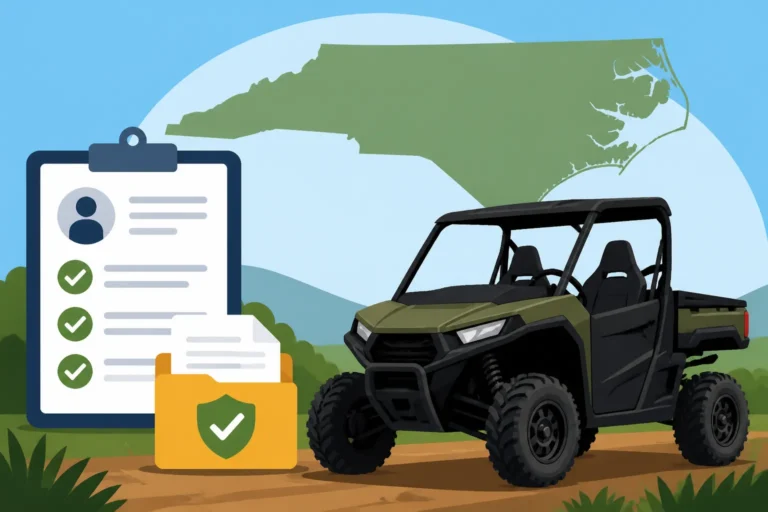
Before you can even think about getting an MUV insurance policy, your machine needs to be modified to meet North Carolina's strict MUV standards. This means ensuring it has all the required safety features, dimensions, and engine size. Once you're confident your machine qualifies, you'll need to head to the DMV for an inspection and to begin the registration process. This involves paperwork like [North Carolina MVR-60 Requirements], which is an affidavit proving your machine meets the MUV criteria.
Crucially, you absolutely cannot register your MUV for road use without providing proof of insurance. The North Carolina DMV requires this before they will issue you a license plate and registration card. So, the sequence generally goes like this: modify MUV to meet state standards, gather all necessary documentation (like proof of ownership, MCO, etc.), secure an MUV-specific insurance policy (getting a binder or proof of insurance), and then take everything to the DMV to complete the registration. You can't skip any of these steps if you want to legally drive your MUV on public roads.
The Cost of Insurance Versus the Benefits of Road Legality
Let's be real: adding a full road-legal insurance policy to your MUV is an additional expense. It's another line item in your budget for your passion. However, it's an expense that opens up a world of possibilities and provides an invaluable layer of protection. Think about the convenience: being able to legally cross a public road to get from one trail section to another, or to run a quick errand to the hardware store without fearing a hefty fine or worse, an uninsured accident. This freedom, while limited to certain road types, is a significant benefit for MUV owners.
Beyond convenience, the peace of mind that comes with knowing you're fully covered cannot be overstated. Accidents happen, and having appropriate insurance means you're not facing potentially crippling financial liabilities if you're involved in a collision on a public road. For many MUV owners who've invested in making their machine compliant—perhaps with high-quality components from companies like SuperATV—protecting that investment with comprehensive insurance makes sound financial sense. The added cost of MUV insurance truly pales in comparison to the potential costs of an uninsured accident or the fines for operating an unregistered, uninsured vehicle on North Carolina’s roads.
Disclaimer
This article is for general informational purposes only and does not constitute professional advice. Laws, prices and regulations vary by location and change over time. Consult a qualified professional for guidance on your specific situation.