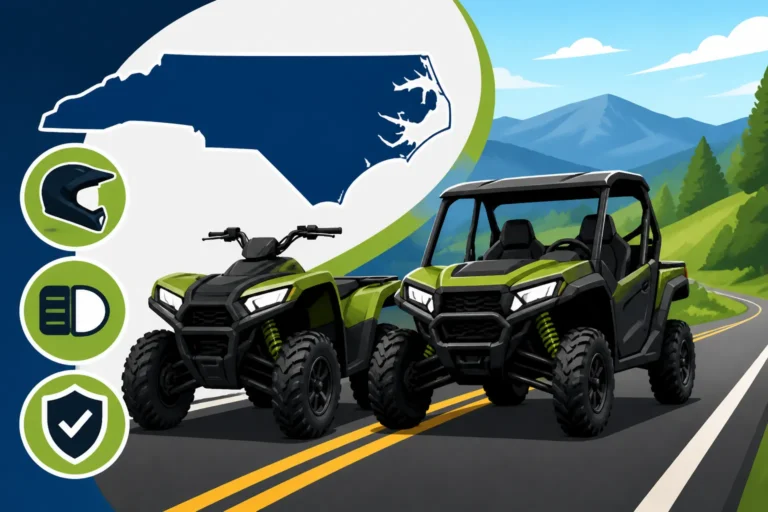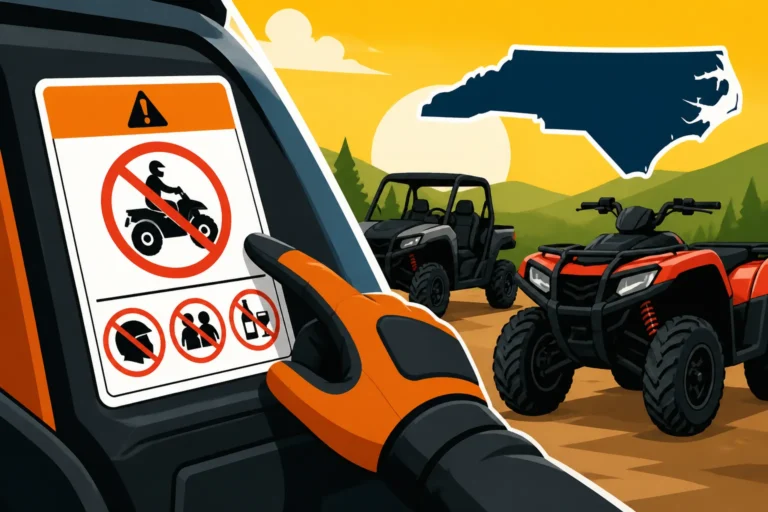
North Carolina Rules for Riding a Township Road
Understanding the rules for riding ATVs and UTVs on public roads in North Carolina can feel like navigating a maze, especially when it comes to those quieter, often unpaved township roads. Many riders assume that because a road is less traveled or seems "country," the rules might be different, but that's often not the case, leading to confusion and potential legal trouble. This guide will clarify North Carolina's stance on ATVs and UTVs on township roads, detailing the general prohibitions, narrow exceptions, and what you absolutely need to know to stay on the right side of the law.
The General Rule: Why ATVs Aren't Road Legal in North Carolina
Let's cut right to the chase: in North Carolina, your typical ATV or UTV is generally not street legal on any public road, and that includes your local township roads. It's a common misconception that less-trafficked roads, like those maintained by a township or county, somehow fall outside the purview of state law regarding vehicle registration and operation. Unfortunately, for most riders, this isn't true. The state's primary concern is safety and the distinct classification of these vehicles.
Understanding the Difference Between Off-Road and On-Road Machines
The core issue here is how North Carolina legally defines and classifies vehicles. An All-Terrain Vehicle (ATV) or Utility Terrain Vehicle (UTV) is, by its very design and legal definition, considered an off-road vehicle. Think about it: they’re built for uneven terrain, mud, rocks, and navigating trails. They have knobby tires, high ground clearance, and suspension systems designed for impacts, not smooth pavement. Their braking systems, lighting, and even their speed capabilities are optimized for off-highway use.
This fundamental difference means they don't meet the safety and equipment standards required for vehicles operating on public roadways. Cars, trucks, and even motorcycles are manufactured and equipped with features like turn signals, rearview mirrors, windshields, specific headlight and taillight configurations, and certified seatbelts that are legally mandated for on-road use. Most stock ATVs and UTVs simply don't come with all of these, or if they do, they might not meet the specific regulatory standards for public roads. This discrepancy is a huge source of frustration for riders who just want to get from one section of their property to another or access nearby trails without trailering their machine.
The Specifics of Township and Public Roads
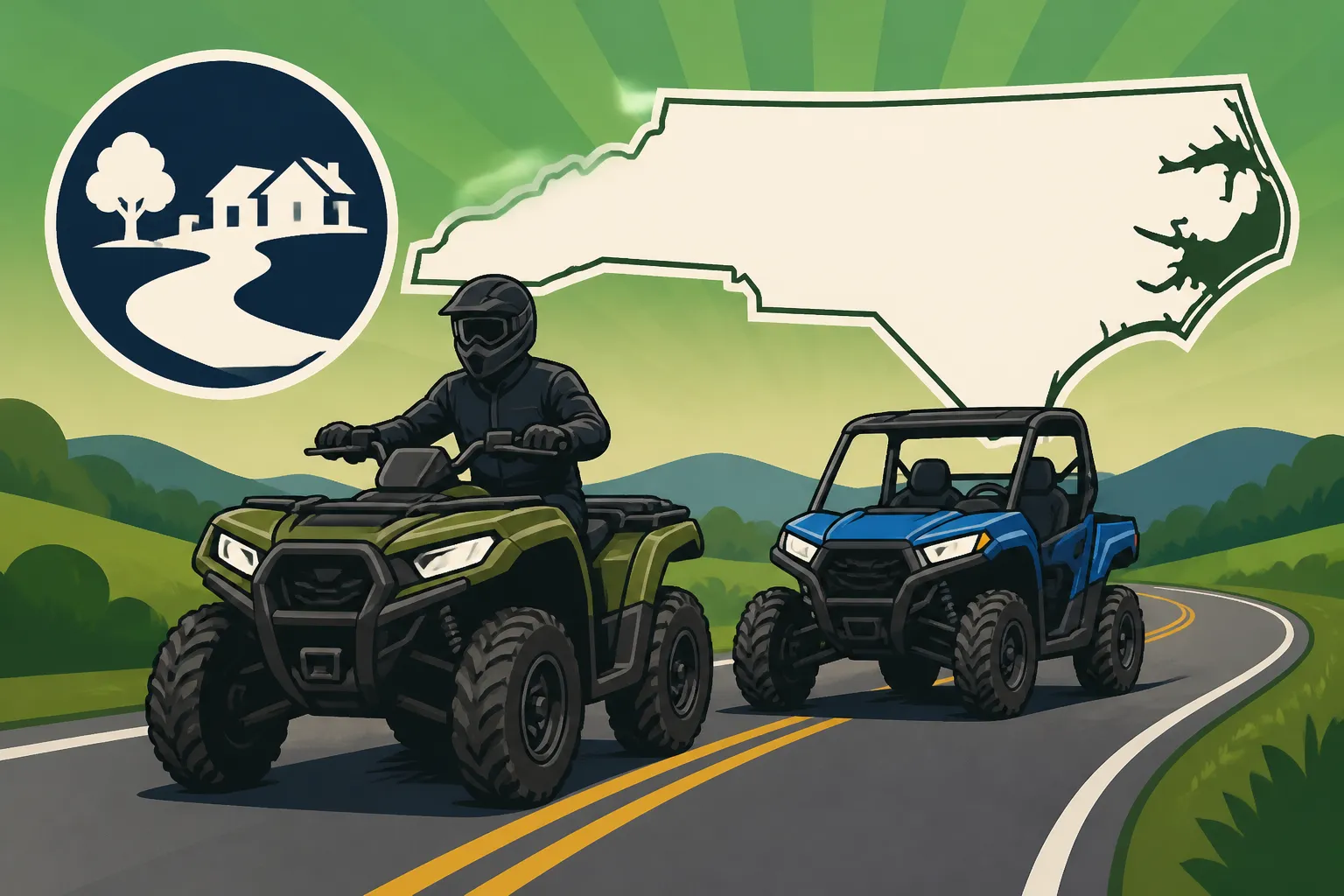
When North Carolina law talks about "public roads," it's not distinguishing between a bustling interstate highway and a quiet gravel lane managed by a local township. The definition is broad: any road, street, or highway maintained by the state, a county, or a municipality that is open to public vehicular traffic. This means that a township road, even if it's barely a paved path, falls under the same general prohibitions as a major state highway.
Driving your ATV or UTV recreationally on a township road, county road, or state highway is simply not permitted under the general rules. This applies whether you're just cruising around, heading to a friend's house a few miles down the road, or trying to connect two different sections of private land. The law doesn't care if there's no traffic or if you're being extra careful; the act itself is generally prohibited. Local law enforcement, whether it's the county sheriff's office or the State Highway Patrol, can and will enforce these rules, and ignorance of the law is rarely an acceptable excuse.
Exceptions to the Rule: When an ATV Might See a Township Road
While the general rule is "no ATVs on public roads," North Carolina does carve out a few very specific and narrow exceptions. It's crucial to understand that these aren't loopholes for recreational riding, but rather tightly defined circumstances under which an off-road machine might legitimately encounter a township road.
The Modified Utility Vehicle (MUV) Route: A Complex Path to Street Legality
For some side-by-sides (UTVs), there is a path to becoming street legal in North Carolina, but it's not easy. This is through the designation of a "Modified Utility Vehicle" or MUV. An MUV is essentially a UTV that has been heavily modified and inspected to meet specific on-road vehicle standards, allowing it to be titled and registered for street use. This is the only true street-legal option for an off-road machine in North Carolina, and it's almost exclusively applicable to UTVs, not traditional quad ATVs, due to the stringent requirements. You can learn more about this by checking out [North Carolina's Modified Utility Vehicle Route].
The list of MUV requirements is extensive and includes everything from engine size to specific dimensions and safety equipment. For instance, the machine must have an engine displacement greater than 2,400 cubic centimeters, a length of no more than 142 inches, a width of no more than 58 inches, and a height of no more than 70 inches. It also needs to be capable of exceeding 40 mph. Beyond these basic specs, it must be equipped with headlights, taillights, brake lights, turn signals, a horn, a speedometer, a parking brake, seatbelts, and a windshield. This often means buying aftermarket parts and performing significant upgrades. Companies like SuperATV offer a range of aftermarket parts that could potentially help a UTV meet some of these equipment requirements, but ensuring compliance with all the state's very specific regulations for an MUV is a significant undertaking that requires careful research and often professional installation and inspection. You'll need to obtain a [A VIN Assigned by the North Carolina DMV] for your MUV, as well as [Registering an MUV for the Road].
Once your UTV is transformed into an MUV, it must then go through the full titling and registration process with the North Carolina DMV, just like any other car or truck. This means paying [North Carolina ATV Highway Use Tax] and adhering to [North Carolina MUV Insurance Requirements]. It's a complex, often expensive, and time-consuming process that most recreational riders don't pursue because it fundamentally changes the nature of their off-road machine and its intended use. But, if you manage it, an MUV can legally travel on roads with a posted speed limit of 55 mph or less, including township roads.
The Farming Operations Exception: Limited Road Use
North Carolina law does provide a narrow exception for ATVs and UTVs used in legitimate "farming operations." This isn't a free pass to ride your quad or side-by-side on any road for any farm-related task. This exception generally allows for the operation of these vehicles on public roads only for the purpose of moving from one field or portion of a farm to another, or for hauling equipment or products related to the farming operation.
Crucially, this use is limited to "the minimum distance necessary" and requires the operator to yield to all other traffic. It is absolutely not intended for recreational use, even if you own a farm. You can't just take your UTV for a leisurely drive down the township road because you happen to live on a farm. The exception is specifically for the direct, essential business of farming. This often applies to short stretches of road, like crossing from one side of a property to another, or moving between adjacent farm plots. For more on this, you might look into [North Carolina's Farming Operations Exception] and [Riding a North Carolina Street on Farm Business]. This also means that anyone operating the machine under this exception, whether the farmer, an employee, or a family member, must be directly involved in the farm's operations at that specific time.
Crossing a Road: Quick and Direct
Another very common and often misunderstood exception is the ability to "cross" a public road. North Carolina law generally permits an ATV or UTV to cross a public street or highway, if the crossing is made at an angle of approximately 90 degrees to the road, and at a place where the crossing is safe and does not unduly interfere with vehicular traffic. The intent here is to allow riders to get from one section of private property to another that is divided by a road.
This is not a license to ride on the road for any distance, even a short one. It is strictly for a direct, immediate traversal. You cannot ride down the shoulder, or travel a block, to find a more convenient crossing point. You must cross directly from point A to point B. This rule is often used by riders whose private land is bisected by a township road or a small county road. Just like with the farming exception, the operator must yield to all traffic and ensure the crossing is done safely. This rule is designed to be as minimally disruptive and exposed to traffic as possible. Understanding [North Carolina Rules for Crossing a Road] is vital for any rider whose property abuts a public road.
What Happens If You Ride Illegally on a Township Road
Ignoring North Carolina's rules for ATVs and UTVs on township roads can lead to a host of unpleasant consequences, ranging from fines to serious legal and financial liabilities. It's not just about getting a slap on the wrist; there can be significant repercussions that impact your wallet, your driving record, and even your machine.
Penalties and Enforcement
If you're caught operating a non-street-legal ATV or UTV on a public road, including a township road, you can expect to receive a citation. While the exact fine can vary by jurisdiction and specific circumstances, it's typically treated as a non-moving violation, but it's still a real penalty. These fines can range from a couple of hundred dollars upwards, depending on any additional infractions like reckless driving or causing property damage. The primary enforcement agencies you might encounter are the North Carolina State Highway Patrol and local county sheriff's deputies. These officers are well-versed in the state's vehicle laws and don't usually differentiate between a paved highway and a dirt township road when it comes to vehicle legality. For more information on who might issue a ticket, you can refer to [Who Writes an ATV Ticket in North Carolina].
In some cases, especially if there's a history of violations, or if the operation is deemed particularly egregious or unsafe, law enforcement may even have the authority to impound your machine. Recovering an impounded ATV or UTV can involve significant towing and storage fees on top of any fines, turning a casual ride into a very costly mistake. Furthermore, if you are under 18 and riding illegally, a parent or guardian could also face legal consequences for allowing or permitting the illegal operation of the vehicle.
Insurance, Liability, and Safety Concerns
Perhaps even more critical than fines are the insurance and liability implications of riding illegally. Your standard ATV or UTV insurance policy is almost certainly an off-road policy. This means it provides coverage only when your machine is being operated in an off-road environment or on private property. The moment you take that machine onto a public road, even a quiet township road, you are likely operating outside the terms of your policy.
If you are involved in an accident on a public road while operating an unregistered, non-street-legal ATV or UTV, your insurance company will almost certainly deny coverage. This leaves you personally liable for any damages to your machine, any injuries to yourself, and, most critically, any damages or injuries you cause to other vehicles, property, or people. Imagine hitting another car or injuring a pedestrian; the financial consequences could be catastrophic, potentially leading to lawsuits, wage garnishment, and financial ruin. This immense personal liability is one of the most compelling reasons to never operate an ATV or UTV illegally on public roads. Beyond the legal and financial risks, there's the simple fact that ATVs and UTVs are not designed for road conditions. They have a higher center of gravity, different handling characteristics, and are less visible than cars. Riding them on any public road, regardless of traffic, significantly increases your risk of an accident.
Practical Advice for Navigating North Carolina Roads
Understanding the rules is one thing, but knowing how to practically apply them to your riding habits in North Carolina is another. It requires planning, responsible decision-making, and sometimes a change in how you think about accessing your favorite riding spots.
Planning Your Ride to Stay Legal
The best way to avoid legal trouble on North Carolina's township roads is to proactively plan your rides. First and foremost, assume that all public roads, including township and county roads, are off-limits for your standard ATV or UTV unless you explicitly meet one of the very narrow exceptions discussed earlier. This means that if your riding area isn't directly accessible from your property, you'll need to trailer your machine to a designated riding spot.
Always be aware of the boundaries of private property versus public roads. Many riders mistakenly believe that if a road leads directly into a field or property they own, it becomes part of their private land, but this is rarely the case if the road is maintained by a public entity. If you're unsure about the status of a particular road, contacting your local county or township administrative office can provide clarity. Also, remember that simply having landowner permission to ride on adjacent private land does not extend that permission to the public road connecting those properties. Your best bet is always to separate your off-road machine from public road use entirely.
Considering Alternatives and Gear
Given the restrictions, it's wise to explore legal and safe alternatives for your ATV and UTV riding. North Carolina has several fantastic designated off-road vehicle (OHV) trail systems within its national forests, such as the Badin Lake OHV Trail Complex or Brown Mountain OHV Trail System. These areas are specifically designed for ATVs and UTVs, offering miles of challenging and enjoyable trails without the worry of breaking the law on public roads. You'll need to purchase permits to ride these trails and adhere to their specific rules, but it’s a fully legitimate way to enjoy your machine. Many riders find that a dedicated trip to one of these locations is far more rewarding and stress-free than trying to skirt the law on local roads. For ideas, check out [Where to Ride an ATV in North Carolina].
Regardless of where you ride, whether on private property, designated trails, or if you've gone through the rigorous MUV conversion process, always prioritize safety. Wear appropriate safety gear, including a DOT-compliant helmet, eye protection, sturdy boots, gloves, and long clothing. Regularly inspect your machine for mechanical issues. And if you are considering the MUV route for a side-by-side, remember that in addition to the strict regulatory requirements, you'll need to equip your machine with appropriate street-legal accessories. Companies like SuperATV offer a vast catalog of parts from windshields to turn signal kits, but fitting these doesn't automatically make your UTV an MUV. You still need to meet all state requirements and register it with the DMV. The bottom line is to ride smart, ride safe, and always ride within the bounds of the law.
Disclaimer
This article is for general informational purposes only and does not constitute professional advice. Laws, prices and regulations vary by location and change over time. Consult a qualified professional for guidance on your specific situation.