When a Farm Employee May Use a Public Road
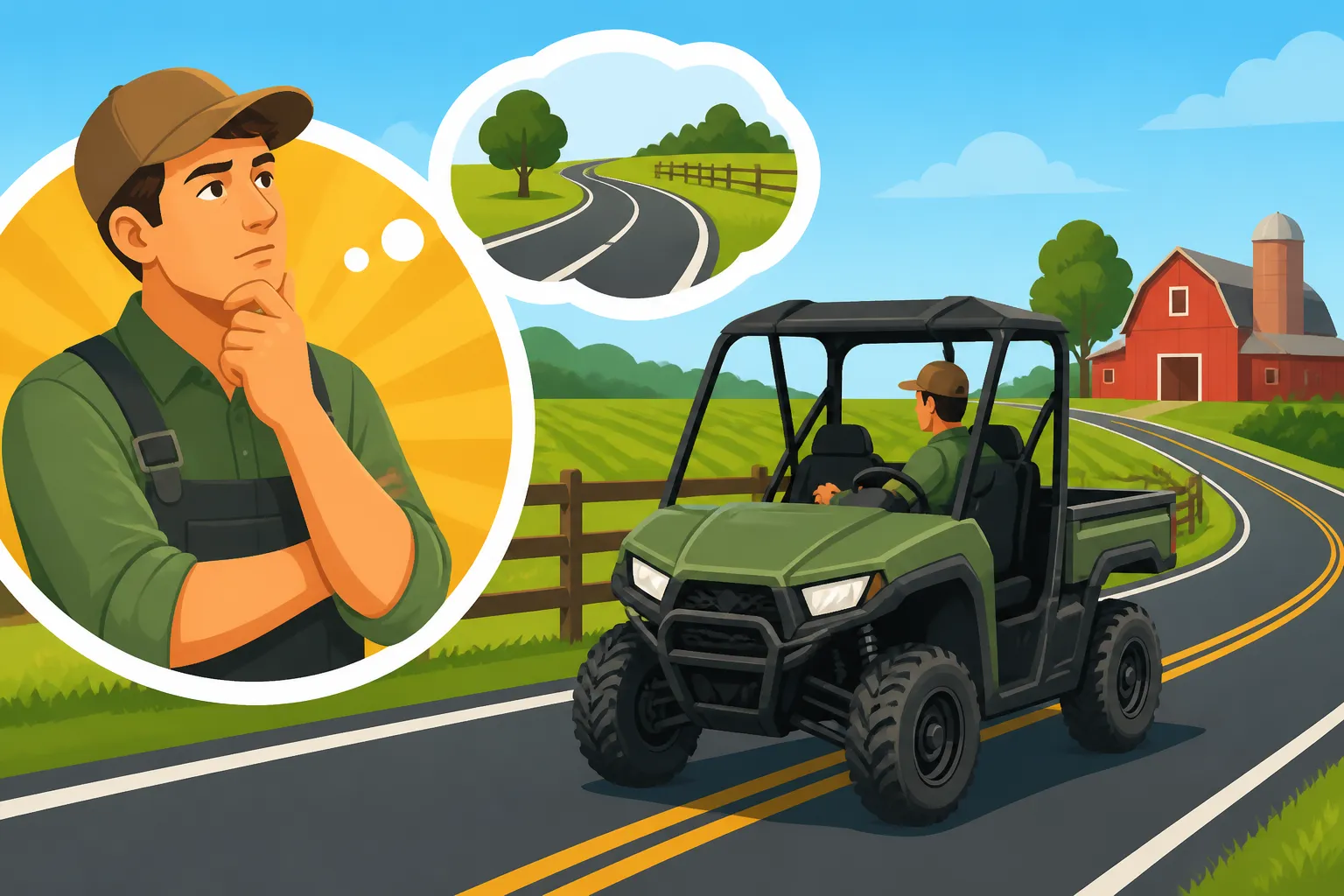
It's a common dilemma for farmers and their teams across North Carolina: you've got fields on both sides of a little country road, or you need to haul a small piece of equipment from the barn to a distant pasture. Your ATV or UTV is the perfect tool for the job – quick, nimble, and built for rough terrain – but what about that stretch of pavement? This guide is here to untangle the nuances of North Carolina law, helping you understand precisely when a farm employee can legally and safely use a public road with an ATV or UTV, and what responsibilities come with that privilege.
The North Carolina Farm Operations Exception: What It Really Means
North Carolina law, recognizing the practical realities of agricultural life, does offer a specific exception that allows ATVs and UTVs to operate on public roads under certain conditions related to farming. This isn't a free pass for anyone with a tractor cap to hit the highway; it's a carefully defined allowance designed to support legitimate farming activities. Understanding the scope of this exception is crucial to staying on the right side of the law.
Defining "Farm Business" for ATV Use
When the law talks about "farm business," it's referring to activities that are directly and integrally related to the operation, cultivation, and maintenance of a farm. This isn't about running errands to town or taking a scenic route to a friend's house. Think practical, on-the-ground agricultural tasks. For example, using your UTV to transport a few bales of hay from one field to another, checking irrigation lines that run alongside a public road, or moving fencing supplies to a distant corner of your property would typically fall under this definition. You might be carrying a sprayer filled with herbicide or a toolbox for equipment repairs. The key here is that the machine is being used as a utilitarian farm implement, directly contributing to the daily functions of the farm. If you're out scouting for deer or just enjoying a Sunday drive, even if it's on a quiet rural road, that does not qualify as farm business under this exception. The purpose of the trip must be unequivocally tied to the agricultural operation.
Consider the scenario of a farmer, Mr. Jones, who has two cornfields separated by a county road. His UTV, perhaps equipped with a heavy-duty cargo bed from a company like SuperATV to handle the rough loads, is perfect for hauling small loads of seed from his barn to the far field. This is clearly farm business. However, if Mr. Jones decides to take the same UTV to the local hardware store to buy nails for a personal project at home, that's not farm business, and he'd be in violation of the law. The intent and action must align with direct farming activities. The [North Carolina's Farming Operations Exception] exists solely for the efficient conduct of farming, not for general transportation.
Who Qualifies as a "Farm Employee"?
The "farm employee" aspect is just as important as the "farm business" definition. This exception isn't just for the registered owner of the farm; it extends to anyone actively engaged in the farm's operations. This includes the farmer themselves, their immediate family members who work on the farm, and any hired hands or seasonal workers. The critical factor is that the individual must be employed by or directly involved in the farm's operational tasks, and using the ATV or UTV in the course of performing those duties. If a neighbor is simply borrowing your ATV for their personal use, even if they live on a farm themselves, they wouldn't qualify under your farm's exception.
Imagine Sarah, a college student who works part-time on a large hog farm outside Raleigh. Her job often involves riding an ATV between different barns to monitor feed levels or move small tools. When she needs to cross a county road to get from Barn A to Barn B, she would be considered a farm employee conducting farm business. Her employer could provide documentation or a simple letter to confirm her role, which could be helpful if she were ever stopped by law enforcement. This distinction helps to prevent recreational riders from misrepresenting their activities. The law is designed to support legitimate agricultural workers, not to open up public roads for casual ATV use. For more details on this, you can look into [Who in the Household May Ride on Farm Business].
Navigating Public Roads: Limitations and Requirements
Even when you meet the criteria for farm business and employee status, operating an ATV or UTV on a public road in North Carolina comes with strict limitations and specific equipment requirements. This isn't like driving a regular vehicle; you're operating under an exception, and that means being extra vigilant and prepared.
Which Roads Are Actually Open to Farm ATVs?
This is where many riders get confused. The farm exception primarily applies to local secondary roads, often those quiet, two-lane country roads that connect fields or traverse rural properties. These are typically unpaved roads, gravel roads, or lightly traveled paved roads with lower speed limits. The law is not intended to allow ATVs on major highways, interstates, or heavily trafficked urban or suburban streets. Common sense plays a huge role here: if a road has a high volume of traffic or a speed limit above, say, 35-45 mph, it's highly unlikely to be covered by the farm exception. Even crossing such a road can be problematic.
Consider a hypothetical situation: a farm employee needs to move an ATV from a pasture on one side of a four-lane divided highway to a barn on the other. Even if it's "farm business," attempting to cross or drive on such a highway would almost certainly be illegal and extremely dangerous. The risk to both the ATV operator and other motorists is simply too high. In such cases, trailering the ATV across the highway would be the only safe and legal option. The intent of the exception is for incidental, short-distance travel on low-traffic roads. For a deeper dive into this, you can refer to [Which Roads the Farm Exception Actually Opens]. Always prioritize safety and err on the side of caution when considering road use.
Essential Equipment for Farm ATVs on Public Roads
When you're operating an ATV or UTV on a public road, even under the farm exception, your machine needs to be visible and equipped for safe interaction with other traffic. This isn't about making your farm machine "street legal" in the same way a Modified Utility Vehicle (MUV) would be, but about meeting basic safety standards for brief road use. At a minimum, your ATV or UTV should have working headlights, taillights, and brake lights. These are absolutely non-negotiable, especially if there's any chance you'll be operating during dawn, dusk, or in low-visibility conditions. Reflectors, particularly on the rear and sides, are also vital to enhance your visibility to other drivers.
Beyond basic lighting, a slow-moving vehicle sign, clearly displayed on the rear of your machine, is highly recommended and often expected. This triangular orange sign immediately alerts drivers behind you to your slower speed, giving them more time to react. While not always explicitly mandated for all farm ATV road use, it's a best practice that can prevent accidents and demonstrate your commitment to safety. Additionally, consider enhancing your machine's visibility with aftermarket accessories. A company like SuperATV offers a range of LED light bars, upgraded mirrors, and even turn signal kits that, while not making your ATV a street-legal car, can significantly improve its visibility and your ability to see approaching traffic when you do need to traverse a public road for farm work. The more visible and predictable you are to other drivers, the safer everyone will be. For more information on general equipment rules, check out [North Carolina Equipment Rules for ATVs].
Operational Rules and Driver Conduct
When an ATV or UTV is used on a public road for farm business, the operator isn't exempt from basic traffic laws. You must still adhere to speed limits, yield to oncoming traffic, and obey all traffic signs and signals. Remember, you're operating a vehicle that is often slower, less visible, and has different handling characteristics than a typical car or truck. Therefore, extreme caution is paramount. Always stay as far to the right side of the road as safely possible, allowing faster traffic to pass. Do not impede the flow of traffic any more than absolutely necessary. If there's a safe shoulder, utilize it.
Regarding passengers, most ATVs are designed for a single rider. Carrying an extra passenger on a single-rider ATV is generally illegal and extremely unsafe, whether on private land or a public road. If your UTV is a factory two-seater or multi-seater, then carrying a passenger involved in the farm work (e.g., another farm employee) might be permissible, but always ensure they are seated properly and wearing appropriate safety gear. Recreational passengers have no place on a public road. The goal is to minimize your time on the public road and operate with the utmost responsibility, treating the road as a shared space where other vehicles have priority. Familiarize yourself with [North Carolina Rules for Riding a Public Street] for farm use, as this will help you understand the expectations for your conduct.
Legalities, Risks, and Best Practices for Farm Use
Understanding the "how-to" is only part of the equation; it's equally important to grasp the legal and practical risks associated with using ATVs on public roads, even under the farm exception. Being prepared for various scenarios and adopting best practices can prevent headaches, fines, and potentially serious accidents.
Understanding Insurance and Liability
This is a critical area that many farm operators overlook. Your standard personal ATV insurance policy might not cover you if you're involved in an accident on a public road, even if you're technically operating under the farm exception. Personal policies are often designed for off-road recreational use and may have exclusions for public road operation. Similarly, your farm liability insurance policy might cover activities on your farm property, but its coverage for vehicles on public roads can vary widely. The stakes are high: if you cause an accident while operating your ATV on a public road and you're not adequately insured, you could be personally liable for significant damages, including medical costs, property damage, and legal fees.
It's absolutely imperative to speak with your insurance agent to clarify your coverage. Explain precisely how and when your farm employees use ATVs or UTVs on public roads. You may need to add a specific rider or a separate policy to ensure you have comprehensive liability and property damage coverage for such scenarios. Don't assume you're covered; verify it. A clear understanding of your insurance is one of the most important aspects of responsible farm operations that involve crossing or using public roads. This proactive step can save you immense financial and legal heartache down the line. Check what North Carolina generally requires in terms of [North Carolina ATV Insurance Requirement], though farm-specific situations may differ.
Avoiding Misinterpretation and Enforcement
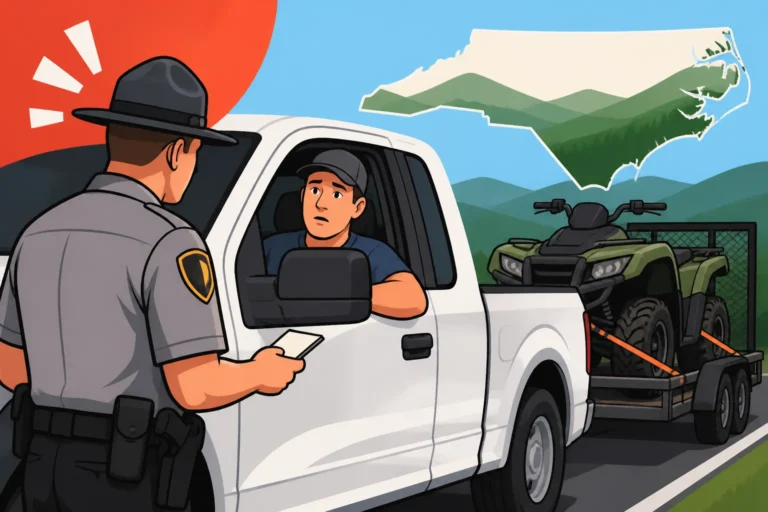
Even with the farm exception, law enforcement officers have discretion, and interpretations can vary. It's not uncommon for an officer unfamiliar with the specifics of farm law to stop an ATV on a public road. If you're pulled over, remain polite, calm, and cooperative. Clearly and concisely explain that you are a farm employee (or the farmer) engaged in legitimate farm business, stating the specific task you are performing. If you have any documentation – like farm ownership papers, a business card, or an employment letter – it might be helpful, though not strictly required for a stop.
The best defense is prevention: ensure your ATV is equipped with all necessary safety features, that you are following all operational rules, and that your use of the public road is genuinely minimal and for a clear farm purpose. Anything that looks like recreational riding will raise red flags. Be mindful of areas where non-farm ATV use is common, as officers might be more vigilant there. Ignorance of the law is no excuse, and if you're deemed to be operating outside the scope of the farm exception, you could face fines for illegal road use. For information on potential consequences, you can refer to [Who Writes an ATV Ticket in North Carolina] and [North Carolina Fines for an ATV Violation].
Best Practices for Responsible Farm ATV Road Use
To minimize risks and ensure compliance, establish clear best practices for any farm employee using an ATV or UTV on a public road.
- Plan Your Route: Before leaving your property, plan the shortest, safest route on public roads. Identify the least-traveled roads and times of day. Can you find an alternative path on private property that avoids public roads entirely?
- Maintain Your Machine: Regularly inspect your ATV or UTV, especially focusing on brakes, tires, headlights, taillights, and reflectors. Ensure everything is in perfect working order before heading onto a public road. A breakdown on a road is not only inconvenient but also dangerous.
- Wear Safety Gear: Even for short trips, insist that all operators and any permitted passengers wear appropriate safety gear. This includes a DOT-approved helmet and eye protection. While the farm exception focuses on the vehicle's purpose, personal safety gear is paramount for the operator. [North Carolina Helmet Law for ATV Riders] still applies to individuals, regardless of the vehicle's purpose.
- Visible Identification: Consider having clear signage on the ATV itself, perhaps a magnetic sign, indicating "Farm Use" or the farm's name. This isn't legally required but can immediately signal your purpose to other drivers and law enforcement.
- Educate Employees: Ensure all farm employees who might use an ATV on a public road are fully aware of the rules, limitations, and best practices. Regular refreshers can prevent misunderstandings.
- Avoid Distractions: Just like driving a car, avoid distractions while operating an ATV or UTV on a public road. Stay focused on the road, traffic, and your surroundings.
By adhering to these guidelines, farm employees can confidently and legally leverage their ATVs and UTVs for necessary farm operations while ensuring safety and compliance with North Carolina law.
| Feature / Scenario | Recreational ATV Use on Public Road | Farm ATV Use on Public Road (Under Exception) |
|---|---|---|
| Legality | Generally illegal; exceptions for MUVs (registered). | Permitted only for direct farm business. |
| Road Types | MUVs on roads 55 mph or less; other ATVs prohibited. | Primarily local, low-traffic, secondary roads. |
| Operator | Must meet MUV requirements; other ATVs prohibited. | Farmer, immediate family, or farm employee. |
| Purpose | General transportation, leisure (for MUVs). | Directly related to agricultural operation (e.g., hauling feed, checking fields). |
| Required Equipment | MUVs: Extensive road-legal equipment (lights, signals, speedometer, etc.). | Basic lighting (head/tail/brake lights), reflectors, slow-moving vehicle sign (recommended). |
| Passengers | MUVs: As designed; other ATVs: typically none. | Only if machine designed for it and passenger is part of farm work. |
| Insurance | Typically specific road-use ATV insurance (for MUVs). | Farm liability and specific ATV road-use coverage should be verified. |
| Consequences of Misuse | Fines, tickets, vehicle impoundment. | Fines, tickets, loss of privilege, liability for accidents. |
Disclaimer
This article is for general informational purposes only and does not constitute professional advice. Laws, prices and regulations vary by location and change over time. Consult a qualified professional for guidance on your specific situation.