Adults Who Take the Safety Course Voluntarily
Adults Who Take the Safety Course Voluntarily
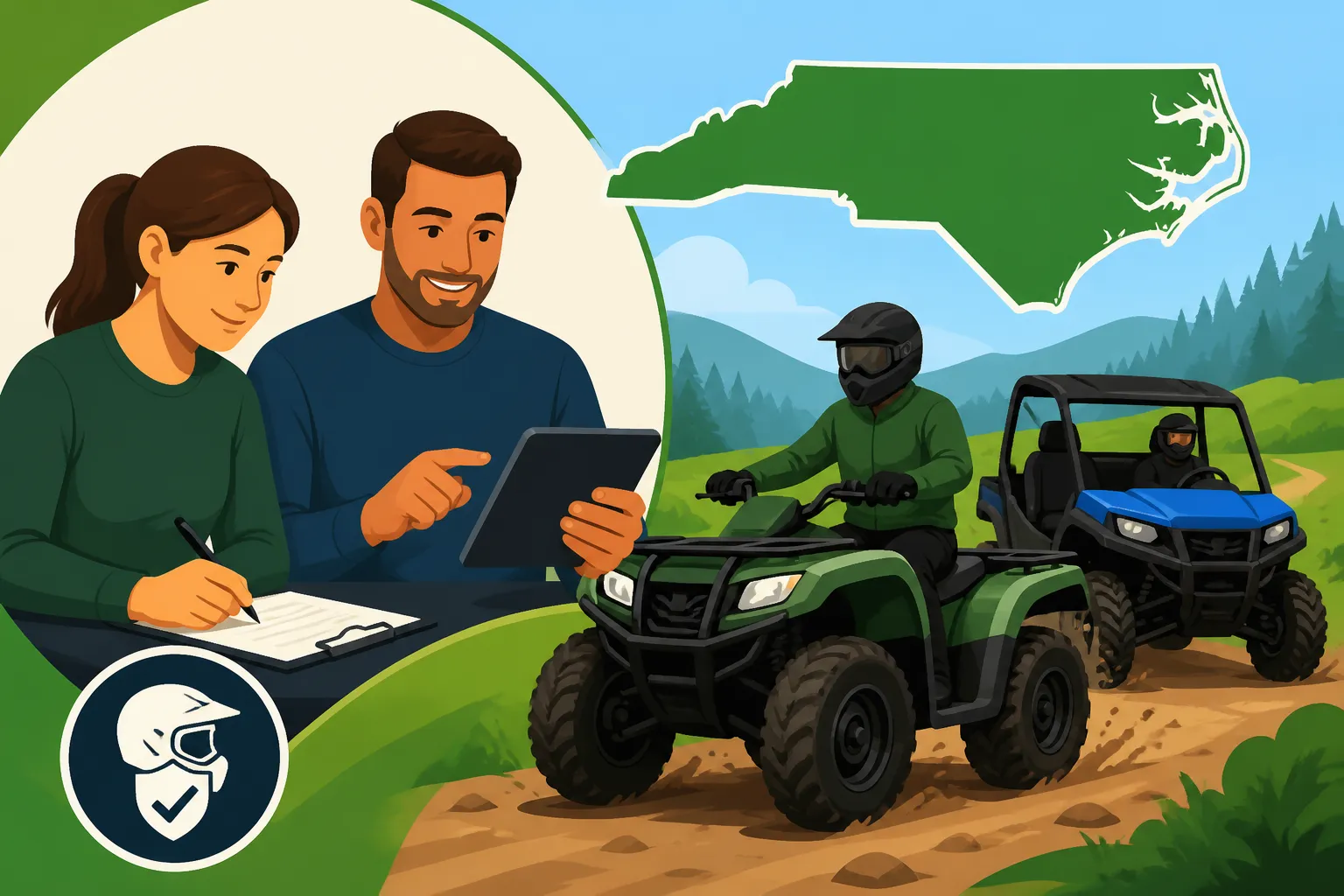
Adults who ride an ATV or UTV in North Carolina may wonder whether a safety course is worth taking if the state does not require it for them. The answer depends on your birth year and where you ride. A voluntary course can build practical skills, but it does not replace a trail permit or other rules.
When North Carolina requires a safety certificate
North Carolina’s safety-certificate requirement is tied to birth year, not to whether someone is a child or an adult. Riders born on or after January 1, 1990 generally need to complete an approved ATV safety course to operate an ATV on covered public lands. That means an adult can still be required to have a certificate if their birth date falls on or after the cutoff.
Adults born before January 1, 1990 are generally not required to take the course under this birth-year rule. They can still choose to take it voluntarily. For more detail on the cutoff and who it applies to, see North Carolina Safety Certificate Birth Year Rule, Who Needs a North Carolina Safety Certificate, and North Carolina Rules for Riders Born On or After 1990.
The distinction is easy to miss: being an adult does not automatically exempt a rider born on or after the cutoff. On the other hand, an adult born before the cutoff does not have to take a course just to satisfy that particular requirement. The state’s certificate rules and the rules for the land you plan to ride are separate questions, so check both before heading out.
A safety certificate is not the same thing as a permit. A certificate shows that a rider has completed an approved course; a permit is an access requirement set by the land manager. For example, riding a forest trail may require a permit even if you already have your certificate. Review Do You Need a Permit for North Carolina Forest Trails? for the separate permit question, and check current requirements with the agency managing your riding area.
| Your situation | General certificate takeaway | What to check next |
|---|---|---|
| Born before January 1, 1990 | The birth-year rule generally does not require a certificate | Whether the riding area requires a permit or has other rules |
| Born on or after January 1, 1990 | An approved certificate is generally required on covered public lands | Which courses are approved and what proof to carry |
| Unsure whether a course qualifies | Do not assume any online or in-person class counts | Confirm approval with the relevant North Carolina authority |
| Riding somewhere other than public land | The public-land certificate rule may not answer every question | Follow the property owner’s requirements and applicable law |
These are general guideposts, not a substitute for checking the rule that applies to a specific trail, forest, or property. Requirements can differ by location and may change. The North Carolina safety-certificate information and the land manager’s current notices are the best places to confirm what you need before a ride.
Why take the course if you do not have to?
A voluntary course can be useful even when it is not needed to meet the birth-year requirement. Adults may have years of general driving experience without much experience on an ATV. These machines respond differently from cars and trucks, especially on slopes, loose surfaces, ruts, and uneven ground. A course can help riders think through those differences before they meet them on a trail.
Course content may cover safe operating habits, terrain awareness, protective equipment, basic controls, and ways to reduce the chance of a rollover or collision. The exact lessons depend on the provider and course format. Check What an ATV Safety Institute Course Covers for a closer look at the kinds of subjects a course may address, and verify that a course is approved if you need it to satisfy North Carolina’s requirement.
The value is not limited to learning how to operate the throttle and brakes. A good course can reinforce habits that are easy to overlook when riding with friends or following a group: leaving enough stopping distance, slowing down when visibility is poor, choosing a line that matches your skill level, and avoiding a maneuver that feels beyond your ability. That preparation matters whether you are a first-time rider or an experienced adult returning to the sport after a long break.
A course may also give you a structured way to ask questions. If you are new to a particular machine, uncertain about passenger rules, or riding with younger family members, use the course to clarify what the machine can safely do and what it cannot. For legal questions, still check the relevant rules separately. Training is not permission to ride somewhere that is closed or restricted.
Taking a course voluntarily does not automatically make a rider eligible for every trail, remove other safety obligations, or guarantee that another state will recognize the certificate. North Carolina’s certificate rule is its own requirement; other places may use different standards. If you plan to ride outside the state, check that location’s rules rather than assuming your North Carolina course will satisfy them.
Choosing a course and using the certificate
If you decide to take a course, start by confirming that it is recognized for the purpose you have in mind. This is especially important for riders born on or after January 1, 1990, who need a certificate to meet the applicable public-land requirement. A course can be worthwhile for learning even if it is not approved for that legal purpose, but the two outcomes are not interchangeable.
North Carolina’s approved-course requirements are worth checking before you register. Use Courses the Commissioner of Insurance Has Approved and North Carolina ATV Safety Certificate Requirements to understand the approval question, then confirm the current details with the relevant official source or course provider. Do not rely only on a course advertisement that says “ATV safety”; that wording alone may not establish that it meets the state’s requirement.
Before signing up, ask practical questions:
- Does the course cover the type of machine you ride, such as an ATV or UTV?
- Is it approved for North Carolina’s certificate requirement, if you need a certificate for that reason?
- What proof of completion will you receive, and how should you keep it?
- Does the course involve hands-on practice, online instruction, or both?
- Are there prerequisites or equipment requirements?
Course format can affect how useful the experience feels. Online instruction may suit a rider who wants a flexible introduction, while hands-on practice can provide an opportunity to work through controls and riding situations with an instructor. If you have a particular concern—such as riding on hills, managing a machine with a passenger, or handling loose terrain—ask whether the course addresses it.
After completing an approved course, keep your proof of completion accessible. Before riding, confirm what form of documentation the land manager or enforcement officer expects. [Carrying a Safety Card on a North Carolina Ride] can help you think through the practical question of having proof available. Keeping a clear record is sensible even if you are an adult who took the course voluntarily and is not required to carry a certificate under the birth-year rule.
Remember that the certificate addresses training, not every part of trip preparation. You may still need a forest permit, and your machine and riding behavior must comply with the rules for the specific place. Check trail status, permit requirements, and any equipment or rider restrictions before you travel. A course does not open a closed trail, authorize riding off a marked route, or replace permission to ride on private land.
For adults born before the cutoff, the decision is straightforward: the course may be optional under the state’s birth-year rule, but it can still be a practical investment in safer habits. For adults born on or after the cutoff, first confirm that the course is approved and that you meet the certificate requirement for your intended riding area. In either case, treat training, permits, and local riding rules as separate parts of the same preparation.
Disclaimer
This article is for general informational purposes only and does not constitute professional advice. Laws, prices and regulations vary by location and change over time. Consult a qualified professional for guidance on your specific situation.