Guided ATV Tours in North Carolina
Planning a guided ATV tour in North Carolina can be harder than picking a machine: tours may use private parks, forest trails, or roads, and each has different access rules, costs, and skill demands. This guide explains how tours work, what to ask before booking, and how to choose an outing that fits your group, experience, and plans.
What a Guided ATV Tour Includes
A guided tour usually pairs a rented machine with a planned route and a guide who leads the group. The exact package varies. Some outings are guided rides on a trail network; others are tours on private land, scenic excursions, or experiences that combine riding with stops or other activities. The word “tour” alone does not tell you where you will ride or what is included.
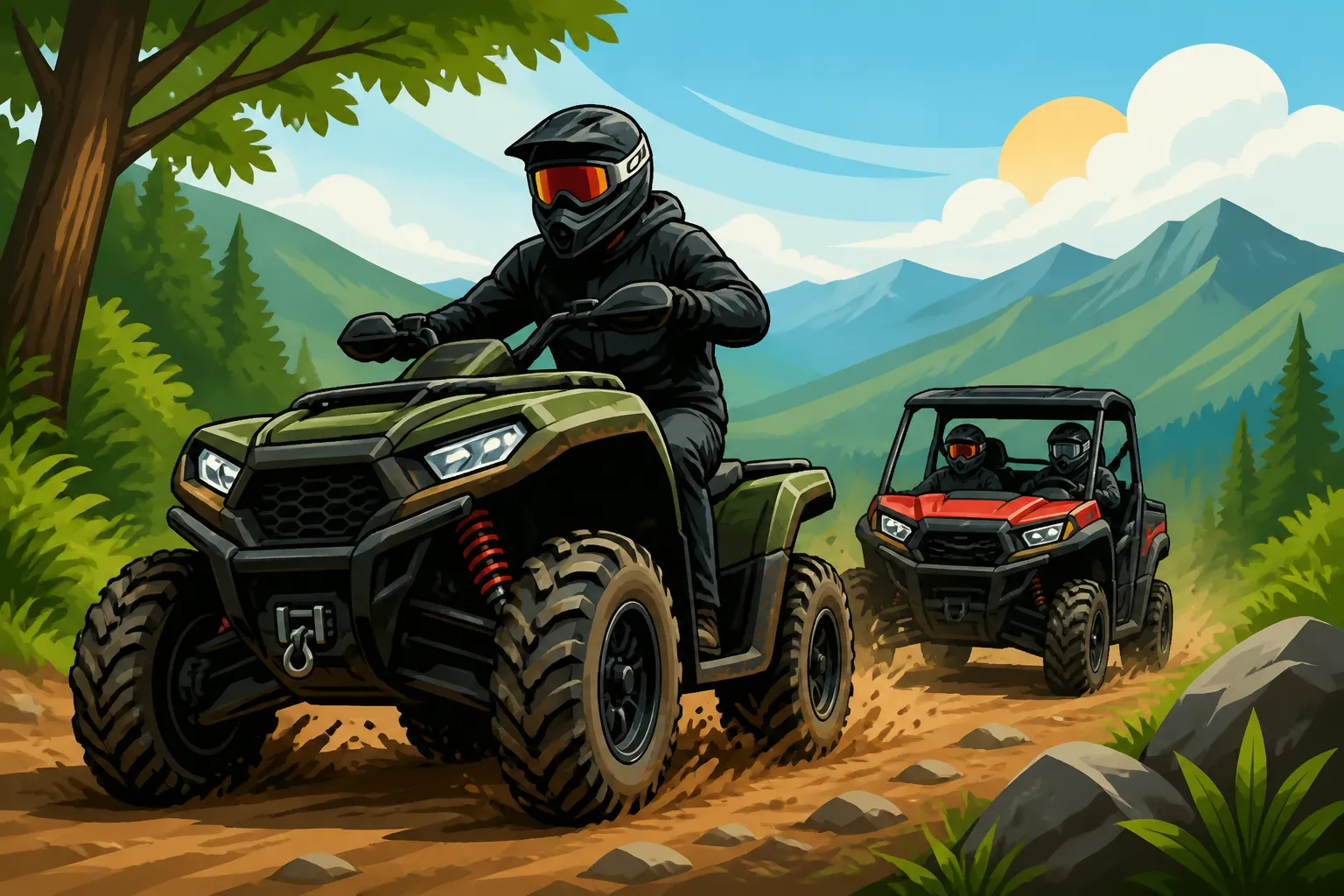
Before booking, confirm whether the experience provides an ATV, a side-by-side UTV, or a choice of both. An ATV is generally ridden astride, while a UTV is driven from a seat and often has a steering wheel, seat belts, and room for a passenger. A UTV tour can suit people who prefer not to balance a quad, but its larger size affects where it can go. Check the vehicle description rather than relying on photos or a general listing title.
A tour package may include some or all of the following:
- The machine and a pre-ride orientation
- A guide who leads the group
- A helmet or other protective gear
- Fuel during the outing
- Access to a private riding area or an approved trail route
- A passenger seat, if the machine is designed for one
- A waiver, safety briefing, or basic instruction
- A shuttle, meal, or scenic stop, where offered
Do not assume that “guided” means every expense, accessory, or trail permit is covered. It also does not mean the ride is tailored to your skill level. The operator may require drivers to meet age or license rules, limit passengers, set a minimum group size, or use a route that is unsuitable for a very young child or a nervous first-time rider.
A useful way to think about tour choices is to compare the whole experience, not just the machine:
| Tour format | What it often involves | Best fit | Ask before booking |
|---|---|---|---|
| Private-property trail ride | A guide leads a route on an operator’s land or a permitted private venue | Riders wanting a controlled setting | Is the route beginner-friendly, and how long is the ride? |
| Forest-area ride | A guided outing that may use an authorized route near public land | Riders seeking a more rugged, natural setting | Which trails are included, and are permits covered? |
| Scenic guided excursion | A route planned around views, stops, or local landmarks | Groups that value the outing as much as the riding | How much time is spent driving versus stopped? |
| Side-by-side tour | A driver operates a UTV, often with a passenger | Couples, families, or riders who prefer a seated vehicle | Who may drive, how many passengers fit, and what safety gear is provided? |
| Self-guided rental | A machine is rented without a tour leader | Experienced riders with a route and access plan | Where may the machine legally be used, and what support is available? |
That last distinction matters. A rental does not automatically include permission to ride a public trail, and a tour does not automatically include every permit needed for every location. Ask the operator to describe the actual route and what the booking covers.
For a broader comparison of rental formats, see [Renting a Side-by-Side in North Carolina] and North Carolina Rentals That Allow Forest Trails. If you are comparing an outing with taking a machine out on your own, North Carolina Rentals Versus Buying a Machine can help clarify what you are paying for: a short-term experience, ongoing access, or ownership.
Where Tours Operate and How the Setting Changes the Ride
North Carolina offers very different riding environments, from rolling Piedmont terrain to mountain routes. But a tour’s location and access arrangement matter more than a broad regional label. A tour advertised as being “near a forest” may use private property, an authorized trail, or a combination of routes. It does not necessarily mean riders can enter any nearby public land.
Private parks and managed riding areas
A private riding area can offer a defined route, a place to check in, and staff who explain local procedures. Terrain may still vary considerably: a managed venue could have easy paths, steep sections, mud, rocks, or narrow turns. “Private” is not a guarantee that the route is gentle or that every rider can complete it comfortably.
Ask whether the route is selected based on ability, whether the group stays together, and what happens if someone wants to turn back. Some operators may offer different ride lengths or route choices, but availability depends on the specific business and conditions. Find out whether the tour stays within one property or travels between locations.
Tours near public forest trails
A tour close to a national forest or other public land may sound like a direct way to ride forest trails, but access is controlled. Not every road, trail, or forest area is open to motor vehicles. Routes can have seasonal operating windows, permit requirements, closures, and machine restrictions. A guide should be able to explain the route being used and whether it is authorized for the type of vehicle in the tour.
If the outing is at or near Uwharrie, Brown Mountain, or Wayehutta, check the route and current access details directly with the operator and the relevant land manager. Conditions and closures can change, and a guide’s route may not cover all the trails a visitor sees on a map. The general North Carolina Forest OHV Permits information and North Carolina Trail Conditions Before You Ride are useful background, but ask which requirements apply to the specific tour.
Mountain and scenic rides
Mountain scenery can come with uneven ground, narrow trails, steep grades, changing weather, and slower travel. A scenic ride might include a viewpoint or a stop, but the route can still require attention and steady machine control. Fog, rain, fallen branches, or trail damage may affect the ride or lead to a change of route.
Ask how the operator handles poor weather and trail closures. A tour may proceed in light rain, move to another route, be delayed, or be canceled under its own policy. Do not assume you will receive a refund or a different ride time unless the booking terms say so.
Tours outside the mountains
Piedmont rides may involve different terrain, such as clay, wooded paths, open areas, or rolling ground. Wet conditions can make clay slippery and muddy, while dry conditions may create dust. A route that sounds easy in a description can feel more demanding when the surface is loose or visibility is reduced.
If the ride is near a lake or other recreation area, confirm whether the machine stays on designated riding routes. Proximity to water does not mean ATVs can use a beach, shoreline, road, or access lane. Read North Carolina Rules for Riding a Beach if beach access is part of your question; a tour operator should identify exactly where its route goes.
Choosing a Tour for Your Group
The right tour depends on who will drive, who will ride as a passenger, and how comfortable everyone is with rough terrain. Be candid about experience when you contact the operator. A first ride can be enjoyable, but it is easier to make a good choice when the tour is designed for beginners rather than when the group hopes to keep up with an advanced ride.
Match the machine to the riders
An ATV requires the rider to steer with handlebars, balance, shift weight, and respond to the terrain. A UTV is driven from a seated position and may allow passengers to ride beside or behind the driver, depending on its design. Neither format is automatically safer or easier for every person. The machine, route, speed, passenger arrangement, and rider’s judgment all matter.
For a group with mixed preferences, ask whether everyone can ride in the same type of machine and remain together. Some businesses may have different vehicle options, while others operate only one kind. A passenger should not assume that a spare seat is available: machines have a manufacturer-designed seating capacity, and operators may have additional restrictions.
Think about experience, fitness, and comfort
A beginner-friendly tour should explain controls and expectations before riding, allow time for questions, and use a route suited to the group. Ask how long the orientation lasts and whether a guide demonstrates basic handling. If the route includes climbs, water, rocks, ruts, or mud, ask how difficult those features are and whether they can be avoided.
Riding is physical even when the machine has an engine. A rider may need to brace, steer against uneven ground, sit through vibration, and manage heat, dust, or cold. Anyone with a mobility limitation, injury, balance concern, or medical condition should discuss the ride with a qualified professional and ask the operator about the physical demands before paying.
For first-time riders, [North Carolina Tours for Beginners] offers related planning advice. Families can also compare the considerations in North Carolina Tours for Families, especially if the group includes children who may ride as passengers rather than drivers.
Check age and driver requirements
Rental and tour companies set their own rules within applicable law. Driver age, license requirements, passenger age, and supervision policies can vary by machine and operator. A listing’s general description may not include every condition, so confirm eligibility directly before booking. Do not treat a child’s ability to sit in a vehicle as proof that the child meets the operator’s passenger rules.
For North Carolina legal context, review North Carolina Rules for a Rented Machine and North Carolina Rental Age and License Rules. Then ask the specific operator how those rules apply to its machines and route. If a tour crosses a state line or operates in another state, rules may change along with the route.
Consider the pace and group size
A guided tour may be a single group, a private booking, or a ride that joins other customers. Group size can affect how often the tour stops, how much individual instruction is possible, and whether a slower rider feels rushed. Ask whether the group has a lead guide, a second guide at the back, or a way to communicate if someone needs help.
If one person in the group is new or uneasy, find out whether the guide can adapt the route without separating the group. A sensible tour should explain what the guide can and cannot change. If the operator says the group must keep a certain pace or complete a particular route, decide whether that is comfortable for everyone before reserving.
Booking, Costs, and What to Confirm
Tour costs are not always directly comparable. One operator may quote a per-machine amount, another may charge by rider or by time, and a package may include gear or access that another listing treats separately. For named providers and booking platforms, prices and policies can change; check the current booking details with the provider before committing.
Polaris Adventures and Viator can be starting points for finding or comparing experiences, where relevant listings are available. A marketplace listing is not a substitute for the operator’s current terms. Confirm the actual business running the ride, the exact location, the route, and the cancellation and safety requirements with the party responsible for delivering the tour.
Ask what the price covers
Before paying, request a clear breakdown of what is included and what may cost extra. This can include:
- Whether the quote is for a driver, a machine, a passenger, or a group
- The ride duration and whether check-in or instruction is included in that time
- Whether fuel, protective gear, trail access, and required permits are included
- Any passenger, additional-driver, or vehicle upgrade charges
- Whether a refundable deposit or card authorization is required
- Potential damage, cleaning, late-return, recovery, or fuel charges
- Whether gratuity is optional, expected, or already included
If the listed duration is a “two-hour tour,” ask whether that means two hours on the trail or a total visit that includes check-in, paperwork, and the briefing. Arrival time can matter too: late arrivals may miss the group departure or be treated under the operator’s late or cancellation rules.
For broader cost questions, consult [North Carolina UTV Rental Cost per Day] and North Carolina Rental Fuel Policy. The details in a rental article may not match a guided tour, so use them as a checklist rather than assuming the same terms apply.
Read the waiver and damage terms
A waiver explains risks and the operator’s conditions, but it is not a description of every possible charge. Ask what the agreement says about damage, rollover, towing or recovery, cleaning, and mechanical problems. If the machine is damaged during the ride, understand how the operator decides responsibility and what the next steps are.
The details can differ between businesses and booking channels. Read the actual agreement before signing, especially if a third-party platform took the reservation. See North Carolina Rental Insurance and Waivers and Reading a North Carolina Rental Contract Before You Sign for related questions to raise.
Be especially careful with vague statements such as “insurance included.” Ask what protection that means, what it excludes, and whether it limits your responsibility for damage. Do not assume personal health insurance, vehicle insurance, or a credit card benefit covers an ATV or UTV tour. Contact the relevant insurer or card issuer for an answer about your own coverage.
Confirm cancellation and weather terms
A mountain storm, trail closure, mechanical issue, or unsafe condition can change a scheduled ride. The operator’s policy will determine whether it offers a reschedule, refund, credit, or another remedy. Read the terms for both customer cancellations and operator cancellations. If a platform is involved, confirm whether you must contact the platform, the tour operator, or both.
When weather is uncertain, ask when the operator makes a go-or-no-go decision and how it will contact you. Keep the booking confirmation and make sure the provider has a reliable phone number. Do not drive to a remote meeting point based only on an old listing or an unconfirmed message.
Safety, Equipment, and the Pre-Ride Briefing
A guide can explain the route and help manage the group, but each rider remains responsible for paying attention, following instructions, and riding within their ability. A tour is not risk-free. Machines can tip, collide, lose traction, or encounter unexpected obstacles, and terrain can change during the day.
Use the briefing to understand the machine
Listen carefully to the operator’s explanation of starting, stopping, steering, shifting, braking, and using any safety equipment. Ask what to do if the machine stalls or if you become separated from the group. Before moving, make sure you know how to signal the guide and how to stop safely.
Do not feel pressured to pretend you understand a control. Ask for a demonstration and confirm that you can operate it before departing. If the controls, vehicle size, or route feel beyond your ability after the orientation, tell the guide before the group starts. The time to raise a concern is before riding, not halfway through a difficult section.
Wear protective gear that fits
Ask which gear the operator supplies and what riders should bring. A helmet should fit securely and be appropriate for the activity. Eye protection helps guard against dust, branches, and debris. Gloves, sturdy footwear, long pants, and sleeves can reduce exposure to scratches and hot or rough surfaces. Dress for the forecast and the possibility of changing conditions, particularly in the mountains.
If a helmet or goggles are supplied, check fit and condition before departure. If you wear prescription glasses, ask whether they fit comfortably under the provided helmet and eye protection. For general legal background, see North Carolina Helmet Law for ATV Riders and North Carolina Eye Protection Requirement. Requirements can depend on the rider and situation, so confirm what applies to your group and the location.
Follow the guide and leave room
Keep the spacing the guide instructs and avoid crowding the machine ahead. On a narrow trail, sudden braking or an unexpected turn can leave little room to react. Do not pass the guide or another rider unless the guide explicitly permits it. If dust limits visibility, increase distance and slow down as instructed.
Stay on the designated route. Cutting a corner, widening a turn, or leaving a marked trail can damage the land and create hazards for other riders. The guide may ask the group to stop at a particular place or wait for riders to catch up. Follow those directions even when the trail looks clear.
Manage heat, fatigue, and communication
Bring water if the operator permits it, and ask whether there are planned stops. Heat, vibration, dust, and concentration can make a ride tiring faster than expected. Tell the guide if you feel unwell, lose focus, or need a break. Do not ride after using alcohol or drugs, and do not take a machine out if medication affects alertness or coordination.
Ask how the guide communicates with the group. Some tours rely on hand signals and visual contact; others may provide radios or another system. Find out what to do if you cannot see the guide, if the machine has a problem, or if a rider is separated. Mobile phone service may be unreliable in remote areas, so the tour’s own communication plan matters.
Permits, Access, and North Carolina Rules
A guided tour is not an exemption from local rules. The operator should know which routes the tour is authorized to use and what requirements apply, but riders should still ask clear questions. Do not assume that a vehicle’s title, road equipment, or rental agreement gives it access to a public trail.
North Carolina does not treat every ATV and UTV the same way for road use, trail access, or paperwork. A route may involve private land, public forest trails, or a road crossing, each with its own conditions. The key booking question is not simply “Is the tour legal?” but “Where exactly does it ride, and what permissions or permits cover that route?”
Public land and trail permits
Some public riding areas require a permit for each machine, and rules can differ by location and permit type. A tour operator may arrange access for its fleet, but ask whether that is included in your booking and whether you need to carry or display anything yourself. If the tour crosses into a different managed area, verify which rules apply there.
A current forest map or trail notice can help clarify the authorized route, but a map may not show temporary closures. Check North Carolina Trail Closures to Check First before planning an independent ride, and ask the tour operator to confirm any changes affecting its route. For a guided booking, get the operator’s answer in writing if access is central to your decision.
Road use and street legality
An ATV or ordinary UTV rental is not automatically street legal. A guided ride that uses a public road, crosses one, or follows a road corridor must comply with the rules for that location and vehicle. Do not infer road permission from the fact that a guide leads the group. Ask whether the route includes any public-road segment and how riders are instructed to handle it.
North Carolina has a specific modified utility vehicle pathway, but many familiar side-by-sides may not qualify. That is separate from trail access and does not make a machine legal on every road. See Are ATVs Street Legal in North Carolina? and North Carolina MUV Street Legal Requirements for the distinction.
Passengers and minors
Passenger rules depend on the machine’s design, the rider’s age, the location, and the operator’s policy. A passenger should ride only in a designated seat and follow the guide’s instructions. Never carry a passenger on a machine not designed to carry one, even if the ride is short or the terrain appears easy.
For minors, confirm the rules with the operator before booking and check the applicable state requirements. A parent or guardian may need to provide consent or sign paperwork, but that does not replace legal age, supervision, or equipment requirements. Review North Carolina Rules for Riders Under 16 and North Carolina Passenger Rules on an ATV if children are part of the group.
Insurance and responsibility
The operator should explain what insurance it carries and what responsibility remains with the rider. Coverage can differ for injury, property damage, machine damage, and third-party claims. Ask for specific explanations rather than relying on a general “covered” statement. A waiver, insurance policy, and damage waiver are different things.
If the tour is on public forest land, there may also be rules about approved equipment, noise, spark arresters, and staying on designated routes. The operator’s fleet may be set up for its intended route, but ask what riders are expected to check or carry. The tour leader’s directions are important, but they do not replace posted closures or land-management rules.
Preparing for Tour Day and Handling Problems
A good ride starts before you reach the staging area. Save the confirmation, verify the meeting address, and check whether the business expects riders to arrive early for check-in. Some meeting points can be remote or difficult to find, so use the operator’s latest directions rather than relying on a map pin alone.
A practical preparation checklist
- Confirm the machine type, seating arrangement, route, and ride duration.
- Recheck driver, passenger, age, and license requirements for everyone attending.
- Ask what the fee includes, whether a deposit is required, and what extra charges may apply.
- Read the waiver, damage terms, and cancellation policy before departure.
- Confirm the meeting location, check-in time, weather plan, and operator contact details.
- Wear clothing suited to dust, mud, sun, and changing temperatures.
- Bring required identification and any documents the operator requested.
- Eat and hydrate beforehand, and avoid alcohol or impairing substances.
- Tell the guide about relevant experience, limitations, or concerns before the ride begins.
Keep valuables secure and ask whether the operator provides a place to store items. Loose objects can fall from a machine or become distracting. If the tour involves water, mud, or rain, protect your phone and any medication you need to carry.
If the machine has a problem
Stop in a safe place if the guide tells you to, and do not attempt a repair unless the operator directs you to do so. Tell the guide promptly about unusual noises, steering or braking problems, a warning light, or a loss of power. Continuing to ride a machine that feels unsafe can turn a minor issue into a larger one.
Ask in advance whether the operator provides trail support and what happens if a vehicle cannot continue. A guided tour may have a recovery plan, but the details vary. Clarify whether a breakdown changes the ride time or could result in an additional charge under the agreement.
If someone wants to stop
A rider may become tired, anxious, or uncomfortable with a section of trail. The guide needs to know immediately. Ask before the ride whether there is a way to pause, shorten the route, or return to the starting point. A tour may not be able to offer every option once the group has entered a remote area, so it is better to discuss this before departure.
If an injury occurs, follow the guide’s emergency directions and call for emergency help when appropriate. Do not move an injured person unless there is an immediate danger or the guide or emergency personnel instruct you to do so. The operator should explain how the group will contact help in an area with limited phone coverage.
Frequently Asked Questions
Are guided ATV tours in North Carolina suitable for beginners?
Some tours are designed for beginners, but not every route or machine is a good first ride. Ask about the terrain, briefing, pace, group size, and whether the guide can adapt the route to the group’s experience.
Does a guided tour include the trail permit?
Sometimes the operator arranges required access or permits, but that is not guaranteed. Ask whether the booking includes all machine permits and whether riders need to carry or display anything during the tour.
Can a child ride on a guided ATV or UTV tour?
Possibly, depending on the child’s age, the machine, the route, North Carolina rules, and the operator’s minimum-age and passenger policies. Confirm all requirements with the operator before booking.
Should I choose an ATV or a UTV tour?
Choose based on the group’s comfort, riding experience, passenger needs, and the route. An ATV is ridden astride; a UTV is driven from a seat and may have passenger seating. Ask the operator which machine is used and whether it suits your group.
What happens if weather or a trail closure affects the tour?
The operator’s policy determines whether the ride is rescheduled, changed, or canceled and what remedy is offered. Check the terms before booking and confirm how the business will notify you of changes.
Disclaimer
This article is for general informational purposes only and does not constitute professional advice. Laws, prices and regulations vary by location and change over time. Consult a qualified professional for guidance on your specific situation.