Who Needs a North Carolina Safety Certificate
North Carolina’s ATV safety certificate rule can be confusing because it depends on when you were born, where you ride, and what kind of machine you operate. The key point: it is not a universal license for every rider. Check whether the rule applies to your ride, complete an accepted course if required, and carry proof with you.
What the North Carolina safety certificate is for
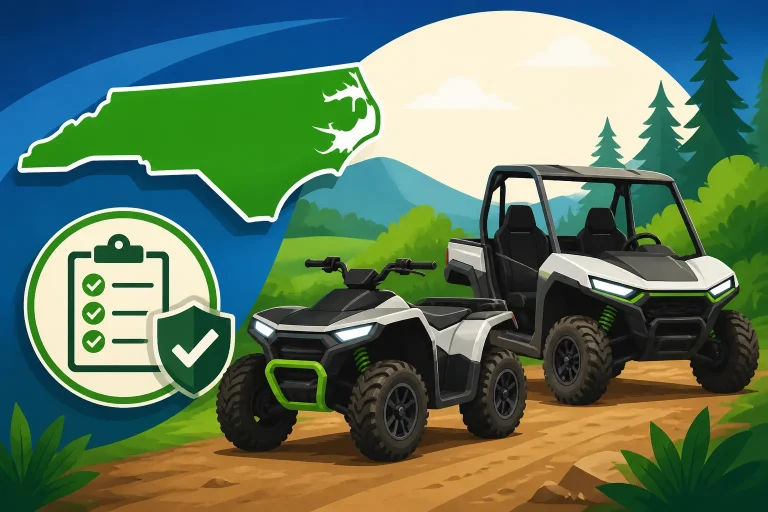
North Carolina uses a birth-year cutoff for ATV safety training on public land. A person born on or after January 1, 1990, must complete an ATV safety course approved by the Commissioner of Insurance to operate an ATV on public land where the requirement applies. Riders born before that date are outside this birth-year requirement.
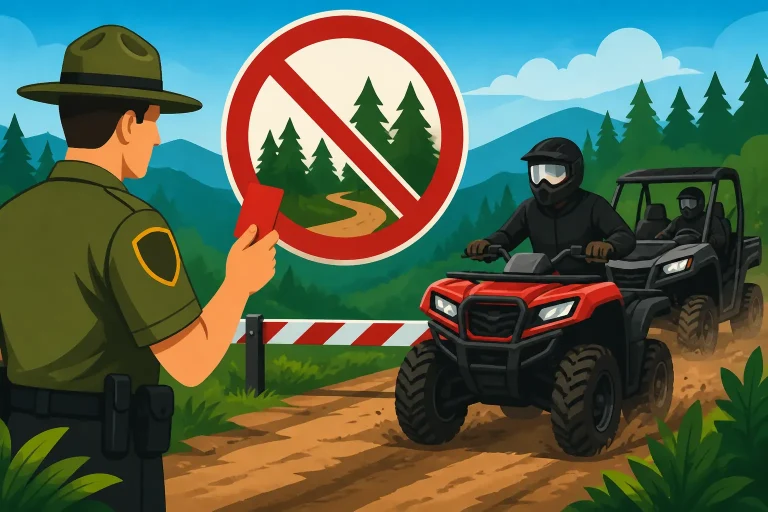
The certificate shows that you completed qualifying safety training. It is not a driver’s license, vehicle title, registration, trail permit, or general authorization to ride. Having one does not make a closed trail legal to use, allow an ATV on a public street, or replace any permit required at a riding area.
The rule is about the rider, not the owner of the machine. You may need a certificate even if the ATV belongs to someone else, is rented, or is registered in another state. Likewise, an owner’s certificate does not cover a friend or family member who rides the machine. Each rider who falls under the rule needs to meet it individually.
The requirement is also tied to where you ride. It is not a general training mandate for every ATV trip on private property. A landowner can set additional conditions for access, though, and a public riding area may have its own entry and operating rules. Before setting out, check both the statewide requirement and the land manager’s rules. North Carolina ATV Safety Certificate Requirements provides a broader overview of how the certificate fits into the state’s riding rules.
| Rider and ride | Does the birth-year rule generally require a certificate? | What to check |
|---|---|---|
| Born on or after January 1, 1990, riding an ATV on public land | Yes, where the public-land requirement applies | Course approval, proof to carry, and site-specific rules |
| Born before January 1, 1990, riding an ATV on public land | No, not under the birth-year requirement | Any separate land-access or riding conditions |
| Riding only on private property | Not under the public-land birth-year rule | Landowner requirements and other safety laws |
| Riding a UTV or side-by-side | Do not assume the ATV rule applies the same way | How the land manager classifies the machine and what its rules say |
| Visiting North Carolina from another state | The rider’s birth year still matters | Whether the course documentation meets North Carolina’s requirement |
This table is a practical starting point, not a substitute for the rules of a specific property. Public land can include managed riding areas with their own trail, permit, and machine restrictions. A certificate addresses training only; it does not settle those other questions.
Who needs the certificate
The cutoff is based on your date of birth, not your current age. Someone born on January 1, 1990, or later falls on the certificate-required side of the line when riding an ATV on public land covered by the rule. Someone born on December 31, 1989, falls on the other side, even if that person is still relatively young.
That distinction matters when families ride together. A parent who is not required to hold a certificate does not exempt a child or other rider who is covered by the cutoff. Supervision rules and certificate requirements are separate issues: meeting one does not automatically satisfy the other. If a minor will ride, check the age and supervision requirements as well as the training rule. North Carolina Rules for Riders Born On or After 1990 and [North Carolina Supervision Rules for Young Riders] cover those related questions.
The requirement applies to visitors as well as North Carolina residents. Living elsewhere, having an out-of-state ATV registration, or holding another state’s trail permit does not by itself answer whether your course certificate will be accepted. Before traveling, confirm that the training credential you have meets North Carolina’s standard and the riding area’s requirements. Does North Carolina Accept an Out-of-State Certificate? addresses that issue directly.
A certificate also does not necessarily settle whether someone can operate a particular machine. Riders still need to follow rules for age, helmets, passengers, equipment, and the specific trail or property. For example, a young rider may need adult supervision even after completing a course. A rider with a valid certificate can still be barred from a route because of age limits, machine width, a closure, or a permit condition.
ATV versus UTV
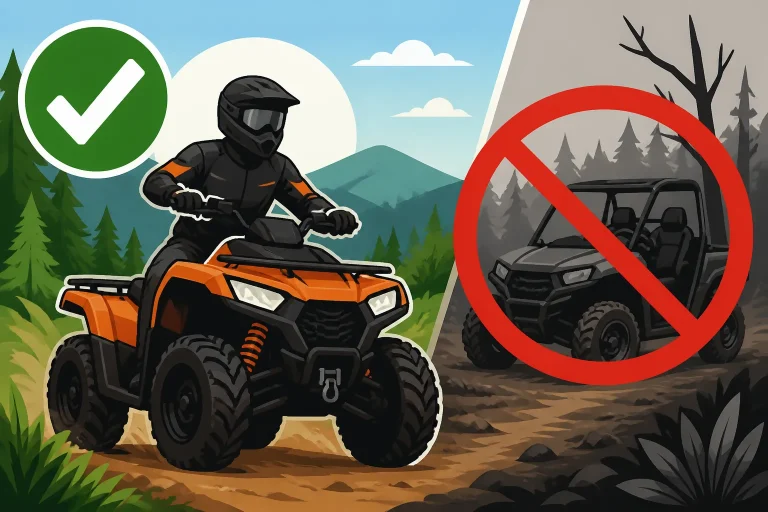
Be careful about applying the ATV certificate rule automatically to every side-by-side or UTV. The machine’s legal classification and the riding area’s operating rules matter. A vehicle marketed as a UTV may be treated differently from an ATV under particular regulations, and an OHV trail manager may impose its own training conditions for certain machines or drivers.
If you plan to ride a UTV, ask the land manager whether its certificate requirement covers that vehicle and whether it applies to every operator. Do not assume that a course card for an ATV automatically meets a separate UTV rule, or that a UTV is exempt simply because it has a steering wheel, seat belts, or multiple seats. The same caution applies to rentals: ask the rental provider and the destination whether the driver needs a certificate, and check any additional age or license conditions. North Carolina Rules for a Rented Machine can help you separate rental requirements from the safety certificate rule.
What counts as an accepted certificate
The important question is not just whether you took a class. The course must meet North Carolina’s approval standard for the requirement. Before enrolling, confirm that the course is approved by the Commissioner of Insurance or otherwise qualifies under the state’s current rules. A general off-road lesson, a manufacturer’s orientation, or a course certificate from an unfamiliar provider may not be enough.
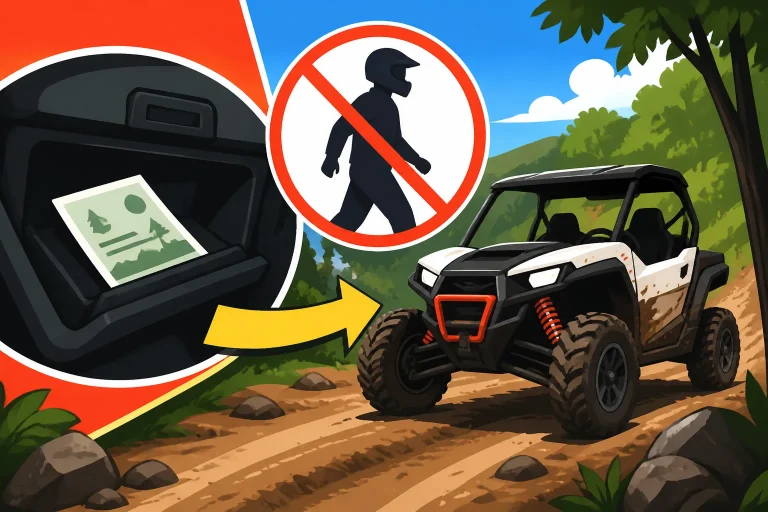
Keep the completion document in a form you can show during the ride. Carry the certificate or other accepted proof with you rather than relying on the assumption that a trail employee can look up your record. If the course provider issues a digital document, verify that the riding area accepts it and make sure you can access it where you will be riding. A phone battery, weak signal, or inaccessible account can turn a simple check into a delay.
Before you sign up for a course, check:
- Whether the course is accepted for North Carolina’s ATV safety certificate requirement.
- What proof the provider gives you after completion.
- Whether the document identifies the rider clearly and can be carried or shown on a ride.
- Whether the trail system accepts that form of proof.
- Whether there are separate requirements for a UTV, rental machine, or organized event.
Avoid treating a course advertisement as the final word. Providers may offer different types of training, and not every class necessarily satisfies the same legal requirement. When in doubt, confirm with the relevant state authority or the land manager before paying for a course.
The certificate is also different from a forest OHV permit. A permit may be required for access to a specific riding area, and its terms can vary by location. A safety card does not serve as a day permit or season permit, and buying a permit does not substitute for a required certificate. Check the destination’s current permit and access instructions separately. Do You Need a Permit for North Carolina Forest Trails? explains the separate permit question.
Does it expire?
Do not assume that a certificate expires on a certain schedule, or that it is valid forever, without checking the course provider and current state guidance. Keep the original completion information and ask the issuing provider whether it remains acceptable. If you have an older card, a replacement document, or a course record with incomplete details, confirm its status before relying on it at a trailhead. Does a North Carolina Safety Certificate Ever Expire? focuses on certificate validity and records.
How to prepare before a public-land ride
A few checks before loading the ATV can prevent confusion at the gate. Start with the rider’s birth date, then confirm the machine type and destination rules. Do not rely on a permit, registration card, or proof of ownership as a substitute for safety training.
Use this sequence:
- Check the rider’s birth date. If the rider was born on or after January 1, 1990, treat the certificate requirement as relevant for ATV use on public land.
- Confirm the machine’s classification. If it is a UTV or side-by-side, ask whether the site applies the ATV certificate rule to its operators.
- Verify the course. Confirm that the course meets North Carolina’s approval standard before enrolling or relying on an existing card.
- Check the destination. Review current permit, trail, age, supervision, equipment, and closure rules for the specific riding area.
- Carry proof. Bring the certificate or accepted documentation in a form you can produce during the ride.
- Check again if the trip changes. A different forest, rental provider, event, or machine can have additional conditions.
Visitors should make the same checks. An out-of-state registration or riding permit does not automatically satisfy North Carolina’s certificate rule, and North Carolina’s certificate should not be assumed to replace requirements in another state. If your course documentation was issued elsewhere, confirm acceptance before traveling rather than waiting until arrival. [North Carolina Rules for a Visiting Rider] covers other considerations for riders coming into the state.
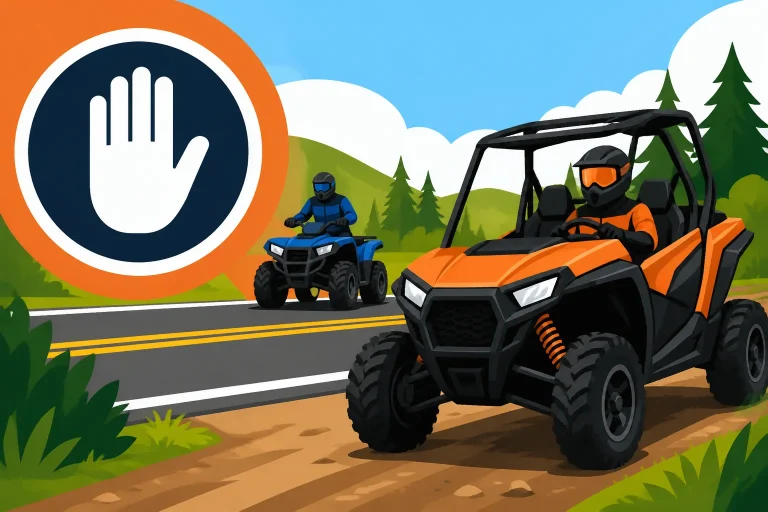
Finally, keep the certificate question separate from road legality. North Carolina generally does not make an ATV street legal just because its operator has completed training. Public roads, crossings, private property, and managed trails each have their own rules. If your plan includes using a road, check the specific law and route rather than treating the certificate as permission to ride there. North Carolina Rules for Riding a Public Street explains that distinction.
The practical takeaway is straightforward: riders born on or after January 1, 1990, should be prepared to show an accepted safety certificate when operating an ATV on covered public land. Riders born earlier are not subject to that birth-year certificate requirement, but still need to follow all other rules. Confirm the course, machine classification, and destination requirements before you go.
Disclaimer
This article is for general informational purposes only and does not constitute professional advice. Laws, prices and regulations vary by location and change over time. Consult a qualified professional for guidance on your specific situation.