A Passenger on a North Carolina Forest Trail
A passenger can join you on a North Carolina forest trail only when the machine is built to carry one. An extra seat or a second helmet does not make a single-rider ATV a two-person vehicle. Before setting out, check the machine’s seating, the trail’s rules, each rider’s safety gear, and whether the forest permit applies to your trip.
Start with the machine, not the number of riders
North Carolina’s passenger rule turns on how the manufacturer designed the ATV. If it is built for one rider, carrying a second person is not allowed just because the passenger can sit behind the operator or hold on. The same principle applies on a national forest trail: a trail permit does not override the machine’s passenger limit.
A factory two-person ATV has seating intended for both the operator and passenger. Look for the manufacturer’s instructions and the machine’s labels rather than relying on an add-on seat, a longer saddle, or a passenger’s ability to hang on. If the manual identifies the vehicle as a single-rider model, treat it as one-person only. For more detail on the state rule, see When North Carolina Lets You Carry a Passenger and A Factory Two-Seater Under North Carolina Law.
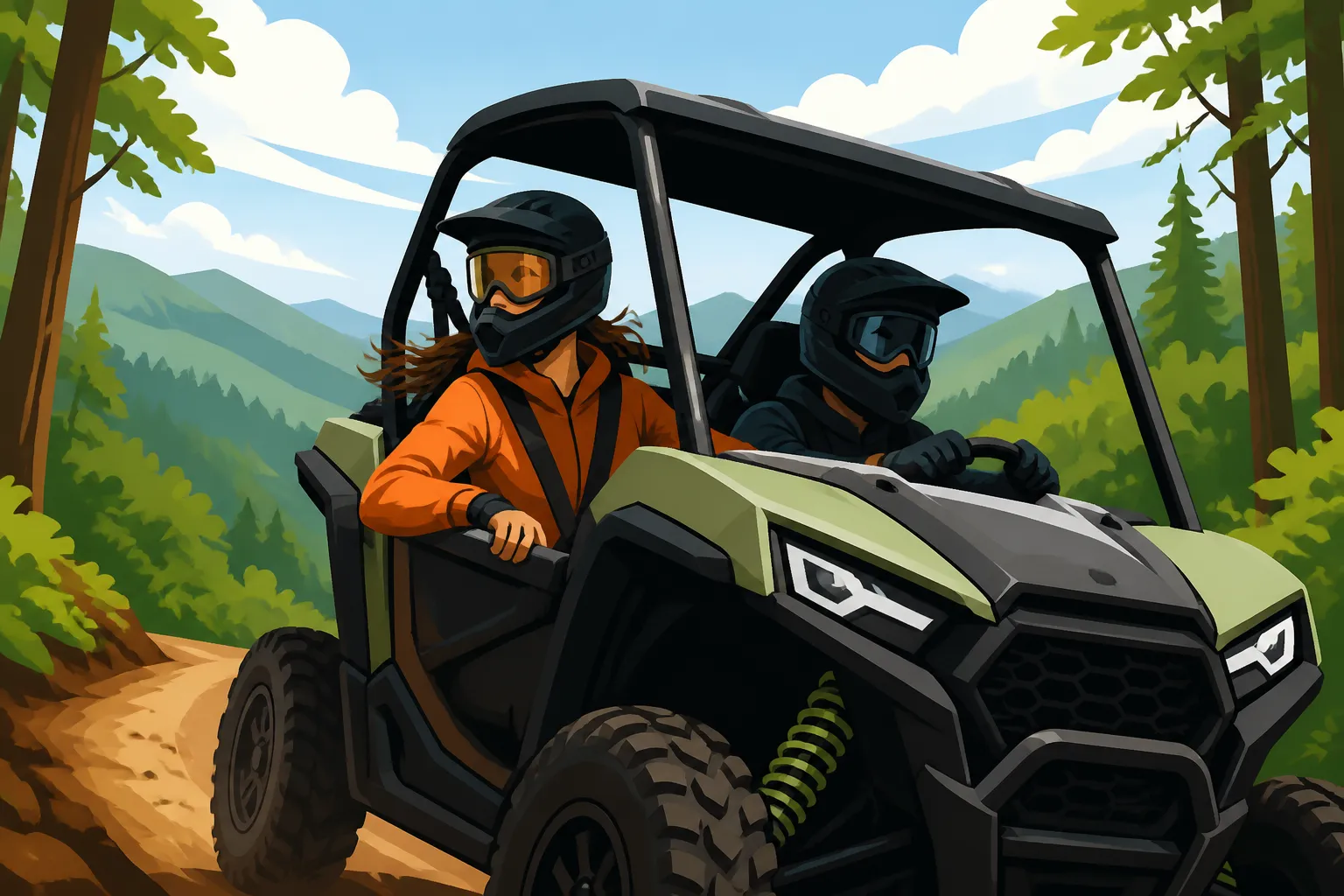
Side-by-sides and UTVs are different from single-seat ATVs, but their passenger capacity is still limited by the vehicle’s design. Use only the installed seating positions, and do not exceed the capacity shown by the manufacturer. Keep each passenger in a proper seat with the available belt or restraint secured. If a passenger cannot sit securely in a designated seat, the ride is not suitable for that person.
| Machine or setup | Passenger guidance |
|---|---|
| Single-rider ATV | Do not carry a passenger, even if someone can sit behind the operator |
| Factory two-person ATV | Carry a passenger only in the intended passenger position and within the maker’s capacity |
| Side-by-side or UTV | Use designated seats and restraints; stay within the vehicle’s stated capacity |
| Modified machine | Do not assume an added seat or footrests make it legal for a passenger |
An ATV passenger also needs a place to put their feet and a stable position that does not interfere with steering or controls. The operator should be able to manage the vehicle without the passenger shifting unpredictably. A passenger who is too small to reach the intended footrests or sit securely may not be ready for that machine, even if the seat technically has room.
The practical takeaway is simple: verify the model’s passenger capacity before loading gear or driving to the trailhead. If the manual, label, or machine configuration leaves you uncertain, ask the manufacturer or dealer rather than making a judgment based on appearance.
Check the passenger’s age, gear, and ability to ride
Being allowed to ride as a passenger does not mean every age or size is appropriate for every machine. A passenger needs to understand basic instructions, remain seated, use the footrests and restraints provided, and avoid reaching toward moving parts. The operator should be able to communicate clearly with the passenger and stop if the passenger becomes uncomfortable.
North Carolina has separate safety rules for young riders. Requirements can depend on age and whether the person is operating or riding as a passenger, so do not assume that a child who may legally ride is automatically suited to a particular ATV. Review North Carolina Rules for a Passenger Under 18 and North Carolina Rules for Riders Under 16 before bringing a minor. When the passenger is young, check the current state requirements and the forest’s rules as well.
Helmets and eye protection matter for passengers just as they do for operators. Use a properly fitting helmet that meets applicable requirements, and use eye protection appropriate for dust, branches, and flying debris. A passenger should not borrow a helmet that is loose or poorly fitted simply to get through the day. See North Carolina Helmet Rules on Forest Trails for a closer look at trail-specific equipment rules.
Before riding, agree on a few simple signals. The passenger should know how to tell the operator to stop, how to hold on without grabbing controls, and to stay seated through turns and bumps. The operator should avoid sudden acceleration, hard braking, and sharp turns that can throw a passenger off balance. Added weight changes how an ATV handles, so a two-up ride may need a slower pace and more room to stop.
For a passenger who has never ridden before, explain what to expect before you start moving. Show where to sit, where to place feet, what to hold, and what not to touch. Begin on an easy, legal section of trail if the route offers one, and stop if the passenger cannot stay positioned safely. A passenger who is frightened or fatigued can create a risk for both people.
Understand forest permits and trail access
A passenger does not turn a single-rider machine into a passenger vehicle, and a permit does not grant permission to ride anywhere. Forest permits govern access to designated riding areas; the vehicle must still be allowed on the specific trail, and riders must follow posted restrictions and closures.
North Carolina’s national forest OHV systems have their own permit arrangements. Brown Mountain and Badin Lake use forest permits, and Wayehutta has its own access requirements. Permit options, sales locations, seasons, and operating conditions can vary by riding area, so check the relevant forest information before you leave. North Carolina Forest OHV Permits explains the general permit system, while Where to Buy a North Carolina OHV Permit can help with planning where to obtain one.
A forest permit is generally tied to the vehicle, not sold as a separate passenger ticket. That does not mean the passenger can use it to ride a different machine, or that one vehicle’s permit covers a second vehicle in your group. Check the rules for the specific riding area and confirm the display instructions. The distinction is important because North Carolina does not issue a general ATV registration sticker that substitutes for a forest permit. See Why a Permit Is Per Vehicle in North Carolina and Why There Is No North Carolina OHV Decal.
Out-of-state plates, registrations, or permits should not be treated as a replacement for a North Carolina forest permit. If you are visiting from another state, check the forest’s current requirements directly; reciprocity assumptions can lead to an avoidable problem at the trailhead. A permit requirement can also be separate from the operator’s safety-certificate requirement. North Carolina has a birth-year rule for certain ATV operators on public land, so review North Carolina ATV Safety Certificate Requirements if the operator may fall under it. A passenger who is not operating should not assume that the operator’s certificate or permit answers every question about their own obligations.
The forest can restrict access based on the type, size, or permitted use of a machine. A UTV that can legally carry passengers on private property is not automatically allowed on every forest trail. Confirm that the route is open to the machine’s category and dimensions, and do not enter a closed trail or ride beyond a posted boundary. Trail conditions and access can change; check North Carolina Trail Conditions Before You Ride and North Carolina Trail Closures to Check First before hauling out.
Make a passenger-ready trail plan
A safe two-person trip starts with choosing a machine and route that suit both riders. Passenger weight changes balance, braking, and acceleration. An ATV that feels manageable with one rider may respond differently with a passenger and packed gear, particularly on steep or uneven ground.
Use this sequence before heading to a forest trail:
- Confirm the machine’s passenger capacity. Check the owner’s manual, label, and factory seating. Do not use an improvised seat or carry a passenger on a single-rider ATV.
- Check the route and vehicle rules. Make sure the riding area is open and allows your specific type of machine. Verify current permit and trail requirements with the forest or district.
- Fit each rider with proper gear. Check helmet fit, eye protection, footwear, and any required restraints. Bring clothing suited to weather and trail conditions.
- Review passenger basics. Explain where to sit and hold, how to signal a stop, and why the passenger should remain seated and keep hands away from the controls.
- Adjust the ride for two people. Carry only necessary gear, leave extra stopping distance, and take turns and rough sections at a pace that keeps the passenger secure.
- Have a backup plan. Identify where you can stop safely, keep a charged phone accessible where service allows, and let someone know your intended riding area and return plan.
If you are renting, ask the outfitter directly whether the specific machine is designed for a passenger and whether the rental agreement permits two riders. Do not rely on a booking photo or assume that a wider seat means a second passenger is allowed. Also ask whether the forest permit is included, what trails the rental machine may use, and what gear is supplied. North Carolina Rules for a Rented Machine is useful background, but the rental company’s current written terms matter for its equipment.
If the machine is damaged, has a missing belt, or no longer has a secure passenger foot position, leave it parked until it is fixed. Likewise, if a trail is too narrow or rough for a passenger to remain stable, turn around rather than pushing through. An adult passenger does not remove the need to obey machine capacity, and a child passenger does not make an unsuitable route safer.
Before departure, check posted notices at the trailhead and follow any instructions from forest staff. If conditions change during the ride, such as a closure, storm damage, or a passenger feeling unwell, stop and reassess. Rules for designated trails and forest access can differ from rules on private land, so do not carry trail assumptions over to roads, game lands, or another riding area.
The safest answer to “Can I bring a passenger?” is therefore conditional: only if the vehicle is designed for that passenger, both people can ride securely and meet applicable safety rules, and the machine is allowed on the trail under current permit and access requirements. When any one of those conditions is unclear, verify it before you unload.
Disclaimer
This article is for general informational purposes only and does not constitute professional advice. Laws, prices and regulations vary by location and change over time. Consult a qualified professional for guidance on your specific situation.