North Carolina Fines for No Forest Permit
Riding a North Carolina national forest trail without the required OHV permit can turn a day out into a citation and an avoidable trip to deal with it. The exact penalty depends on the violation and how it is handled, so there is no single fine to assume. Here’s how to check the rules, avoid common permit mistakes, and respond if cited.
What can happen if you ride without a forest permit
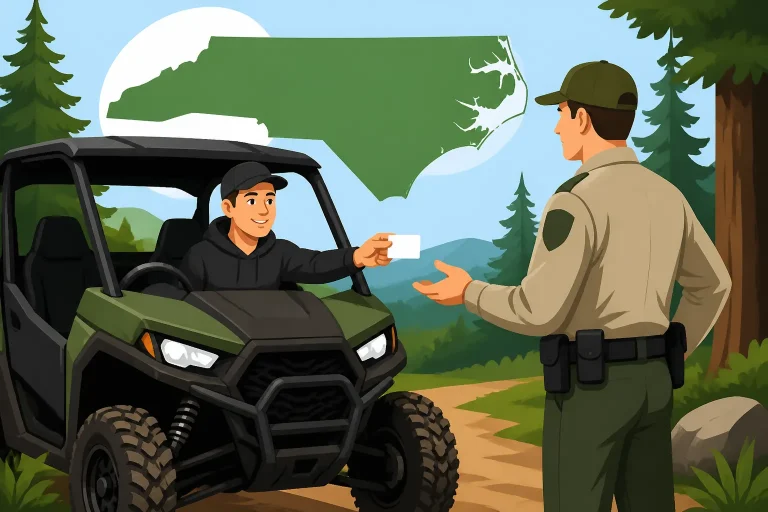
Where a permit is required, riding without one can lead to an enforcement citation. The amount you ultimately owe may depend on the specific violation and its disposition; court costs or other consequences may also apply. Check the citation and its response instructions rather than relying on a guessed fine amount.
A permit violation is not necessarily the only issue an officer may consider. Riding on a closed trail, leaving a marked route, or violating another posted requirement can be treated as a separate matter. The permit does not authorize access to every road or trail in a forest. For that reason, a rider may face more than one allegation if several rules were broken during the same trip.
| Situation | Why it matters | Practical next step |
|---|---|---|
| Required permit was never purchased | The machine may be operating without the access authorization required for that riding area | Check the citation and the area’s current permit rules |
| Permit was bought, but proof is missing or not displayed as required | An officer may not be able to verify compliance roadside | Keep the receipt or confirmation and follow local display instructions |
| Permit is attached to a different machine | Permits may be required for each vehicle, rather than each rider or group | Confirm which machine the permit covers |
| Rider is on a closed trail | A valid permit does not override a closure | Leave the closed route and follow posted notices |
| Rider leaves the marked trail | Off-route travel can be a separate violation | Stay on routes open to the machine and activity |
A permit is also different from title, registration, and a safety certificate. Having a title or out-of-state registration does not automatically replace a forest access permit. North Carolina’s forest permit rules are separate from vehicle paperwork, and requirements can vary by riding area. For an overview, see North Carolina Forest OHV Permits and Do You Need a Permit for North Carolina Forest Trails?.
Where permit rules apply and how to avoid a mistake
Do not assume that every North Carolina forest road requires the same permit, or that one permit covers every riding area. Requirements depend on where you plan to ride and which routes are open to your machine. Confirm the rules for the specific forest and trail system before loading up. The areas covered by day permits are summarized in Which North Carolina Forests Take a Day Permit.
A permit can also have limits beyond its location. For example, check whether it is valid for the date of your trip, whether each machine needs its own permit, and how the permit or proof of purchase must be displayed or carried. A rider may have paid the correct fee but still have a roadside problem if the permit is assigned to the wrong machine or the required proof cannot be shown.
Use this checklist before each trip:
- Identify the riding area. Confirm the exact trail system and forest unit, not just the nearest town or campground.
- Check current access notices. Look for closures, seasonal changes, and instructions for permits. Start with [Checking a Forest Notice Before You Load].
- Confirm what the permit covers. Check the valid dates, vehicle requirements, and whether your machine type is allowed.
- Buy through an authorized option. The available purchase methods may differ by area. See Where to Buy a North Carolina OHV Permit.
- Keep proof accessible. Save the receipt or confirmation and follow the posted instructions for displaying or carrying the permit.
- Recheck before unloading. A closure or change in conditions can affect your ride even if you already bought a permit.
If you ride several machines as a family or group, verify the permit requirement for each one. A permit bought for one ATV should not be assumed to cover a second ATV or a side-by-side. The per-machine issue is explained in Why a Permit Is Per Vehicle in North Carolina.
A permit does not make a closed trail legal
A valid permit is permission to use a covered area under its rules; it is not blanket permission to ride anywhere in the forest. Trail closures, restricted routes, vehicle limits, and off-trail rules still apply. Check the signs at the trailhead and any notices along the route. For related details, read [North Carolina Fines for Riding a Closed Trail] and [North Carolina Rules for Riding Off the Trail].
If a gate is closed or a notice conflicts with what you expected, do not ride through on the assumption that your permit takes priority. Turn around and confirm the current status with the responsible office. Conditions, maintenance, or other management decisions can change access after a permit has been purchased.
Common permit problems that can lead to a citation
Many problems are preventable, but they are easy to overlook when a group is eager to start riding.
Assuming registration substitutes for a forest permit. Vehicle title or registration paperwork and an OHV access permit serve different purposes. A registration from another state does not necessarily satisfy a North Carolina forest permit requirement. Check Does North Carolina Honor Out-of-State Registration? rather than treating paperwork from home as a substitute.
Buying for the rider instead of the machine. Some riders expect one permit to cover everyone in a truck or group. Check whether each machine needs a separate permit, even when several riders travel together. If you arrive with multiple machines, confirm each one is covered before entering the trail system.
Leaving the permit in the truck. Payment alone may not be enough if the area requires a permit to be displayed on the machine or proof to be available during a check. Follow the specific instructions for that location. For Uwharrie, see Where a Uwharrie Forest Permit Goes on Your Machine.
Relying on old information. A past trip, an old online post, or a friend’s recollection may not reflect current operating dates or permit instructions. Check the relevant forest notice before leaving home and again at the entrance. Do not rely on a permit from one area to assume the rules are the same elsewhere.
Confusing a forest permit with a safety certificate. A safety certificate requirement, where applicable, is separate from a trail access permit. Satisfying one does not satisfy the other. Review the birth-year rule and document requirements in North Carolina ATV Safety Certificate Requirements if that may apply to a rider in your group.
If a citation occurs despite having purchased a permit, gather the records that show what happened: purchase confirmation, receipts, photographs of the permit and machine, and any relevant notices at the entrance. Keep the information organized, but do not assume it automatically cancels a citation. The citation itself explains how to respond and whether a court appearance or other action is required.
What to do after receiving a citation
Read the citation carefully as soon as practical. Check the stated violation, response deadline, payment or appearance instructions, and the office or court identified on the document. Do not ignore it because you believe the permit rule was unclear or because you paid for a permit elsewhere.
If you think the citation is mistaken, preserve relevant details while they are fresh. Note where you entered, which trail you were on, what signs were present, and whether the permit was displayed or available. Save purchase records and photographs, and keep the original documents in a safe place. Follow the citation’s official process to dispute or address it; a conversation at the trailhead is not a substitute for responding as instructed.
If the citation involves more than the permit, separate the issues when reviewing what happened. A permit purchase may help explain the permit question, but it does not resolve a separate allegation about a closed route or off-trail riding. When the consequences are unclear or the citation could affect you beyond a simple payment, consider getting advice from a qualified professional familiar with the matter.
The simplest way to avoid a permit citation is to verify the exact riding area, buy the required permit for every machine, keep proof available, and obey current closures and route restrictions. Taking a few minutes to check before unloading is usually easier than sorting out an enforcement notice afterward.
Disclaimer
This article is for general informational purposes only and does not constitute professional advice. Laws, prices and regulations vary by location and change over time. Consult a qualified professional for guidance on your specific situation.