What an ATV Safety Institute Course Covers
An ATV Safety Institute course is meant to turn safety advice into decisions and riding habits you can use on the trail. If you need a North Carolina safety certificate, you also need to know what the course teaches, what proof you receive, and whether that proof meets the state’s requirement. Here’s what to expect—and what the course does not replace.
What an ATV Safety Institute course is designed to teach
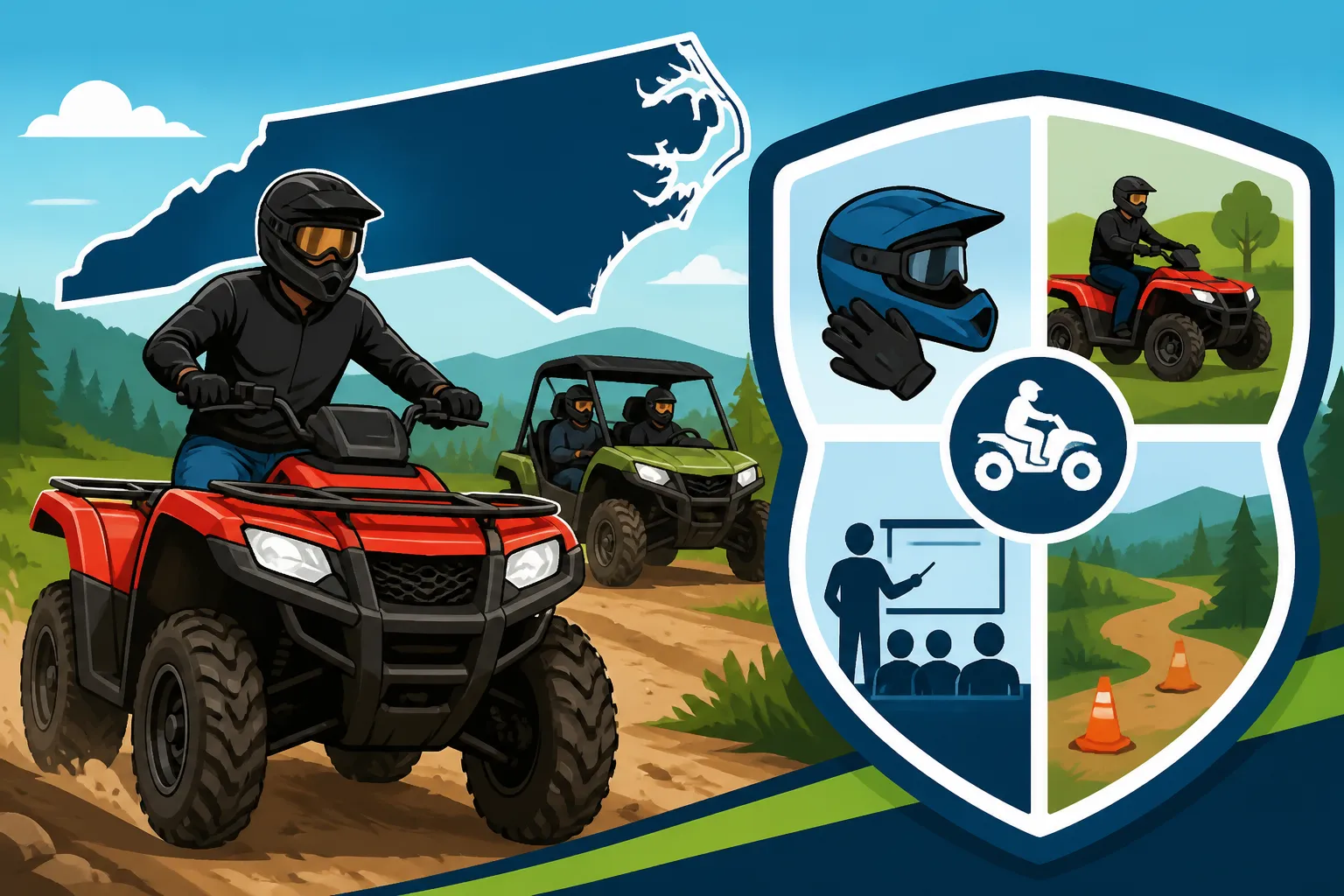
The ATV Safety Institute’s rider training is intended to help riders operate an ATV more safely and recognize situations that can lead to a crash. It is not simply a talk about helmets, and it is not a substitute for learning the controls on your own machine. A typical course combines safety instruction with practice, though the format, length and available exercises depend on the provider and location.
The main focus is the ATV: a machine designed to be straddled and steered with handlebars. The course explains how an ATV responds to rider input, how terrain affects control, and why riding within your ability matters. Its lessons are useful for new riders, but experienced riders can also benefit from reviewing habits they may have picked up informally.
Course delivery can vary. Some offerings may include online or classroom material alongside practical instruction; others may organize the learning differently. Ask the provider what the specific course includes, whether you will ride an ATV during the session, what equipment is supplied, and what you must bring. Do not assume that a course description for one location applies to every provider.
A course is structured learning, not a promise that a rider will never crash. Safe outcomes still depend on the rider’s judgment, the machine’s condition, the terrain, weather, visibility and the choices of everyone in the riding group. Training helps build a foundation; it does not remove the need to assess risks each time you ride.
| Course topic | What you may learn | Why it matters on a ride |
|---|---|---|
| Pre-ride inspection | How to check basic machine condition and controls | Problems are easier to address before leaving the staging area |
| Protective equipment | How to choose and use appropriate riding gear | Gear helps reduce exposure to common hazards |
| Controls and operation | How to use the throttle, brakes and other controls | Smooth inputs help maintain control |
| Riding skills | How to start, stop, turn and manage changes in terrain | Practicing fundamentals builds confidence and control |
| Risk awareness | How to recognize hazards and adjust your plan | Conditions can change quickly, even on a familiar route |
| Rules and responsibility | Why riders should follow site rules and respect others | Access depends on using trails and property responsibly |
For North Carolina riders, the training course is only one part of the picture. A course may help meet a safety-certificate requirement, but the certificate does not automatically grant permission to ride a particular trail, forest or private property. Review North Carolina ATV Safety Certificate Requirements and Do You Need a Permit for North Carolina Forest Trails? separately.
The main lessons you can expect
Preparing the ATV and checking protective gear
A safety course usually emphasizes checking a machine before riding. The purpose is not to turn every student into a mechanic. It is to help riders notice obvious problems and understand when a machine should not be used until it has been repaired.
An inspection may cover items such as tires, brakes, throttle operation, controls, lights and other visible components. The exact checklist can vary by course and machine. Riders should follow the manufacturer’s owner’s manual for the ATV they will use, since equipment and inspection recommendations differ.
The course also explains protective equipment and why fit matters. A helmet should fit securely and be appropriate for ATV riding. Eye protection can help keep dust, branches and debris out of the eyes. Gloves, long sleeves, long pants and suitable boots can add protection from abrasion, weather and contact with the machine. The instructor may explain how to check gear, but you should still make sure it fits you and is in usable condition.
Protective clothing does not make a risky maneuver safe. A helmet and goggles cannot compensate for excessive speed, riding beyond your ability or entering a trail that is too difficult for you. The practical lesson is to combine appropriate gear with conservative decisions. North Carolina rules may impose specific equipment requirements in particular situations, so check North Carolina Helmet Law for ATV Riders rather than treating a training session as a complete legal reference.
Learning how the controls affect the machine
Riders need to understand the controls before they try to travel over uneven ground. Training typically covers how to start and stop, how to operate the throttle and brakes, and how to use the machine’s controls smoothly. The instructor may also discuss shifting, if the ATV has a manual or selectable transmission.
The point is not merely to memorize which control does what. Sudden braking, abrupt acceleration or an unexpected change in direction can affect balance and control. A rider who practices smooth inputs in a controlled setting has a better chance of responding deliberately when a trail becomes rough or crowded.
An instructor may also explain that ATVs do not steer like cars. The rider’s body position and movement can affect how the machine turns and handles. A course introduces these concepts and gives students a chance to practice basic skills. It cannot prepare a rider for every combination of slope, loose material, ruts, water, rocks or obstacles encountered outdoors.
Practicing riding skills and managing terrain
Practical exercises, where offered, are a central part of rider training. Under instruction, students may practice basic starting, stopping, turning and maneuvering. They can get a feel for how the machine responds at low speed, where it is easier to focus on technique than it would be on a demanding trail.
The instructor may introduce ways to position the body and maintain balance during turns or while traveling over changing terrain. The right approach depends on the ATV, the situation and the course instruction. Riders should not treat a short practice exercise as a license to attempt steep or technical terrain without experience.
A course may also address hills, uneven ground and obstacles. The useful takeaway is often knowing when not to proceed. A rider should assess whether the route is within their skill level, whether the machine is suitable for the terrain, and whether there is a safe way to turn around. If a hill or obstacle looks beyond the rider’s ability, stopping and choosing another route is a sound safety decision—not a failure.
Trail conditions can change after rain, storms or heavy use. A familiar route may have loose rocks, washed-out sections, standing water, downed branches or reduced visibility on a later visit. Training gives riders a framework for thinking through conditions, but it cannot tell them that a specific trail is open or safe today. Check current access information before traveling.
Recognizing risk and riding responsibly
Safety instruction is also about choices. A course can help riders think through speed, distance, visibility, fatigue and the actions of other people. It may discuss how to ride with a group, keep enough space between machines and avoid following so closely that one rider has no time to react.
Riders should not assume that everyone in a group has the same skill level or machine capability. Before starting, agree on a pace, regrouping points and what to do if someone has a problem. A rider who feels pressured to keep up is more likely to take risks. Let the least experienced rider help set the pace, and stop if anyone needs a break or has a concern.
Training also encourages respect for trail signs, boundaries, other trail users and the environment. Staying on designated routes helps reduce damage and avoids entering areas where riding is prohibited. On private land, permission matters; ownership of an ATV does not give a rider access to someone else’s property. For more on the rules that affect access, see [North Carolina Landowner Permission Requirements] and North Carolina Rules for Riding a Public Street.
What the course does not cover or guarantee
An ATV safety course is not a universal operating permit. It does not, by itself, authorize a rider to use a public trail, forest road, game land, beach or private property. Each location can have its own access rules, permits, age restrictions and equipment requirements. Check the rules for the specific place you intend to ride.
It is also not a driver’s license or a street-legal conversion. Completing rider training does not make an ATV legal to use on a public road. North Carolina has limited circumstances that affect road use, and the rules depend on the situation and machine. Do not rely on a training card as permission to ride on pavement.
An ATV course may not be a UTV course. A side-by-side has different seating, controls and occupant-protection considerations from a straddle-style ATV. A rider who completes ATV training should not assume it fully covers UTV operation, seat belts, passenger behavior or the handling of a wider and heavier vehicle. If you plan to use a UTV, ask for training that applies to that machine and follow its owner’s manual and safety instructions.
Nor does a course guarantee that every student will leave with the same proof of completion. Documentation may depend on the provider, course format and requirements. Before enrolling, ask what certificate or card is issued, how it is delivered, and whether the provider’s course meets North Carolina’s current approval requirements if you need the training for compliance.
A course does not replace age-specific rules, supervision requirements or restrictions on passengers. Parents and guardians should check the rules that apply to the rider rather than relying only on course participation. See North Carolina Rules for a Rider Under 16 for related requirements.
Using an ASI course toward North Carolina requirements
North Carolina’s safety-certificate rules are separate from the lessons themselves. The state’s requirement is tied to the rider’s birth year and the use of an ATV in covered settings. If you are taking a course to satisfy a legal requirement, verify that the specific course and provider qualify before you book. A course title or a general claim that a program is “safety training” is not enough to establish acceptance.
The ATV Safety Institute course may be relevant to that requirement, but confirm the current North Carolina rule and accepted training options through the appropriate official channel. The course provider can tell you what credential it issues; state guidance can tell you whether that credential satisfies the rule. For details on the age threshold and who needs a certificate, see Why the Safety Certificate Depends on Your Birth Year and Who Needs a North Carolina Safety Certificate.
Do not assume that a safety certificate is a forest permit. Forest riding may require a separate permit for each machine, and the permit rules can differ by riding area. A certificate is about rider training; a permit is about access. Neither one automatically replaces the other.
Also check before relying on an out-of-state course or card. Requirements and acceptance can differ between states, and completion documents may not transfer as riders expect. If you trained elsewhere, ask whether North Carolina accepts that specific course for its safety-certificate requirement. The question is not simply whether the course was legitimate or useful; it is whether it meets the state’s current rule. Which Safety Courses North Carolina Accepts explains why confirming the exact course matters.
Once you receive proof of completion, keep it somewhere accessible and find out whether you must carry it while riding. Do not assume a photo on a phone is sufficient unless the relevant authority confirms that format is accepted. The practical steps are simple:
- Ask the course provider what proof of completion you will receive.
- Confirm that the course and credential meet North Carolina’s requirement, if you need it for that purpose.
- Check the rules of the specific riding area for a separate permit and any additional conditions.
- Keep the certificate or card available in the format required for the ride.
For details on carrying proof, read Carrying the Certificate on a North Carolina Ride. If your plans include public forest trails, separately check North Carolina Forest OHV Permits and the rules for the specific forest or riding area.
How to choose a course and get ready
Before registering, make sure the course matches your goal. If you want to learn basic ATV operation, ask whether the course includes hands-on riding and whether beginners are welcome. If you need a certificate for a North Carolina requirement, ask about the credential and verify the course’s acceptance independently. If you mainly ride a UTV, ask whether the instruction covers UTVs rather than assuming an ATV course is interchangeable.
Find out what the course provides and what you need to bring. Ask about the machine used for practical exercises, the required clothing and footwear, any age or guardian requirements, and what happens if weather affects the session. These details vary by provider. If you are bringing your own machine, ask whether it must meet particular condition or equipment standards.
Choose gear for the actual activity, not just for the photograph on a course page. A properly fitting helmet and eye protection are central pieces of kit, but the rest matters too: gloves, durable clothing and boots that protect the feet and ankles. If you need to buy equipment, compare sizing, fit and safety features before choosing. Amazon can be one place to compare product descriptions, but a listing does not confirm that a particular item fits well or meets the requirements of your course or ride. Check the manufacturer’s information and the course provider’s instructions.
Arrive ready to listen and practice. Tell the instructor if you are new to ATVs, uncertain about a control or uncomfortable with an exercise. A useful training environment should allow students to ask questions and work through basic skills at an appropriate pace. Do not conceal a lack of experience because other participants seem more confident.
Afterward, keep practicing within your ability. Revisit the owner’s manual, conduct a pre-ride check, and choose terrain suited to your skill. If the machine feels unfamiliar, spend time practicing at low speed in a safe, permitted area before joining a group on more difficult trails. Training is most useful when it changes ordinary decisions: checking the machine, wearing appropriate gear, choosing a manageable route and turning back when conditions call for it.
The course also cannot make every rider an expert after one session. Skill develops through careful practice and sound judgment, not by collecting certificates. Riders should repeat or refresh training when they change to a different type of machine, take a long break from riding, or want instruction beyond basic operation. For UTVs, ask specifically about vehicle-appropriate training and occupant protection.
Frequently Asked Questions
Does an ATV Safety Institute course include hands-on riding?
Many course offerings combine safety instruction with practical exercises, but the format can vary by provider. Confirm whether the specific session includes riding, what machine is used and what you need to bring.
Does completing the course make an ATV street legal in North Carolina?
No. Rider training does not convert an ATV into a street-legal vehicle or authorize road use. Road rules and any exceptions are separate from course completion.
Is an ATV course the same as a UTV course?
Not necessarily. ATVs and UTVs differ in design, controls and occupant protection. Ask whether training specifically covers the type of machine you plan to operate.
Will an out-of-state course satisfy North Carolina’s certificate requirement?
Do not assume that it will. Confirm whether North Carolina accepts the particular course and proof of completion before relying on it to meet a state requirement.
Disclaimer
This article is for general informational purposes only and does not constitute professional advice. Laws, prices and regulations vary by location and change over time. Consult a qualified professional for guidance on your specific situation.